
Empowering Mid-Tier Education Governance to Scale Impact in Low- and Middle-Income Countries.

Educational governance in low- and middle-income countries is crucial to improve education. Intermediate actors, which connect central policies with schools, are often underutilized. The report highlights their importance to scale up educational innovations and suggests that governments share decision-making authority with them, training and supporting them to strengthen the education system.
Syria: The Jihadist Ghosts of Al-Sharaa

The government of Ahmed Al-Sharaa in Syria faces discontent from allied jihadist groups such as Hayat Tahrir al Sham, complicated by internal divisions and the influence of the Islamic State. A mediation sought by Al-Sharaa is hindered by the jihadists’ distrust.
Transforming the EU: Digital Services Need More Than Just the Digital Omnibus for Competitiveness

The European Commission proposed a digital omnibus to simplify regulations in the EU, but fails to achieve a transformative reform or the desired competitiveness. Changes are proposed in data regulations, particularly in the Data Act, although it presents deficiencies. The proposal includes modifications to the GDPR to address consumer fatigue with privacy consent notifications, with browser extensions as a solution.
How can Europe reduce economic security risks?

Europe must implement risk mitigation strategies, adapting tools to a changing geopolitical context. It is recommended to reduce dependencies on critical materials and digital and financial sectors, identify critical points in supply chains and use the Anti-Coercion Instrument selectively. Additionally, it is suggested to use industrial policy tools and economic associations in a balanced way, avoiding penalizing partners in trade agreements.
Europes Strategic Posture for Competitive Engagement with China.
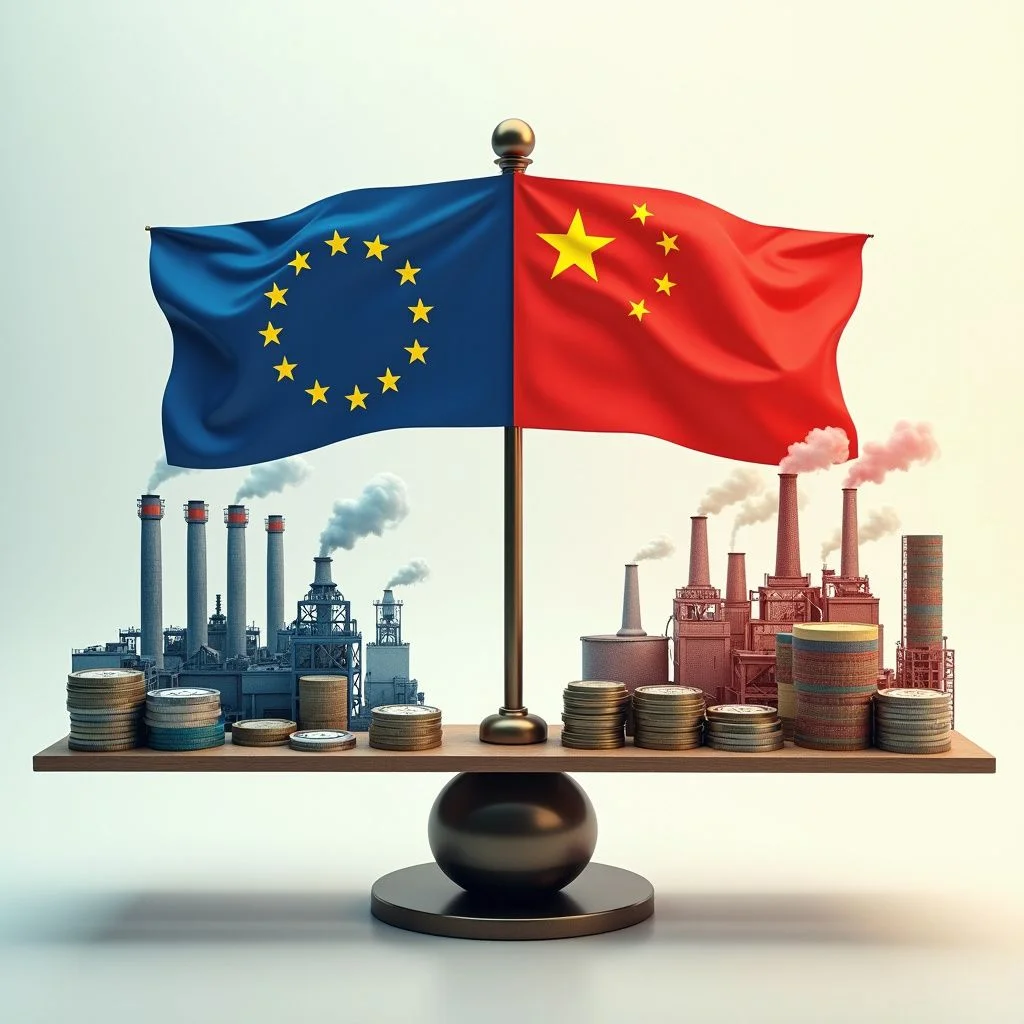
Europe faces a systemic rivalry with China, which includes cooperation, competition and confrontation. China challenges European prosperity with unfair trade practices and a dual circulation strategy, affecting the competitiveness of European companies. It uses economic coercion and pressures with trade restrictions. Europe must prepare to counter economic and security threats.