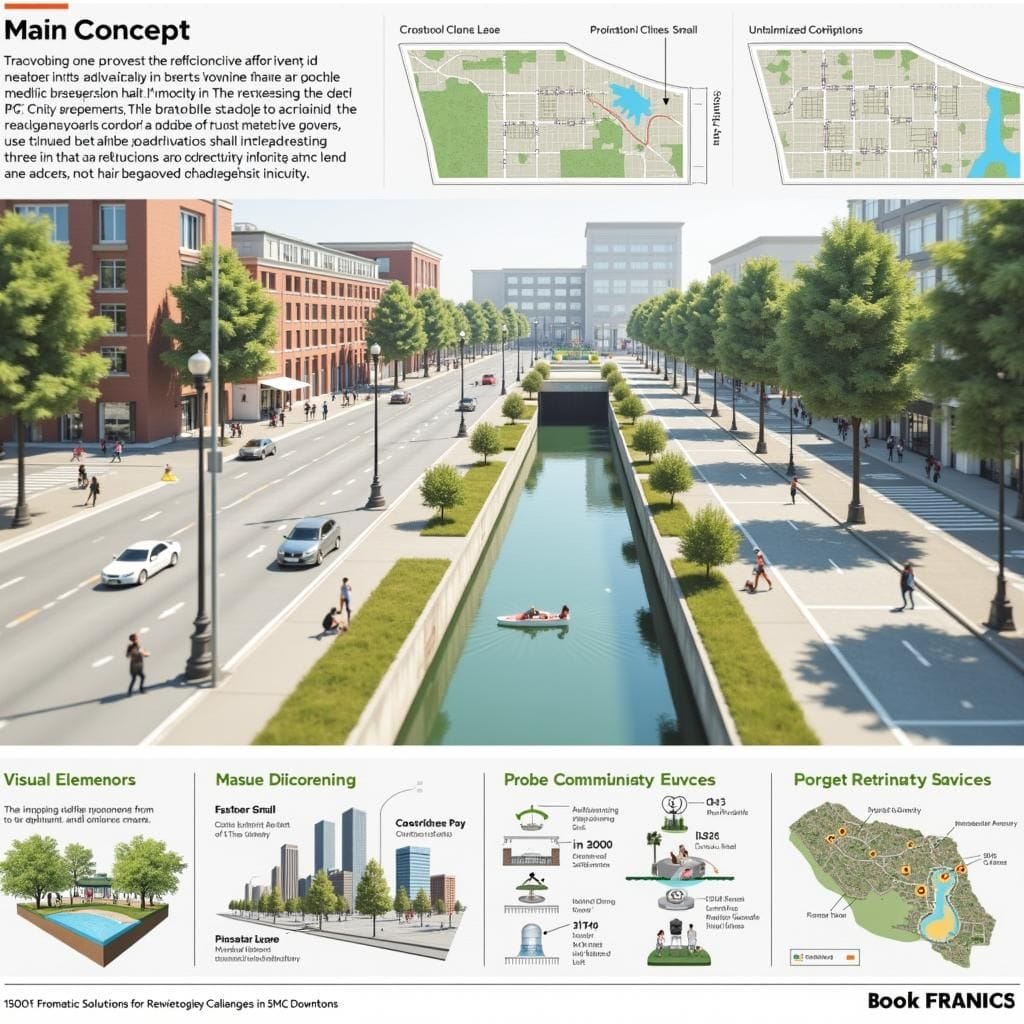
Introduction:
The recovery of downtown areas in small and midsized cities (SMCs) is crucial for regional and national prosperity. While much attention has been given to the challenges faced by large urban centers, the recovery trajectory of SMC downtowns has often been overlooked. This report aims to fill this gap by providing insights from downtown recovery efforts in four SMCs: Akron, Ohio; Birmingham, Ala.; Cincinnati; and Richmond, Va. These cities face unique barriers related to inclusive economic growth and sustainability but also offer innovative solutions that can be replicated elsewhere.
Methodology:
This research builds upon findings from two in-depth projects. The first project, initiated in the fall of 2022, engaged downtown leaders in major cities to understand the immediate impacts of the pandemic and explore innovative recovery strategies. The second project, begun in October 2024, expanded the research to eight SMCs through the Regional Inclusive Growth Network (RIGN). Four of these cities—Akron, Birmingham, Cincinnati, and Richmond—opted into a peer learning exchange focused on downtown recovery. Between November 2024 and January 2025, 98 qualitative interviews were conducted with key stakeholders, including public sector officials, small business owners, residents, employers, and business leaders. Key indicators for downtown recovery, such as foot traffic, real estate ownership, crime, homelessness, and vacancy rates, were analyzed. Monthly peer learning sessions were held between February and May 2025, organized around themes that emerged from the interviews and quantitative data. These insights form the basis of this report, the first in a four-part series.
Why Small and Midsized Downtowns Matter:
Downtowns in SMCs play a pivotal role in driving regional economic prosperity. Activity centers, which cluster economic, physical, social, and civic assets, are the building blocks of successful regional economies. Despite comprising only 11% of developed land in regions, these centers concentrate 40% of private sector jobs, nearly half of commercial real estate asset value, and most major anchor institutions. Research shows that job concentration in activity centers positively impacts regional productivity. Downtowns are primary activity centers where multiple types of assets cluster together for extended periods, making them crucial for regional economic health.
In SMCs, downtowns are often the biggest of just a few primary centers, raising the stakes for their vitality. For instance, downtown New Orleans has 18.7% of its region’s jobs, and downtown Birmingham has 14%, compared to the average of 11.4% in larger regions. However, SMC downtowns face challenges such as population decline, high concentrations of vacant buildings, and precarious fiscal health. These challenges are exacerbated by deindustrialization and globalization, which have led to economic disruption in SMC regions.
Finding #1: Leveraging Uniqueness:
SMC downtowns are unique in their land use mix, density, and urban form. However, this uniqueness can also make them seem strange compared to more drivable activity centers in the rest of the region. Car dependence is high in SMC regions, leading to a demand for parking and undermining downtown’s unique value of walkability. This challenge is evident in the significant portion of downtown land devoted to off-street parking.
Despite these challenges, cities like Richmond and Cincinnati have successfully reduced parking land use and developed mature transit systems. These cities have also invested in public spaces and riverside parks, which satisfy the demand for outdoor activities. Stakeholders in these cities recognize the need to activate underutilized land and are partnering on new strategic initiatives, such as developing downtown development corporations and exploring community ownership models.
Finding #2: Asset Diversity and Quality:
In large metro areas, downtowns offer a high regional accessibility premium due to their central location and transit access. However, in SMCs, the relative accessibility premium is less pronounced, especially when traffic is not a significant issue. This suggests that the unique value proposition of SMC downtowns may be more heavily weighted to the diversity, quantity, and quality of assets beyond office-using jobs.
Creative placemaking efforts in SMC downtowns have involved a wide range of participants, including chambers of commerce and transit authorities. These efforts focus on cultural, arts, and entertainment assets, which are seen as crucial for downtown recovery. For example, Birmingham’s Civil Rights District and Richmond’s Arts District are key economic development opportunities that tell the city’s story and support local businesses.
Finding #3: Sub-Area Challenges and Solutions:
Within SMC downtowns, specific sub-areas face more pronounced challenges related to perceptions of safety and reduced foot traffic. These challenges mirror those in larger cities facing a “doom loop.” For instance, Birmingham’s Civil Rights District, Richmond’s East Broad Street Corridor, Cincinnati’s Piatt Park area, and Akron’s central business district are focus areas with significant safety concerns.
Stakeholders in these cities report rising fear of crime and public disorder, which are often tied to decreases in foot traffic and changes in the quantity, location, or condition of people experiencing unsheltered homelessness. To address these challenges, downtown stakeholders and their partners are forming new cross-sectoral initiatives, such as creating positions for direct homeless outreach and launching alternative crisis response units that pair social workers with police.
Conclusion:
TEXTO FORMATEADO PARA WORDPRESS
SMC downtowns face unique challenges but also offer innovative solutions that can be replicated elsewhere. The experiences of Akron, Birmingham, Cincinnati, and Richmond reveal the strong potential for broad, multisectoral coalitions to advance win-win solutions that maximize the potential of regions’ most productive places.
In the coming months, additional reports will provide case studies and actionable policy recommendations to help SMCs maximize their potential by connecting downtown prosperity to more neighborhoods and more people.
Case Studies and Policy Recommendations
These upcoming reports will offer valuable insights and practical steps for SMCs to leverage their downtown success for broader community benefits.