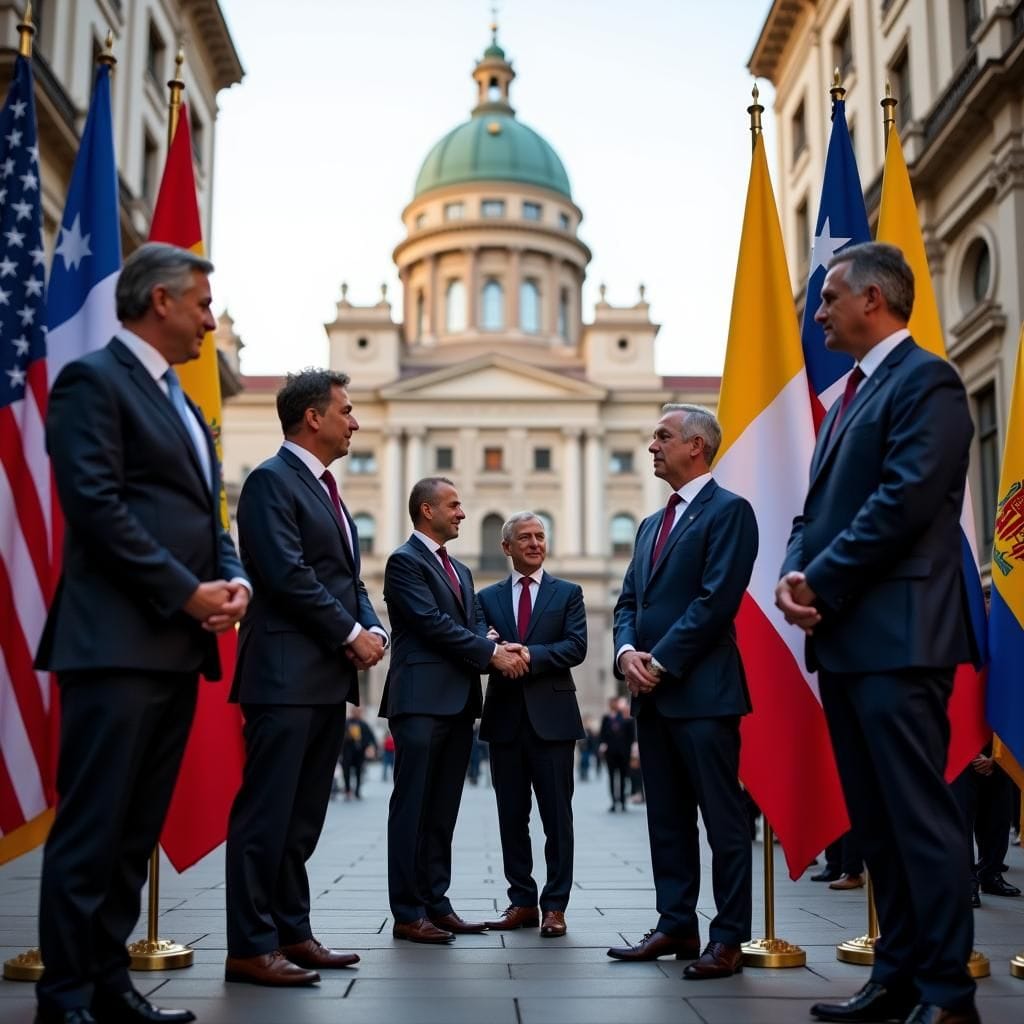
From Santiago, Chile, the first Spanish and the President of Chile, Gabriel Boric, launched the initiative “Democracy Always”, with the aim of strengthening multilateralism and cooperation among democratic countries. This meeting, held at the La Moneda Palace, saw the participation of the presidents of Brazil, Lula da Silva, Colombia, Gustavo Petro, Uruguay, Yamandú Orsi, and the Spanish government, Pedro Sánchez. The initiative aims to counter threats to democracy in a time when it is under attack.
During the meeting, leaders discussed three main objectives: strengthening institutions and multilateralism, fighting disinformation, and reducing inequalities. These topics were included in a Joint Declaration, which invites other countries to actively participate, involving universities, parliaments, civil society, media, and the private sector. In addition, leaders expressed their support for a ceasefire in Gaza and access to humanitarian aid in the Gaza Strip.
The “Democracy Always” initiative was conceived as a response to the international reaction, hatred, and lies, which are putting freedoms and fundamental rights at risk. Pedro Sánchez and Lula da Silva, the project’s creators, emphasized the importance of going on the offensive to defend democracy. Sánchez stated that it is necessary to strengthen institutions and multilateralism, build a global digital governance, fight against all forms of inequality, and implement a tax reform to ensure that the super rich assume their responsibilities.
Gustavo Petro emphasized that the global progressivism must unite to shed light in a world that is arguing irrationally and is destroying multilateralism. Yamandú Orsi explained that the goal is to have a concrete and common proposal that “lands democracy” with tangible elements such as disinformation and encourages self-criticism when democracy regresses in participating countries. Lula da Silva highlighted that liberal democracy has not been able to respond to current concerns, making it necessary to strengthen institutions and multilateralism.
Pedro Sánchez reiterated the commitment taken together with Brazil at the United Nations Conference in Seville on support for development, to make the international fiscal system more progressive and therefore more equitable. He also stated that preserving democracy is a moral duty and a political objective, and that it is necessary to lead the response against a reactionary international. Sánchez also emphasized that the collaboration among democratic countries is essential, as no one saves themselves alone.
Gabriel Boric highlighted that it is never a wrong moment to strengthen democracy and human rights. This event had a significant impact on Sánchez’s journey to Uruguay and Paraguay, strengthening his image as a political reference for the global left in South America. The journey also aimed to relaunch the agreement between the European Union and Mercosur, which would represent the largest free trade area in the world. This agreement is particularly important in an era of unjust and unilateral trade wars.
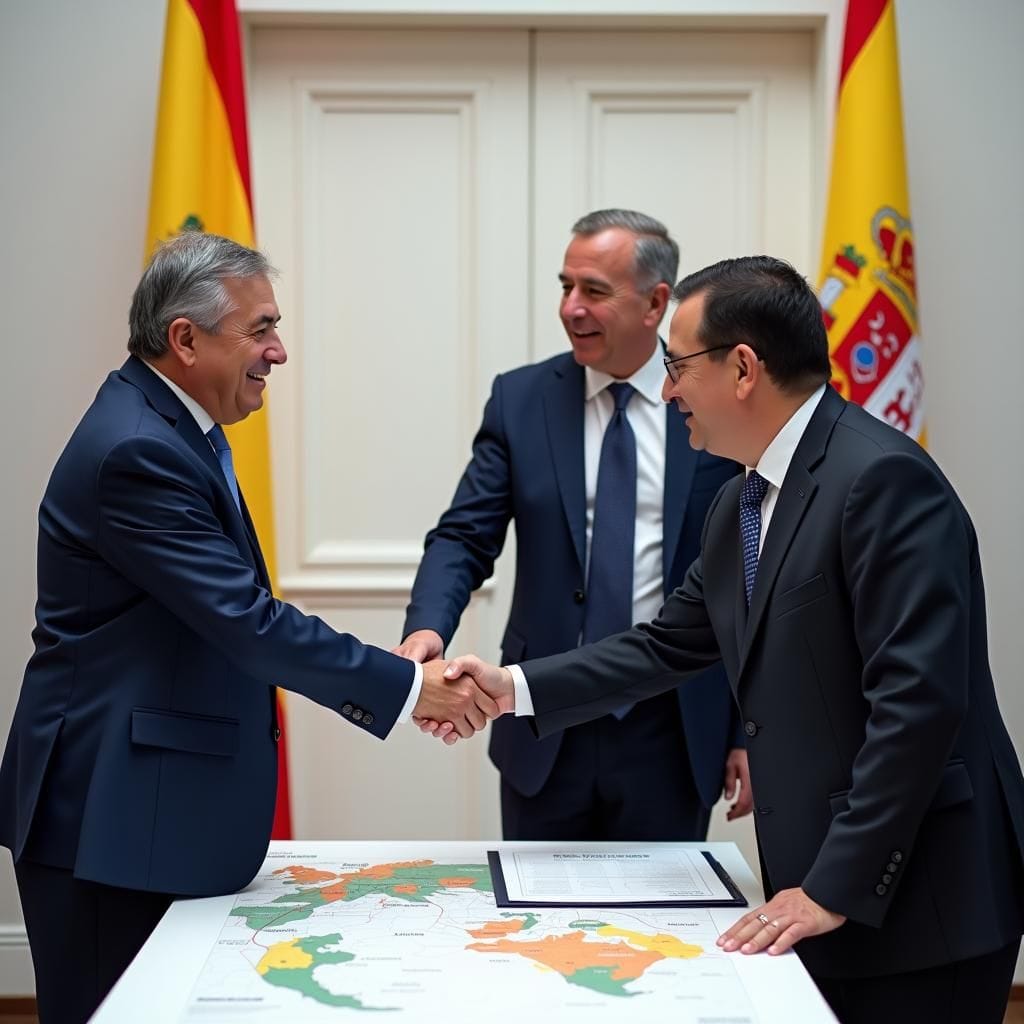
During his visit to Paraguay, Sánchez signed cooperation agreements between Spain and Uruguay, and between Spain and Paraguay, in the presence of representatives of Spanish companies and those of the hosting countries. These agreements aim to promote commercial openness and combat protectionism. In addition, Sánchez paid tribute to Lucía Topolansky, wife of Pepe Mujica, who recently passed away, and announced a solemn tribute involving the South American region.
The “Democracy Always” movement represents a progressive movement articulated in different parts of the globe, which will be found in Spain in 2026. In September, during the United Nations General Assembly, leaders will meet again, this time with the participation of the presidents of State or government of Mexico, Honduras, Canada, Australia, South Africa, United Kingdom, and Denmark. This progressive movement is determined to oppose the reactionary international, putting forward a concrete and united response to defend democracy and fundamental rights.