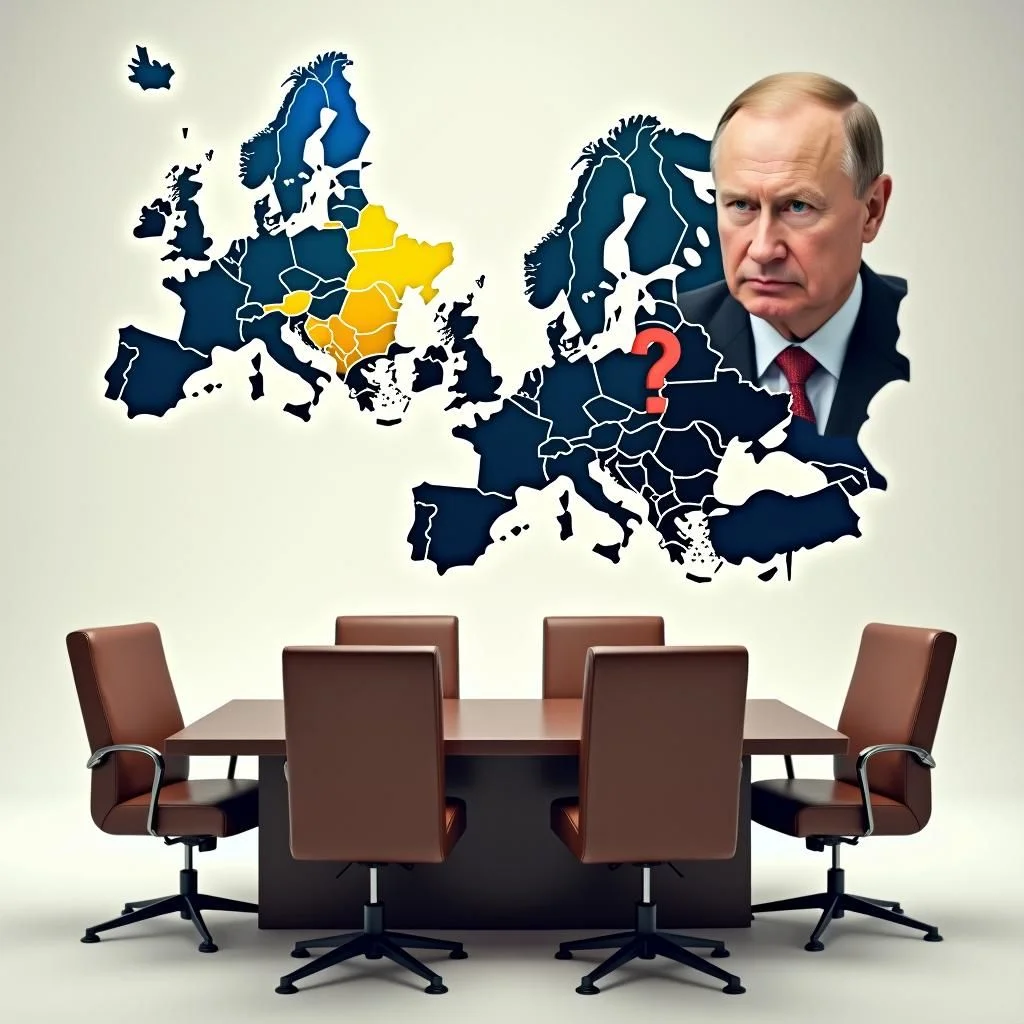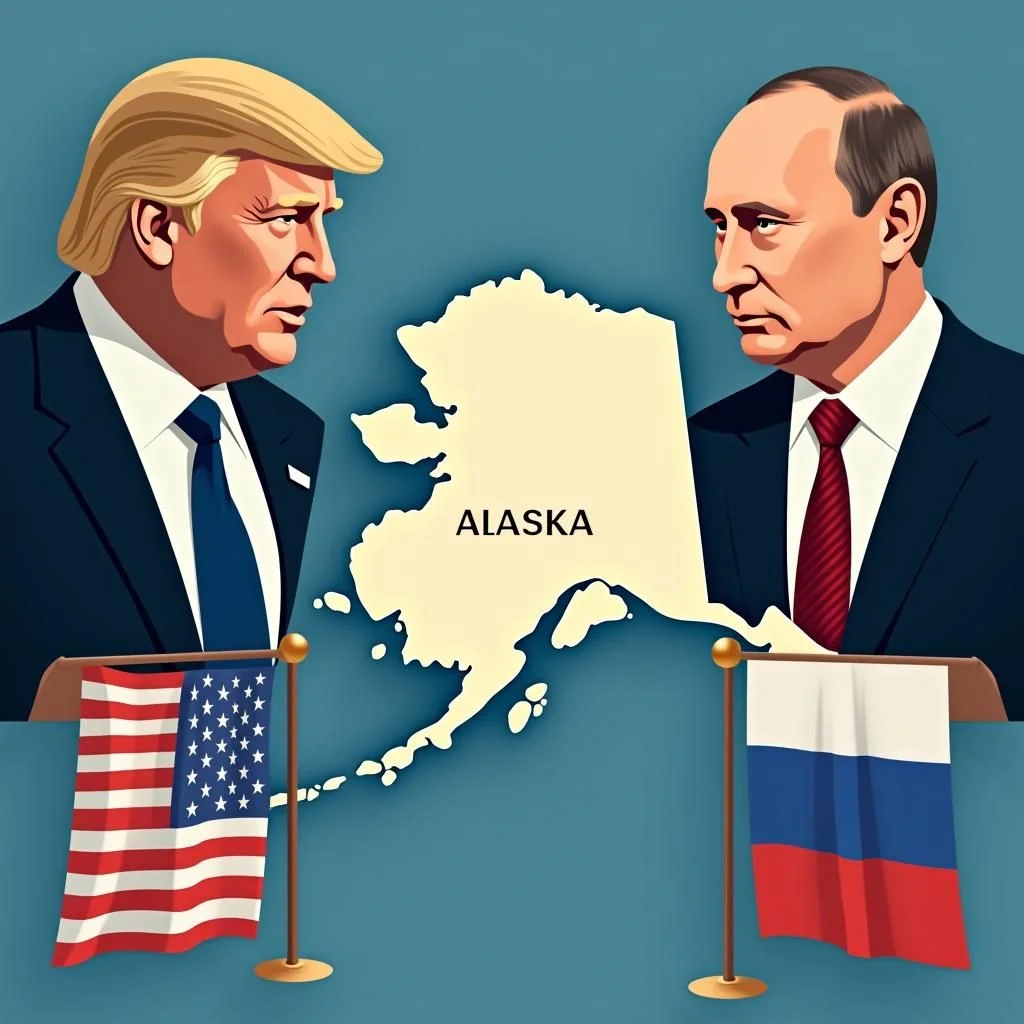
The two presidents will meet to discuss a possible ceasefire in Ukraine, but the proposal of territorial concessions raises doubts, with Europe relegated to a spectator. If there is a place in the world where Russia and the United States are so close that they almost touch, while Europe is extremely far away, this place is certainly Alaska. And it is precisely here, according to the announcements, that the American president Donald Trump will meet his Russian counterpart Vladimir Putin for a summit charged with expectations for the possible outcomes on the war in Ukraine, triggered by the large-scale Russian invasion in February 2022. The choice of the “Last Frontier” state, as Alaska is often defined today, has a significant symbolic meaning and comes after months of a wall-to-wall confrontation between Washington and Moscow.
Trump had hoped to push Putin to a ceasefire in Ukraine in the short term, after returning to the White House in January, but the past months and weeks have seen a resurgence of the conflict. On Sunday alone, 112 clashes took place on the eastern Ukrainian front, according to the General Staff of the Armed Forces of Kiev. The Russians carried out 38 air attacks, dropping 66 guided bombs, but also 1,691 drone kamikaze attacks. Ukrainian drones, on the other hand, hit industrial areas in the Russian region of Nizhny Novgorod in the night.
If from Moscow and Washington a cautious optimism is filtering in view of the summit, the main knot to be untangled concerns the inclusion of Ukrainian President Volodymyr Zelensky, also desired by a Europe forced, against its will, to watch the whole thing from a considerable distance. At an official level, it is still unclear why Alaska was chosen precisely for the Trump-Putin face-to-face, nor where the summit will take place, the first between the two leaders since the G20 in Osaka in 2019. The White House has not revealed details on the location or the reasons for the choice, but Alaska is the US state closest to Russia. So much so that a Kremlin advisor has defined it as logical to cross the Bering Strait rather than fly over Europe and possibly the entire Atlantic to meet elsewhere.
In 1867, Russia ceded Alaska to the United States for $7.2 million, ignoring the fact that the territory, considered at the time hostile and difficult to control, would later prove rich in natural resources. This meeting will be the first between US and Russian presidents since the summit between Putin and then-US President Joe Biden in Geneva in 2021. In the same year, Anchorage – the largest city in Alaska – hosted the talks between the Biden administration and China, the first high-level meeting of the Biden era. Putin’s last known trip to the US dates back to 2015, for the UN General Assembly, under the Obama administration.
It is worth recalling that neither the US nor Russia are members of the International Criminal Court, which in 2023 issued an arrest warrant for Putin. Whatever the details, the impression is that it is another initiative being pushed forward on the backs of Europeans, and, more seriously, probably without the Ukrainians. On Sunday, there was a show of support from European allies in favor of Ukraine, insisting that any peace talks with Russia must include Kiev.
European leaders and officials had the opportunity to express their concerns to the US vice president during his visit to the UK over the weekend. In a hastily organized meeting, it was reiterated that any peace talks must be preceded by a ceasefire and that Ukraine itself must be actively involved. However, sources from the Trump administration have stated that the White House has not entirely ruled out Zelensky’s presence, presumably in a subsequent face-to-face meeting with Putin.
If the contours of the summit are still unclear, its contents are even more so. Trump, announcing the upcoming meeting with Putin, suggested that a peace agreement between the two countries could include “some territorial exchanges,” indicating that the United States would push Ukraine to cede definitively part of its territory. Zelensky, for his part, has already clarified that Ukraine will not “give away” land to Russia as part of a ceasefire agreement. “The response to the Ukrainian territorial question is already contained in the Ukrainian Constitution,” Zelensky said. “Ukrainians will not give their land to the occupier,” he added.
The American president had indicated August 8 as the day of choice for Putin: stop fighting or face sanctions. In reality, none of his conditions were met, and Trump’s “ultimatum” was overshadowed by the announcement of the summit in Alaska, the outcome of which is still to be seen. Doubts remain about Putin’s intentions and the effectiveness of a peace process marked by confused proposals and internal pressures within the Trump administration. In the background, an increasingly distant Europe, both diplomatically and geographically, from the decision-making process.
El presidente Joe Biden y el presidente Vladimir Putin se reunirán para discutir una posible tregua en Ucrania, pero la propuesta de concesiones territoriales genera dudas, con Europa relegada a espectadora. Si hay un lugar en el mundo donde Rusia y Estados Unidos están tan cerca que se tocan, mientras que Europa está extremadamente lejos, ese lugar es ciertamente Alaska. Y es precisamente aquí, según las declaraciones, que el presidente estadounidense Donald Trump se reunirá con su homólogo ruso Vladimir Putin para un cumbre cargada de expectativas para los posibles resultados de la guerra en Ucrania, desencadenada por la invasión rusa a gran escala en febrero de 2022. La elección del “Último Límite” estado, como Alaska se define a menudo hoy en día, tiene un significado simbólico importante y viene después de meses de un enfrentamiento a tope entre Washington y Moscú.
Trump había esperado empujar a Putin a una tregua en Ucrania a corto plazo después de regresar a la Casa Blanca en enero, pero los meses y semanas pasados han visto un resurgimiento del conflicto. El domingo solo, 112 enfrentamientos tuvieron lugar en la frontera oriental ucraniana, según el Estado Mayor de las Fuerzas Armadas Ucranianas. Los rusos llevaron a cabo 38 ataques aéreos, lanzando 66 bombas guiadas, pero también 1.691 ataques kamikaze de drones. Los drones ucranianos, por otro lado, golpearon áreas industriales en la región rusa de Nizhny Novgorod en la noche.
Reacciones de Moscú y Washington
Si una cautelosa optimismo está filtrándose de Moscú y Washington ante la cumbre, el nudo principal que debe desenredarse concierne a la inclusión del presidente ucraniano Volodymyr Zelensky, también esperado por una Europa obligada, a pesar de sí misma, a ver todo esto desde una distancia considerable. A nivel oficial, sigue siendo incierto por qué Alaska fue elegida específicamente para la reunión cara a cara entre Trump y Putin, o dónde se llevará a cabo exactamente, la primera entre los dos líderes desde la cumbre del G20 en Osaka en 2019. La Casa Blanca no ha revelado detalles sobre la ubicación o las razones de la elección, pero Alaska es el estado estadounidense más cercano a Rusia. Tan cerca que un asesor del Kremlin ha definido como lógico cruzar el estrecho de Bering en lugar de volar sobre Europa y posiblemente todo el Atlántico para reunirse en otro lugar.
En 1867, Rusia cedió Alaska a Estados Unidos por $7.2 millones, ignorando cómo el territorio, considerado entonces hostil y difícil de controlar, demostraría ser rico en recursos naturales. Esta reunión será la primera entre presidentes estadounidenses y rusos desde la cumbre entre Putin y el entonces presidente estadounidense Joe Biden en Ginebra en 2021. En el mismo año, Anchorage – la ciudad más grande de Alaska – albergó conversaciones entre la administración Biden y China, el primer encuentro a nivel alto de la era Biden. La última visita conocida de Putin a Estados Unidos data de 2015, para la Asamblea General de la ONU, bajo la administración de Obama.
Es importante recordar que ni Estados Unidos ni Rusia son miembros de la Corte Penal Internacional, que en 2023 emitió un mandato de arresto para Putin. Cualquiera que sean los detalles, la impresión es que esto es otra iniciativa impulsada hacia adelante en los hombros de los europeos, y, incluso más seriamente, probablemente sin los ucranianos. El domingo, hubo un show de solidaridad de aliados europeos a favor de Ucrania, insistiendo en que cualquier conversación de paz con Rusia debe incluir a Kiev.
Los líderes y funcionarios europeos han tenido la oportunidad de expresar sus preocupaciones al vicepresidente estadounidense durante su visita al Reino Unido durante el fin de semana. En una reunión organizada a toda prisa, se reiteró que cualquier conversación de paz debe estar precedida por una tregua y que Ucrania misma debe estar involucrada activamente. Sin embargo, fuentes de la administración Trump han declarado que la Casa Blanca no ha descartado por completo la presencia de Zelensky, presumiblemente en una reunión cara a cara posterior con Putin.
Contenidos de la cumbre
Si los contornos de la cumbre siguen siendo borrosos, los contenidos son incluso más así. Trump, anunciando la reunión inminente con Putin, sugirió que un acuerdo de paz entre los dos países podría incluir “algunas intercambios territoriales”, indicando que Estados Unidos empujaría a Ucrania a ceder definitivamente parte de su territorio. Zelensky, por otro lado, ha declarado ya que Ucrania no “dará” tierra a Rusia como parte de un acuerdo de tregua. “La respuesta a la cuestión territorial ucraniana ya está contenida en la Constitución ucraniana”, dijo Zelensky. “Los ucranianos no darán su tierra al ocupante”, agregó.
El presidente estadounidense había indicado el 8 de agosto como el día de elección para Putin: detenga la lucha o enfrente sanciones. En realidad, ninguna de sus condiciones fue cumplida, y el “ultimátum” de Trump fue eclipsado por el anuncio de la cumbre de Alaska, cuyo resultado aún se debe ver. Mientras tanto, siguen siendo dudas sobre las intenciones de Putin y la efectividad de un proceso de paz marcado por propuestas confusas y presiones internas dentro de la administración Trump. En el fondo, una Europa cada vez más lejana, tanto diplomáticamente como geográficamente, del proceso de toma de decisiones.