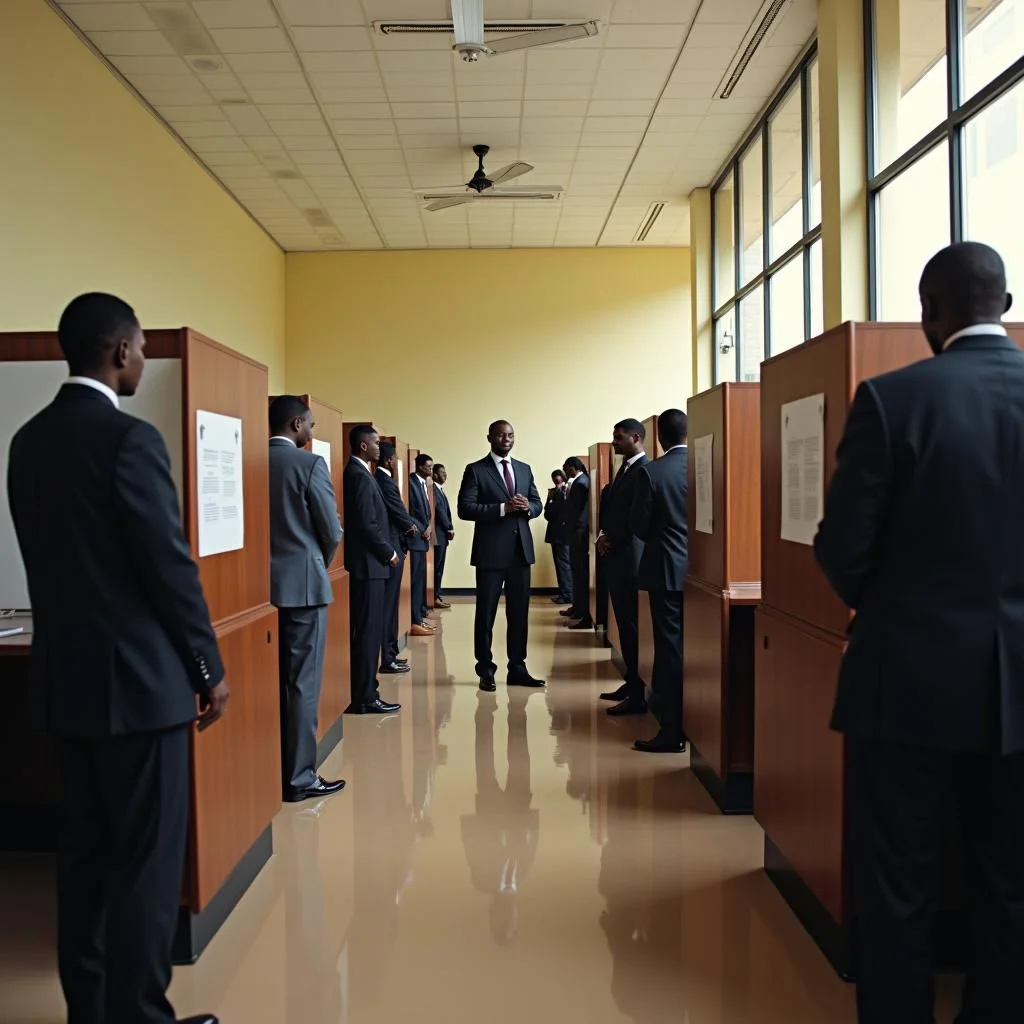
The Democratic Republic of the Congo (DRC) has made significant strides in transitioning from armed conflict to democratic elections, despite recent increases in violence. Following the Global and Inclusive Agreement of 2002, which ended five years of conflict, the country adopted a new constitution that established a series of democratic institutions. Since then, the DRC has conducted four rounds of parliamentary and presidential elections, some of which have been credible, while others have been deeply flawed. Executive power has changed hands at the national level once and numerous times at the provincial level.
However, the concept of democracy in the DRC is often more theoretical than practical. The 2006 Constitution codifies the separation of powers, an independent judiciary, protections for individual and civil rights, and democratic oversight bodies. Unfortunately, these stipulations are regularly transgressed by the ruling elites, creating a stark contrast between “democracy on paper” and “democracy in reality.” This paradox is a defining feature of the Congolese political system.
The DRC: An Electoral Oligarchy
The DRC can be characterized as an “electoral oligarchy,” where power is transferred within a narrow political elite, sometimes through elections and sometimes through negotiations. While these transfers of power produce some checks and balances among elites, there is very little accountability between these elites and the population at large. This system, often referred to as “political transhumance,” lacks partisan cleavages and political loyalty.
To understand how the DRC reached this state, one must look back to the political transition period from 2003 to 2006. During this time, the Congolese state was captured by a narrow political elite who benefited from a significant influx of money, particularly from the privatization of the mining sector. This influx of money, facilitated by the “liberal peace” approach adopted by international donors, eroded the nascent democratic institutions that were being established.
The 2006 Constitution introduced multiparty democracy, and the subsequent electoral law codified a proportional representation electoral system. This produced a political landscape with a proliferation of weak political parties. Simultaneously, the media landscape and civil society were characterized by lively debate but also by political manipulation and fragmentation, which undermined accountability.
The transition period saw the emergence of a turbulent media landscape and a fragmented civil society. While these sectors were marked by vibrant debate, they were also plagued by political manipulation and a lack of cohesion. This fragmentation made it difficult to hold the ruling elites accountable, further exacerbating the democratic deficit.
The influx of money from the privatization of the mining sector had a profound impact on the political system. The liberal peace approach, which emphasized economic liberalization and market-based solutions, inadvertently facilitated the concentration of wealth and power in the hands of a few. This concentration of power allowed the ruling elites to manipulate the democratic institutions to their advantage, further eroding the already fragile democratic structures.
The 2006 Constitution and the subsequent electoral laws were intended to create a more democratic and accountable political system. However, the implementation of these laws was flawed, leading to a proliferation of weak political parties. These parties lacked the organizational capacity and ideological cohesion to effectively represent the interests of the population. As a result, the political landscape became fragmented, with parties often aligning with each other based on short-term political interests rather than long-term ideological commitments.
The media landscape in the DRC is characterized by a high degree of freedom but also by significant manipulation and fragmentation. While the media plays a crucial role in democratic societies by providing information and facilitating public debate, the fragmented nature of the media in the DRC often results in a lack of cohesive narratives and a proliferation of misinformation. This fragmentation makes it difficult for the population to hold the ruling elites accountable, as there is no single, authoritative source of information.
Civil society in the DRC is vibrant but also fragmented. While there are many civil society organizations working on a range of issues, their efforts are often undermined by political manipulation and a lack of coordination. This fragmentation makes it difficult for civil society to effectively advocate for democratic reforms and hold the ruling elites accountable.
Accountability in the DRC
The DRC’s political system is characterized by a lack of vertical, horizontal, and diagonal accountability. Vertical accountability refers to the mechanisms by which citizens can hold their representatives accountable through elections and other democratic processes. Horizontal accountability refers to the checks and balances between different branches of government. Diagonal accountability refers to the mechanisms by which non-state actors, such as civil society organizations and the media, can hold the government accountable.
In the DRC, vertical accountability is weak due to the lack of effective democratic institutions and the manipulation of electoral processes. Horizontal accountability is also weak due to the concentration of power in the hands of a few and the lack of effective checks and balances between different branches of government. Diagonal accountability is undermined by the fragmentation of civil society and the media, which makes it difficult for non-state actors to effectively hold the government accountable.
La sistema político de la RDC se caracteriza por una falta de divisiones partidistas y lealtad política. Esta falta de cohesión ideológica y lealtad política hace que sea difícil para los partidos políticos representar efectivamente los intereses de la población y mantener a los elites gobernantes responsables. Como resultado, los partidos políticos a menudo se alinean entre sí basándose en intereses políticos a corto plazo en lugar de compromisos ideológicos a largo plazo.
Características del sistema político de la RDC
El sistema político de la RDC se caracteriza por una falta de instituciones democráticas efectivas y una concentración de poder en manos de unos pocos. Esta concentración de poder permite a las elites gobernantes manipular las instituciones democráticas a su favor, lo que erosiona aún más las estructuras democráticas ya frágiles. La falta de instituciones democráticas efectivas y la concentración de poder en manos de unos pocos hace que sea difícil para la población mantener a las elites gobernantes responsables, lo que agrava aún más el déficit democrático.
Consecuencias de la concentración de poder
La concentración de poder en manos de unos pocos permite a las elites gobernantes manipular las instituciones democráticas a su favor, lo que erosiona aún más las estructuras democráticas ya frágiles. La falta de accountability y la concentración de poder en manos de unos pocos hacen que sea difícil para la población mantener a las elites gobernantes responsables, lo que agrava aún más el déficit democrático.
Conclusión
En conclusión, el sistema político de la RDC se caracteriza por una falta de instituciones democráticas efectivas, una concentración de poder en manos de unos pocos y una falta de accountability. Estos factores hacen que sea difícil para la población mantener a las elites gobernantes responsables, lo que agrava aún más el déficit democrático.