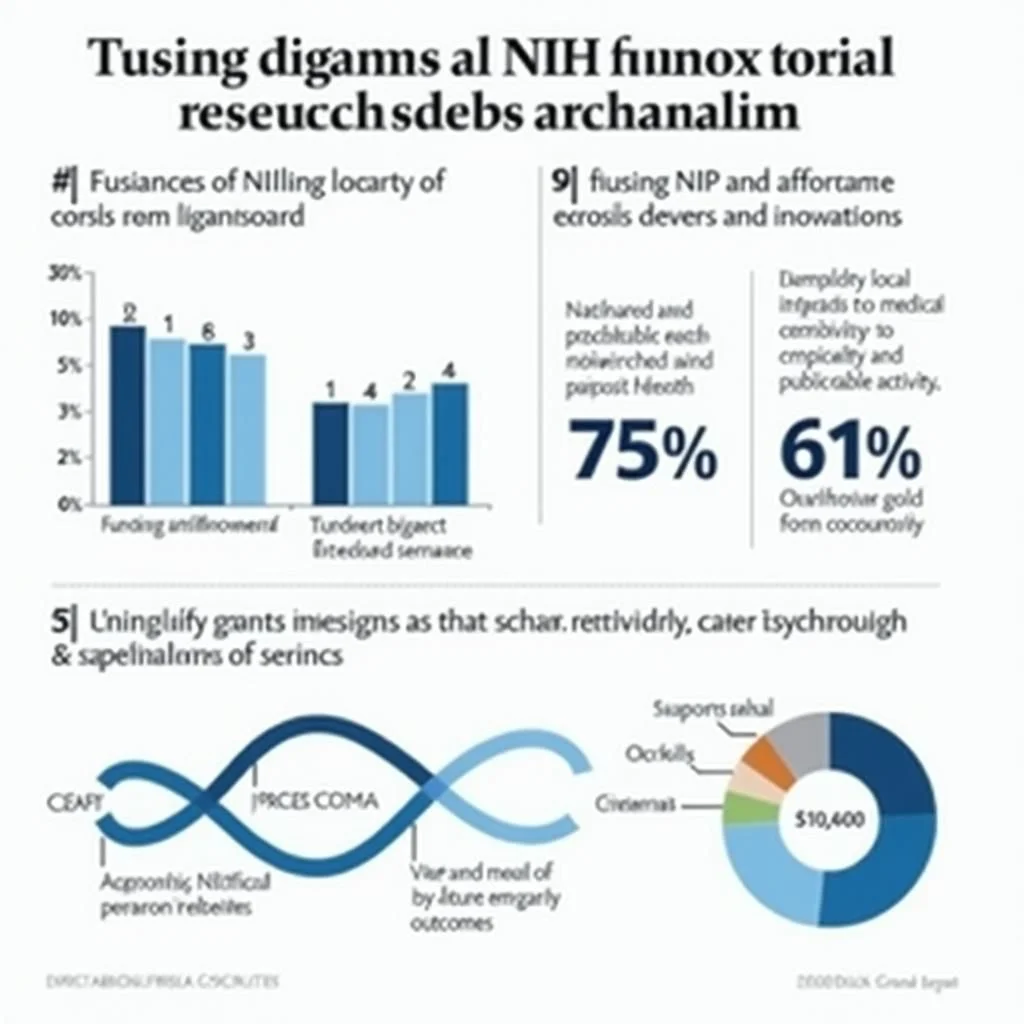
Funding levels for the National Institutes of Health (NIH) have been under scrutiny since the beginning of 2025. Initially, an executive order limited the coverage of overhead expenses associated with funded awards to 15% of the award. Additionally, specific research grants were terminated, totaling at least $7.5 billion by the end of May. However, the most significant threat to NIH-supported medical research is the proposed reduction in NIH funding from $48 billion this year to $27.5 billion next year, a 43% drop. The outcome of this process remains uncertain, with the Senate’s Committee on Appropriations supporting sustained funding.
The primary impact of NIH funding is on human health. Public funding supports research that is foundational for future medical innovation. No single firm has the incentive to fund such research because any firm can benefit from it. A cut in funding would reduce such advances, potentially harming future health outcomes. However, the broader implications of these potential NIH funding cuts are even more significant. The innovations resulting from this research generate investments that spur economic activity across the country. The economic impact is also felt at the local level. When individual institutions receive these funds, they hire researchers who may relocate to take these jobs. Spending in the area increases, and other local businesses may prosper. Public funding of scientific research may also encourage private investment in the same community, as firms translate scientific discoveries into marketable products. Overall, the broader labor markets in which recipient institutions reside could benefit from NIH funding. Cutting that funding may be detrimental to the community.
Investigating the Impact of NIH Funding on Local Labor Markets
To investigate the extent to which NIH funding affects local labor markets, this report categorizes major NIH awards by the location of their recipients and tracks funding per capita in those locations over the past two decades. The analysis examines changes in funding levels to determine whether locations with a larger influx of NIH funding experienced greater employment growth and an increase in the population share with a college degree. The findings support a relationship between NIH funding and both employment growth and educational attainment.
“College towns” are most likely to receive large NIH awards. To examine geographic patterns in NIH funding, the historical catalog of NIH awards is analyzed, focusing on awards made since 2004 to researchers outside of NIH. Many institutions receive relatively small awards that are unlikely to have a substantial impact on local labor markets. To focus on the larger awards that have a greater potential to result in a local economic impact, the analysis restricts attention to institutions that received awards larger than $50 million per year in 2024. These institutions accounted for over 80% of NIH funding in 2024. Each institution is assigned to a “labor market” based on the concept of a “commuting zone,” which is a group of counties linked by commuting patterns. All large awards to institutions in each commuting zone are aggregated, and these data are averaged over five-year periods to reduce idiosyncratic annual fluctuations. The data are adjusted for inflation and augmented with year 2000 commuting zone population counts to create measures of NIH funding per capita.
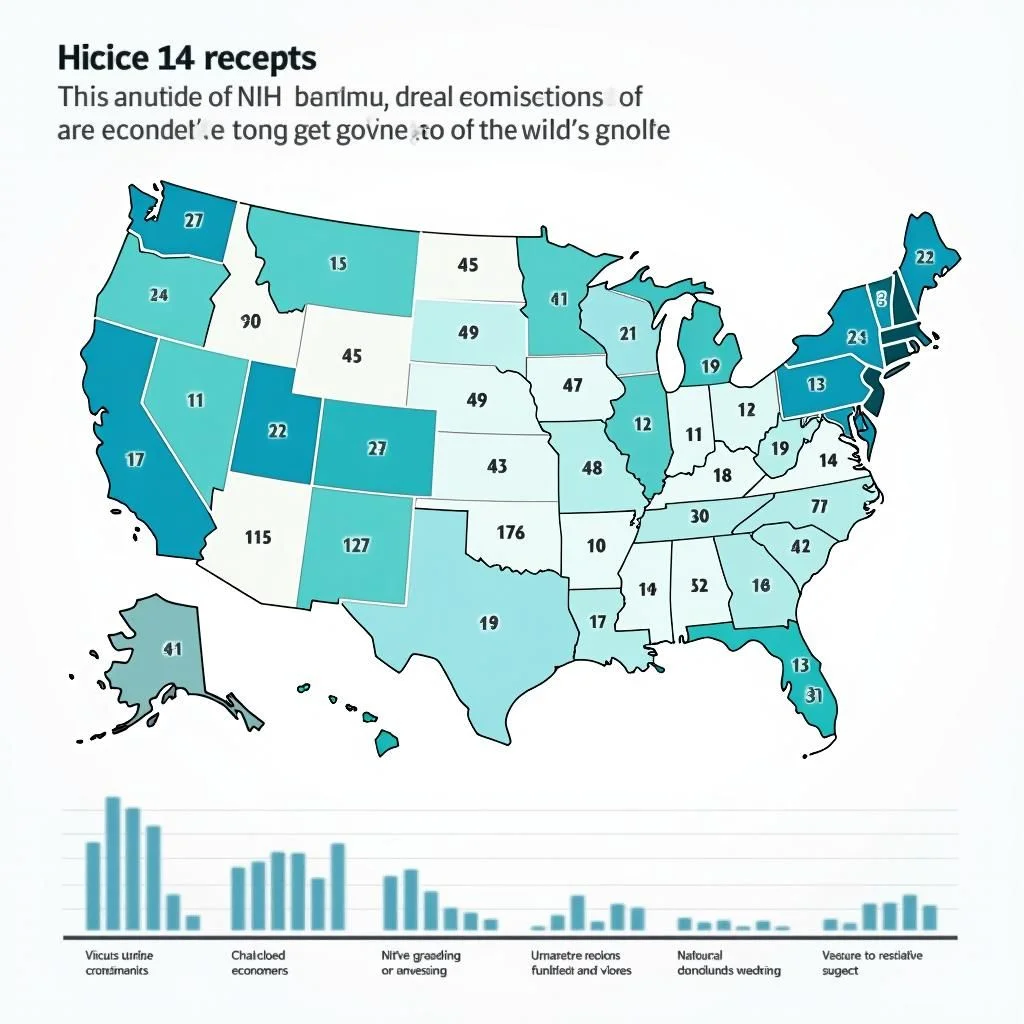
The analysis includes a total of 741 commuting zones. Of these, 664 included no institution that received large NIH awards during the analysis period. For the 77 zones that did receive large awards, the distribution of the level of NIH funding per capita in the 2019-2023 period is displayed. Eight of these areas received average funding greater than $500 per capita: Rochester, MN ($1,237); Raleigh, NC ($1,183); Iowa City, IA ($996); Gainesville, FL ($768); Charlottesville, VA ($728); Madison, WI ($681); Boston, MA ($616); and Wilmington, NC ($502). These locations are mainly where universities with large medical facilities account for a substantial share of the local economy.
Changes in NIH Funding and Local Labor Markets
Changes in NIH funding are linked to changes in local labor markets. The simple correlation of NIH funding levels with labor market characteristics is not necessarily a good indicator of whether NIH funding causes a stronger labor market. For example, places with more educated workers may attract more research funds, rather than the reverse. A better approach is to examine the impact of changes in funding over time. If the NIH increases research funding in a particular location, does its labor market grow stronger? Such variation in funding over time is plausibly generated by the idiosyncratic differences across locations in the strength of the research being proposed and its alignment with NIH priorities. In this case, comparing changes in funding to changes in labor market conditions would be an appropriate method of identifying a causal relationship.
Despite these limitations, the analysis can shed some light on how NIH funding affects local labor markets. Data from the 2005 through 2023 American Community Survey (ACS) are used to measure labor market activity. These data include geographic identifiers for all respondents labeled “public use microdata areas (PUMAs),” which can be translated into 1990 commuting zones using available crosswalks. Using these data, measures of the employment-to-population ratio and the percentage of those between ages 25 and 64 with a college degree in each labor market are constructed. These data are aggregated into the same five-year averages for each commuting zone as defined earlier.
Figures 4 and 5 show the relationship between changes in NIH funding levels and changes in labor market conditions. Commuting zones are categorized into those that received no funding throughout the period, those whose real funding per capita fell, and those whose real funding per capita increased. The latter category is further distinguished by those in which the increases were “large” (above the median among those with increases) and “small” (below the median). Within each of those categories, changes in labor market activity between the last period (2019-2023) and the first (2004-2008) are displayed.
Results of the analysis
Figure 4 displays the results of this analysis for the employment-to-population ratio. For reference, between 2004-08 and 2019-2023, this statistic declined from 63% to 59% nationally. The drop in employment was lower in locations that received the largest increases in NIH funding. Locations where real funding levels fell also saw smaller drops in employment than labor markets that never received large awards. It is possible that those labor markets were somewhat protected by the lingering impacts of previous funding. This could include subsequent investments by private firms that intentionally chose locations near NIH-funded institutions.
In Figure 5, a strong relationship between changes in NIH funding and changes in the educational composition of the population is also seen. The percentage of college graduates in the national population increased from 28% to 37% over this period. Across labor markets, the largest increase in the percentage of college graduates is seen in locations that received the greatest increase in NIH funding. Again, even those locations whose real funding per capita was cut had larger increases than those with no funding at all, suggesting that the impact of prior awards had perhaps lingered. It makes sense that NIH funding attracts a population with the training necessary to work in research-intensive environments.
Regression models and estimates
Beyond these descriptive analyses, regression models relating these local labor market outcomes to the level of funding in each of the five-year periods are estimated. These models use panel data methods that include time-period and labor market fixed effects. The estimates can be viewed as the impact of changes in funding on changes in these local labor market outcomes after controlling for national trends over time and features of individual local labor markets that are constant over time. For both outcomes, a positive relationship with NIH funding changes is found. The results indicate that a $100 increase in NIH funding per capita leads to an increase in the employment-to-population ratio of 0.3 percentage points. Similarly, the same $100 increase is estimated to increase the share of college graduates by 0.9 percentage points.
Implications of NIH funding cuts
Cutting NIH funding will likely reduce employment in academic communities. To understand the implications of these estimates, consider the potential job losses if NIH funding were cut from $47 billion to $28 billion. For this exercise, it is assumed that the reduction in funding would be distributed uniformly across labor markets that receive NIH funding. Applying this 43% cut to the level of funding per capita observed in the 2019-2023 data in each labor market that receives NIH funding, and incorporating the estimates of the impact of funding changes on the employment-to-population ratio, suggests that employment losses in affected areas would be meaningful. Many college towns would be strongly affected by these funding cuts. For instance, Madison, WI, Gainesville, FL, and Charlottesville, VA all receive considerable funding from NIH relative to their population. They each receive approximately $700 per resident in a typical year. With an adult population of around 500,000, the Madison, WI labor market is estimated to lose almost 4,000 jobs. The loss in the Gainesville, FL, and Charlottesville, VA labor markets would be smaller, but they still would lose roughly 2,000 jobs. Other college towns like Columbia, MO and State College, PA would lose almost 1,000 jobs in labor markets with adult populations of around 250,000. Among bigger cities, Boston leads the way. NIH funding per capita was more than $600 in 2019-2023. The simulation suggests NIH cuts would lead to 29,000 lost jobs, a roughly 1% reduction relative to current employment levels in that labor market. The combined estimated effects on local labor markets total 300,000 jobs. However, this simple aggregation misrepresents the national employment effect because displaced workers in one labor market may obtain jobs in another one.
Avoiding these cuts is a worthwhile investment. Avoiding these cuts will substantially improve employment levels in the affected labor markets. However, this impact ignores the other important benefits to society that are associated with NIH funding. These include the value of the health improvements that result from such funding and the national economic impact associated with medical innovations.
Importancia de la inversión en NIH
De hecho, el director’s letter acompañante de la solicitud de presupuesto de NIH para FY2026 cita los “descubrimientos salvavidas en biología y medicina” que han resultado de la investigación financiada por NIH. Una reciente análisis del Congreso de la Cámara de Presupuesto estimó que una reducción del 10% en la financiación llevaría a una reducción del 4,5% en el desarrollo de nuevos medicamentos. Presumiblemente, una reducción del 43% en la financiación tendría un impacto mucho mayor. Estos otros beneficios solos son argumentablemente mucho mayores que los efectos en el mercado laboral local.
Retorno de la inversión en NIH
Las estimaciones de los efectos en el mercado laboral local, junto con el impacto en la innovación farmacéutica y los patentes de la empresa privada, sugieren que el retorno de la inversión en la financiación de NIH es positivo y muy alto. En una era en la que la eficiencia gubernamental se considera un objetivo importante, las reducciones sustanciales en la financiación de NIH parecen contraproducentes.