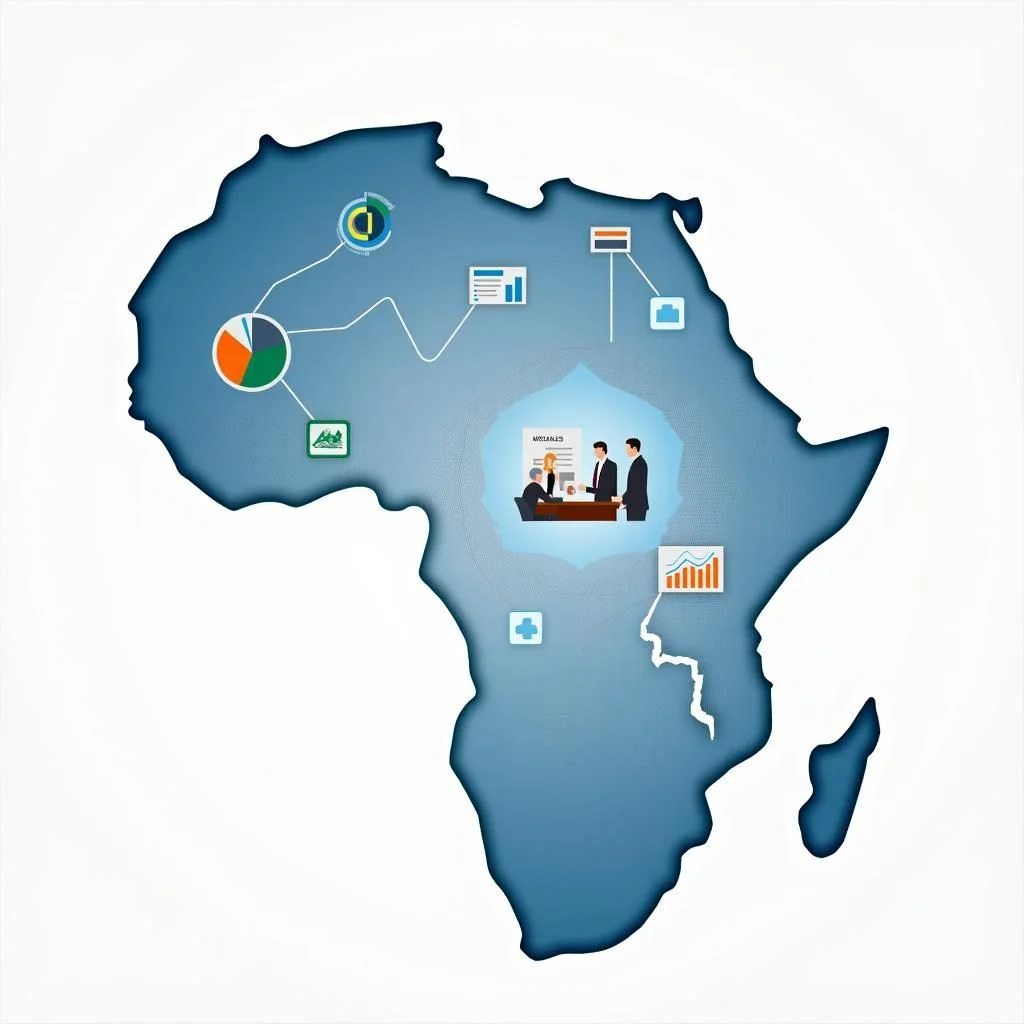
As the United Nations General Assembly begins its 80th session, the Office of the Special Advisor for Africa (OSAA) is actively supporting African development and navigating the shifting international order. The OSAA was established in 2003 with a mandate to advise, advocate, coordinate, and monitor the UN’s commitments and policies relating to Africa’s development and security. These functions are interconnected and can be understood through a value chain approach.
The advisory function leverages the UN system’s extensive knowledge and data production capabilities. The UN system is recognized as one of the best data and knowledge hubs globally. The OSAA acts as a knowledge broker, using this data to develop analytical work that informs policy decisions. This advisory role supports the Secretary-General, the Deputy Secretary-General, and the 54 member states in Africa. The advisory function produces knowledge that feeds into the advocacy function, which disseminates this information to support policymaking in Africa. For instance, Africa’s debt distress and lack of fiscal space are critical issues that require data-driven policy advisory services to address macroeconomic challenges.
Coordination is another key function of the OSAA. By leveraging the advisory and advocacy roles, the OSAA can coordinate efforts among various UN entities that intervene in Africa. This coordination ensures that the UN system works cohesively to support Africa’s development agenda. The monitoring function, mandated by the General Assembly, involves tracking commitments towards Africa’s development. The OSAA uses its data and knowledge assets to monitor progress and ensure accountability.
Resetting the Business Model
As the UN system faces a liquidity crisis due to decreasing Official Development Assistance (ODA) and changes in funding policies, there is a need to reset and restart the business model. The multilateral system is going through tough times, but Africans approach crises as opportunities. The UN’s priorities for Africa include implementing the Sustainable Development Goals (SDGs) to achieve sustainable development. Sustainable financing, driven by domestic resource mobilization, is crucial for achieving sustainable development and durable peace.
To support Africa in this journey, the UN system relies on its intangible assets: knowledge, data, expertise, trust, and footprint. The UN system is present in regions where the state is not, making it a trusted partner. The focus should be on becoming a preferred policy advisor rather than just delivering projects and programs. Africa needs to own its development agenda and implementation, with the UN system providing support, facilitation, and catalysis.
UN 2.0 and UN80 Reform Process
The 80th session of the UNGA will be a mutual accountability moment for member states and the UN system. The system needs to prove its fitness for purpose and acknowledge the crisis by launching reforms. The UN 2.0 initiative and the UN80 reform process are key measures to address the root causes of the crisis. UN 2.0 focuses on reconfiguring skills such as data, innovation, foresighting, and culture, while UN80 aims for quantitative and qualitative downsizing and streamlining to maintain value for money.
Transition Period and Multilateral System
The UN business model, created in 1945, is outdated and does not reflect the current geopolitical reality. The historical process of power reshuffle and instability requires a transition period managed by the multilateral system. African countries need a balanced and fair multilateral system to address their marginalized position. The management of this transition period is complex and requires an open mindset and agility.
The Security Council’s composition, which has not added new permanent members since 1945, is a contentious issue. The international environment is currently fragmented, making it difficult to achieve consensus on reforms. The correlations of force are dynamic and unstoppable, leading to instability and fragmentation. This fragmentation is a feature of the transition period and needs to be managed effectively.
African Union and Effective States
The rise of unilateral, bilateral, and regional cooperation arrangements poses challenges for global multilateral organizations. Effective states are crucial for a strong multilateral system. African countries should prioritize their development agendas and recognize the opportunities presented by the current transition period. The African Union needs to be strengthened by effective states to capitalize on these opportunities.
Financial Flows and Human Capital Development
African countries should focus on controlling their financial flows and breaking the finance paradox. Africa has lost significant amounts of money due to inefficient public spending, trade mispricing, and other factors. Controlling these flows and channeling them towards human capital development is essential for building resilient societies.
Technology and Innovation
Youth and young girls hoping to follow in the footsteps of successful leaders should connect with technology and innovation. They should not wait for the state to provide skills but should use the power of technology to acquire information and develop skills in science, technology, engineering, and mathematics. This approach will enable them to succeed and contribute to Africa’s development.