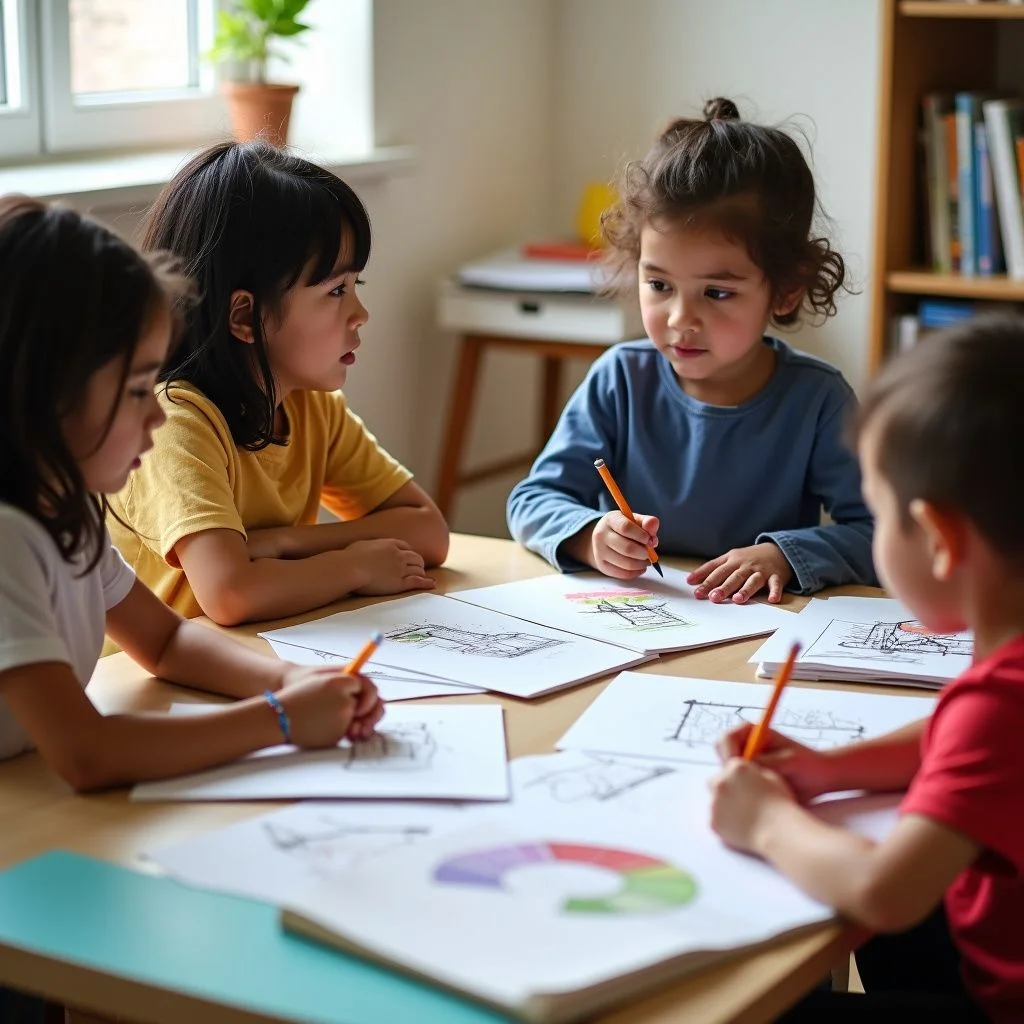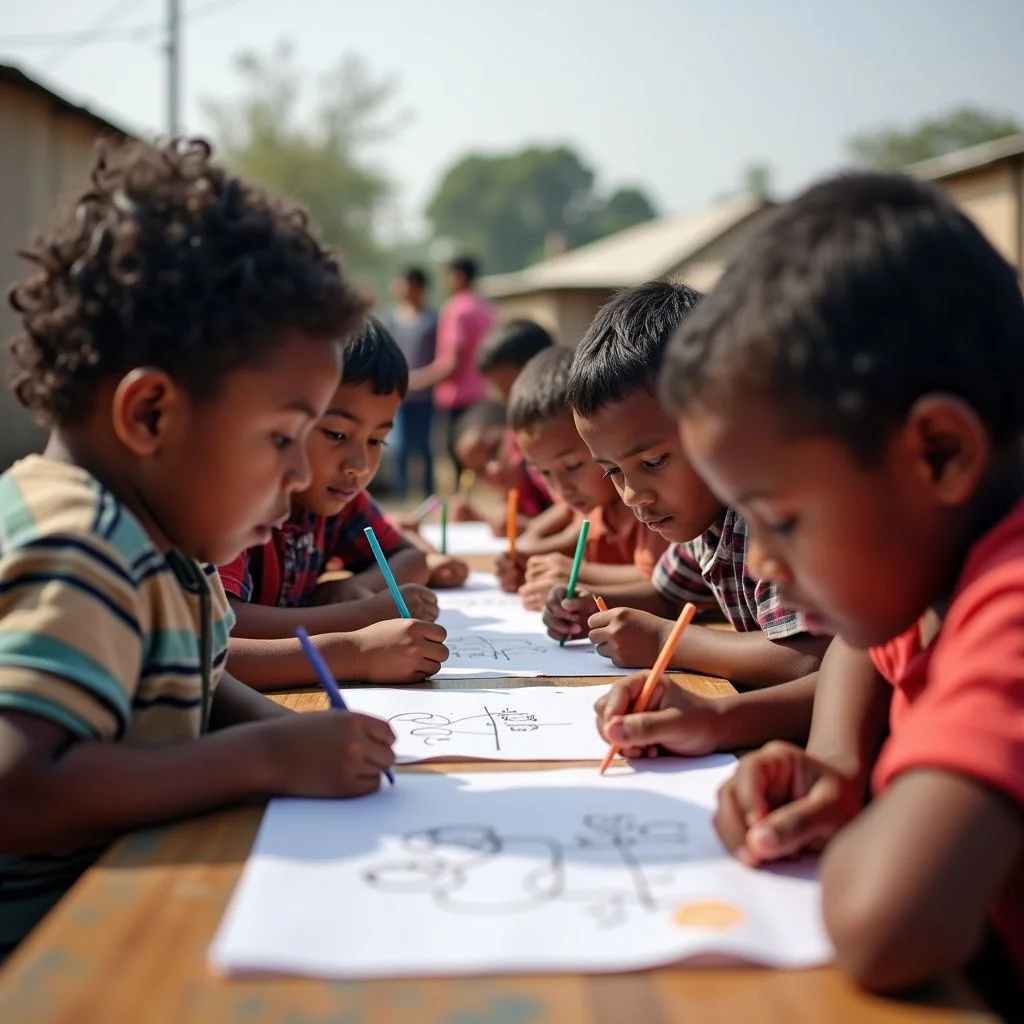
This first case study in the “Unveiling worlds: Centering child voices in humanitarian contexts case study series” employs drawing and child-led conversations to shed light on the lived realities of young Rohingya children in Bangladesh. This qualitative study aims to provide context-specific insights from children to inform policies and practices for governmental bodies, U.N. agencies, and implementing NGOs. The approach is designed to be replicable, low-cost, and adaptable to any protracted emergency context.
The study focuses on the voices of young Rohingya children, who are often overlooked in humanitarian efforts. By using drawing and child-led conversations, the research captures the unique perspectives and experiences of these children, offering a deeper understanding of their needs and challenges. This method not only respects the children’s agency but also ensures that their voices are central to the development and implementation of humanitarian programs and policies.
The insights gained from this research are already influencing how humanitarian programs are implemented. For instance, BRAC, a Global South-led international development agency, has adjusted its programs based on the findings. This adjustment highlights the practical impact of involving children in the design and evaluation of humanitarian interventions.
To ensure a broader impact, discussions have been initiated for program and policy modifications based on this research. These discussions involve the Early Childhood Development (ECD) in emergencies coordination group and the Refugee Relief and Repatriation Commissioner within the Bangladesh Ministry of Disaster Management and Relief. These efforts aim to integrate the children’s perspectives into broader humanitarian strategies, ensuring that policies are more responsive to the needs of displaced children.
The case study series, “Unveiling worlds: Centering child voices in humanitarian contexts,” is part of a broader initiative to center child voices in humanitarian contexts. This approach recognizes that children are not just passive recipients of aid but active participants who can provide valuable insights into their own experiences and needs. By centering their voices, humanitarian efforts can become more effective and responsive.
The qualitative nature of the study allows for a nuanced understanding of the children’s experiences. Through drawing and conversations, the study captures the emotional and psychological aspects of displacement, providing a holistic view of the children’s lives. This method is particularly useful in protracted emergency contexts where traditional data collection methods may not fully capture the complexity of the situation.
The replicability and adaptability of this approach make it a valuable tool for other humanitarian contexts. The low-cost nature of the method ensures that it can be implemented in resource-constrained environments, making it accessible to a wide range of organizations and agencies. The adaptability of the method allows it to be tailored to different cultural and contextual settings, ensuring that it remains relevant and effective.
The findings of this study underscore the importance of involving children in humanitarian efforts. By centering their voices, humanitarian programs can better address the unique needs and challenges faced by displaced children. This approach not only improves the effectiveness of humanitarian interventions but also empowers children, recognizing their agency and contribution to their own well-being.
The study highlights the need for a shift in how humanitarian efforts are designed and implemented. Traditional approaches often overlook the perspectives of children, leading to interventions that may not fully address their needs. By involving children in the process, humanitarian efforts can become more child-centered, ensuring that the voices of the most vulnerable are heard and acted upon.
The case study series aims to provide a comprehensive understanding of how child voices can be centered in humanitarian contexts. By offering context-specific insights and practical recommendations, the series seeks to influence policy and practice at various levels. The series is a valuable resource for policymakers, practitioners, and researchers interested in improving humanitarian responses to children in crisis.
The involvement of children in humanitarian efforts is not just a moral imperative but also a practical necessity. Children’s unique perspectives and experiences provide valuable insights that can enhance the effectiveness of humanitarian interventions. By centering their voices, humanitarian efforts can become more responsive to the needs of displaced children, ensuring that they receive the support they need to thrive.
The case study series emphasizes the importance of a child-centered approach in humanitarian contexts. This approach recognizes that children are active participants in their own well-being and that their voices are crucial in shaping effective humanitarian interventions. By centering child voices, humanitarian efforts can become more inclusive, responsive, and effective.
The study’s findings have practical implications for policymakers and practitioners. The insights gained from the research can inform the development of policies and programs that better address the needs of displaced children. By involving children in the process, humanitarian efforts can become more child-centered, ensuring that their voices are heard and acted upon.
The case study series provides a roadmap for centering child voices in humanitarian contexts. By offering context-specific insights and practical recommendations, the series seeks to influence policy and practice at various levels. The series is a valuable resource for policymakers, practitioners, and researchers interested in improving humanitarian responses to children in crisis.
La aproximación utilizada en este estudio no solo es aplicable al contexto de los rohingyas, sino también a otros entornos de emergencia prolongados. La replicabilidad y adaptabilidad del método lo convierten en una herramienta valiosa para otros contextos humanitarios. La naturaleza de bajo costo del método garantiza que pueda ser implementado en entornos con recursos limitados, lo que lo hace accesible a una amplia gama de organizaciones y agencias.
El estudio destaca la necesidad de un cambio de paradigma en los esfuerzos humanitarios. Las aproximaciones tradicionales a menudo pasan por alto las perspectivas de los niños, lo que lleva a intervenciones que pueden no abordar plenamente sus necesidades. Al involucrar a los niños en el proceso, los esfuerzos humanitarios pueden volverse más centrados en los niños, asegurando que las voces de los más vulnerables sean escuchadas y actuadas.
La importancia de un enfoque centrado en los niños
La participación de los niños en los esfuerzos humanitarios no es solo un imperativo moral, sino también una necesidad práctica. Las perspectivas y experiencias únicas de los niños proporcionan valiosas aportaciones que pueden mejorar la efectividad de las intervenciones humanitarias. Al centrar sus voces, los esfuerzos humanitarios pueden volverse más responsivos a las necesidades de los niños desplazados, asegurando que reciben el apoyo que necesitan para prosperar.
La serie de estudios de casos enfatiza la importancia de un enfoque centrado en los niños en contextos humanitarios. Este enfoque reconoce que los niños son participantes activos en su propio bienestar y que sus voces son cruciales para moldear intervenciones humanitarias efectivas. Al centrar las voces de los niños, los esfuerzos humanitarios pueden volverse más inclusivos, responsivos y efectivos.
Implicaciones prácticas de los hallazgos del estudio
Los hallazgos del estudio tienen implicaciones prácticas para los formuladores de políticas y los profesionales. Las aportaciones obtenidas de la investigación pueden informar el desarrollo de políticas y programas que aborden mejor las necesidades de los niños desplazados. Al involucrar a los niños en el proceso, los esfuerzos humanitarios pueden volverse más centrados en los niños, asegurando que sus voces sean escuchadas y actuadas.
La serie de estudios de casos proporciona una guía para centrar las voces de los niños en contextos humanitarios. Al ofrecer aportaciones específicas del contexto y recomendaciones prácticas, la serie busca influir en la política y la práctica a varios niveles. La serie es una valiosa fuente para los formuladores de políticas, los profesionales y los investigadores interesados en mejorar las respuestas humanitarias a los niños en crisis.
La aproximación utilizada en este estudio no solo es aplicable al contexto de los rohingyas, sino también a otros entornos de emergencia prolongados. La replicabilidad y adaptabilidad del método lo convierten en una herramienta valiosa para otros contextos humanitarios. La naturaleza de bajo costo del método garantiza que pueda ser implementado en entornos con recursos limitados, lo que lo hace accesible a una amplia gama de organizaciones y agencias.
El estudio destaca la necesidad de un cambio de paradigma en los esfuerzos humanitarios. Las aproximaciones tradicionales a menudo pasan por alto las perspectivas de los niños, lo que lleva a intervenciones que pueden no abordar plenamente sus necesidades. Al involucrar a los niños en el proceso, los esfuerzos humanitarios pueden volverse más centrados en los niños, asegurando que las voces de los más vulnerables sean escuchadas y actuadas.
La serie de estudios de casos enfatiza la importancia de un enfoque centrado en los niños en contextos humanitarios. Este enfoque reconoce que los niños son participantes activos en su propio bienestar y que sus voces son cruciales para moldear intervenciones humanitarias efectivas. Al centrar las voces de los niños, los esfuerzos humanitarios pueden volverse más inclusivos, responsivos y efectivos.
Implicaciones prácticas de los hallazgos del estudio
Los hallazgos del estudio tienen implicaciones prácticas para los formuladores de políticas y los profesionales. Las aportaciones obtenidas de la investigación pueden informar el desarrollo de políticas y programas que aborden mejor las necesidades de los niños desplazados. Al involucrar a los niños en el proceso, los esfuerzos humanitarios pueden volverse más centrados en los niños, asegurando que sus voces sean escuchadas y actuadas.
La serie de estudios de casos proporciona una guía para centrar las voces de los niños en contextos humanitarios. Al ofrecer aportaciones específicas del contexto y recomendaciones prácticas, la serie busca influir en la política y la práctica a varios niveles. La serie es una valiosa fuente para los formuladores de políticas, los profesionales y los investigadores interesados en mejorar las respuestas humanitarias a los niños en crisis.