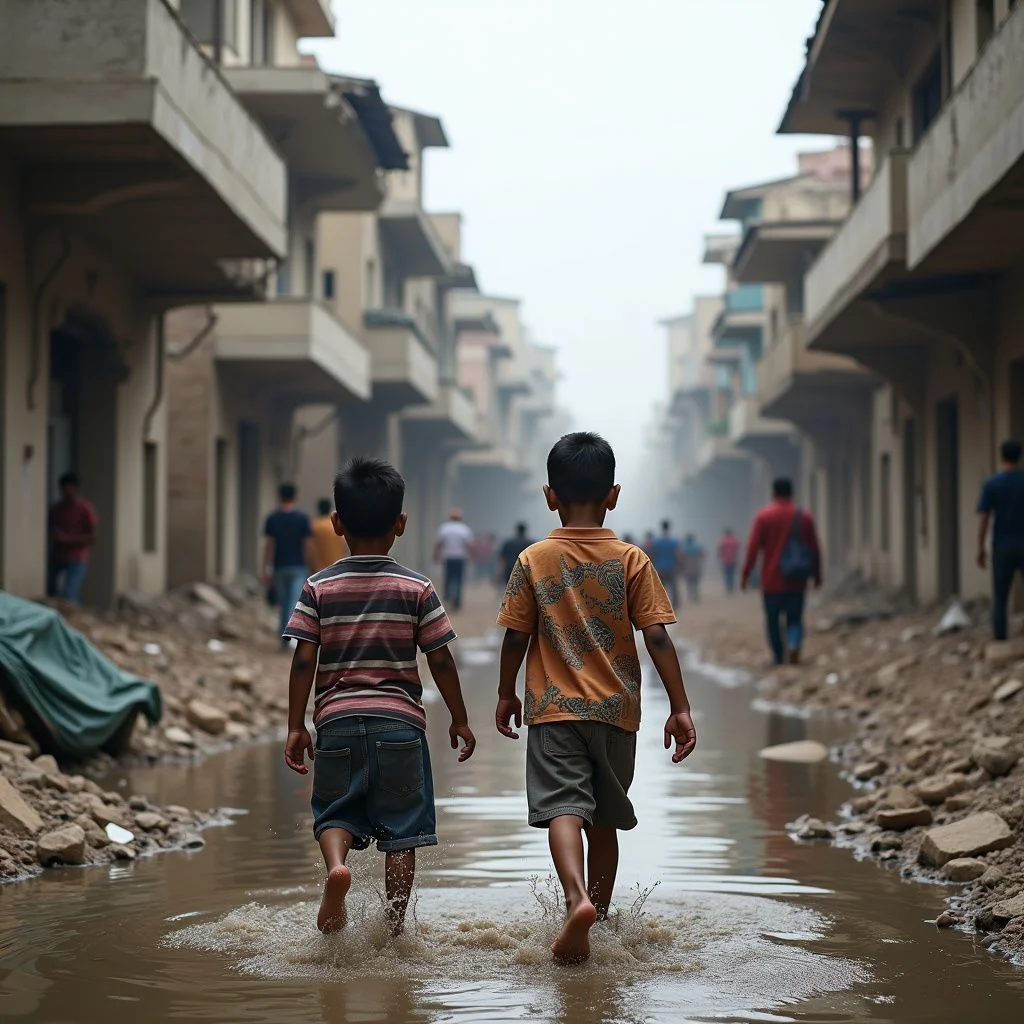
The Byron storm has hit the Gaza Strip, exacerbating the humanitarian crisis while the ‘second phase’ of Trump’s plan remains suspended between political calculations and security uncertainties. The storm, which brought intense rain and strong winds, has caused further deaths and destruction. In less than 48 hours, two newborns and a nine-year-old child died from hypothermia in tents that do not provide adequate protection from the water and mud. The civil protection agency has received thousands of requests for assistance, while the United Nations is racing against time to transfer part of the population to the interior, where the wind gusts are less devastating. The Palestinian enclave is facing the most powerful meteorological event in years in the worst possible conditions to face it. According to UN data, over 80% of the Strip’s buildings have been destroyed or damaged, and the authorities advise against seeking shelter in the remaining structures, which are still standing but are at risk of collapse.
Israel blocks the entry of construction materials, increasing the risk of flooding for a population of around 795,000 displaced people. The storm has not stopped Israeli bombings, which have targeted the Jabaliya refugee camp in the south, causing the death of a woman and injuring others. The humanitarian crisis is taking place in a dramatic context for the Gazawi population, which has found some relief with the ceasefire, but not the peace they had hoped for. Almost two months after the ceasefire came into effect, questions are growing about the transition to the second phase of Trump’s plan, which provides for the complete withdrawal of Israeli troops from Palestinian territory, the disarmament of Hamas, and the creation of a transitional authority and an international security force.
The circumstances on the ground in the enclave seem to have changed. Hamas governs the western part of Gaza with an iron fist, and the countries mentioned as possible members of the international stabilization force are not rushing to send their troops to disarm the organization, considering it a suicidal mission. A situation that could be advantageous for Israeli Prime Minister Benjamin Netanyahu, who has already obtained the return of 20 living hostages and the bodies of all dead hostages, except for police officer Ran Gvili. A return to limited combat, with Hamas militarily weak and without hostages to use as a bargaining chip, could benefit the premier and his political agenda in a delicate election year.
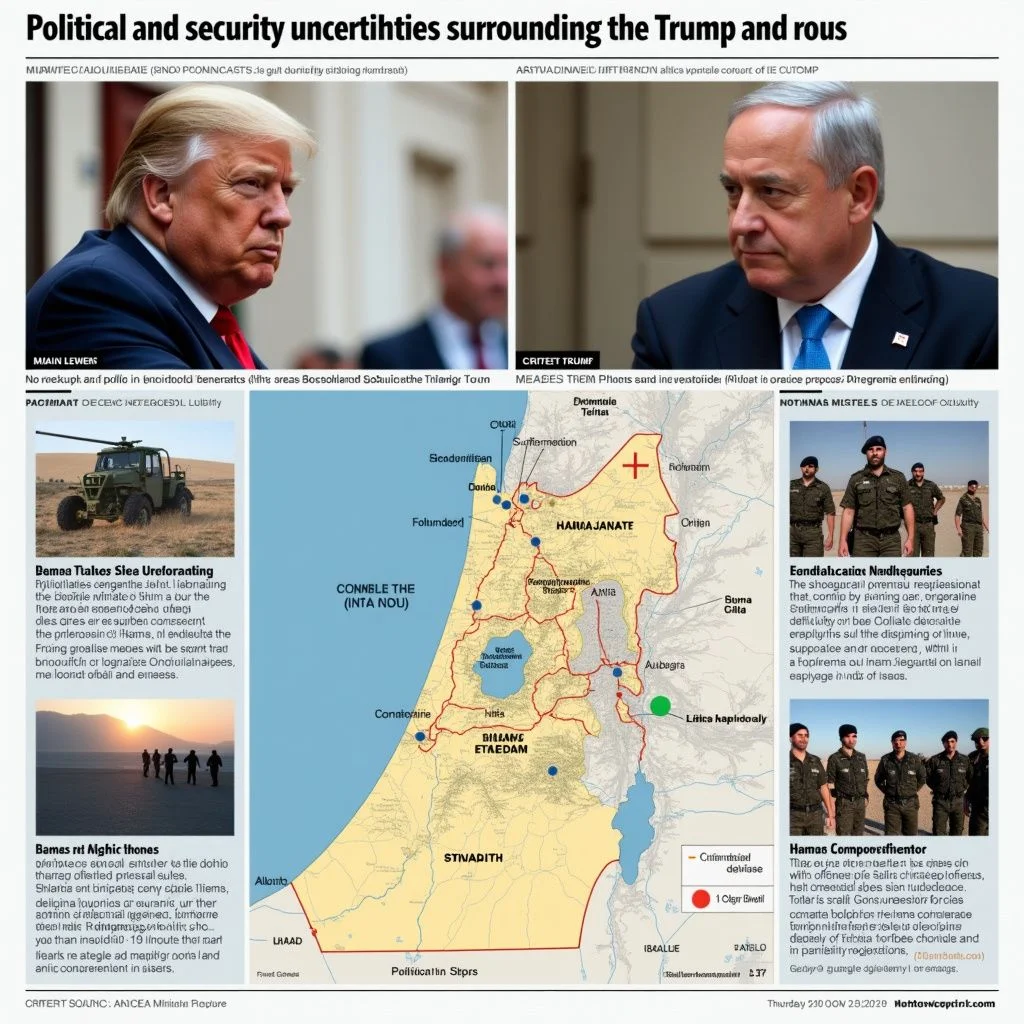
Netanyahu’s interests, however, do not seem to align with those of the main architect of the ceasefire between Israel and Hamas: Donald Trump. The two are expected to meet at the end of the month at Mar-a-Lago, while the US president is searching for an international success to claim, especially after the impasse on the Ukraine peace plan and the increasingly tense relations with European allies, concerned about the accommodating approach towards Vladimir Putin. Gaza appears to Washington as a more promising terrain for building a narrative of ‘progress’ than Kiev. Trump is eager to announce the transition to the next phase of the plan, which should be implemented between Christmas and mid-January. It is unlikely that Trump will allow Netanyahu to resume combat in Gaza, while his goal is to form the Palestinian technocrat government and the international stabilization force that should implement the ‘Phase two’.
However, in these conditions, the problem of security and the disarmament of Hamas will remain even after their establishment. In the talks between Israelis and Americans, the disarmament of the Islamist group represents only a part of the discussion. At the center are also the prospects of ‘business’ related to reconstruction. This week, the United States is said to have asked Israel to pay for the removal of rubble from the Gaza Strip and to assume responsibility for the massive clearance operation. According to Israeli media, Qatari Prime Minister Mohammed Abdulrahman Al Thani has clarified that he has no intention of paying the bill to remove them. “We will not be the ones to sign the check to rebuild what others have destroyed,” he declared. “When it comes to Gaza, it is Israel that has razed this land to the ground.”
In Gaza, there are over 68 million tons of debris, and Trump’s peace plan does not clarify who should remove them. Despite the ceasefire, people are still dying in Gaza. After the Israeli army’s blows, the population of the Strip has been hit by the cold and the heavy rains of these days, which risk exacerbating a situation that is already catastrophic. There are no safe places, only tents and makeshift shelters among the rubble. Aid is struggling to enter, due to the restrictions imposed by Israel, and what arrives is not enough to meet the enormous needs of a population exhausted by two years of war, destruction, and hunger. Against this backdrop, the peace plan is also struggling to take off, while people look on with a mix of hope and skepticism at the end-of-year meeting between Trump and Netanyahu.
La tormenta Byron ha golpeado la Franja de Gaza, agravando la crisis humanitaria mientras que el “fase dos” de Trump permanece suspendido entre cálculos políticos y incertidumbres de seguridad. La tormenta, que trajo intensas lluvias y fuertes vientos, ha causado muertes y destrucción adicionales. En menos de 48 horas, dos recién nacidos y un niño de nueve años murieron de hipotermia en tiendas que no ofrecen protección adecuada del agua y la lodo. La agencia de protección civil ha recibido miles de solicitudes de rescate, mientras que las Naciones Unidas están corriendo contra el tiempo para transferir parte de la población al interior, donde los vientos de tormenta son menos devastadores. La franja de Gaza se enfrenta al evento meteorológico más poderoso en años en las peores condiciones posibles para enfrentarlo. Según los datos de la ONU, más del 80% de los edificios de la franja han sido destruidos o dañados, y las autoridades advierten contra buscar refugio en estructuras que aún están en pie pero precarias y en riesgo de derrumbe.
Israel ha bloqueado la entrada de materiales de construcción, aumentando el riesgo de inundación para una población de alrededor de 795,000 personas desplazadas. La tormenta no ha detenido los bombardeos israelíes, que han objetivo el campamento de refugiados de Jabaliya en el sur, causando la muerte de una mujer y heriendo a otros. La crisis humanitaria se está desplegando en un contexto dramático para la población de Gaza, que ha encontrado algún alivio con el cese al fuego, pero no la paz que esperaban. Casi dos meses después de la entrada en vigor del alto el fuego, están creciendo las preguntas sobre la transición a la segunda fase del plan de Trump, que prevé la retirada completa de las tropas israelíes del territorio palestino, el desarme de Hamas y la creación de una autoridad transicional y una fuerza de seguridad internacional.
La situación en el suelo de la franja parece haber cambiado. Hamas gobierna la parte occidental de Gaza con un puño de hierro, y los países mencionados como posibles miembros de la fuerza de estabilización internacional no están apresurando a enviar sus tropas para desarmar la organización, considerándolo una misión suicida. Una situación que podría ser beneficiosa para el primer ministro israelí Benjamin Netanyahu, quien ya ha obtenido el regreso de 20 rehenes vivos y los cuerpos de todos los rehenes fallecidos, excepto el policía Ran Gvili. Un regreso a la lucha limitada, con Hamas militarmente débil y sin rehenes para usar como moneda de cambio, podría beneficiar al premier y su agenda política en un año electoral delicado.
Las intereses de Netanyahu no parecen alinearse con los de la principal arquitecta del alto el fuego entre Israel y Hamas: Donald Trump. Los dos están esperados a reunirse a finales del mes en Mar-a-Lago, mientras que el presidente estadounidense busca un éxito internacional para reclamar, especialmente después del impasse en el plan de paz de Ucrania y las relaciones cada vez más tensas con aliados europeos, preocupados por la aproximación conciliadora con Vladimir Putin. Gaza parece a Washington como un terreno más prometedor que Kiev para construir una narrativa de “progreso”. Trump está ansioso por anunciar la transición a la siguiente fase del plan, que debería implementarse entre Navidad y mediados de enero. Es poco probable que Trump permita a Netanyahu reanudar la lucha en Gaza, mientras que su objetivo es formar el gobierno tecnócrata palestino y la fuerza de estabilización internacional que debería implementar la “Fase dos”.
Sin embargo, en estas condiciones, el problema de la seguridad y el desarme de Hamas seguirá existiendo incluso después de su establecimiento. En las conversaciones entre israelíes y estadounidenses, el desarme del grupo armado islamista representa solo una parte de la discusión. Al centro están también las perspectivas para “negocios” relacionados con la reconstrucción. Esta semana, Estados Unidos habría pedido a Israel que pagara por la eliminación de escombros de la Franja de Gaza y asumiera la responsabilidad de la operación de limpieza masiva. Según los medios israelíes, el primer ministro de Catar, Mohammed Abdulrahman Al Thani, ha aclarado que no tiene la intención de pagar la factura para eliminarlos. “No seremos los que firmen el cheque para reconstruir lo que otros han destruido”, declaró. “Cuando se trata de Gaza, es Israel el que ha arrasado esta tierra con el suelo”.
En Gaza, hay más de 68 millones de toneladas de escombros, y el plan de paz de Trump no aclara quién debería eliminarlos. A pesar del alto el fuego, la gente sigue muriendo en Gaza. Después de los golpes del ejército israelí, la población de la franja ha sido golpeada por el frío y las intensas lluvias en los últimos días, que pueden agravar una situación ya catastrófica. No hay lugares seguros, solo tiendas y refugios improvisados entre los escombros. La ayuda está luchando por entrar, debido a las restricciones de Israel, y lo que llega no es suficiente para satisfacer las enormes necesidades de una población exhausta por dos años de guerra, destrucción y hambruna. Contra este fondo, el plan de paz también está luchando por despegar, mientras se mira con esperanza y escepticismo la reunión de fin de año entre Trump y Netanyahu.