
Globalization
Donald Trump’s Digital Mercantilism
Donald Trump seeks to protect large US tech companies from European regulations, while the EU demands accountability from digital companies.

Donald Trump seeks to protect large US tech companies from European regulations, while the EU demands accountability from digital companies.

New tariffs raise residential construction costs in the U.S., reaching $30 billion in investment, exacerbating the housing crisis with high prices and rents, despite affordable housing policies.
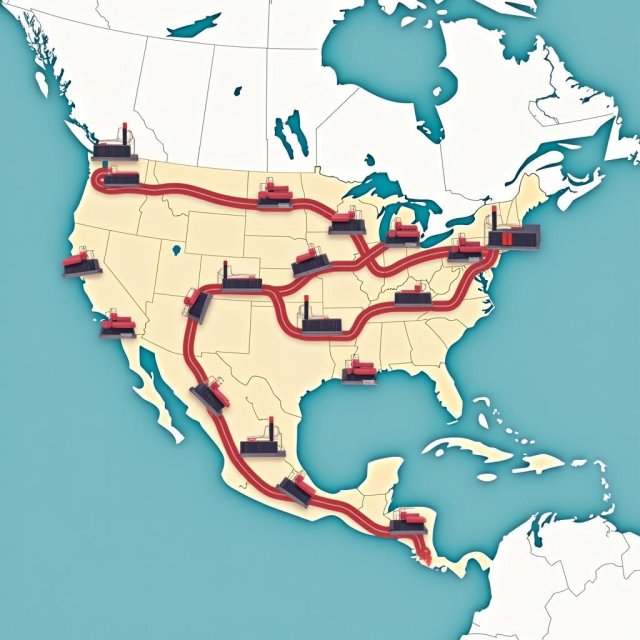
The document analyzes whether China evades US tariffs through transshipments via Mexico and Canada, incorporation into North American supply chains, and investment in both countries. Evidence of evasion is found mainly through Mexico, and to a lesser extent, Canada. Adjusting trade data for price increases, it is concluded that while evasion is reduced, evidence of this behavior still persists.

President Trump declared a national emergency due to trade deficits, using the International Emergency Economic Powers Act of 1977 to impose tariffs. The case has reached the Supreme Court, questioning the legality of his actions. The IEEPA, heir to the 1917 Trading with the Enemy Act, has been criticized for its prolonged use and the difficulty in ending emergencies.

The Supreme Court will decide whether the International Emergency Economic Powers Act allows the tariffs imposed by the White House, which could alter the balance of power between Congress and the president, affecting the stability of U.S. fiscal and trade policy.