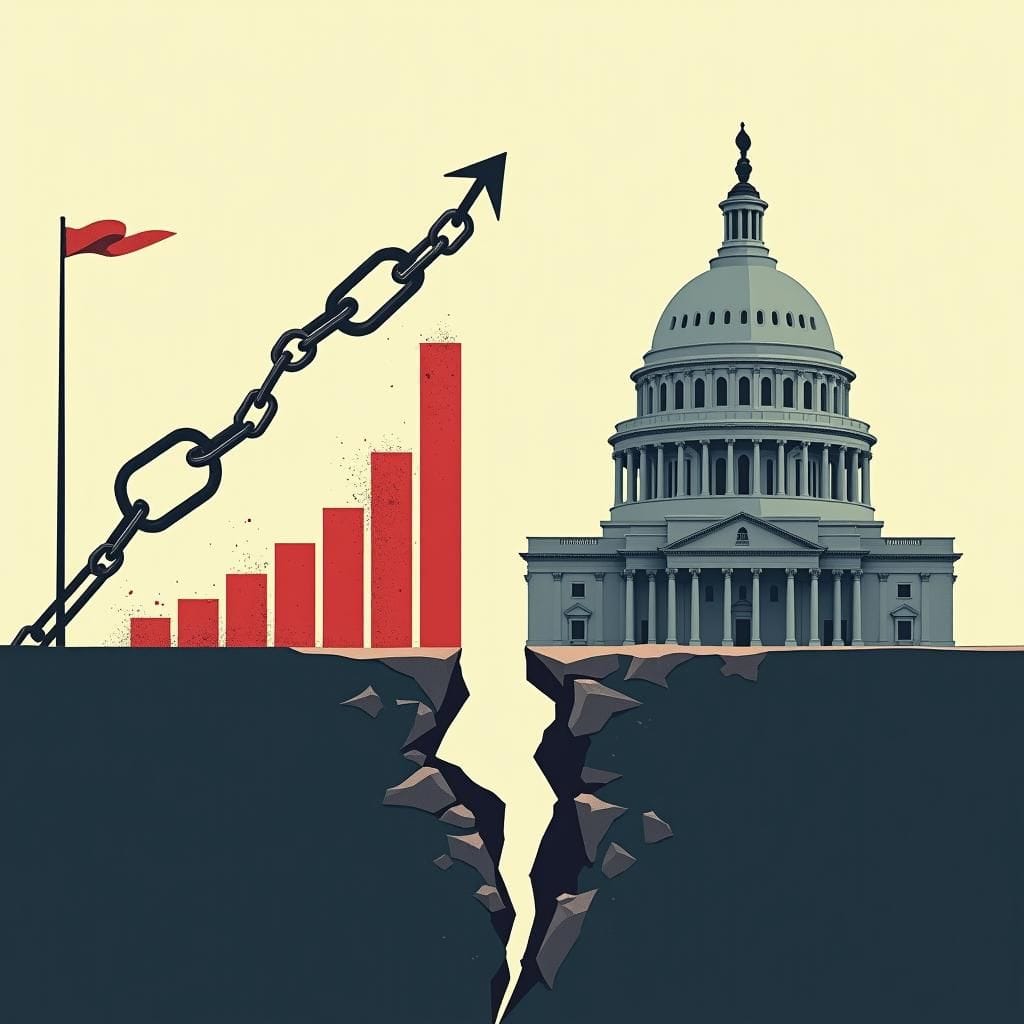
Trust is the foundational element that enables confidence among multiple actors; it offers a pathway for honesty, open communication, and reliability in mutual understanding. Communities view themselves as coequal partners to elevate the knowledge base and priorities for policymakers and the policymaking process.
The Role of Trust, Public Data, and Government
Stakeholder discussions, including government and community-based organizations, highlighted that trust is a powerful factor in successful community-led data initiatives. Trust between all stakeholders in the data collection process is necessary for facilitating sustainable partnerships that advance the well-being of communities.
Well-being reflects the capacity of communities to engage in meaningful actions that aim to improve society and enhance the assets of their family, neighborhood, and community.
Trust across almost all levels of society has diminished. The 2025 Edelman Trust Barometer found that 61% of respondents had a moderate or higher sense of grievance against government and the rich. This grievance erodes trust primarily in government (25%), media (34%), business (42%), and NGOs (45%).
In the United States, this is particularly evident at the federal government level, specifically in institutions like Congress, the Executive branch, and other federally regulated departments.
As trust in the federal government has dwindled, so too has the public’s faith in national media, especially with the rise of social media misinformation, presidential attacks on news organizations, and increasing partisan bias.
One of the emerging challenges within this larger trend is a similar decrease in trust across all aspects of data collection in the United States.
A key dimension to this trend has been a rising concern regarding the protection of Americans’ personal data.
Research from Pew indicates that since 2019 there has been a rise in concern among Americans about how the government uses their data, particularly among Republicans.
Stakeholder conversations with researchers, nonprofit and advocacy organizations, city and municipal governments, and data and research hubs identified concerns with how recent actions by the federal government may advance erosion in trust in federal data.
The temporary removal of some datasets has generated worry among researchers about the prospect of wider censorship of data, especially as it relates to any data that tracks race or other social identities.
Experts have identified that there will be consequences associated with the shift in how data is managed by the federal government.
For example, it has been noted that the federal government has reduced the public’s trust in safely sharing their attitudes toward certain policies through surveys and focus groups, which will have long-term consequences on data collection.
This, coupled with severe cuts in funding that supports research efforts, sends a strong message that data, particularly community-led data, is not valued in federal policymaking.
This creates an environment that is highly competitive due to scarce resources, not an ideal environment to establish and rebuild trust with communities.
The corrosion of trust driven by the federal government’s lack of desire and capacity to protect Americans’ personal data, or to track important outcomes by race and other identities, will have significant consequences.
The most direct impact of data censorship will be on the collective ability to identify racial and ethnic inequalities across important outcomes, including health.
An important dataset that’s been impacted is the Center for Disease Control’s Behavioral Risk Factor Surveillance System (BRFSS), which is one of the most used datasets among public health and health policy scholars interested in the identification of inequalities in healthcare access, disease, and injury.
The potential loss of this resource would stunt researchers’, communities’, and policymakers’ abilities to address inequalities through data-driven policy.
The U.S. Census count, a process that requires Americans to trust the federal government with their personal information, would be significantly impacted by an erosion of institutional trust.
Although certain administrations may have ended, the setbacks during previous administrations could lead to potential hardships in data collection.
For instance, previous pushes to include citizenship status in the Census led to undercounts of certain communities, which impacted the resources granted to predominantly affected counties.
Therefore, Americans’ high concerns about data security are expected to have a pronounced impact on the next Census count.
To address the deficit of trust that community-based organizations, underserved communities, and the broader populace have in the government, several steps can be taken.
Partnerships with local organizations are effective for establishing trust throughout communities.
Municipal stakeholders specifically noted that they seek to partner with community organizations that have pre-existing connections with communities.
These intermediary organizations ease the process of building bridges of trust between communities and local government.
Community-led data collection is the most successful when spearheaded by organizations who already convene with community members for discussions and education.
This highlights that progress toward formal data collection is much easier after trust is in place.
Para fomentar la confianza en las comunidades, los estakeholders están de acuerdo en que una aproximación efectiva es garantizar que los gobiernos municipales y de ciudad centren en la transparencia al construir herramientas de recolección y difusión de datos. Un estakeholder municipal ha hecho la transparencia en la recolección de datos y políticas informadas por datos la base de su trabajo con las comunidades, logrando exitosamente la creación de una cultura de transparencia a nivel de ciudad. Al proporcionar acceso a una red de datos abiertos, independientemente de cómo tal información refleje sobre la ciudad, junto con la realización de capacitaciones de datos con líderes comunitarios y la colaboración con empresas locales, los estakeholders han reforzado sus valores de abierto y responsabilidad gubernamental. Mientras que otras ciudades y gobiernos municipales buscan llenar las brechas de datos, principalmente atribuidas a la manipulación y eliminación de conjuntos de datos por parte del gobierno federal, estas iniciativas locales han permanecido centradas en la transparencia.
Enfoque de los servicios públicos
Los gobiernos deberían buscar entregar servicios públicos a través de un enfoque colaborativo, en el que las experiencias vividas y las perspectivas de las personas afectadas estén activamente informando y influyendo en las intervenciones. Los gobiernos y la comunidad de política pública deberían no solo buscar difundir investigaciones y datos sino también mostrarlo de una manera accesible y fácil de entender, de manera que haga una diferencia real en el bienestar de la comunidad.
Conexiones propósitas
Para fomentar la confianza, es crítico desarrollar conexiones propósitas que centren en las necesidades de los residentes. Los miembros del servicio civil local podrían asignar tiempo equivalente completo (FTE) para que el personal asista a reuniones de asociaciones de vecinos o reuniones mensuales de organizaciones sin fines de lucro para aprender sobre los problemas locales presupuestos. Los funcionarios de gobierno municipal y de ciudad deberían no solo depender de las comunidades para asistir a las reuniones que organizan sino también crear varias oportunidades para que las comunidades accedan y se familiaricen con el proceso de toma de decisiones.
Estrategias para la confianza
Las comunidades comprenden la profundidad de los problemas que amenazan la salud y la seguridad de sus miembros o residentes. Planificar para abordar o asistir a las comunidades en abordar estos desafíos construye relaciones a largo plazo basadas en estrategias para solucionar y prevenir problemas. Estas estrategias ofrecen oportunidades regulares para el co-diseño de programas y servicios de calidad y efectivos.
Elementos clave para la confianza relacional entre un conjunto diverso de estakeholders
Los elementos clave para construir y medir la confianza relacional entre un conjunto diverso de estakeholders incluyen el respeto, la construcción de una visión compartida y la creación de una cultura de escucha. Estos principios son aplicables a diferentes dominios y la esfera de la política en general, particularmente en lo que respecta a la necesidad de respeto, la construcción de una visión compartida y la creación de una cultura de escucha. Los intentos de avanzar en los objetivos gubernamentales a través de diferentes actores a menudo fallan debido a prioridades desalineadas y intereses en competencia. Sin embargo, cuando los intereses compartidos se convierten en la base fundamental, más alianzas mutuamente beneficiosas pueden surgir. La conexión de los esfuerzos gubernamentales a un nivel alto con entidades locales confiables y estakeholders de la base puede ayudar a impulsar soluciones de datos basadas en la comunidad y colaborativas.
Acuerdos comunes y perspectivas marginadas
Buscar un terreno común y acuerdos compartidos sobre los beneficios y desventajas de la difusión pública de datos puede ayudar a avanzar en las reformas y incluir perspectivas típicamente marginadas en las decisiones y trazar un camino sostenible hacia adelante.