It is no surprise that nations are embracing and legislating artificial intelligence. As of the latest count, 54 countries, ranging from major powers like China, India, and the United States to smaller nations such as Uganda, Armenia, and Latvia, have published their own national AI plans. These plans vary widely in focus and scope. Some countries, like China, prioritize defense-related initiatives, while others, such as Switzerland, emphasize societal betterment. The plans also differ in their approach to governance and data privacy. Some offer comprehensive guidelines, while others largely ignore these critical aspects.
The United States has been proactive in developing its AI strategy. The «Computer Science For All Act,» introduced in 2023, aims to enhance computer science education by awarding grants to various entities. The Partnership for Global Inclusivity on AI (PGIAI) is an example of a consortium model, bringing together the U.S. Department of State, major tech companies, and international partners to ensure the responsible development of AI, particularly for addressing quality of life issues in developing countries. Additionally, under the former Biden administration, the United States established a partnership with India to share AI infrastructure investments, a move that aligns with recommendations for collaborative development.
Research has shown that the U.S. federal government’s spending on AI is widely dispersed, indicating a nascent but immature market. However, recent analyses reveal a sharp rise in AI spending, with a significant focus on the U.S. Department of Defense (DoD). The DoD’s investment in AI has grown to such an extent that other agencies’ spending has become relatively insignificant by comparison.
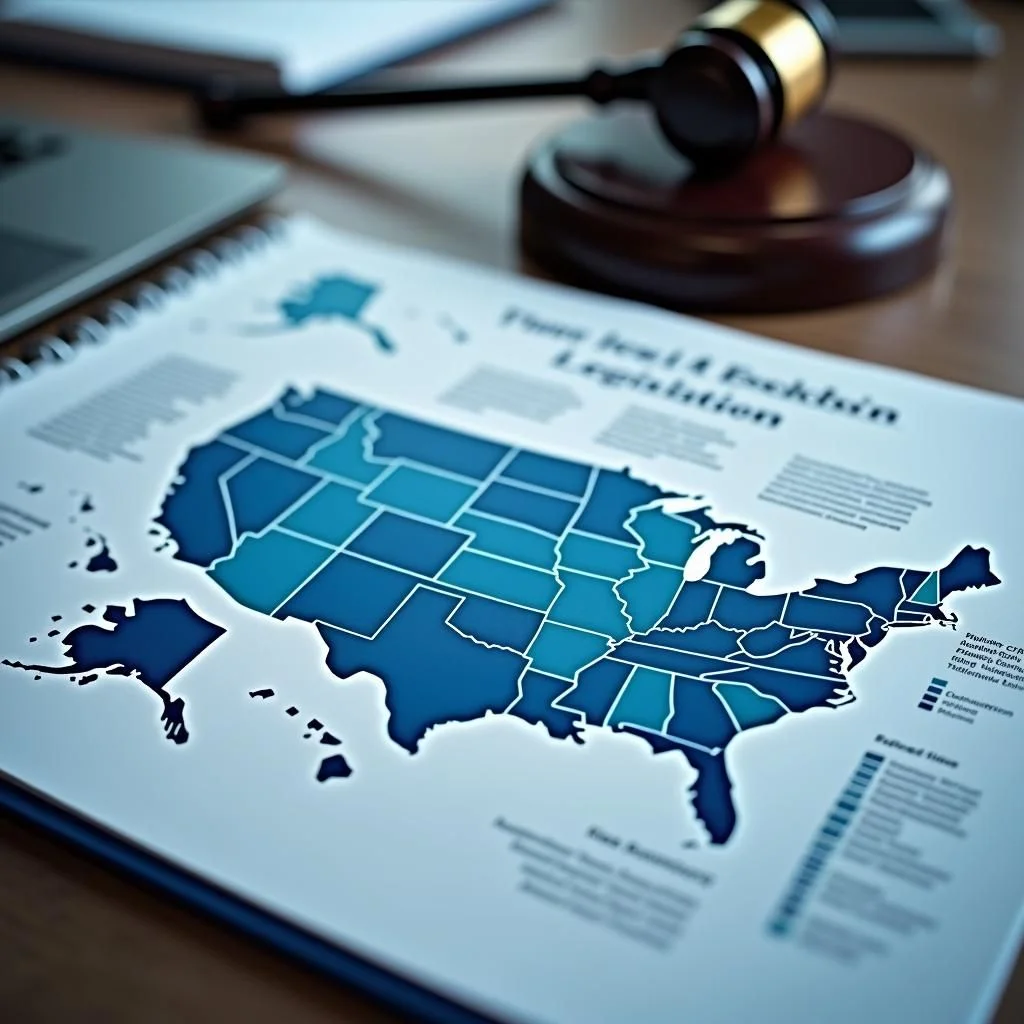
The race to implement AI has now shifted to the state level, with 34 states actively studying AI. Of these, 24 states have formed specific groups to study AI, while 10 states have delegated the task to existing committees. Additionally, 47 states have introduced AI-related legislation in 2025, with New York leading in the number of introductions and Texas leading in the number of bills passed.
State Legislation on AI
The focus of state legislation on AI is primarily on protecting citizens from misuse. Key themes in the proposed legislation include prohibiting harmful uses of AI and ensuring transparency in AI operations. Democrats have been more proactive in pushing AI governance, consistent with their broader tech-regulation tendencies. Republicans have also introduced many AI bills, often focusing on issues like banning harmful uses of AI or promoting innovation. Election deepfake bans and measures against child pornography have seen bipartisan interest. Sweeping regulatory bills, imposing strict obligations on AI developers or businesses, have mostly come from Democrats in states like California, New York, and New Jersey. Republican-led states often favor lighter-touch approaches, with Texas failing to pass a high percentage of its proposed bills.
Major Themes in 2025 Bills
Several major themes emerge from the 2025 bills:
- Nonconsensual Intimate Imagery (NCII)/Child Sexual Abuse Material (CSAM): 53 bills were introduced, focusing on the removal of NCII and synthetic deepfakes. Maryland’s TAKE IT DOWN Act is a notable example, requiring online platforms to establish processes for removing NCII. Most of these bills have significant penalties and have largely died in committee.
- Elections: 33 bills were introduced, primarily focusing on the disclosure of AI use in political communications. Examples include New York’s bill requiring disclosure of synthetic content in political ads and Massachusetts’ bill prohibiting the use of deepfakes to deceive voters.
- Generative AI Transparency: 31 bills were introduced, addressing concerns about interactions with chatbots. Hawaii and Massachusetts proposed legislation requiring clear notification when consumers interact with AI. These bills are still in various stages of the legislative process.
- Automated Decision-Making Technology (ADMT)/High-Risk AI: 29 bills were introduced, focusing on safeguards to protect citizens from unintended consequences of AI systems. Most bills are modeled after Colorado’s AI Act, which mandates transparency, accountability, and consumer rights.
- Government Use: 22 bills were introduced, covering a range of issues from AI usage plans to human oversight. Georgia’s AI Accountability Act and Montana’s bill limiting AI use by government are notable examples. Most bills aim to protect citizens from AI-driven governance decisions.
- Employment: 13 bills were introduced, focusing on protecting employees from AI decision-making. Illinois and Pennsylvania have bills requiring employers to notify applicants about AI use in the hiring process. California has also introduced limitations on AI-based workplace surveillance.
- Health: 12 bills were introduced, addressing AI’s role in healthcare decisions. California’s bill focuses on protecting against AI systems making treatment decisions, while Illinois’ bill prohibits licensed professionals from using AI for therapeutic decisions. Indiana requires disclosure if AI is used in healthcare decisions.
La mayoría de las leyes propuestas en 2025 por los estados se centran en proteger a los ciudadanos del potencial abuso de la inteligencia artificial. Los estados reconocen la necesidad de actuar sobre la inteligencia artificial, aunque con enfoques variados. Se encuentra terreno común en áreas donde se ve o se considera ampliamente un problema el daño tangible, como el CSAM, la NCII y las elecciones. Hay incertidumbre a nivel federal, con republicanos en el Senado de los EE. UU. que recientemente propusieron un moratorio de 10 años sobre los estados que aprueben regulaciones de inteligencia artificial, aunque esta medida fue eventualmente retirada. El gobierno federal está monitoreando de cerca la legislación estatal, y el Plan de Acción de la Inteligencia Artificial ha encargado a la FCC que evalúe el impacto de las leyes estatales. Hasta que la ley federal lo prohíba, los estados están esperando continuar presionando con fuerza en la legislación de la inteligencia artificial para abordar las preocupaciones de los ciudadanos. El tema es demasiado urgente para que los estados se queden de pie mientras el gobierno federal deliberaba.
Reacciones de los estados y el gobierno federal
Los estados están trabajando en legislación para abordar las preocupaciones de los ciudadanos sobre la inteligencia artificial. Hasta que la ley federal prohíba la regulación estatal, los estados están esperando continuar presionando con fuerza en la legislación de la inteligencia artificial. El gobierno federal está monitoreando de cerca la legislación estatal y ha encargado a la FCC que evalúe el impacto de las leyes estatales. La incertidumbre a nivel federal ha llevado a algunos estados a tomar medidas más agresivas para abordar las preocupaciones de los ciudadanos.