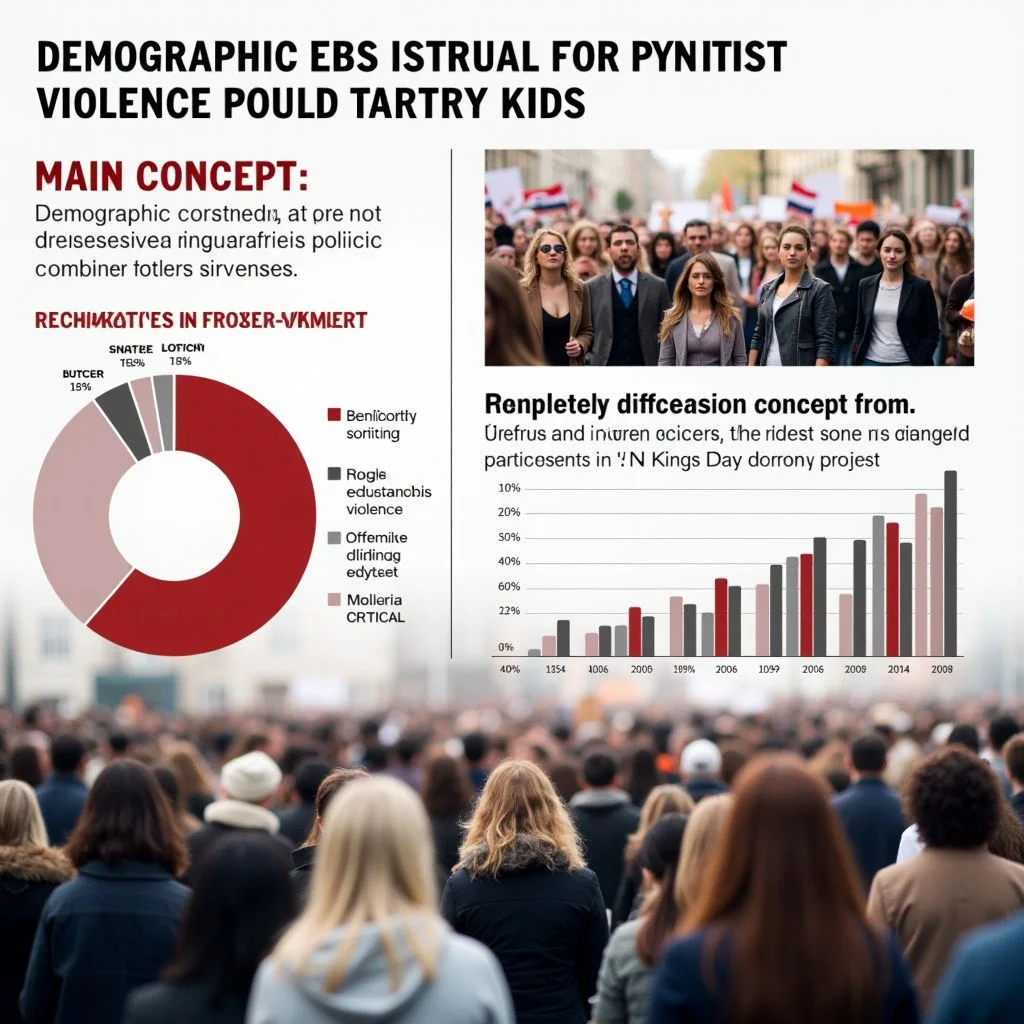
Record-breaking protests have been a defining feature of the second Trump presidency. While these protests have been overwhelmingly peaceful, there has been a notable trend in the support for political violence among protest participants, at least until the most recent round of anti-Trump protests in October 2025.
Following the first No Kings Day of protest in June, “No Kings 2.0” attracted even greater attendance, with millions of people participating in events across over 2,700 locations in the United States. The organizing coalition reported that it was one of the largest single days of protest in U.S. history.
To understand who is participating in this wave of protests against the second Trump administration, survey data has been collected from a random sample of participants at all large-scale demonstrations that took place in 2025. At the second No Kings Day in October, data was collected from 348 people as they rallied on Pennsylvania Avenue in Washington, D.C., representing a 75% response rate.
This methodology and sample size are consistent with research studying protests. Participants in the protest were predominantly female, white, highly educated, and had voted for the Democratic candidate in the most recent presidential election.
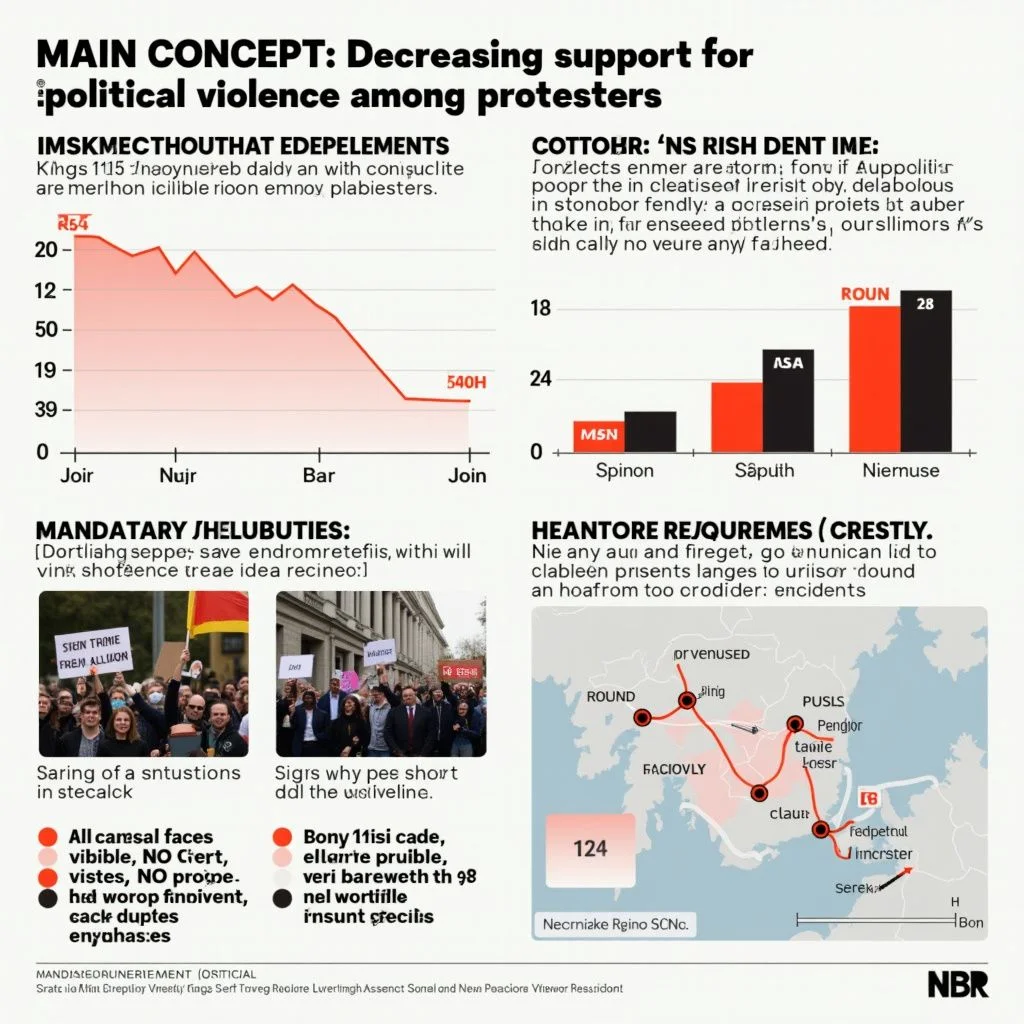
Although the demographic makeup of protesters has remained consistent, one feature has changed remarkably over this year: support for political violence. The survey includes a question that asks respondents to indicate their degree of agreement with the statement: “Because things have gotten so far off track, Americans may have to resort to violence to save our country.”
While data collected over the first year of the second Trump administration showed a consistent upward trend in support for political violence, a substantial drop was observed at No Kings Day 2.0. Moreover, the proportion of the crowd who rejected political violence surged to 59%.
The survey data cannot determine what caused the gradual growth and then abrupt decline in support for violence among protesters this year. However, it is worth noting that the second No Kings Day took place after a summer filled with high-profile acts of political violence against public officials.
In June, a gunman fatally shot Minnesota Democratic lawmaker Melissa Hortman and her husband and wounded Democratic state Senator John Hoffman and his wife. Three months later, conservative activist and media figure Charlie Kirk was murdered.
In the wake of these heinous acts, political violence became a topic of heated national conversation. More importantly, the prospect of violence ceased to be an abstract or hypothetical concept and became a grisly reality. It is not a coincidence that after these real acts of violence, a significant decline in support for political violence was seen in surveys of protesters.
In addition to surveying participants at large-scale protest events, national sentiment has been monitored through an annual survey that asks the same question to a nationally representative sample. This survey was administered two weeks before the November election, coinciding with the days directly following No Kings Day 2.0.
The data show that support for political violence has held remarkably constant over the past year: overall support was at 21% in 2024 and is at 20% in 2025. However, when the data is broken down by political ideology, notable differences emerge: support for political violence by left-leaning Americans has gone up 9% to 26%, and support by right-leaning Americans has fallen by 12% to 17%.
These patterns are similar to findings from other surveys that ask slightly different questions. A stated belief that political violence may be necessary is not a measure of intention to commit violence. Nevertheless, these findings provide clear evidence about public sentiment regarding how well democracy is working and how opinions have shifted.
The data from the general public show higher support for violence among left-leaning individuals than among participants at progressive protests. This finding suggests that people who choose to join peaceful protests may be using them as an outlet for their political dissatisfaction, rather than supporting the notion that political violence may be necessary to save the country.
It is also important to remember that, while political violence on the left outnumbers violence from the right in 2025, the actual levels remain much lower than historic periods of violence. Given these data, it is unclear where the public sentiment is headed, but these large shifts should not be ignored.