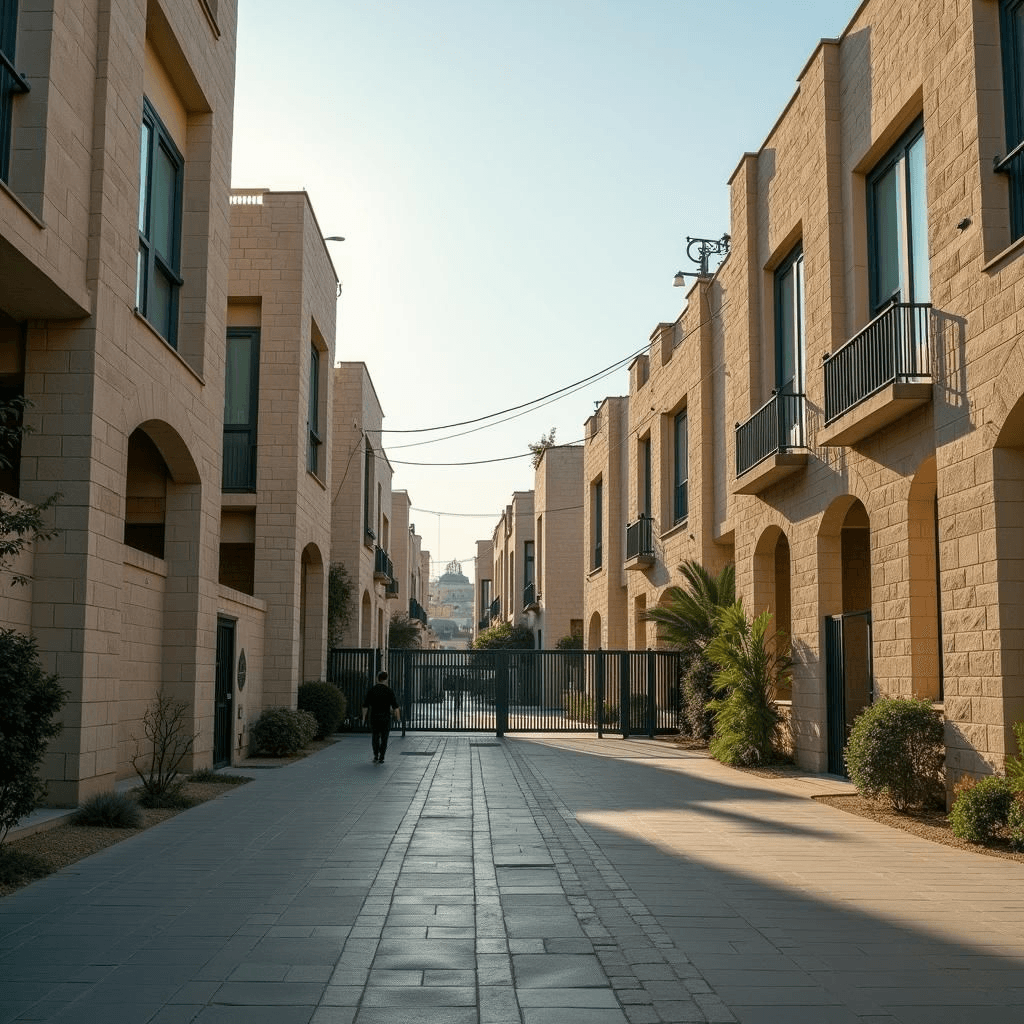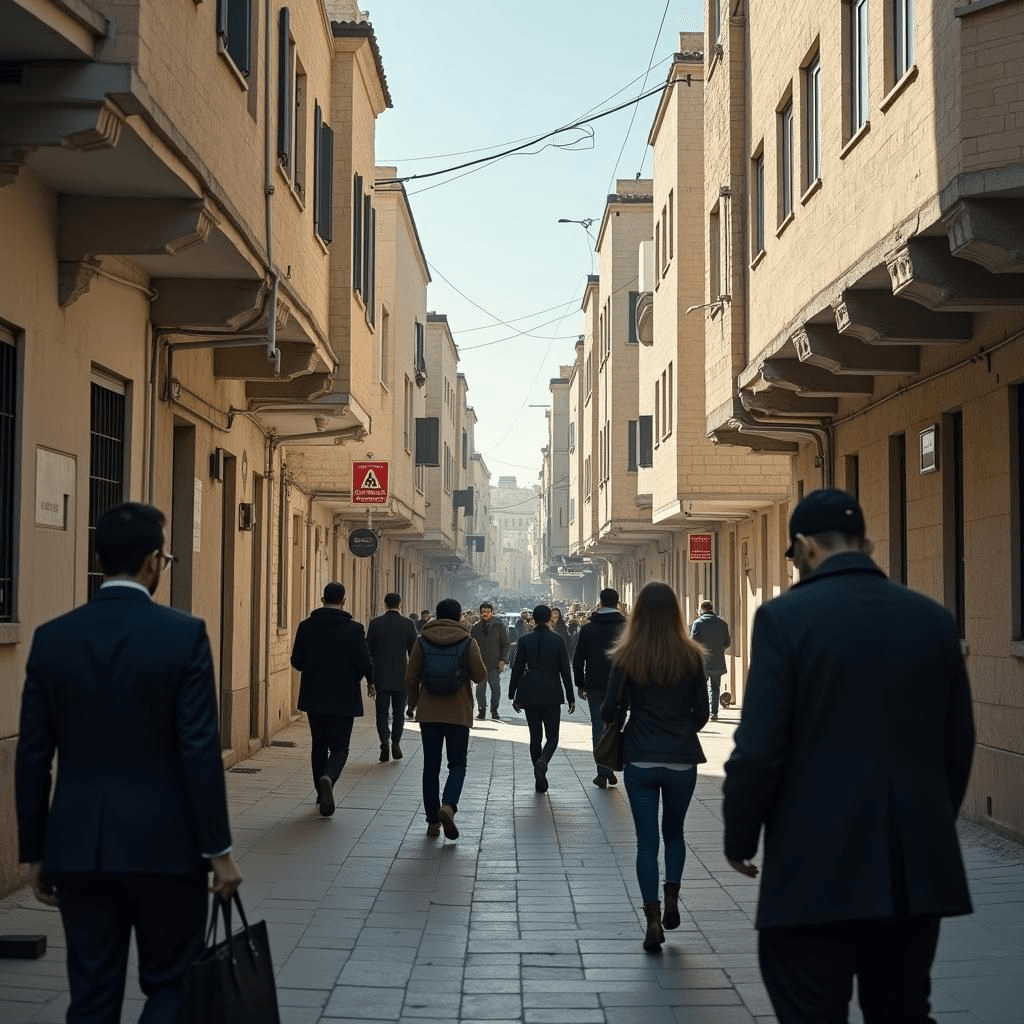
In Jerusalem, a “strange war” is ongoing, characterized by alarms on cell phones and nightly sirens that once again divide East and West in a present suspended between disrupted daily life and memories of trenches. The sophisticated internal protection system works precisely. The first warning is given on every cell phone in the entire country, signaling the launch of missiles from the Iranian territory. A few minutes later, when the direction of the weapons is identified, the sirens of the real alarm sound, a sinister noise that encourages running to shelters or armored rooms, called “mamad”, an acronym for “protected residential space” in Hebrew. In modern buildings, the mamad is present on every floor, sometimes in every apartment. The sirens sound only in areas of the country that are about to be hit. For example, recently in Jerusalem, only the cell phone alert was given, without the sound of the sirens, because the city would be spared from the two waves of Iranian missiles that instead caused casualties and destruction in Bat Yam, south of Tel Aviv, and Haifa, north.
The alert, although not a complete alarm, is enough to interrupt sleep. The night before, the sirens had sounded and the sky over Jerusalem had been illuminated by a battle of missiles and anti-missile rockets. However, Jerusalem is not considered the first line of this war as Tel Aviv. The city is divided into two: the Jewish quarter to the West and the Palestinian quarter to the East, separated by an unmarked but deeply concrete border. So far, both Hamas from Gaza and Hezbollah from Lebanon have tried to avoid Jerusalem to avoid hitting the Palestinian population and Islamic holy sites. Now, the Iranians are following this practice.
Mutual Hatred and Coexistence
Forced to coexist, the maximum effort they can make is to ignore each other. The Jerusalemites spend their time praying in synagogues, mosques and churches, while in Tel Aviv people spend their time on the beach.
Looking at this new war from Jerusalem is unusual: it is not at the front but a little bit; the missiles do not arrive but someone falls; there is hatred, an essential component of any belligerence. However, the conflicts are so interconnected – Gaza, Lebanon, Syria, now Iran, Israeli security, Palestinian cause – that they overlap.
A Historical Tradition of Danger
It has taken two days of war to understand that even the advanced Israeli anti-missile system is not completely impenetrable. If the Iranians launch hundreds of missiles simultaneously, someone fatally manages to pass through. Therefore, even East and West Jerusalem can end up on the front line. However, it is a fear composed. Jerusalem has a historical tradition with these moments of danger: before the Arab-Israeli wars, then the first and second Palestinian Intifada. Once trenches were dug in the squares. And now the newcomer, Iran, who in reality is a stone guest: as long as there was the Shah, he supported the Israeli wars; since the ayatollahs have been in power, he has always supported the enemies of the Jewish state.
It is difficult to find anything really new in what happens in Jerusalem. Yesterday afternoon, the alarm sounded again on cell phones, then the sirens sounded. Somewhere, the anti-missile missiles were activated. The best summary of this day, which will repeat tomorrow and then again, is that of an old friend born in the Rome ghetto and emigrated to Jerusalem long ago: “It’s war”. The city lives in a present suspended between disrupted daily life and memories of trenches, where fear returns to divide East and West in a “strange war”.