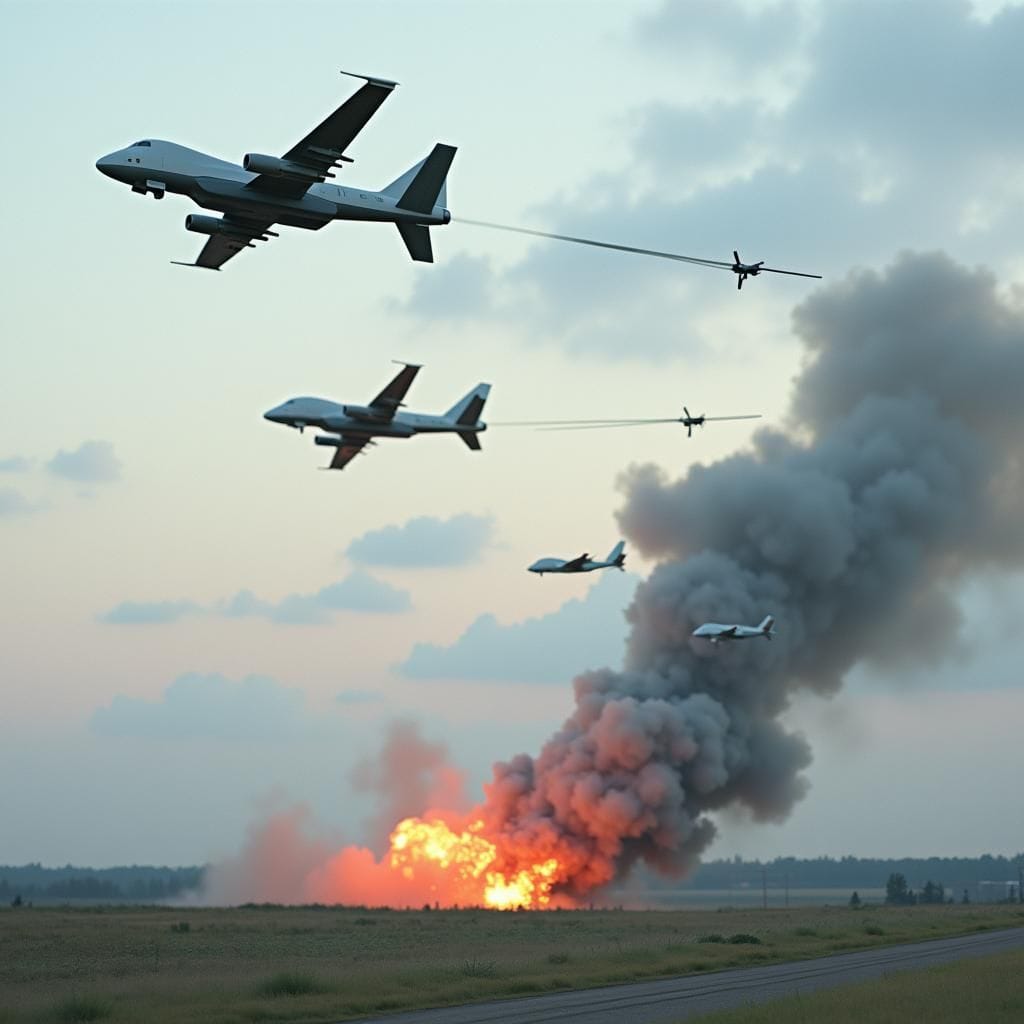
Significant aerial attacks in Ukraine have been marked by a series of significant events in the past few months. On June 1st, the largest drone and missile attack launched against Ukraine was recorded. On June 9th, a new record was set with the most massive Russian bombing in history. On June 29th, the most imposing aerial offensive since the start of the conflict was carried out. On July 4th, the largest number of Russian drone and missile attacks in history was recorded. These events reflect a constant expansion of bombing campaigns by Russia.
At the beginning of July, Russia managed to launch over 700 drones in a single night. According to statistics compiled by Ukrainian analysts, in July 2023, Russia was using an average of 10 drones per day. A year later, this figure had doubled to 20 drones per day. In 2024, launches exceeded 240 drones per day. Parallel to this, the use of cruise missiles, ballistic missiles, and bombs also increased, although to a lesser extent. A year ago, Russia could launch an average of four missiles per day, while the current rate is approaching ten. The attacks do not follow a regular pattern; the median daily launch rate is significantly lower than the average.
High-ranking Russian military commanders prefer to concentrate launches on weekly massive bombings, composed of hundreds of simultaneous missile and drone attacks. The objective is to saturate Ukrainian air defenses, which are struggling to counter such a high number of threats, and to maximize damage.
To achieve this, Russia employs hundreds of what are called “swarms”, unarmed drones of lower cost, whose only purpose is to distract Ukrainian radars and allow armed drones to reach their targets. The conflict has also become an industrial war, where production capacity is crucial.
The increase in attacks is driven by the robust expansion of Russia’s production capacity. The most commonly used drone by Russia is the Shahed, a “suicide drone” developed in Iran, capable of carrying up to 90 kilograms of explosive over hundreds of kilometers. In 2022, these drones were imported from Tehran, but since the summer of 2023 they have been produced directly in Russian factories. The main factory is located in Yelabuga, 1,200 kilometers from the front.
The production capacity of this factory has doubled since 2023, allowing the production of 170 Shahed per day, with the goal of reaching 190 daily units by December. Production is supported by China, which supplies critical components to Russia, while supplies to Ukraine have been disrupted.
If the current rate of production expansion is maintained, Moscow could be in a position to launch up to 2,000 drones in a single night for November, according to some Western analysts. Threats against Ukrainian cities and military bases have multiplied in a single year, forcing Ukraine to make a radical change in its air defense operations.
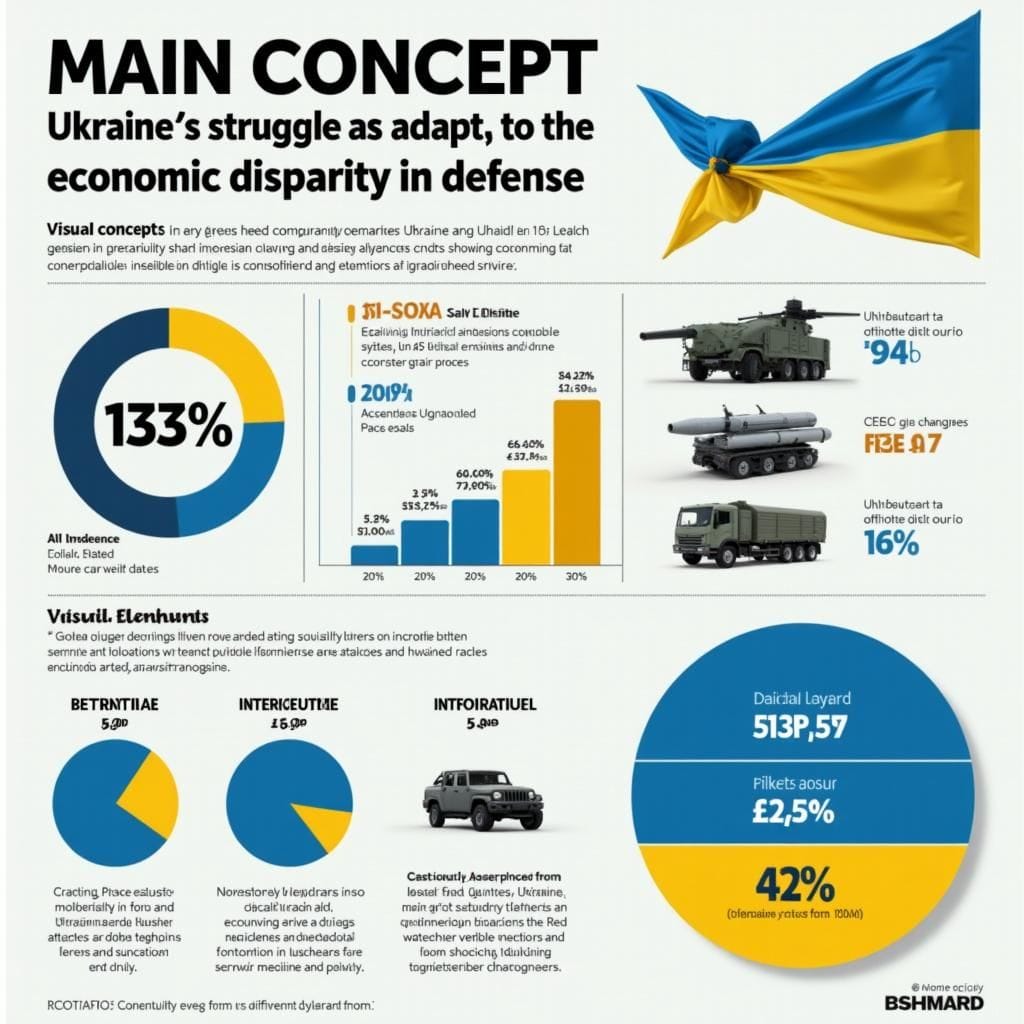
If in 2024 80% of the drones were intercepted before reaching their targets, in 2025 this figure has fallen to 50%. Although international attention focuses on the provision of Patriot missiles and batteries to Ukraine, these systems are not effective against drone attacks.
Using interceptor missiles that cost $4 million each against drones that cost around $35,000 is not an efficient option. Ukraine cannot afford this economic disparity, given the difficulties in acquiring long-range US systems. The most efficient way to shoot down drones is through anti-air munitions. Mounted machine guns on rooftops and pick-ups, electronic weapons that interfere with the radio signals that guide drones, portable missile launchers, helicopters, and combat aircraft are currently the most effective against the Shahed.
Paradoxically, to counter future threats traditional defense systems that have been in use for decades are being used. One of the most valued weapons by the Ukrainians are the old German Gepard, armored vehicles equipped with two 35-millimeter guns that have been in service with the Bundeswehr for 50 years. Germany has recently committed to donating 200,000 rounds of ammunition. However, innovation does not stop:
Ukraine’s own drone interceptors
Ukraine seeks to protect its skies from Russian swarms to be able to sit, in the eventual moment of negotiation, not as a victim, but as an adversary still capable of defending itself.