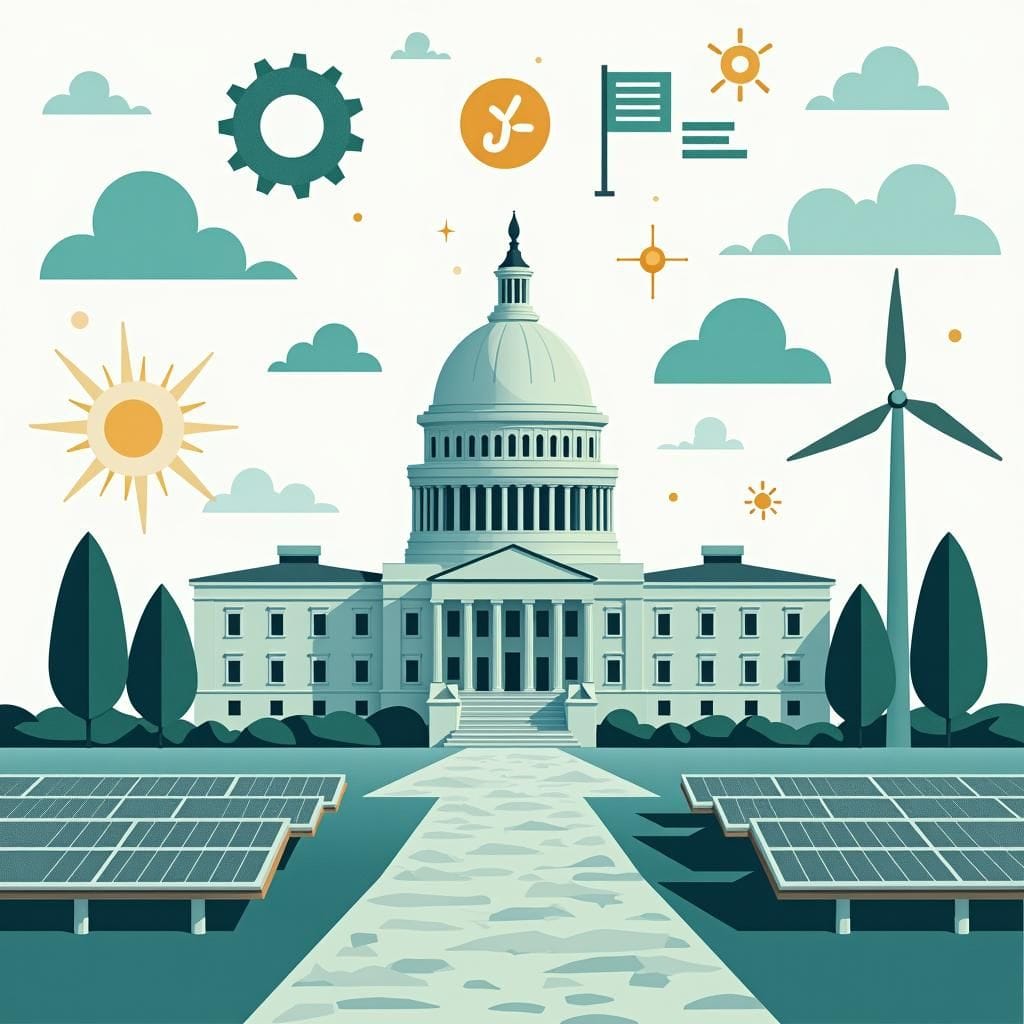
Local power is the engine for change that can produce progress today while reshaping the playing field for what’s possible at the state and national level down the road. This discussion focuses on how federal policy affects our energy future and what it will take to bring affordable and resilient energy to everyone.
Recent years have seen significant attention on energy due to its role in powering lives, economies, job creation, and cost considerations for households and businesses. Under different presidential administrations, there have been varying approaches to energy policy, with some favoring renewable energy and others focusing on fossil fuels.
The energy system is the backbone of our country and global connections. It impacts health, economic stability, and community resilience.
Organizations like the Hive Fund and the Accelerating Community Investment initiative are working to transition from dirty energy to clean energy, focusing on justice, redistributing power, and creating healthier, safer, and more prosperous communities. These initiatives often involve frontline groups most impacted by the energy system, whether through pollution, plant proximity, or energy burden.
The Hive Fund raises money and makes grants to groups innovating solutions for a cleaner energy transition. For example, in North Carolina, Black farmers host solar installations, making energy more reliable and less expensive.
The Accelerating Community Investment initiative aims to address deep-rooted disparities in the financial system by connecting impact and values-aligned capital to communities. This effort focuses on building a practitioner network, developing investable opportunities, and leveraging public finance tools for community change.
A more distributed and localized energy system offers economic, environmental, and energy resilience benefits. These include energy savings, lower costs for consumers, enhanced reliability, reduced emissions, job creation, and economic development.
However, achieving these benefits requires market-building efforts focused on access to capital, peer learning networks, project pipeline aggregation, and equity infusion.
The energy transition is one of the most significant technological transformations in human history. It involves moving away from fossil fuels that pollute communities and contribute to climate instability.
Reliability and resilience are crucial, as seen in Houston where a hub home with solar and battery systems provided life-saving access to energy during power outages.
Scaling good energy practices requires creative solutions to make investments more affordable.
Local engagement and pilot projects can lead to broader adoption. For instance, in North Carolina, a rural electric utility’s inclusive utility investment model was elevated and adopted statewide, demonstrating the potential for local solutions to scale.
Federal policy plays a critical role in shaping the energy future.
Recent changes in administration have led to the cancellation of clean energy programs and the rescinding of executive orders aimed at directing benefits to historically underserved communities. However, programs like Solar for All, which targets low-income communities with solar initiatives, continue to operate and provide valuable lessons.
Despite federal policy shifts, there is still significant opportunity for local and state governments, community organizations, and private businesses to drive the energy transition.
State governments, in particular, hold many cards in this picture, including roles in labor regulation, infrastructure investment, and utility regulation.
Community-based organizations play a crucial role in engaging communities and fostering systems-level change.
The energy transition also presents opportunities for innovation in areas like artificial intelligence (AI) and data centers.
Ensuring that these technologies are designed responsibly and in partnership with communities is essential for long-term sustainability.
The corporate community must be involved in these conversations, with community members acting as co-strategists rather than mere participants.
In summary, the energy transition offers numerous benefits and opportunities for communities across the country.
By fostering local engagement, innovative solutions, and broad collaboration, it is possible to create a more resilient, equitable, and sustainable energy system.
This transition requires the involvement of various stakeholders, including state and local governments, community organizations, and the private sector.
By working together, it is possible to achieve a future where clean and renewable energy is accessible to everyone.