Drone from Belarus have violated Polish airspace, testing NATO, the EU, and Trump’s response. The incursion, which saw a dozen drones, was too significant to be considered a technical incident but too limited to constitute a real attack. The vague and contradictory explanations provided by Minsk and Moscow have increased questions about what happened. Let’s analyze the context, probable motivations, and possible consequences.
Escalation of the Russian-Ukrainian conflict
In recent days, the Russian-Ukrainian conflict has escalated with intensified air attacks on Ukrainian cities, including the government building in Kiev. Simultaneously, hundreds of lethal drones have been shot down in Ukraine while Russia and Belarus have deployed thousands of soldiers and equipment near western borders in preparation for the Zapad 2025 military exercise. This exercise, which begins this weekend, has previously allowed Moscow to deploy special forces along the Ukrainian border, some of which were used in the first phase of the February 2022 invasion.
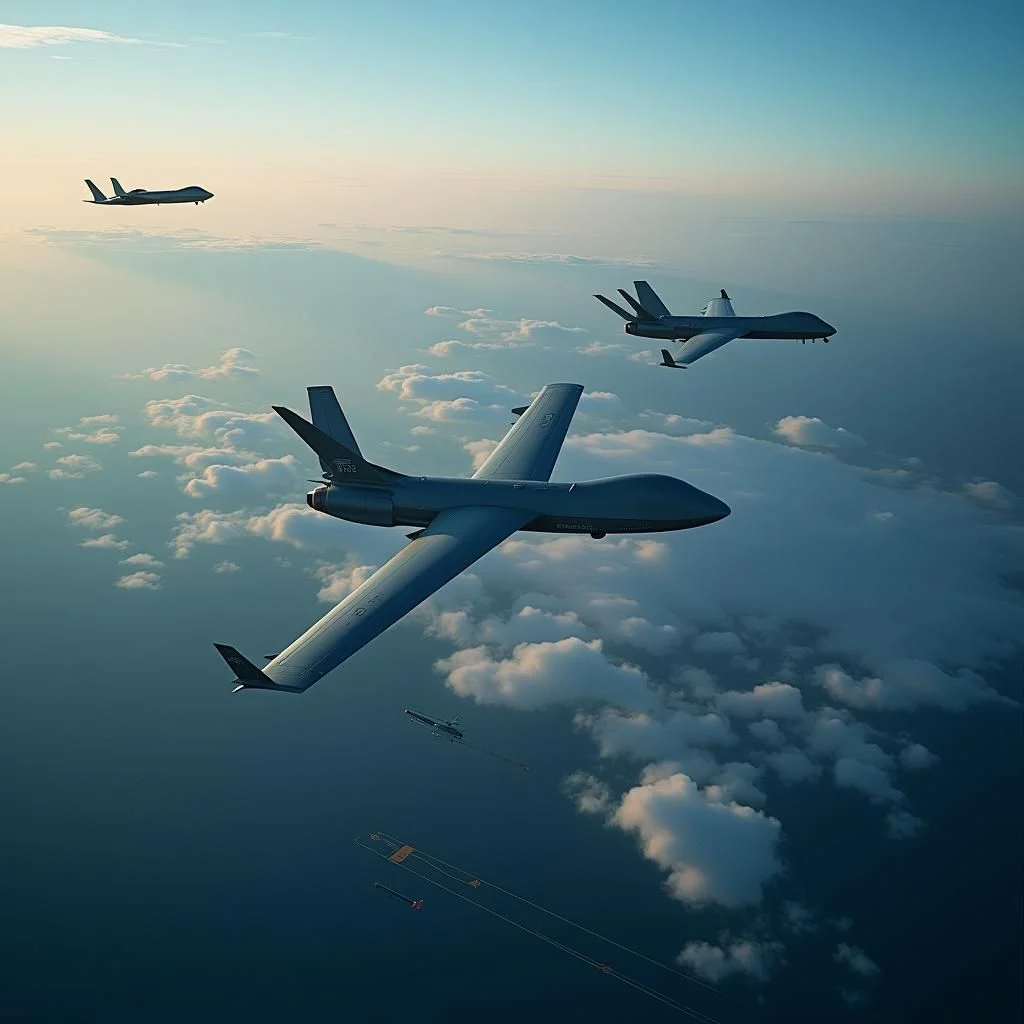
There is a reason to dramatize what is happening. The Polish prime minister has compared the situation to 1939, but at the moment the drones used were not armed. These drones, of Iranian manufacture, are often used by Russia to deceive Ukrainian air defenses and consume precious ammunition before launching large-scale lethal operations. The drones did not cause casualties, and the wreckage collected by Polish military confirms that they did not constitute an armed attack. The situation has been described as a “provocation,” with Moscow wanting to test the reaction of the West with a low-risk hybrid operation.
Recent incidents
In recent days, there has also been an episode of GPS jamming of the plane carrying Ursula von der Leyen from Moldova to Bulgaria, another small provocation and warning signal. If it is a test, the results are evident. From a military point of view, the response has been effective: the Polish air force and allied aircraft, Dutch and Italian, have shot down the drones, and the alert system has been activated promptly. However, the drones have managed to enter allied airspace without being shot down by ground-based air defenses, highlighting a potential inadequacy of the NATO system on the eastern front.
Poland has invoked Article 4 of the Washington Treaty, which allows any member state to request an extraordinary consultation with allies in case of a threat to its territorial integrity. This article had been rarely invoked before the Russian invasion of Ukraine. NATO has raised its alert level and bilateral assistance to Warsaw, while the Secretary General has announced an internal investigation into the incident.
Drone incursion and European response
The drone incursion has preceded Ursula von der Leyen’s speech on the state of the Union to the European Parliament. Von der Leyen has used the opportunity to reiterate the message of unity among Europeans and a greater common commitment to defense. She has proposed the creation of a “drone wall” funded by Brussels to monitor the eastern border and contribute to an “European shield,” evoking the European Sky Shield Initiative launched by Germany and other European countries.
The Russian drone incursion was probably designed to test Donald Trump’s response. His response has been typically “Trumpian”: a cryptic post on Truth Social and a phone call of solidarity with the Polish president. Trump’s reaction may influence whether Putin’s provocations remain such or become more serious intimidation, with the risk of an open conflict.
Conclusion
The Russian-Ukrainian conflict continues to evolve, with intensified air attacks and significant military deployments. NATO and the EU are responding with strengthened security measures and extraordinary consultations. Russian provocations, such as the drone incursion and GPS jamming, are signs of a hybrid strategy aimed at testing Western defenses and creating tension. The response of the allies and Trump’s reaction will be crucial in determining the future evolution of the situation.
There is a reason to dramatize what is happening. The Polish prime minister has compared the situation to 1939, but at the moment the drones used were not armed. These drones, of Iranian manufacture, are often used by Russia to deceive Ukrainian air defenses and consume precious ammunition before launching large-scale lethal operations. The drones did not cause casualties, and the wreckage collected by Polish military confirms that they did not constitute an armed attack. The situation has been described as a “provocation,” with Moscow wanting to test the reaction of the West with a low-risk hybrid operation.
In recent days, there has also been an episode of GPS jamming of the plane carrying Ursula von der Leyen from Moldova to Bulgaria, another small provocation and warning signal. If it’s a test, the results are evident. From a military perspective, the response has been effective: the Polish air force and allied planes, Dutch and Italian, have shot down the drones, and the alert system has been activated promptly. However, the drones have managed to enter allied airspace without being shot down by ground-based air defenses, highlighting a potential inadequacy of the NATO device on the eastern front.
Poland invokes Article 4 of the Washington Treaty
Poland has invoked Article 4 of the Washington Treaty, which allows each member state to request an extraordinary consultation with allies in case of a threat to its territorial integrity. This article had been rarely invoked before the Russian invasion of Ukraine. NATO has also raised its alert level and bilateral assistance to Warsaw, while the Secretary-General has announced an internal investigation into the incident.
European response and unity
The drone incursion preceded Ursula von der Leyen’s State of the Union address to the European Parliament. Von der Leyen used the opportunity to relaunch the message of unity among Europeans and a greater common commitment to defense. She proposed the creation of a “drone wall” funded by Brussels to monitor the eastern border and contribute to a European “shield,” evoking the European Sky Shield Initiative launched by Germany and other European countries.
Trump’s reaction and potential consequences
The Russian drone incursion was probably designed to test Trump’s reaction. His response was typically “Trumpian”: a cryptic post on Truth Social and a phone call of solidarity with the Polish president. Trump’s reaction may influence whether Putin’s provocations remain such or become more serious intimidation, with the risk of an open conflict.
The Russian-Ukrainian conflict continues to evolve, with intensified air attacks and significant military deployments. NATO and the EU are responding with strengthened security measures and extraordinary consultations. Russian provocations, such as the drone incursion and GPS jamming, are signs of a hybrid strategy aimed at testing Western defenses and creating tension. The response of allies and Trump’s reaction will be crucial in determining the future evolution of the situation.