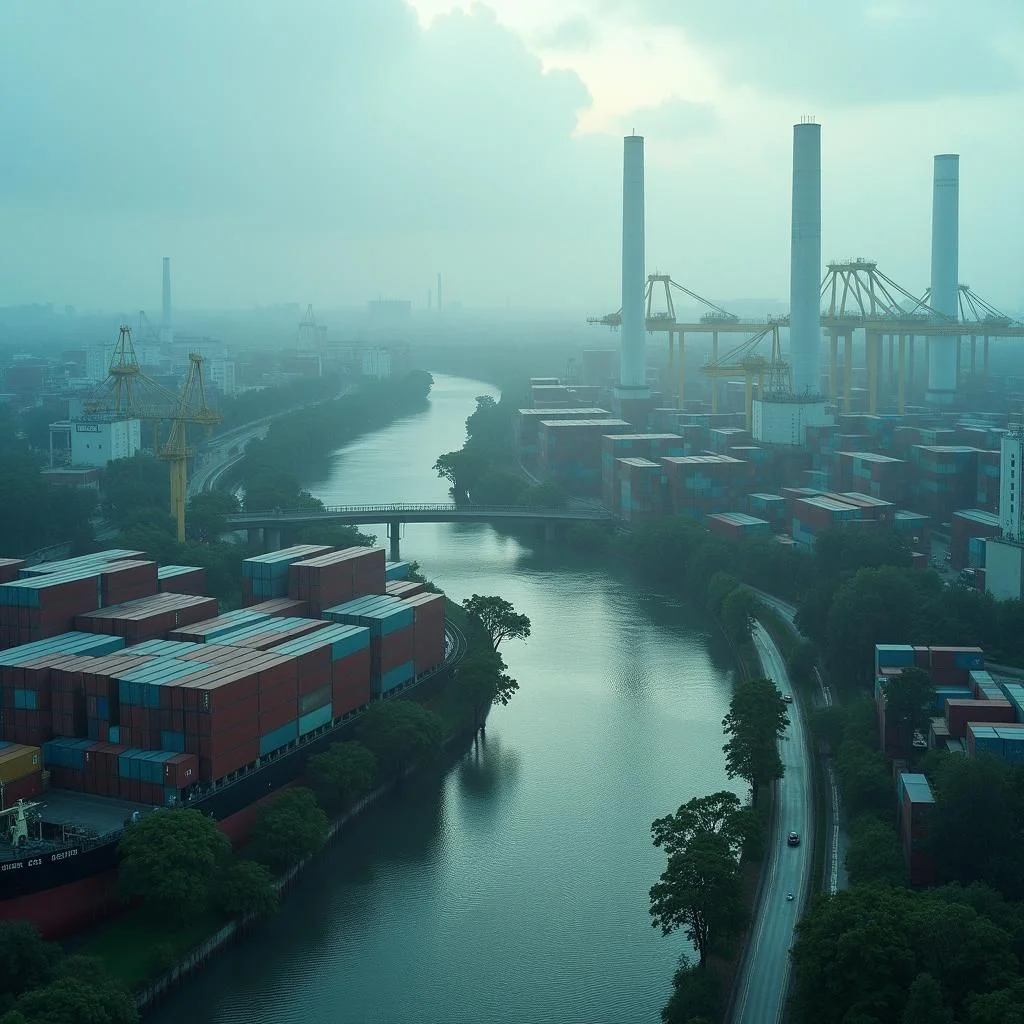
Extreme weather events are becoming more frequent and intense due to climate change, posing significant challenges to global supply chains (GSCs). These events, though often localized, have far-reaching economic impacts that ripple through interconnected global networks. The economic risks associated with these ‘fast onset’ events are substantial but not yet fully understood. This paper explores the impacts of past extreme weather events on supply chains and outlines strategies for the public and private sectors to prepare for and mitigate future disruptions.
Extreme weather events can disrupt supply chains in several ways. Firstly, natural disasters can lead to lower manufacturing production. For example, factories may be damaged or shut down due to floods, earthquakes, or storms, leading to reduced output and delayed deliveries. Secondly, agricultural yields can be severely affected by floods and droughts, impacting the availability of raw materials and food products. Thirdly, infrastructure damage and trade route disruptions caused by climate conditions can hinder the movement of goods and services, leading to supply chain bottlenecks and increased costs.
Historical Context
Historically, the effects of such events have been measurable but relatively short-lived, largely due to the diversified nature of global supply chains. However, as these events become more frequent and intense, their impacts will be significantly larger and more prolonged. For instance, the 2011 Thai floods and the 2022 drought affecting the Panama Canal had notable macroeconomic effects, but these were temporary. As climate change progresses, similar events will have more lasting and severe consequences.
Preparing for Future Disruptions
To prepare for future disruptions, businesses must invest in a comprehensive understanding of the risks to their supply chains. This includes identifying vulnerable points in the supply chain, assessing the likelihood and potential impact of various extreme weather events, and developing contingency plans. Additionally, businesses should implement mitigation measures such as diversifying suppliers, investing in resilient infrastructure, and adopting flexible production strategies.
Government Role
Governments also play a crucial role in mitigating the risks posed by extreme weather events. They need to set the right incentives for companies to invest in risk mitigation. This can include providing tax incentives for businesses that implement resilient practices, offering financial assistance for infrastructure upgrades, and enforcing regulations that promote supply chain resilience. At the international level, coordinated policy responses are essential. The 2007-2008 global rice crisis demonstrated how uncoordinated policy responses can exacerbate the effects of climate-related production shortfalls, leading to global food shortages and price spikes.
International Policy Coordination
The importance of global policy coordination cannot be overstated. Extreme weather events often transcend national borders, affecting multiple countries simultaneously. Coordinated efforts at the international level can help manage these risks more effectively. This includes sharing best practices, developing joint mitigation strategies, and ensuring that global trade policies support supply chain resilience. For example, international agreements on climate change mitigation and adaptation can provide a framework for coordinated action, while regional trade agreements can facilitate the movement of goods and services during times of crisis.
Technological Advancements
In addition to policy coordination, technological advancements can play a significant role in mitigating the risks posed by extreme weather events. For instance, advanced weather forecasting and monitoring systems can provide early warnings of impending disasters, allowing businesses and governments to take proactive measures. Similarly, the use of big data and analytics can help identify vulnerabilities in supply chains and develop more effective mitigation strategies.
Innovation in Supply Chain Management
Furthermore, fostering innovation in supply chain management is crucial. This includes adopting new technologies such as blockchain for enhanced transparency and traceability, and using artificial intelligence to optimize supply chain operations. Innovative solutions can help businesses adapt to changing conditions and build more resilient supply chains.
Conclusion
In summary, extreme weather events pose significant risks to global supply chains, and their impacts are expected to increase in the future. To mitigate these risks, businesses and governments must work together to enhance supply chain resilience. This involves investing in risk assessment and mitigation measures, setting the right incentives, and coordinating policy responses at the international level. Technological advancements and innovation in supply chain management can also play a vital role in building more resilient and adaptable supply chains. By taking proactive measures, the public and private sectors can better prepare for and mitigate the impacts of extreme weather events on global supply chains.