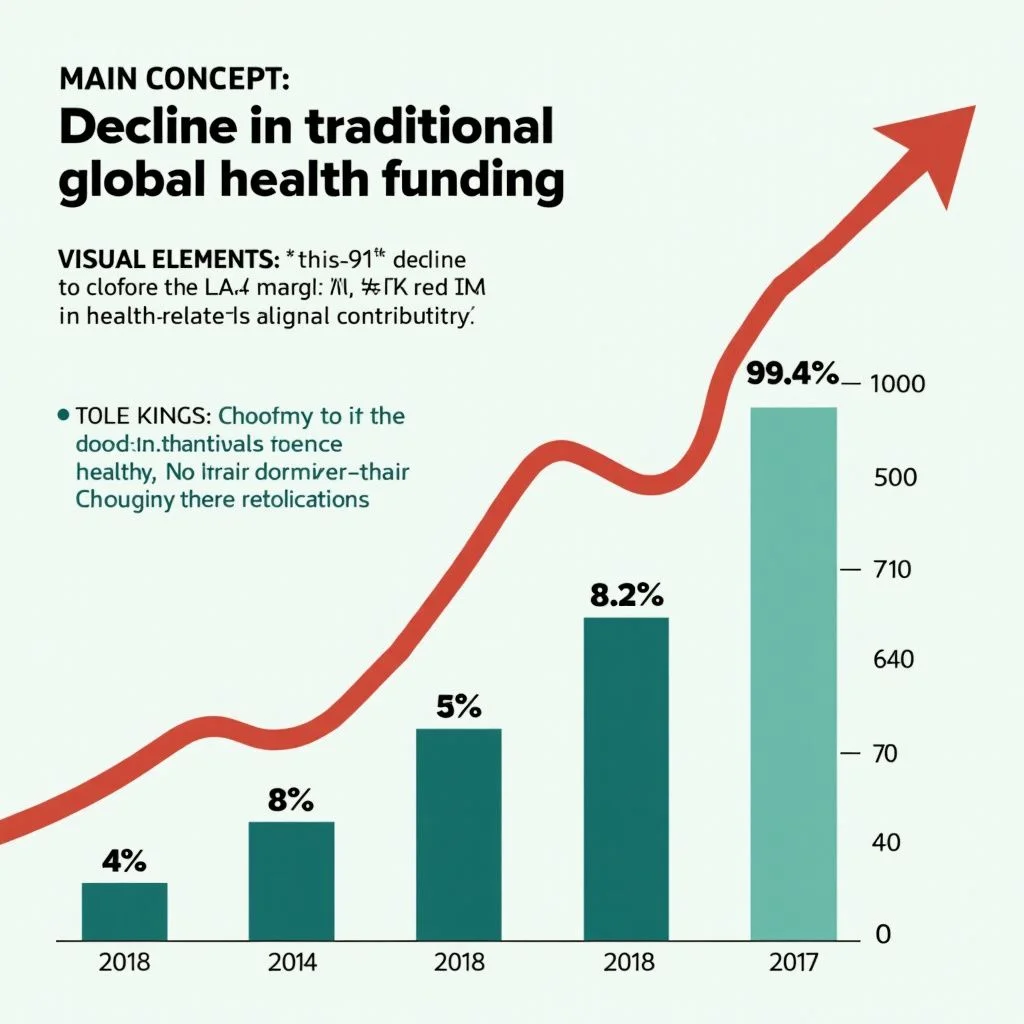
Global development assistance has historically concentrated on alleviating poverty and fostering economic growth, with health being a central investment area. However, over the past decade, several factors have disrupted this aid landscape. Rising fiscal pressures, geopolitical instability, prolonged conflicts, and shifting donor priorities have all played significant roles in this disruption. In 2025, global Official Development Assistance (ODA) experienced a notable decline, falling by 9-17%. Health-related bilateral aid saw an even more substantial drop, decreasing by 19-33%. Major donors, including prominent Western nations, have significantly reduced their contributions. These cuts pose severe threats to health systems in low- and middle-income countries (LMICs), risk reversing progress on the Sustainable Development Goals (SDGs), and could lead to millions of preventable deaths.
Emergence of new actors in global health
As traditional donors scale back their support, new actors are emerging in the global health arena. Philanthropic foundations, private sector donors, and countries from the Global South are becoming increasingly active. These new players bring diverse resources and perspectives, potentially filling some of the gaps left by traditional donors. Concurrently, reforms to the global health system are underway, with a growing emphasis on mobilizing domestic resources. While some countries have successfully increased their domestic health spending, many others face significant challenges, including budget constraints, competing priorities, and limited capacity to implement effective health programs.
Regional and catalytic efforts
Regional and catalytic efforts are also emerging amidst these shifts. These initiatives aim to address specific health challenges and leverage local resources more effectively. The global health landscape is undergoing a fundamental transformation, driven by these evolving dynamics. The primary challenge ahead is not merely to replace lost funding but to reimagine and rebuild a more resilient, equitable, and responsive global health architecture. This new architecture must be capable of meeting today’s complex realities and anticipating tomorrow’s evolving challenges.
The Mind the Gap series
The Mind the Gap series serves as a platform to assess and reflect on the rapidly evolving global health landscape. It provides a comprehensive examination of shifts in financing and explores the impact on historically high investment areas such as HIV, malaria, tuberculosis, and sexual and reproductive health. By analyzing these trends, the series aims to inform policymakers, health professionals, and stakeholders about the current state of global health financing and its implications for public health outcomes. The series also highlights the need for innovative solutions and collaborative efforts to address the emerging challenges in global health.
Re-evaluation of funding mechanisms and priorities
The decline in traditional ODA has led to a re-evaluation of funding mechanisms and priorities. Traditional donors, which have been the backbone of global health financing, are now reassessing their strategies in response to fiscal pressures and geopolitical shifts. This reassessment has resulted in a more selective approach to funding, focusing on areas with immediate and measurable impacts. However, this shift has also created uncertainties for LMICs that rely heavily on external funding for their health systems.
Challenges and opportunities of new donors
The emergence of new donors, particularly from the private sector and philanthropic foundations, offers both opportunities and challenges. These new actors often bring innovative approaches and substantial resources but may lack the long-term commitment and coordinated efforts of traditional donors. Their involvement can lead to fragmented funding and implementation, potentially undermining the coherence and sustainability of health programs.
Domestic resource mobilization
Domestic resource mobilization is increasingly recognized as a critical component of a sustainable global health architecture. Many LMICs are exploring ways to increase their domestic health spending, but this effort is hindered by various factors. Budget constraints, competing priorities, and limited capacity to manage and allocate resources effectively are significant barriers. Additionally, the economic impact of the COVID-19 pandemic has exacerbated these challenges, further straining the financial resources of many countries.
Regional collaborations and catalytic efforts
Regional collaborations and catalytic efforts are gaining traction as potential solutions to these challenges. These initiatives leverage regional strengths and resources to address common health issues more effectively. For example, regional health organizations can facilitate the sharing of best practices, coordinate responses to outbreaks, and pool resources for large-scale health programs. Catalytic efforts, such as public-private partnerships and innovative financing mechanisms, can also play a crucial role in mobilizing additional resources and driving progress in specific health areas.
Rebuilding a resilient and equitable global health architecture
The transformation of the global health landscape requires a multifaceted approach that addresses financing, capacity building, and policy coordination. Rebuilding a resilient and equitable global health architecture involves several key components. First, there is a need for diversified and sustainable financing mechanisms that can fill the gaps left by traditional donors. This includes leveraging domestic resources, attracting private sector investments, and fostering innovative financing models.
Second, capacity building is essential to strengthen health systems in LMICs. This involves investing in healthcare infrastructure, training healthcare workers, and enhancing data collection and analysis capabilities. Building local capacity ensures that health systems can respond effectively to current and future health challenges.
Third, policy coordination is crucial for aligning efforts and resources across different stakeholders. This includes fostering collaboration between traditional and new donors, promoting regional cooperation, and ensuring that health policies are integrated with broader development goals. Effective policy coordination can help create a more cohesive and responsive global health architecture.
Addressing specific needs in high investment areas
Finally, addressing the specific needs of historically high investment areas, such as HIV, malaria, tuberculosis, and sexual and reproductive health, is vital. These areas have historically received significant funding and attention, but the recent declines in ODA threaten to reverse the progress made. Innovative solutions and targeted interventions are needed to sustain and build upon the gains achieved in these critical health areas.
Global health landscape transformation
In conclusion, the global health landscape is undergoing a significant transformation driven by shifting financing dynamics, emerging donors, and evolving challenges. The Mind the Gap series provides a valuable platform for assessing these changes and exploring their implications for global health. By focusing on diversified financing, capacity building, policy coordination, and targeted interventions, the global health community can work towards a more resilient, equitable, and responsive health architecture capable of meeting the complex realities of today and the evolving challenges of tomorrow.