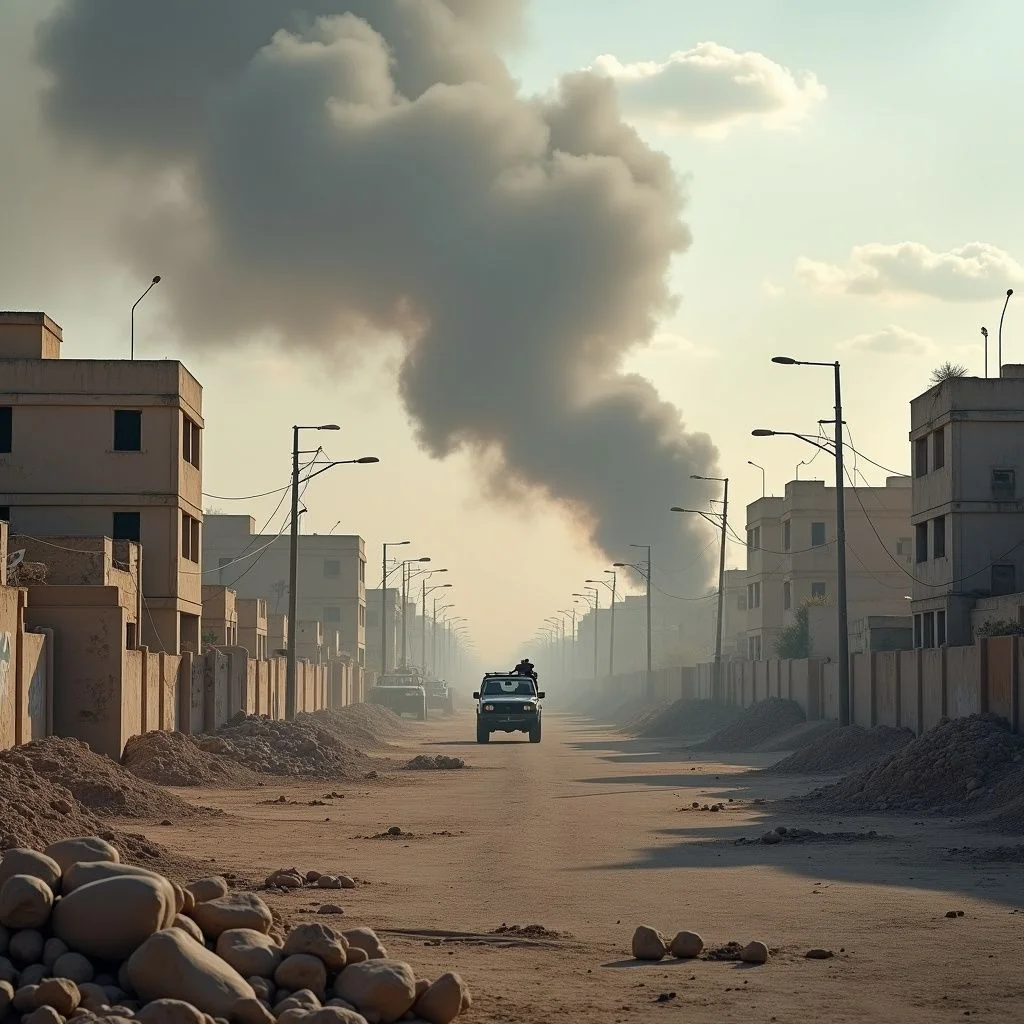
Almost a month after the Sharm El-Sheikh agreements, the US-mediated ceasefire is on the verge of turning into an illusion of peace. Israel announced the restoration of the ceasefire, but the situation in Gaza remains critical. Israeli attacks continue, hitting various locations in the Strip, including Gaza City, Beit Lahia in the north, the refugee camps of Bureij and Nuseirat in the center, and Khan Younis in the south. These bombings, among the bloodiest since the start of the conflict, have caused a significant increase in the number of victims and have saturated the air with columns of ash and smoke.
The Israeli Prime Minister has ordered the Israeli Defense Forces (IDF) to carry out “violent attacks” in response to alleged ceasefire violations by Hamas. The Israeli Defense Minister has warned that Hamas will pay a very high price for attacking soldiers and violating the hostage release agreement. On Wednesday morning, the IDF announced the death of a reserve soldier, Sergeant Major Yona Efraim Feldbaum, in the southern city of Rafah. Hamas denied attacking Israeli troops and accused Israel of violating the agreements.
The Palestinian armed group has also declared that it will postpone the return of the body of a hostage who was supposed to be returned. While Gaza City was illuminated by the flashes of explosions, the Israeli Prime Minister announced the expansion of the territory under Israeli control beyond 53% of the Strip that the IDF currently controls. This initiative, probably coordinated with the US administration, has raised concerns about a possible resumption of large-scale hostilities.
However, the United States has downplayed these concerns, stating that the ceasefire is holding despite skirmishes. The ceasefire agreement, mediated by the United States, Egypt, Qatar, and Turkey, should implement the first phase of the 20-point peace plan for Gaza. According to the terms of the agreement, Hamas was supposed to release all 48 remaining hostages in its possession, 20 of whom were alive, within three days of the ceasefire taking effect on October 10.
Although the living hostages were released, Hamas has returned only 15 bodies, while 13 are still missing. Israeli authorities believe that Hamas is deliberately delaying the return of the remains of the hostages, a claim that the group has denied. The Hamas negotiator has stated that the group has handed over all the hostages it could identify and that the missing bodies could only be identified by members of the organization who died in the war.
Egypt and Turkey have offered to contribute to the search by sending specialized teams to the Strip. All the hostages killed in Gaza were part of the 251 people kidnapped during the Hamas attack on October 7, 2023, during which around 1,100 people were killed. Israel responded by launching a military campaign on the Strip, in which at least 68,000 people were killed, most of whom were women and children.
Almost a month after the signing of the Sharm el Sheikh Peace Accords, the hope fueled by the ceasefire is fading. With the return of violence, panic has spread again through the streets of Gaza, and the prices of foodstuffs, which have begun to flow into the Strip in small quantities, have skyrocketed. The knots of an agreement imposed more than mediated by the United States are coming undone.
The extremist ministers of the Israeli government have resumed urging the premier to “finish the job.” Until Hamas is disarmed, no country seems eager to commit funds to the Strip, which is weighed down by an enormous uncertainty. Meanwhile, the Americans fear that Israel may be inclined to blow up the ceasefire agreement.
However, during a meeting with Hamas officials, it was assured to Arab states that this will not happen. Whether and how the United States will be able to keep its word may prove to be the most important and riskiest bet made so far.