Canton, North Carolina, a town of over 4,400 people located 20 miles west of Asheville, faced a series of significant challenges over a span of five years. The town, historically known for its paper mill, experienced a devastating sequence of events that included Tropical Storm Fred, Hurricane Helene, and the closure of its 115-year-old paper mill. These events not only impacted the town’s economy but also its social fabric and community identity.
The paper mill, a cornerstone of Canton’s identity since 1908, employed over a thousand people and was a source of pride for the community. The mill’s closure in May 2023 marked the end of an era, leaving more than a thousand people without jobs and stripping the town of a significant part of its identity.
The closure was preceded by Tropical Storm Fred in August 2021, which caused massive damage and resulted in six deaths. The storm’s impact was exacerbated by the lack of timely federal disaster declarations, highlighting gaps in the official response system.
Patsy Davis, the executive director of the Mountain Projects Community Action Agency, played a crucial role in coordinating evacuations and providing immediate relief. Her organization stepped in to fill the gaps left by federal agencies, offering shelter and resources to displaced residents.
Shelley White, the president of Haywood Community College, also mobilized the college’s resources to support the community, turning the institution into a hub for relief efforts and training programs for those who lost their jobs.
David Francis, the economic development director at Haywood County, focused on finding new job opportunities for the displaced workers. He faced significant challenges, including the lack of financial support for small businesses from FEMA and the difficulties in reaching out to workers due to the mill’s management policies.
Despite these obstacles, David’s efforts led to the placement of many workers in new jobs across the region.
The closure of the mill also had a profound psychological impact on the community. Many workers had spent decades at the mill, and the sudden loss of their jobs was devastating.
The community college played a vital role in providing hope and opportunities for a new future. Shelley White emphasized the importance of education in helping people transition to new careers and rebuild their lives.
Just fifteen months after the mill closure, Hurricane Helene struck, causing further devastation.
The community had to prepare for another major disaster, and leaders like Zeb Smathers, the mayor of Canton, worked tirelessly to coordinate relief efforts and ensure the safety of residents.
The hurricane highlighted the need for better federal disaster response mechanisms and the importance of community resilience.
The town’s response to these crises was characterized by a sense of grit and grace. Despite the challenges, the community remained hopeful and determined to rebuild.
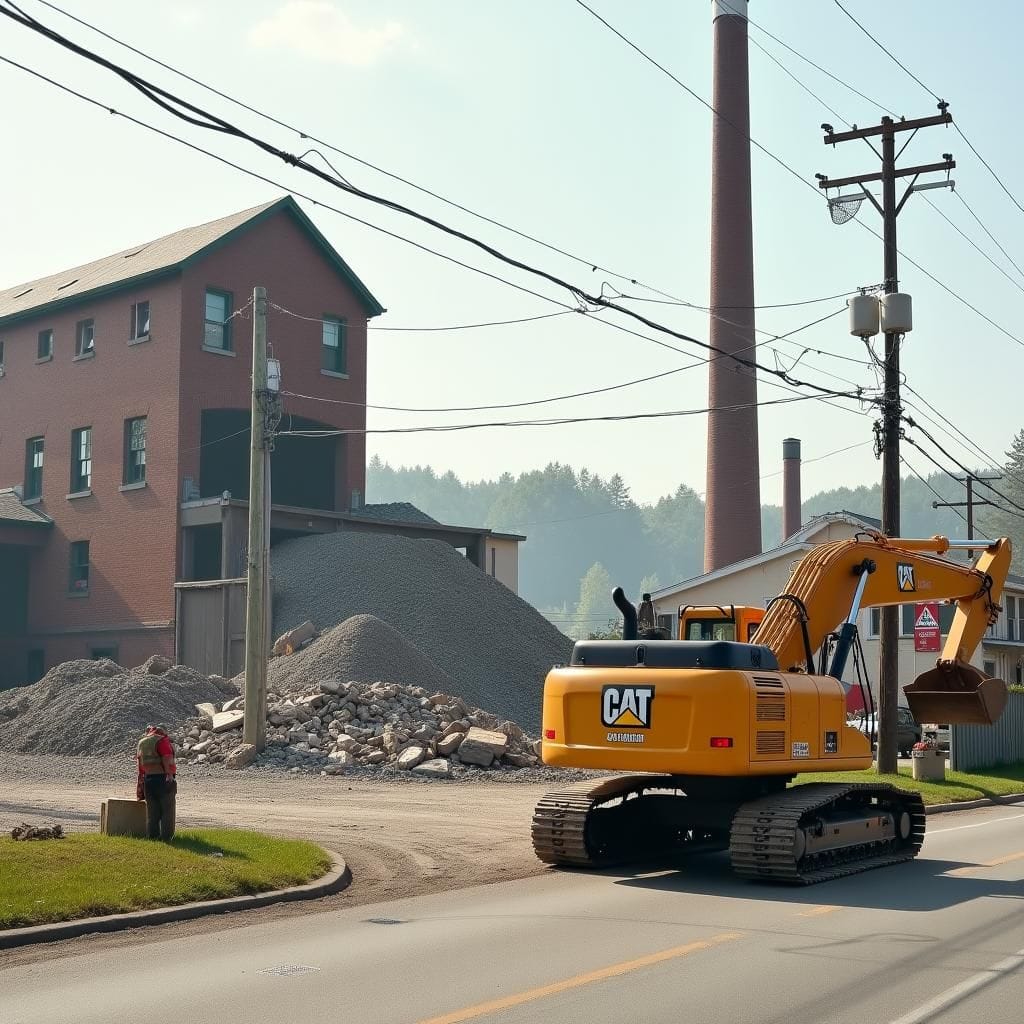
The former mill site is being demolished, and the town is looking to the future with a focus on maintaining its mill town identity while embracing new opportunities.
The community is committed to building a future that honors its past while looking forward to better days ahead.
The town’s efforts to rebuild and recover are not just about economic development but also about preserving its values and identity. The community’s resilience and determination to overcome these challenges serve as an inspiration for other towns facing similar difficulties.
Canton’s story is one of hope, grit, and the power of community in the face of adversity. The town’s legacy will be defined by its ability to rebuild and thrive, leaving a mark on future generations.