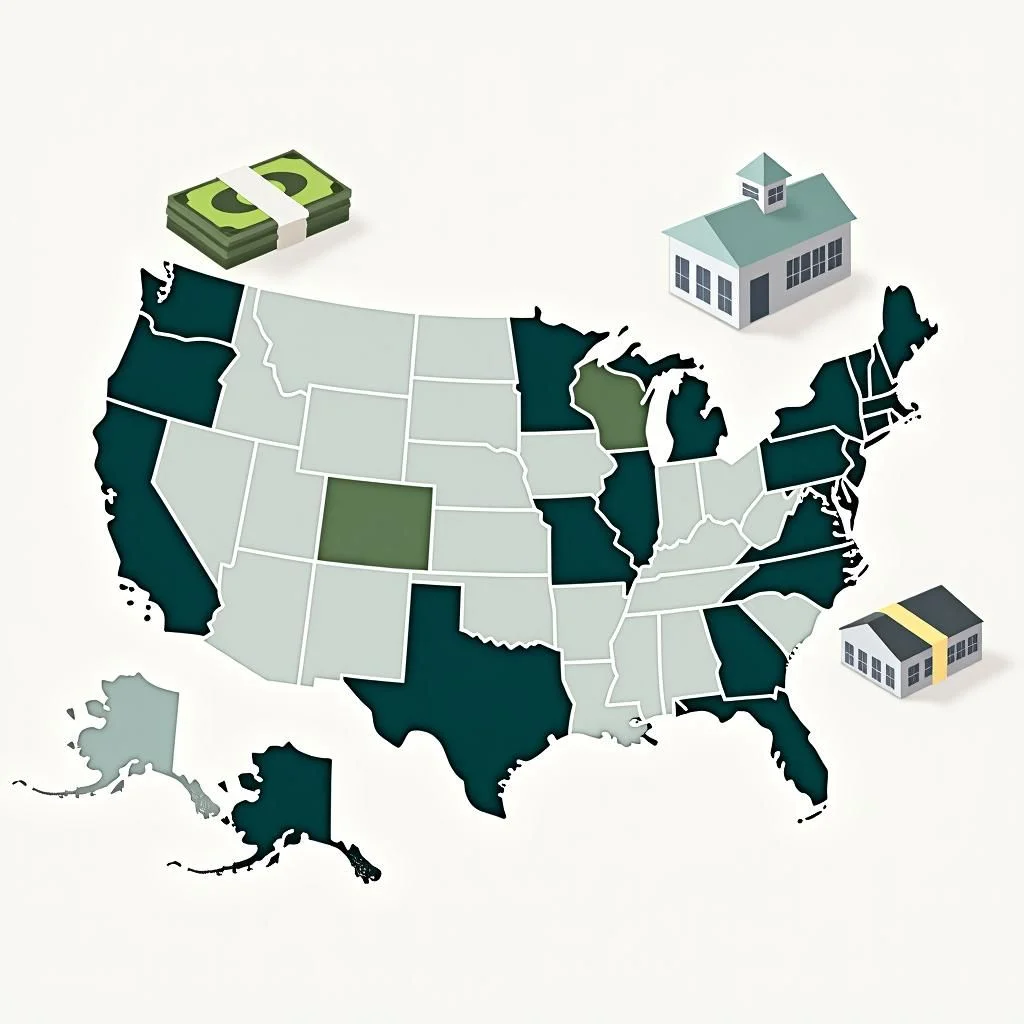
After some eleventh-hour twists and turns, Congress ultimately included a tax-credit scholarship program in the One Big Beautiful Bill Act (OBBBA). This program, though flawed, presents an interesting scenario for state leaders who must decide whether to opt into a potential major source of federal education funding. Red-state Republicans are likely to opt in, while blue-state Democrats face a more complex decision.
The scholarship program allows individuals to donate money to scholarship-granting organizations (SGOs), which then distribute “scholarships” to families for eligible educational expenses. Donors receive a 1:1, nonrefundable tax credit for their contributions, and SGOs can retain up to 10% of the funds for administrative costs. The remaining funds cover a variety of K-12 expenses, including private school tuition, tutoring, technology costs, and more. State leaders have the authority to decide whether to participate and can set rules for SGOs within their borders, such as prohibiting discrimination and requiring performance-related information.
Significant changes from earlier drafts
Several significant changes were made from earlier drafts of the bill. Most importantly, states now have control over whether and how to opt into the program. Earlier versions mandated participation and prohibited state regulation of SGOs and private schools. Additionally, the final version ensures that the program is well-funded through many small donations, rather than a few wealthy donors exploiting tax shelters.
Red-state leaders will likely use this program to supplement existing state-level voucher, education savings account (ESA), and tax-credit scholarship programs. While raising funds may be challenging due to the lack of a tax shelter, private school leaders can act as recruiters, explaining the benefits to parents. In blue states, there are three potential approaches. The first is outright refusal to participate, which could be politically motivated if the program is branded as a federal voucher program or if Treasury Department rules limit state control over SGOs. The second approach involves opting into the program with certain conditions, such as preventing discrimination and restricting eligibility to low-income families. This approach could be seen as a bind similar to the Medicaid expansion, where states must opt in or explain why residents cannot access available resources. The third approach is to transform the program into an educational enrichment initiative, using scholarship funds for a variety of educational expenses for both private and public school students. This could include tutoring, technology, books, special needs services, transportation, and after-school programs, providing a form of “choice” that does not threaten public schools.
Policy flaws
The program has several policy flaws. It leaves billions of dollars of tax revenue allocation to the discretion of donors, SGOs, and scholarship recipients, with limited accountability, transparency, or quality control mechanisms. The potential for waste, fraud, and abuse is significant, and SGOs will siphon 10% of the funds. Despite these flaws, state leaders must decide whether to opt in, a decision that is complicated by the program’s potential benefits and drawbacks.
In red states, the program could supplement existing school choice initiatives, providing additional resources for private schools. In blue states, the program could be transformed into an educational enrichment initiative, offering a range of educational opportunities without undermining public schools. State leaders will need to consider how to mold this program to align with their states’ priorities, whether through choice or enrichment.
The program’s final language allows for a variety of educational expenses, making it possible to tailor the initiative to different state needs. For example, funds could be used for academic tutoring, computer technology, books and supplies, AI-based educational software, special needs services, transportation, and after-school programs. This flexibility could make the program appealing to Democrats drawn to the idea of enriching their children’s education without threatening public schools.
Potential for waste, fraud, and abuse
The potential for waste, fraud, and abuse remains a significant concern. The lack of accountability and transparency, combined with the discretion given to donors and SGOs, creates a high risk of misuse. Additionally, the 10% administrative fee for SGOs could result in a substantial loss of funds that could otherwise be used for educational purposes. Despite these flaws, the program presents an opportunity for states to access federal funding and tailor it to their specific needs.
State leaders must weigh the potential benefits and drawbacks of opting into the program. In red states, the program could provide additional resources for private schools and supplement existing school choice initiatives. In blue states, the program could be transformed into an educational enrichment initiative, offering a range of educational opportunities without undermining public schools. The decision to opt in will depend on each state’s priorities and its ability to mold the program to meet those needs.