The Paris Agreement, adopted in 2015 under the United Nations Framework Convention on Climate Change (UNFCCC), was hailed as a significant achievement. It provided a pathway out of a political stalemate that had highlighted deep-seated dissatisfaction with the existing global climate governance structure. The agreement swiftly entered into force, within less than a year of its adoption, and garnered near-universal participation with 195 parties, making it one of the most broadly adopted international agreements in history.
The Paris Agreement established three primary objectives: 1. To limit the global temperature increase to well below 2°C above pre-industrial levels, with efforts to further limit it to 1.5°C by achieving net-zero emissions by the second half of the 21st century. 2. To enhance adaptive capabilities and resilience to climate impacts, including addressing loss and damage. 3. To align financial flows with a trajectory towards low greenhouse gas emissions and climate-resilient development, encompassing technology transfer and capacity building.
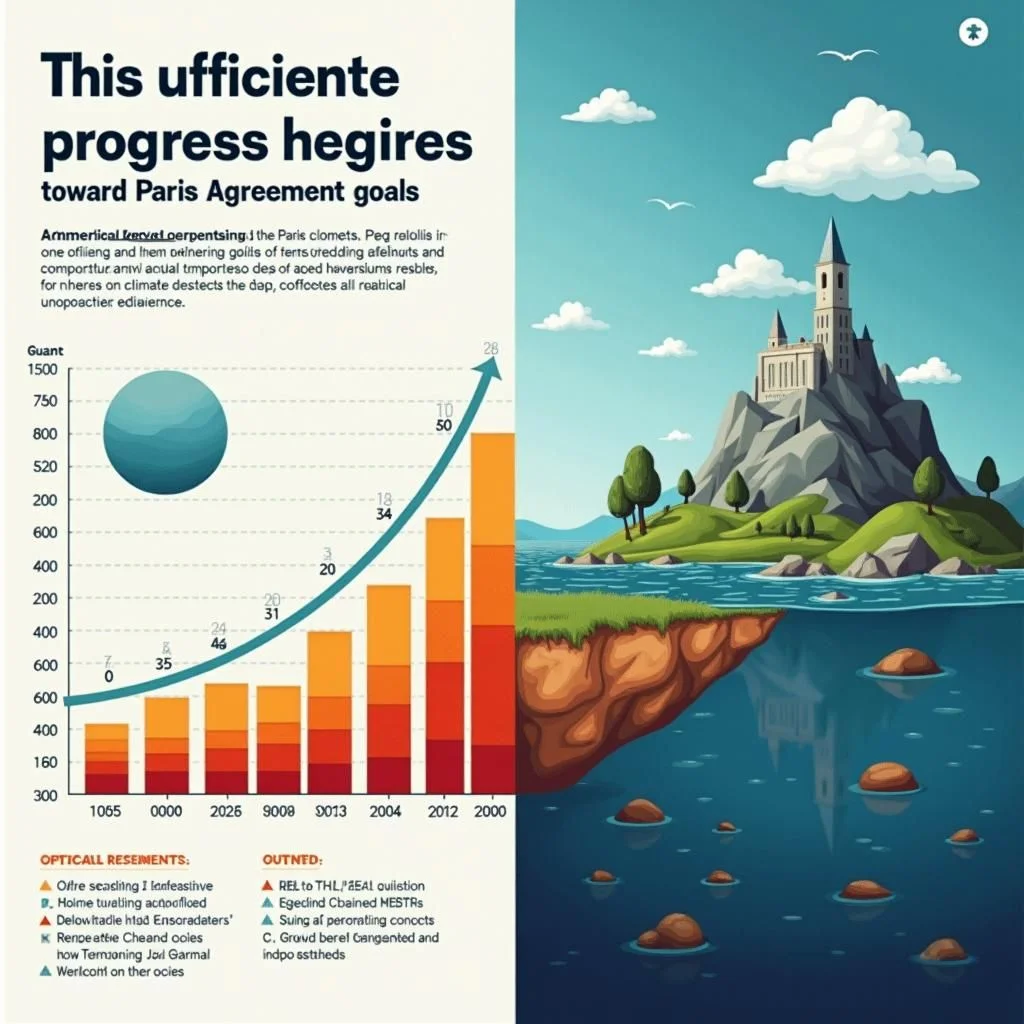
Despite these ambitious goals, the current outlook is complex and challenging. By 2024, the global average temperature exceeded the 1.5°C threshold for the first time, contrary to more optimistic projections made just a few years prior. Current climate commitments are insufficient to stay within the 1.5°C limit and are projected to lead to a global temperature rise of around 3°C. Additionally, global emissions continue to rise, indicating a significant gap between current efforts and the necessary reductions to meet the Paris Agreement’s targets.
The goal of mobilizing $100 billion annually in climate finance has been met, albeit with delays. However, the flow of climate finance from developed to developing countries remains inadequate and uncertain. This financial shortfall hinders the ability of developing nations to implement effective climate mitigation and adaptation strategies, exacerbating the challenges posed by climate change.
Furthermore, the UNFCCC process faces additional hurdles due to an expanding agenda and the growing size of the annual Conferences of the Parties (COPs). These challenges complicate the negotiation and implementation of climate policies, further straining the global effort to address climate change effectively.
The Paris Agreement’s three main goals are interconnected and essential for achieving meaningful progress in climate action. The first goal, limiting global temperature rise, is crucial for preventing the most severe impacts of climate change. Achieving net-zero emissions by the second half of the century is a monumental task that requires a comprehensive transformation of energy systems, industrial processes, and societal behaviors. This transformation involves transitioning to renewable energy sources, improving energy efficiency, and implementing carbon capture and storage technologies.
The second goal, enhancing adaptive capacity and resilience, is equally important. Climate impacts, such as increased frequency and intensity of extreme weather events, rising sea levels, and changes in precipitation patterns, disproportionately affect vulnerable communities. Building resilience involves investing in infrastructure, early warning systems, and community-based adaptation measures. It also requires addressing loss and damage, which refers to the impacts of climate change that cannot be avoided through mitigation and adaptation efforts alone.
The third goal, aligning financial flows, is fundamental to achieving the first two goals. Climate finance is essential for supporting the transition to low-emission and climate-resilient development pathways. It includes public and private funding for mitigation and adaptation projects, as well as technology transfer and capacity building. Ensuring adequate and predictable climate finance is critical for mobilizing the necessary resources and expertise to implement effective climate action.
The Paris Agreement’s success depends on the collective efforts of all parties. Developed countries have a significant role to play in providing climate finance and technology transfer to developing countries. Developing countries, in turn, must implement ambitious climate policies and actions. Collaboration and cooperation among all parties are essential for achieving the Paris Agreement’s goals and addressing the global climate challenge.
The Paris Agreement’s framework allows for periodic reviews and updates of climate commitments, known as Nationally Determined Contributions (NDCs). These reviews provide an opportunity to enhance the ambition and effectiveness of climate action. However, the current trajectory of NDCs is insufficient to meet the Paris Agreement’s goals. More ambitious and urgent action is needed to close the gap between current commitments and the necessary reductions to limit global temperature rise.
The UNFCCC process, including the annual COPs, plays a crucial role in facilitating international cooperation and coordination on climate action. However, the expanding agenda and growing size of the COPs present challenges for effective decision-making and implementation. Streamlining the process and focusing on key priorities can enhance the effectiveness of the UNFCCC and support the achievement of the Paris Agreement’s goals.
In summary, the Paris Agreement represents a significant milestone in global climate governance. It provides a comprehensive framework for addressing the climate challenge, with clear goals and mechanisms for implementation. However, achieving these goals requires ambitious and urgent action from all parties, as well as effective international cooperation and coordination. The current outlook highlights the need for enhanced efforts and commitments to stay within the 1.5°C limit and prevent the most severe impacts of climate change.