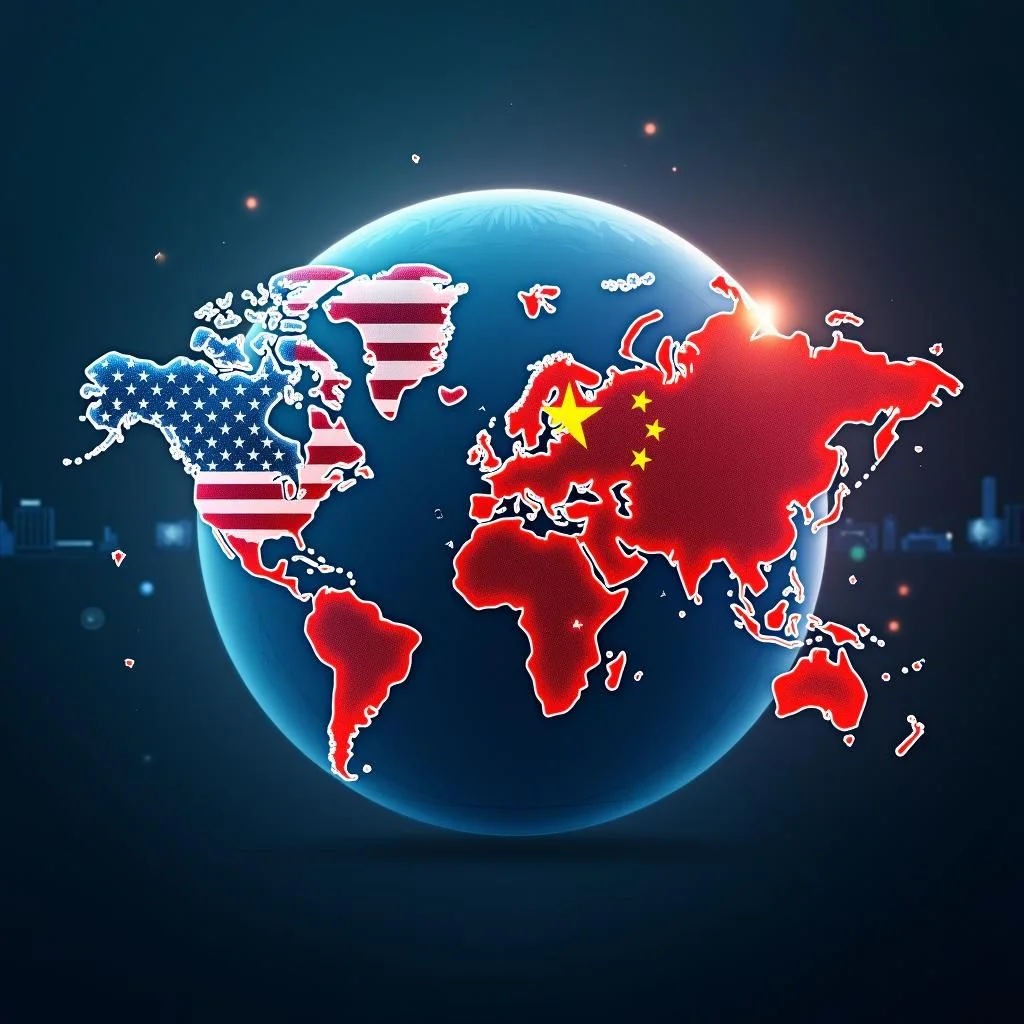
The debate about sovereignty across digital networks, systems, and applications has been ongoing for decades. As early as 1996, John Perry Barlow’s “A Declaration of the Independence of Cyberspace” challenged the notion of government control over the internet. China has long advocated for state control over the internet, and more recently, the U.S. has asserted its leadership in AI, aiming to maintain this position through initiatives like America’s AI Action Plan. This plan endorses the idea of an American sovereign AI stack, emphasizing the need to establish American AI as the global standard and ensure allies build on American technology. The U.S. administration has also taken equity stakes in companies like Intel, signaling further interest in investments across the AI technology stack.
Exerting sovereignty along the AI technology stack, from upstream rare earth minerals to advanced model training, is a complex undertaking. Each stage of the stack involves skilled labor and strategic control points with significant economic, political, and security implications. Currently, the U.S. and China dominate the full AI stack, leaving other countries with the choice to align with one version of the stack or remain neutral. However, many countries are unsatisfied with this choice and fear an AI-induced digital divide, leading to initiatives to develop their own “sovereign AI.”
These initiatives are underway in various regions, including the African Union, India, Brazil, and the European Union. Advocates argue that control over part of the AI stack is necessary for economic competitiveness, cultural and linguistic preservation, national security, and shaping global norms. Europe, in particular, has expressed concerns about its strategic vulnerabilities, such as its reliance on U.S. and Chinese technology providers and the persistent brain drain of AI talent to American, Canadian, and Chinese ecosystems.
Europe’s concerns over digital sovereignty
Europe’s concerns over digital sovereignty are exacerbated by long-running debates over privacy and government surveillance, particularly after the 2013 Snowden revelations and the 2018 U.S. CLOUD Act. The EU has expanded its regulatory capacity with legislation like the Digital Services Act, Digital Markets Act, AI Act, and Code of Practice, aiming to shape the global digital rulebook and reduce dependencies on foreign providers. However, recent shifts in U.S. foreign and trade policy, including tightened semiconductor export controls and a more assertive posture on international technology regulations, have raised concerns about overdependence on the U.S. AI stack.
The push for a sovereign AI stack in Europe
Despite these concerns, the push for a sovereign AI stack in Europe gained urgency in 2025 following changes in U.S. foreign and trade policy. European policymakers have recognized the need for a “third AI technology stack” that would diversify market competition, increase innovation, and provide an alternative aligned with democratic norms. This stack could differentiate itself by raising standards in data governance, monitoring and reporting, and environmental impact.
The geopolitical landscape
The geopolitical landscape is currently dominated by the U.S. and China, with the U.S. holding early technology firm market dominance and China promoting its infrastructure through programs like the Digital Silk Road. A more competitive EU in the global AI industry could establish a “third path forward” rooted in democratic values and fundamental rights. However, maximalist visions of AI sovereignty are not realistic for any country or region, including the United States. The AI stack relies on intricate global technology interdependence, with foundational technologies depending on rare metals and materials with limited sources.
Challenges for Europe
Europe faces additional challenges, including an “innovation gap” and the costly political imperatives of remilitarization and ballooning social welfare costs. A more pragmatic approach for the EU is to control layers of the stack where it has a comparative advantage, fostering strategic interdependence and securing a seat at the table. This could involve partnerships with countries like Brazil, Canada, India, Japan, Kenya, Korea, Nigeria, the United Arab Emirates, and the United Kingdom, all of whom have strategic interests in creating a third stack more independent of China and the U.S.
Building a credible third AI stack
Proponents of a European-led AI stack recognize the potential of countries like India, Korea, Japan, and the U.K., which have cutting-edge expertise along segments of the AI stack. However, details on how to accomplish this non-trivial task are not provided. Europe must leverage its existing strengths, such as world-class AI and science institutes and universities, and address the disconnect between academia, policy, and business. European universities often operate as “ivory towers,” and startups are frequently swallowed up by U.S. Big Tech before reaching scale due to the fragmented nature of the EU market.
Implementation and competition
To build a credible third AI stack, Europe must confront its “inconvenient truths,” including the lack of integration that limits the EU’s scale and impedes AI competitiveness. Mainstream European industry must play a larger role, with sectors like automotive, finance, insurance, and luxury goods supporting this initiative. Private capital is crucial for a durable third stack, and initiatives like the InvestAI program and “Buy European” procurement can help, but they are not substitutes for private capital willing to take risks at scale.
The EU AI Act and the U.S. AI Action Plan
The EU AI Act, which has been finalized with key elements like the Code of Practice, now shifts focus to implementation. European innovators must prove that they can create competitive products while adhering to the new regulatory regime. The U.S. AI Action Plan, on the other hand, rejects “onerous regulation,” creating room for Europe to offer a values-based alternative. However, this differentiation will only succeed if the resulting products and platforms remain competitive at scale.
El mundo se beneficiaría significativamente de una tercera pila de inteligencia artificial que se adhiera a principios democráticos y sea distinta tanto de los modelos impulsados por el Estado chino como de los liderados por el mercado estadounidense. El único camino viable es un esfuerzo colectivo con alianzas estratégicas, un marco de gobernanza compartido, acción coordinada y verdaderos incentivos económicos para la participación. Este esfuerzo colectivo debería incluir a los Estados Unidos, fortaleciendo la pila desde la posición dominante de los Estados Unidos en muchos elementos de la pila de inteligencia artificial.
La importancia de una tercera pila de inteligencia artificial
La “Acción de Gobernanza Global de Inteligencia Artificial” de China promueve la cooperación tecnológica, y los Estados Unidos deberían contrarrestar esto apoyando una tercera pila de inteligencia artificial como un verdadero esfuerzo conjunto. Europa se encuentra bien posicionada para liderar esta iniciativa con sus redes diplomáticas y capacidad científica, y los Estados Unidos deberían alentarla. Sin embargo, la diplomacia europea necesita ser igualada con planes de implementación concretos que estén adecuadamente presupuestados y financiados. La tercera pila de inteligencia artificial debería crecer orgánicamente a partir de iniciativas existentes, como el Global Partnership on AI (GPAI), que podría servir como la columna vertebral de gobernanza para la tercera pila de inteligencia artificial.
La ventana de oportunidad
La ventana de oportunidad es ahora para gobiernos y socios dispuestos a actuar; si no lo hacen, pronto se habrá decidido. El mundo se beneficiaría significativamente de una tercera pila de inteligencia artificial que se adhiera a principios democráticos y sea distinta tanto de los modelos impulsados por el Estado chino como de los liderados por el mercado estadounidense. El único camino viable es un esfuerzo colectivo con alianzas estratégicas, un marco de gobernanza compartido, acción coordinada y verdaderos incentivos económicos para la participación. Este esfuerzo colectivo debería incluir a los Estados Unidos, fortaleciendo la pila desde la posición dominante de los Estados Unidos en muchos elementos de la pila de inteligencia artificial.