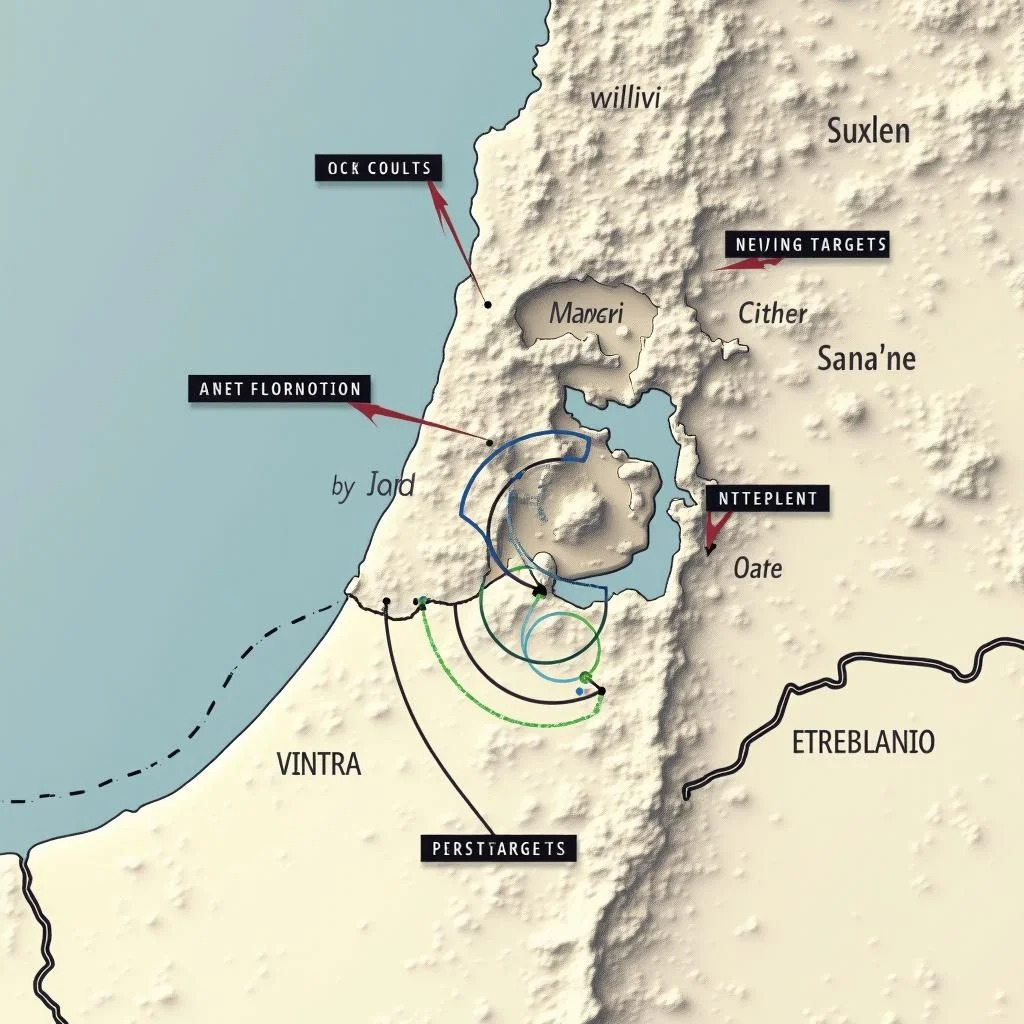
Los ataques israelíes en las capitales árabes revelan la interacción entre la seguridad nacional y las aspiraciones de hegemonía regional. Beirut, Damasco, Teheran, Sana’a y ahora Doha son solo algunas de las capitales árabes que han sufrido bombardeos israelíes. Estos ataques reflejan la ansiedad de seguridad de Israel, que a menudo se transforma en un sentido de omnipotencia y deseo de dominio regional. Esta estrategia representa la “estrategia grande” de Israel, pero cada bombardeo también tiene objetivos tácticos específicos.
Los últimos ataques en Beirut estaban dirigidos a eliminar a los líderes de Hezbollah, mientras que aquellos en Teheran tenían el objetivo de contener la amenaza nuclear iraní. Estos habrían continuado si no hubieran sido detenidos por los Estados Unidos. Los ataques en Yemen fueron una respuesta al régimen que aspira a convertirse en una especie de Corea del Norte en el Medio Oriente. Los ataques en Damasco, por otro lado, fueron una demostración de arrogancia hacia un régimen que, a pesar de las ambigüedades, está tratando de salvar a Siria.
El reciente ataque en Doha plantea muchas preguntas. El Qatar es un emirato amigo de Israel, ha establecido relaciones diplomáticas hace casi tres décadas, es aliado de los Estados Unidos y ha jugado un papel crucial como negociador árabe para una tregua en Gaza. La eliminación de los líderes de Hamas, que falló, representó una clara violación del derecho internacional y la soberanía nacional, valores en los que Israel ha tenido dificultades para estar de acuerdo. Las protestas internacionales han sido vehementes, aumentando el aislamiento de Israel.
A pocos kilómetros de Doha se encuentra Al-Udeid, la base militar más grande de los Estados Unidos en el Medio Oriente y sede del Comando Central de los Estados Unidos en la región. Es difícil imaginar un lugar más protegido y con antenas más sensibles. A junio, los iraníes habían simulado un ataque contra el Qatar en respuesta al apoyo proporcionado por los Estados Unidos durante un ataque contra las instalaciones nucleares iraníes. Si no hubieran sido informados con antelación por los israelíes, los estadounidenses y sus aliados del Qatar habrían tenido los instrumentos para identificar la llegada de una fuerza de ataque.
Los ataques israelíes en Doha plantean muchas preguntas. Es difícil creer que Israel, capaz de ataques de precisión millimétrica en Teherán y en el sur del Líbano, haya errado el blanco en Doha. Los líderes de Hamas han sobrevivido, lo que podría sugerir que alguien con quien reanudar las negociaciones desde una posición de fuerza debía quedarse vivo. Además, la operación se atribuyó al Shin Bet, los servicios secretos israelíes internos, y no al Mossad o al Estado Mayor. Esta versión de un ataque que intenta resolver y no empeorar el conflicto de Gaza es una variante optimista del problema.
Hamas es la hermandad musulmana palestina. Ningún régimen en el poder en el mundo árabe suní tolera una presencia política de los Hermanos Musulmanes. Cuando israelíes y administración estadounidense sostienen que Hamas no puede ser parte de la solución para Gaza, afirman lo que piden también aquellos países. Ninguno de ellos invertiría un dólar en la reconstrucción de Gaza, ni pondría en riesgo la vida de sus hombres para crear una fuerza militar internacional necesaria para estabilizar la franja.
El Qatar, los saudíes, los emiratíes, los egipcios y los jordanos tienen una sola posibilidad de convencer a Netanyahu de alejarse de sus aliados de gobierno extremistas, detener la ocupación de la Franja y intentar una opción política para la solución de Gaza: eliminar a Hamas. La parte política del objetivo corresponde a ellos, la militar a los expertos israelíes. Sin embargo, es importante considerar que Netanyahu podría no regresar al realismo incluso si Hamas fuera eliminado. Podría seguir sosteniendo la idea messiánica de sus aliados, de una limpieza étnica en Gaza y Cisjordania.
Los ataques israelíes en Doha están llenos de lagunas y plantean muchas preguntas. La precisión de los ataques israelíes en otras ocasiones contrasta con el aparente error en Doha. La supervivencia de los líderes de Hamas y la atribución de la operación al Shin Bet sugieren que podría haber una estrategia más compleja detrás de estos eventos. Las motivaciones y los objetivos tácticos de los ataques israelíes continúan siendo objeto de especulaciones, pero es claro que la situación es mucho más compleja de lo que parece a primera vista.
The recent attack on Doha, the capital of Qatar, raises many questions. Qatar is an Israeli-friendly emirate that has established diplomatic relations for almost thirty years, is an ally of the United States, and has played a crucial role as an Arab negotiator for a Gaza ceasefire. The elimination of Hamas’s leaders, which failed, represented a blatant violation of international law and national sovereignty, values in which Israel has always struggled. International protests were fierce, increasing Israel’s isolation.
Just a few kilometers from Doha is Al-Udeid, the largest US military base in the Middle East and the headquarters of the US Central Command in the region. It is difficult to imagine a more protected and sensitive location. In June, the Iranians had simulated an attack on Qatar in response to US support during an attack on Iran’s nuclear facilities. If not informed in advance by Israelis, Americans, and Qatar’s allies, they would have had the tools to identify the arrival of an attack force.
The Israeli attacks on Doha raise many questions. It is difficult to believe that Israel, capable of millimeter-precision attacks on Tehran and southern Lebanon, has missed its target in Doha. Hamas leaders have survived, which could suggest that someone with whom to negotiate from a position of strength had to remain alive. Moreover, the operation was attributed to the Shin Bet, Israel’s internal security agency, and not to the Mossad or the General Staff. This version of an attack that tries to solve and not exacerbate the Gaza conflict is an optimistic variant of the problem.
The Hamas is the Palestinian Muslim Brotherhood. No government in the Arab Sunni world tolerates the political presence of the Muslim Brotherhood. When Israelis and the US administration say that Hamas cannot be part of the solution for Gaza, they say what they also ask from those countries. None of them would invest a dollar in rebuilding Gaza, nor would they risk the lives of their men to create an international military force necessary to stabilize the strip.
Qatar, Saudis, Emiratis, Egyptians, and Jordanians have only one chance to convince Netanyahu to distance himself from his extremist government allies, to stop the occupation of the Strip, and to try a political option for the Gaza solution: eliminate Hamas. The political part of the objective belongs to them, the military part to Israeli specialists. However, it is essential to consider that Netanyahu may not return to realism even if Hamas is removed. He may continue to support the messianic idea of his allies, of a ethnic cleansing in Gaza and the West Bank.
The Israeli attacks on Doha are full of holes and raise many questions. The precision of Israeli attacks in other cases contrasts with the apparent mistake in Doha. The survival of Hamas leaders and the attribution of the operation to the Shin Bet suggest that there may be a more complex strategy behind these events. The motivations and tactical objectives of Israeli attacks continue to be the subject of speculation, but it is clear that the situation is much more complex than it appears at first glance.