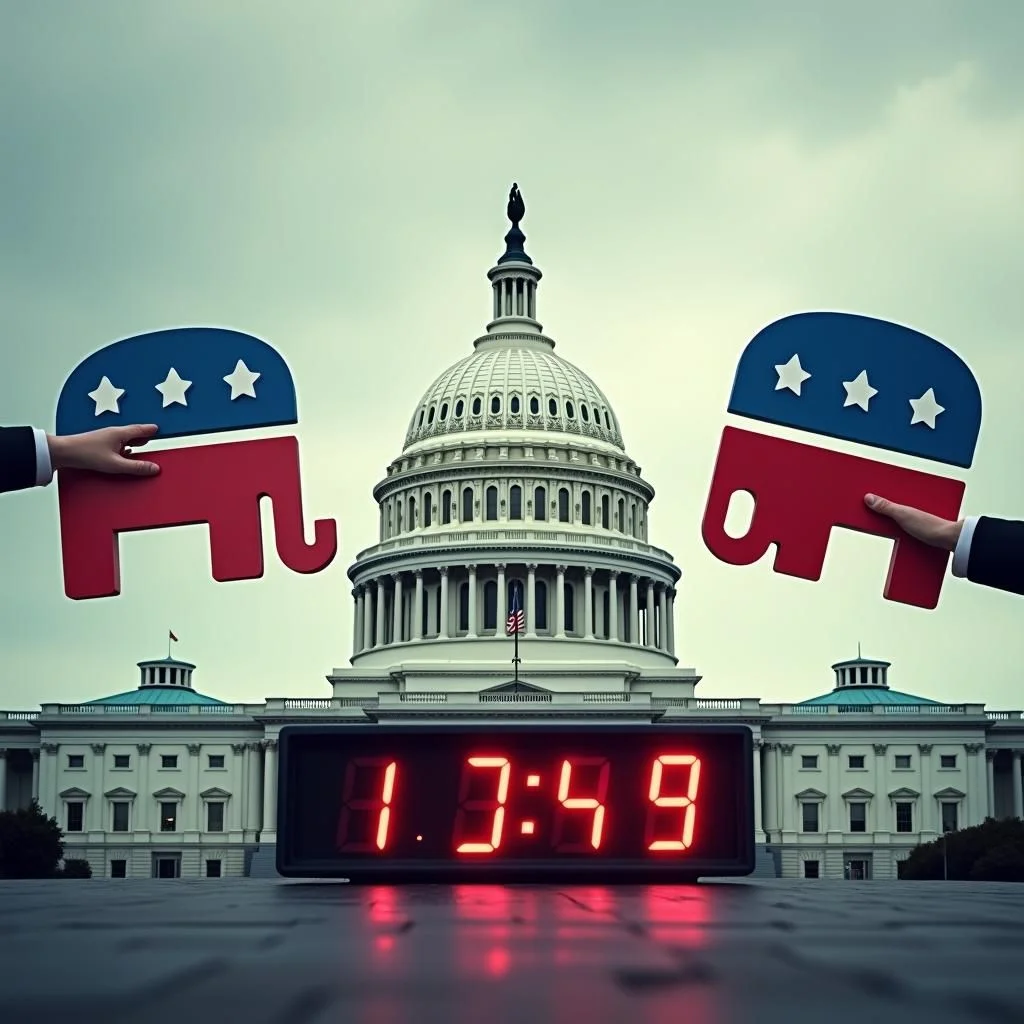
The US Congress has less than 24 hours to avoid a government shutdown, and the prospects are not favorable. The shadow of the shutdown, the closure of non-essential government activities, looms over the country again due to a political stalemate in Congress. A last-minute meeting between President Donald Trump and Congressional Democratic leaders did not produce significant progress. Instead, the distance between the parties has widened after Trump published a video created with artificial intelligence that mocks Democratic leadership. The video showed the minority leader in the House with a fake sombrero and fake mustache, and his counterpart in the Senate who stated in a robotic voice that undocumented migrants should have access to free healthcare.
Current Budget Deadline
The current federal budget expires today. To avoid paralysis, Congress could approve a temporary measure that extends some funding for a limited period. However, the rules are different in both chambers: at the House, a simple majority is enough, while at the Senate, 60 votes out of 100 are required, seven more than the Republican Party has. This makes it essential to have Democratic support, which in return demands the extension of Affordable Care Act (Obamacare) subsidies, which are set to expire at the end of the year. Republicans refuse, accusing their rivals of wanting to guarantee billions of dollars in healthcare subsidies for undocumented immigrants.
Consequences of a Shutdown
If no compromise is found by midnight, the United States will enter a new phase of political uncertainty and severe economic consequences, with the risk of further fueling Americans’ distrust of institutions. The vice president has accused Democrats of “pointing a gun to the head of the American people.” Meanwhile, the White House Budget Office has warned that a shutdown could lead to mass layoffs and transfer some spending authority to the executive branch.
Democratic Concerns
A senator expressed concern for the millions of people who could be affected: “You’re running the risk of plunging our nation into chaos. Millions of lives will be turned upside down. What kind of message does this send to our country, our allies, and our enemies?” After months of siege and demands from voters to attack the government more harshly, Democrats seem to see an opportunity to satisfy their base. However, if a shutdown were to materialize, it’s not clear that they would benefit. According to some analysts, voters might blame Democrats more than Republicans for refusing a deal without trying to negotiate better conditions.
Impact on Government Services
A shutdown means the freezing of 27% of federal public spending. Without the approval of funds needed to finance part of government services, there is a risk of partial blockage of federal agencies and departments, such as the Defense Department, but also museums, public parks, and services for the most vulnerable. In the absence of an agreement, Congress is forced to navigate by sight, approving only the refinancing that presents the same spending levels as the previous year.
History of Shutdowns
This is not a new problem, but it is becoming more frequent. Since 1975, there have been 20 shutdowns, the longest of which, during Trump’s presidency, lasted 34 days. Although the battle concerned spending for the border wall between the United States and Mexico, proposed by the president, it ended because federal air traffic controllers, who were working without pay, began to stay home, threatening to create significant disruptions to air traffic in the United States.
Market Reactions
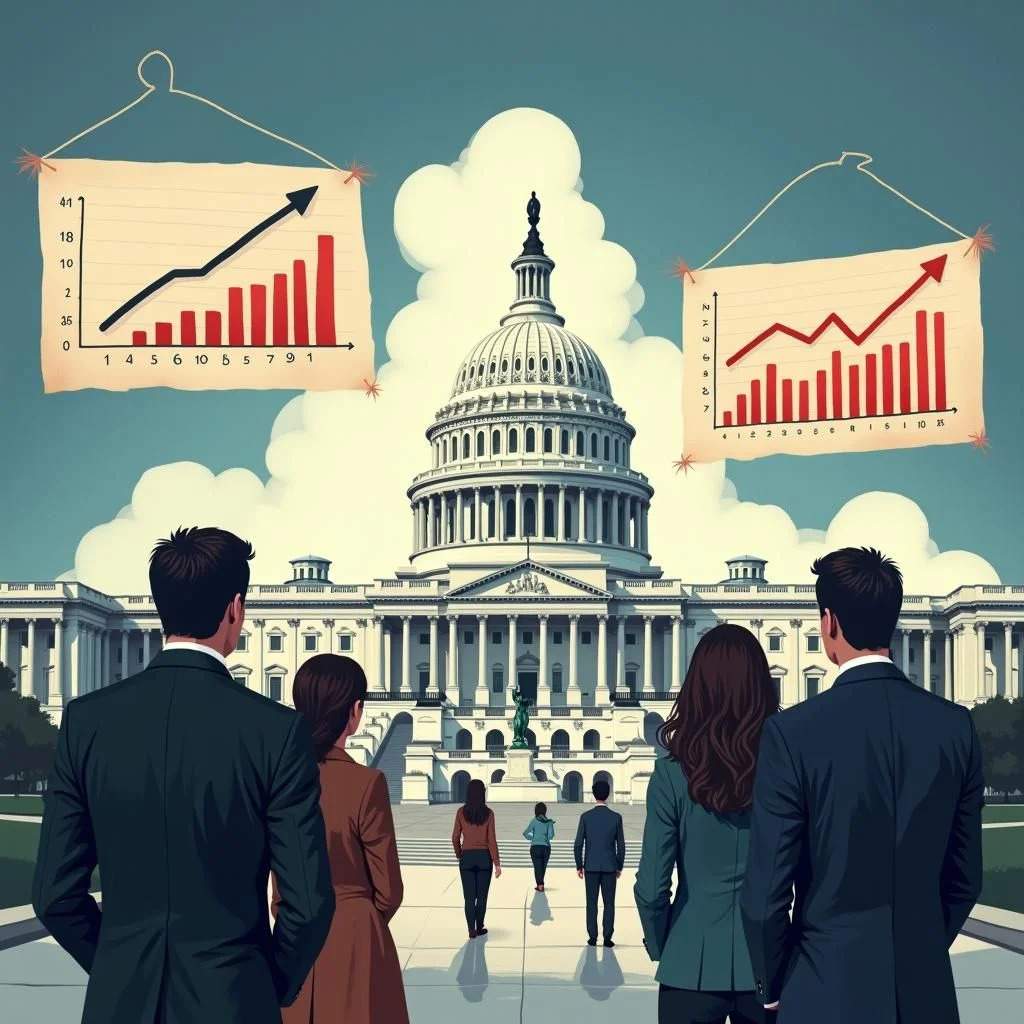
Situations like this can be unpredictable. While both parties seem determined to go to battle, it is unclear when or how this battle will end, and its effects will not stop at services and consumption. Financial markets are in turmoil, and there is a risk of an increase in interest rates on government bonds, considered riskier, which would exacerbate fears of a default by the end of 2025.
Trump’s Power Grab
Despite the risk of a shutdown, which has become a yearly occurrence, a symptom of the growing polarization of politics in the US, this year’s confrontation between President Donald Trump and Congressional Democrats takes place against the backdrop of the most aggressive attempt by a president to extend his power over the entire federal system. An attempt that is intensifying 13 months before the midterm elections.
Trump’s Escalation
Only in the last few days, Trump has ordered the deployment of military personnel to Portland, Oregon, to protect immigration control operations, declaring that the city is “a war zone” after some protests. He has also obtained the indictment of the former FBI director by the Department of Justice. The next few days will show if Democrats will be able to contain this escalation with Senate obstructionism.
Trump’s Threats
Considering Trump’s threat to summarily fire thousands of employees if Democrats were to trigger a shutdown, the coming days will be particularly anguishing for those who will be affected by an administration ready to spare no one.
El Congreso de los Estados Unidos tiene menos de 24 horas para evitar un cierre del gobierno, y las perspectivas no son favorables. La sombra del cierre, la suspensión de actividades gubernamentales no esenciales, se cierne sobre el país nuevamente debido a un estancamiento político en el Congreso. Una reunión final entre el presidente Donald Trump y líderes demócratas en el Congreso no produjo avances significativos. En su lugar, la distancia entre los partidos se amplió después de que Trump publicara un video creado con inteligencia artificial que burla la liderazgo demócrata. El video mostró al líder minoritario en la Cámara con un sombrero falso y bigote falso, y su contraparte en el Senado, quien afirmó con voz artificial que los migrantes irregulares deberían tener acceso a atención médica gratuita.
El presupuesto federal actual expira hoy. Para evitar la parálisis, el Congreso podría aprobar una medida temporal que extiende algunos fondos por un período limitado. Sin embargo, las reglas son diferentes en las dos ramas: en la Cámara, una mayoría simple es suficiente, mientras que en el Senado, se necesitan 60 votos de 100, siete más de los que tiene el Partido Republicano. Esto hace que sea esencial el apoyo demócrata, que a cambio exige la extensión de las subvenciones del Cuidado de Salud Asequible (Obamacare), que expiran al final del año. Los republicanos se niegan, acusando a sus rivales de querer garantizar billones de dólares en subvenciones de atención médica para inmigrantes irregulares.
Si no se encuentra un compromiso antes de la medianoche, Estados Unidos entrará en una nueva fase de incertidumbre política y consecuencias económicas graves, con el riesgo de alimentar aún más la desconfianza de los estadounidenses hacia las instituciones. El vicepresidente ha acusado a los demócratas de “apuntar un arma a la cabeza del pueblo estadounidense”. Mientras tanto, la oficina de presupuesto de la Casa Blanca ha advertido que un cierre podría causar despidos en masa y transferir parte de la autoridad de gasto al poder ejecutivo.
Reacciones de los demócratas
Un senador demócrata expresó preocupación por los millones de personas que podrían verse afectadas: “Estás corriendo el riesgo de hundir nuestra nación en el caos. Millones de vidas serán volcadas al revés. ¿Qué tipo de mensaje envía esto a nuestro país, a nuestros aliados y a nuestros enemigos?” Después de meses de asedio y demandas de los votantes para atacar al gobierno más fuertemente, los demócratas parecen ver finalmente la oportunidad de satisfacer a su base popular. Pero si el cierre se materializa, no está claro que ellos se beneficien de ello. Según algunos analistas, los votantes podrían culpar a los demócratas más que a los republicanos por rechazar un acuerdo sin intentar negociar condiciones mejores.
El cierre significa, en realidad, la congelación del 27% del gasto público federal. Sin la aprobación de los fondos necesarios para financiar parte de los servicios gubernamentales, hay un riesgo de cierre parcial de las agencias y departamentos federales, como el Departamento de Defensa, pero también museos, parques públicos y servicios para los más vulnerables. En ausencia de un acuerdo, el Congreso está obligado a navegar a ciegas, aprobando solo la refinanciación que presenta los mismos niveles de gasto que el año anterior.
No es un problema nuevo, pero se está volviendo más frecuente. Desde 1975, han habido 20 cierres, el más largo de los cuales, durante la presidencia de Donald Trump, duró 34 días. Aunque la batalla concernía a la asignación de fondos para el muro en la frontera entre Estados Unidos y México, propuesto por el presidente, terminó porque los controladores aéreos federales, que estaban trabajando sin sueldo, comenzaron a quedarse en casa, amenazando con crear serios desajustes en el tráfico aéreo de Estados Unidos.
Situaciones similares pueden ser impredecibles. Mientras que ambos partidos parecen determinados a ir a la batalla, no está claro cuándo o cómo esta batalla terminará, cuáles serán los efectos que no se detendrán en servicios y consumo. Los mercados financieros están en turbulencia, y hay un riesgo de aumento de las tasas de interés en los bonos del gobierno, considerados más riesgosos, lo que agravaría las preocupaciones de un default a finales de 2025.
La escalada de Trump
A pesar del riesgo de cierre recurrente anual, el enfrentamiento entre el presidente Donald Trump y los congresistas demócratas de este año tiene lugar en el contexto del intento más agresivo jamás hecho por un presidente para extender su poder sobre todo el sistema federal. Un intento que se está intensificando 13 meses antes de las elecciones intermedias.
Solo en los últimos días, Trump ha ordenado el despliegue de militares a Portland, Oregón, para proteger las operaciones de control de inmigración, declarando que la ciudad es “una zona de guerra” después de que hubieran tenido lugar algunas protestas. También ha obtenido la acusación del ex director del FBI por parte del Departamento de Justicia. Los próximos días mostrarán si los demócratas podrán ralentizar esta escalada con la obstrucción del Senado.
Mientras tanto, considerando la amenaza de Trump de despedir a miles de empleados si los demócratas desencadenaran un cierre, los días que vienen serán particularmente angustiosos para aquellos que se verán afectados por una administración dispuesta a no perdonar a nadie.