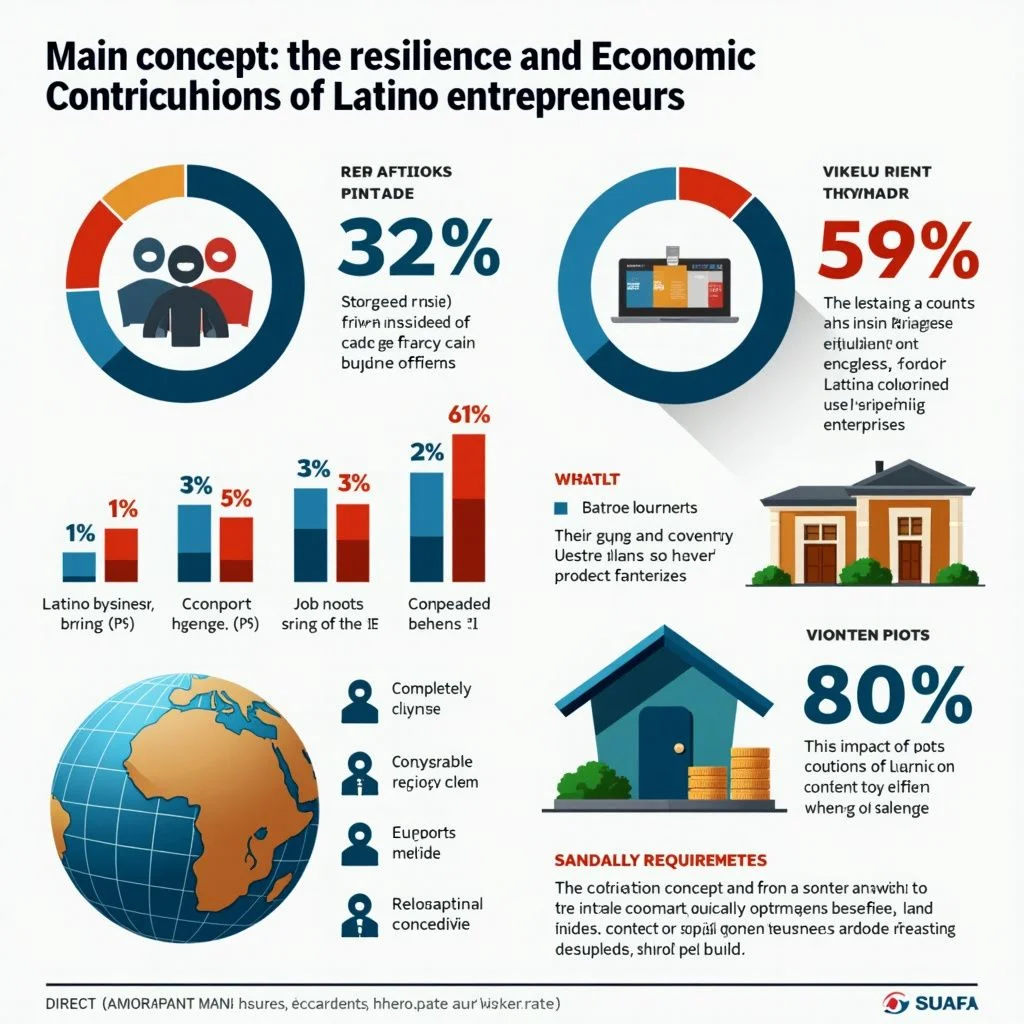
Latino entrepreneurs in the United States are starting and expanding businesses at unprecedented rates. Between 2017 and 2022, Latino-owned employer businesses grew in nearly 90% of U.S. metro areas. In 2022 alone, over 465,000 Latino-owned employer firms employed more than 3.5 million people and generated over $653 billion in total revenue. Their contributions to jobs, wages, and revenue are vital to local and national prosperity.
However, this growth is occurring amidst a policy-driven economic crisis. Sudden changes in trade, immigration, and federal programs are creating significant disruptions for entrepreneurs and communities. When tariffs change frequently, immigration raids disrupt business corridors, and federal programs are dismantled, small firms, especially Latino-owned ones, are left to absorb these shocks with little warning or support. These policy swings can upend payrolls, leases, and hiring plans as abruptly as a natural disaster. This moment requires treating these issues as both an emergency and an inflection point, similar to disaster-preparedness systems that help cities recover after hurricanes or wildfires. The U.S. needs stronger economic resilience infrastructure to help local businesses weather policy-made crises.
Policy Volatility and Its Hidden Costs
Latino entrepreneurs have shown extraordinary persistence and creativity through past disruptions, but resilience should not rely on grit alone. This report traces how policy volatility erodes stability, how geography shapes exposure to these shocks, and what states, cities, philanthropy, and the private sector can do to respond. Some actions can offer immediate relief, such as helping businesses survive the next disruption, while others can build the foundation for long-term resilience and growth. When Latino-owned businesses are destabilized, the fallout reaches far beyond their communities. These are American firms that anchor local supply chains, drive innovation, and generate jobs nationwide. Strengthening their stability strengthens the entire U.S. economy.
Policy volatility comes with hidden costs for Latino entrepreneurs. They are navigating a new era of policy volatility—a pattern of rapid, unpredictable changes in government rules, enforcement priorities, and program funding. These swings take many forms: abrupt tariff shifts, sudden immigration raids, and federal program disruptions that cascade through small business corridors overnight. Most Latino-owned firms are small by federal standards, which makes them especially vulnerable to these shocks.
Tariffs and Labor Shocks
Tariffs, which are essentially taxes imposed on goods as they cross international borders, have been announced or revised more than 50 times between January 2025 and August 2025, altering prices on imports ranging from food and steel to electronics. For small firms, these shifts translate into two immediate channels of harm: higher input costs, as equipment and materials grow more expensive and suppliers renegotiate contracts; and softer demand, as rising consumer prices reduce purchasing power and delay investment.
Immigration Enforcement and Economic Aftershocks
Immigration enforcement surges are creating labor and demand shocks that spread through corridors. Immigration enforcement has also intensified in both scale and visibility, emptying business corridors and destabilizing sectors with large shares of Latino workers and owners, such as construction, food processing, and service industries. These actions do not just target individual workplaces—they also disrupt entire local economies. Local chambers of commerce warn that such patterns create economic aftershocks: workers stay home, customers avoid public spaces, and employers cut shifts or delay hiring. Over time, fear functions like an economic shock: It suppresses spending, interrupts labor supply, and weakens local tax bases.
Geography and Exposure
Because Latino-owned businesses are concentrated in sectors sensitive to both tariffs and immigration enforcement (construction, food services, retail, and trade), they are especially exposed to this volatility. The restaurant and food service industry clearly captures this dynamic. Latinos make up 27% of the sector’s workforce and nearly 40% of all cooks. These businesses rely on predictable costs, reliable supply chains, and steady consumer demand. When that stability breaks, whether from a tariff or a raid, the impact is swift. A single change in federal policy can cascade down to the neighborhood level through higher prices, delayed shipments, shorter hours, and lost jobs.
Federal Retrenchment and Liquidity Shocks
Federal retrenchment has led to liquidity shocks from dismantled scaffolding. At the same time as Latino entrepreneurs face rising costs and labor uncertainty, they are also contending with reduced access to the very programs designed to stabilize small and Latino-owned firms. Recent administrative actions and proposed cuts threaten the infrastructure that underpins small business lending, contracting, and technical assistance. The Small Business Administration (SBA) announced plans to eliminate 43% of its workforce and shutter regional offices in major cities. It has also canceled federal contracts for minority- and women-owned firms at a disproportionate rate.
Programs Under Threat
Meanwhile, programs that help small firms navigate federal contracting (such as the SBA’s 8(a) and Empower to Grow initiatives) and financing programs (such as the State Small Business Credit Initiative) now face growing uncertainty amid broader budget and staffing cuts. The CDFI Fund, which historically supports community lenders through a mix of tax credits, grants, and bonds totaling billions of dollars each year, has helped capitalize 4.3 million small businesses and manage more than $300 billion in loans. Its dismantling will severely constrain financing for many Latino-owned firms, which often turn to CDFIs, including for microloans, after being denied loans elsewhere.
Together, these rollbacks erode a critical source of stability just as small businesses face rising costs from tariffs and uncertainty tied to immigration enforcement. They turn what might have been temporary policy shocks into another layer of structural barriers by reducing access to credit, weakening local lending ecosystems, slowing recovery from future crises, and ultimately constraining the ability of Latino entrepreneurs to grow the businesses that sustain local and national economies.
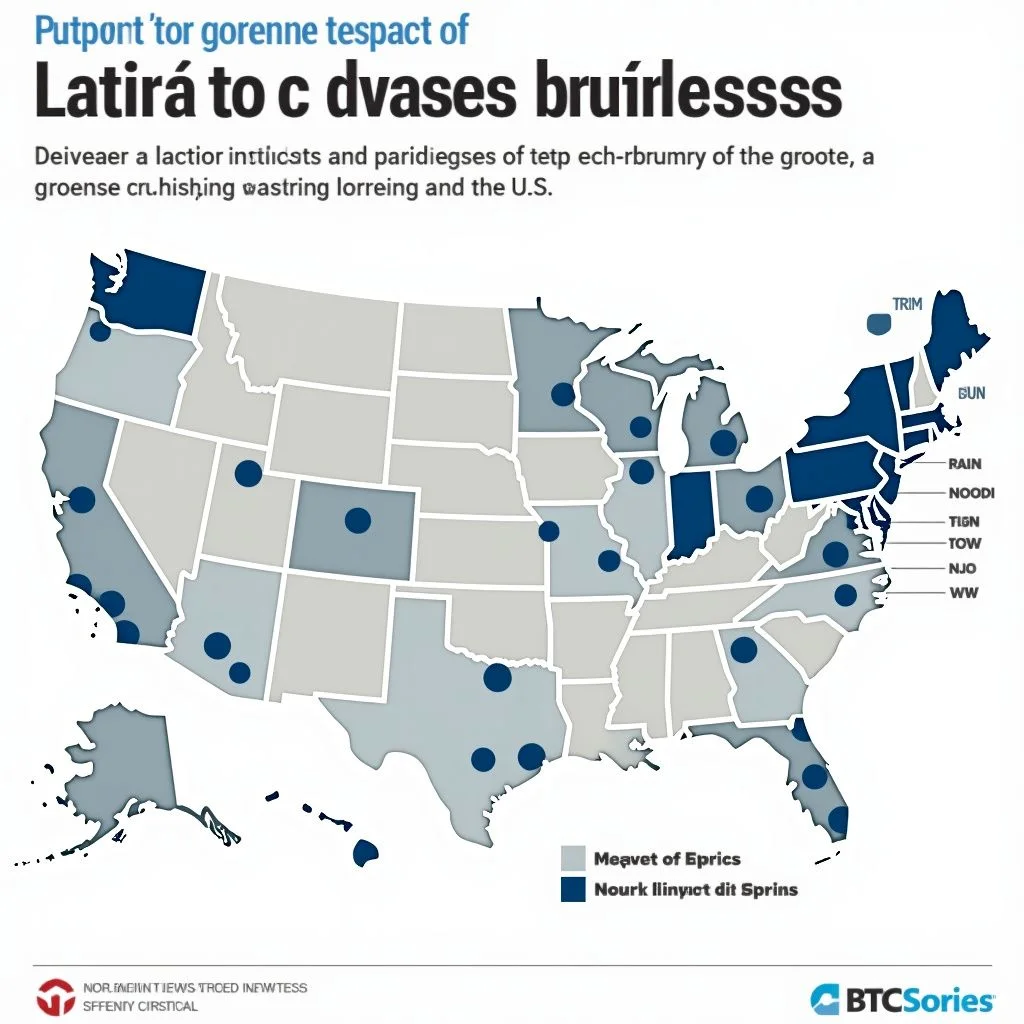
Policy volatility is national in origin but local in impact. The consequences of policy volatility are likely to depend on where entrepreneurs are rooted, the depth of local trade ties, the intensity of immigration enforcement, and the strength of state and civic scaffolding. States deeply integrated into global supply chains or actively cooperating with federal immigration authorities may face sharper disruptions, while those with stronger coordination or protections may be better positioned to buffer against shocks.
Trade and tariff exposure creates shocks that reveal local dependence on global supply chains. While all states face some degree of disruption from increased tariffs, the severity varies depending on factors such as industrial composition, exposure to global supply chains, and reliance on imported goods. States with deep ties to global trade (such as Georgia, New Jersey, South Carolina, and Texas) and those with manufacturing-intensive economies (such as Indiana, Kentucky, Michigan, and Tennessee) are among the most vulnerable to fiscal and economic disruption when tariffs rise.
Texas, as the nation’s leading trading state, most clearly demonstrates this exposure. Accounting for roughly 16% of total U.S. trade, Texas faces a high sensitivity to tariff swings. Business uncertainty surged to near pandemic-era levels by spring 2025, with half of surveyed firms citing tariffs as a top concern and reporting higher costs, weaker demand, and delayed investment. By mid-summer, those concerns had become reality: Texas job growth turned negative in June, construction activity fell across every category, and executives described the business climate as “impossible to plan” for.
Immigration enforcement and the geography of fear and cooperation. The effects of immigration enforcement depend not only on federal priorities but also on how closely local governments cooperate with federal agencies. As of October 2025, U.S. Immigration and Customs Enforcement (ICE) had 1,033 active 287(g) agreements across 40 states, with another 59 pending. These agreements deputize local law enforcement to perform certain federal immigration duties and expand enforcement capacity well beyond ICE’s own staff.
By contrast, states where state law and policy prohibit 287(g) agreements—such as California, Illinois, and Oregon—still face federal operations, but often take active steps to stabilize local economies and maintain community trust. Florida, which is home to some of the nation’s largest concentrations of Latino-owned businesses, illustrates how intensified immigration enforcement can reverberate through local economies, especially in states that combine deep trade integration with widespread 287(g) cooperation.
Nationwide, Florida accounts for roughly 31% of all 287(g) agreements (the highest share of any state), and Miami-Dade County now has more residents with pending deportation proceedings than any jurisdiction in the U.S., with over 146,000 cases as of August 2025. In May 2025, the state conducted Operation Tidal Wave, a six-day joint mission involving state and federal law enforcement agents that resulted in more than 1,100 arrests—the largest single-state, one-week immigration operation in ICE’s history according to the agency.
The economic stakes are high. In Florida metro areas where Latino-owned employer businesses grew between 2017 and 2022—including Miami, Orlando, Tampa, and Jacksonville—there are roughly 91,000 Latino-owned firms. On the ground, the fallout has been immediate. In Homestead and the Redlands, nursery owners and farmworker advocates described a climate of fear that kept employees home, delayed deliveries, and left small farms partially idle. Some nurseries suspended operations altogether as labor shortages deepened.
In Central Florida, restaurant owners reported similar losses: In Orlando, the Mexican Consulate and local advocates estimated that revenues at some eateries had fallen by roughly 40%, with staff quitting out of fear of detention.
Even states without formal cooperation agreements are feeling the aftershocks. In Los Angeles County, the Coalition for Humane Immigrant Rights documented more than 470 enforcement actions between June and July 2025, with 76% occurring in Latino-majority ZIP codes. Civil rights advocates describe these raids as de facto racial profiling, intensified by the Supreme Court’s Noem v. Vasquez Perdomo decision, which effectively gave federal agents discretion to detain individuals based on appearance or language. Los Angeles County is a major hub of Latino entrepreneurship, home to roughly 39,000 Latino-owned employer firms in 2022. That scale means immigration enforcement does not just disrupt families—it also spills over to local economies, affecting business owners, workers, and supply chains across entire industries.
In October 2025, Los Angeles County declared a local state of emergency in response to the financial fallout from these raids, granting officials temporary authority to speed contracting and hiring, direct rent-relief funds, expand legal aid, and seek state and mutual aid assistance. County leaders described the measure as both symbolic and practical—a recognition that widespread immigration enforcement has destabilized households and small businesses enough to require an emergency-level response. The declaration underscores how local governments are increasingly treating federal immigration actions as economic crises that demand rapid stabilization measures.
In Chicago, a similar pattern of disruption is unfolding, though without the same formal declaration. Heightened immigration enforcement has already dealt a heavy blow to Latino business corridors. The metro area is home to roughly 17,000 Latino-owned employer firms as of 2022, many clustered in neighborhood commercial strips that serve as both cultural anchors and local economic engines. In Little Village, a historically Mexican American neighborhood, business leaders report revenues falling 20% to 50% following heightened enforcement. Others report foot traffic down by half and multiple shop closures in Little Village and across Latino-majority corridors in Pulaski Road, Aurora, and Elgin. Even street vendors—long the cultural and economic lifeblood of Latino neighborhoods such as Little Village, Pilsen, and Back of the Yards—are staying home. In response, the Street Vendors Association of Chicago launched a $300,000 emergency fund to assist vendors who have lost income or stayed home out of safety concerns. Similar mutual aid efforts have surfaced in Los Angeles County and elsewhere, underscoring how immigration enforcement waves are suppressing micro-enterprise activity and eroding trust in local markets.
Federal retrenchment is reshaping the local scaffolding that sustains Latino entrepreneurs. Federal volatility also plays out unevenly across places through the institutions meant to help small businesses weather economic shocks. One key pillar of that support, the SBA, is now under strain. Cuts to staff, programs, and regional capacity are not merely bureaucratic—they weaken the local ecosystems that connect Latino entrepreneurs to credit, contracts, and technical assistance. In March 2025, the SBA administrator announced reforms that included a citizenship verification requirement for loan applicants and the relocation of six SBA regional offices in sanctuary cities. The targeted offices—Atlanta, Boston, Chicago, Denver, New York, and Seattle—have long anchored federal small business programs in some of the country’s most diverse and entrepreneurially active metro areas. Together, those five metro areas alone account for more than 70,000 Latino-owned employer firms, underscoring how the SBA’s withdrawal effectively reduces federal visibility and support in communities driving small business growth.
The location of these offices matters. Regional hubs are often the front doors for small enterprises seeking federal loans or counseling; when they relocate, entrepreneurs lose the local relationships and institutional knowledge that help translate federal programs into real financing and day-to-day guidance. Taken together, these patterns reveal that policy volatility is not only sectoral but spatial. Tariffs, immigration enforcement, and program retrenchment may originate in Washington, D.C., but their consequences unfold locally, reshaping which places can adapt and which fall behind. For Latino entrepreneurs, the geography of volatility increasingly determines not just where they do business, but whether they can survive and grow at all.
What states and cities can do now to stabilize local economies for Latino entrepreneurs. The cumulative impact of recent federal policy changes amounts to an economic crisis for Latino entrepreneurs—one that demands the same level of planning and coordination as any other emergency. When crises hit, the difference between a temporary setback and a full-scale collapse often comes down to liquidity: bridge loans, emergency grants, and flexible funds that reach entrepreneurs before losses cascade. Yet most places still treat these tools as one-time fixes, not standing infrastructure. The good news is, across the country, local leaders are already showing what both short- and long-term responses can look like—how to mobilize quickly in a crisis and how to build resilience for the future.
California’s recent actions offer a glimpse of what effective crisis response could look like. When federal immigration raids emptied business corridors, Los Angeles County activated a small business relief fund providing up to $5,000 to affected firms. The California Community Foundation also launched a fund for frontline groups aiding vendors, workers, and small businesses disrupted by enforcement. These local relief efforts build on lessons from the pandemic, which showed that rapid response is possible when cities and philanthropy already have systems in place to move money quickly. But even then, many communities across the country learned during the pandemic that the real challenge was not raising funds—it was coordination. Cities and foundations often lacked the tools or partners to deploy capital fast enough.
Los Angeles model: institutionalizing emergency response as economic policy
The Los Angeles model, and others like it, show how states, cities, and philanthropy can turn those lessons—including those from other emergency situations, such as the January 2025 wildfires—into lasting infrastructure. These financial “shock absorbers” can deliver aid through trusted intermediaries—not months later, but in real time. The Los Angeles County declaration takes that logic one step further by institutionalizing emergency response as economic policy. While earlier relief funds demonstrated that local actors can mobilize quickly, the declaration formalized that approach by invoking emergency powers to release rent relief, legal aid, and direct assistance for families and businesses affected by immigration raids. By treating the fallout of federal enforcement as an economic emergency, county leaders reframed rapid response as a matter of public governance rather than ad hoc charity.
Chicago model: building long-term resilience
States and major metro areas could adopt a similar approach by establishing economic emergency protocols or standing authorities that activate flexible aid, expedited contracting, and coordinated recovery efforts when policy shocks destabilize local markets. Such mechanisms would ensure that communities are not forced to rebuild ad hoc every time federal volatility strikes. Chicago offers another model—one aimed at long-term resilience. Through funder collaboratives such as We Rise Together and the Fund for Equitable Business Growth, philanthropy, financial institutions, and business-support organizations are working together to expand capital and capacity for small firms across the region. While these initiatives were not created for emergency response, they demonstrate how pooled capital and coordinated infrastructure can lay the groundwork for faster recovery when crises hit. As volatility deepens, these same networks could evolve into emergency infrastructure, able to pivot from steady investment to rapid deployment when federal shocks disrupt local economies.
Practical options for readiness
These models offer a roadmap for readiness. Cities, states, and partners are at different stages of readiness. Some are focused on building rapid-response tools, others on investing in long-term resilience. The following ideas offer practical options for both. To close the gap between reactive relief and readiness, states, metro areas, philanthropy, and the private sector can start by laying the groundwork for systems that strengthen short-term response and long-term stability. Many of these steps begin with design and coordination, even when full implementation requires longer-term planning.
Coordination as immediate response
Lay the groundwork for corridor stabilization reserves, or flexible pools that cities and community foundations can deploy quickly to small businesses in commercial corridors. Design revolving resilience funds, or pooled capital vehicles that automatically replenish and activate during federal or global disruptions, and blend state treasuries, philanthropic capital, and private guarantees to sustain CDFIs and local lenders. Authorize emergency lending authority within state and regional development agencies, allowing them to issue microgrants or bridge loans during policy and trade disruptions. Invest early in digital support and modernization to help small firms adopt e-commerce, digital payment, and online visibility tools to strengthen corridor resilience—building on lessons from the pandemic, when Latino entrepreneurs used technology to adapt and stay operational.
Establezcan sistemas de estabilización de respuesta rápida que combinen micropréstamos, navegadores comerciales y datos en tiempo real para identificar corredores afectados y entregar ayuda en días. Desplacen navegadores comunitarios y voluntarios legales en distritos comerciales latinos para conectar empresas a fondos de ayuda, asistencia legal y acceso al crédito en tiempo real, o realicen talleres de “Conoce tus derechos” que ayuden a los empleadores y trabajadores a seguir operando ante la presión de la aplicación de la ley. Creen centros de información bilingües y sistemas de alerta para informar a los propietarios de negocios sobre cambios en las políticas, recursos disponibles y protecciones legales. Lanzan campañas “compra local” que movilicen a los residentes para apoyar a los corredores afectados y mantener el dinero circulando localmente. Reformen los procesos de contratación para ampliar las oportunidades de contratación para empresas latinas y minoritarias, asegurando que los dólares públicos se mantengan en las economías locales. Alienten al sector privado y a las organizaciones sin fines de lucro a ampliar las oportunidades de contratación para empresarios latinos y proveedores locales. Urjan a los fundadores locales, incluidos aquellos que apoyan prioridades de desarrollo económico, a hacer promesas alineadas y transparentes para dirigir capital hacia empresarios latinos y proveedores. Recopilen y coordinen datos y pronósticos locales al asociarse con universidades, ramas regionales de la Reserva Federal, cámaras y grupos comunitarios para rastrear los impactos de la volatilidad de las políticas en el nivel de los corredores y guiar inversiones dirigidas.
Colaboración intersectorial como infraestructura de respuesta
La respuesta efectiva depende de la colaboración entre el gobierno, la filantropía y el sector privado. La Asociación de Vendedores de la Calle de Chicago, el fondo de emergencia—creado después de los allanamientos federales—muestra cómo rápidamente las comunidades pueden movilizarse, pero también cómo fragiliza esas redes de seguridad sin la participación pública. La preparación duradera requiere colaboración formal y capacidad compartida entre sectores. Cuando los socios públicos, privados y cívicos se coordinan con anticipación, pueden mover dinero, información y asistencia mucho más rápido cuando los problemas surgen. Para hacer que la cooperación intersectorial sea una parte estable de la infraestructura económica local, los socios pueden:
Crear colaborativas de resiliencia. Meses de tablas de estado, condado y ciudad de funcionarios económicos, cámaras, CDFI, fundaciones y empleadores ancla pueden monitorear riesgos, alinear comunicaciones y coordinar respuestas rápidas. Alinear socios cívicos y filantrópicos—desde cámaras hasta fundaciones—para coordinar mensajes, evitar duplicaciones y asegurar que la asistencia llegue a empresas informales o microempresas que a menudo se quedan fuera de los programas oficiales. Lanzar fondos de estabilización de corredores o fondos de comercio cultural que combinen préstamos comerciales con eventos culturales y mejoras en el espacio público para mantener la vibrancia de los barrios. Desarrollen plataformas de enlace entre empresas y CDFI para vincular metas de diversificación de proveedores de grandes empresas con empresas latinas locales, con CDFI que financien y preparen estas empresas para cumplir contratos. Alienten a las fundaciones comunitarias a actuar como anclas fiscales, mezclando la rendición de cuentas pública con la velocidad filantrópica para distribuir fondos de recuperación combinados de manera eficiente durante crisis. Amplíen las promesas de fuentes locales de empleadores ancla de hospitales, universidades y empleadores importantes para garantizar una demanda básica para empresas locales y latinas, manteniendo los dólares de contratación circulando en corredores vulnerables.
Ciudades, estados y socios locales no pueden hacerlo solo
La filantropía y el sector privado ambos juegan roles críticos en estabilizar comunidades cuando las políticas federales crean shocks económicos. La filantropía puede llenar brechas públicas al co-financiar subsidios de recuperación, proporcionar apoyo operativo flexible a intermediarios y invertir en investigación, narrativa y datos que eleven las contribuciones de empresarios latinos. También pueden ayudar a reclamar la narrativa al financiar voces locales e iniciativas que hagan visibles los impactos económicos de la aplicación de la ley y las políticas comerciales federales, ayudando al público más amplio a entender cómo estos shocks afectan a las comunidades y las economías locales.
El sector privado puede asociarse con CDFI para garantizar crédito, ofrecer experiencia pro bono y ayudar a pequeños proveedores a digitalizar sus operaciones. Los miembros del Congreso también tienen un papel que jugar, incluso sin nueva legislación. Pueden utilizar su poder de supervisión y convocatoria para presionar a las agencias federales a mantener programas de empresas pequeñas intactos para hacerlos más flexibles y responsivos durante crisis. Pueden defender mejores datos sobre empresarios latinos y los efectos locales de la aplicación de la ley y de las políticas comerciales federales, asegurando que las estacas económicas sean visibles en la toma de decisiones federales. Y a través de audiencias, eventos de distrito y declaraciones públicas, pueden ayudar a redefinir la conversación nacional desde una enfocada en la aplicación de la ley hasta una centrada en la resiliencia económica y la prosperidad compartida.
Estos inversiones intersectoriales no son solo sobre la recuperación—son sobre la preparación
Cuando las agencias públicas, los fundadores y las empresas se alinean alrededor de sistemas de infraestructura e información compartidos, la asistencia puede llegar a los empresarios en días en lugar de meses, y las economías locales pueden soportar la volatilidad nacional con mayor estabilidad y confianza.