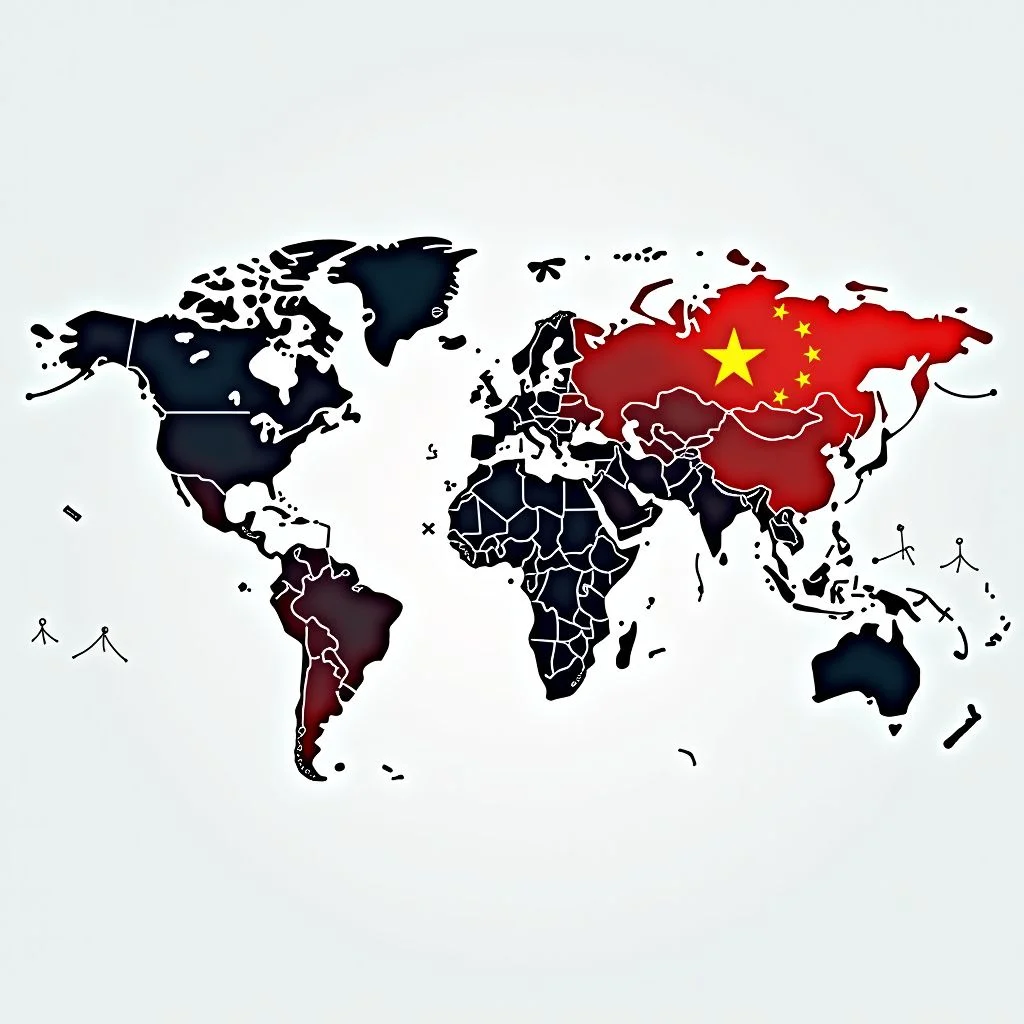
Rapid advances in the sophistication and functionality of military platforms enabled by artificial intelligence (AI) necessitate urgent measures to minimize the likelihood that states will use them in ways that cause harm to civilians. The potential for AI-powered military capabilities to harm entire societies and threaten human survival underscores the critical need for governance and preparedness regimes. China and the United States, as leaders in AI development and diffusion, bear a special responsibility to prevent the misuse of AI in the military domain.
Governance regimes aim to address technical and use-based causes of AI-powered military crises by requiring or prohibiting certain behaviors. Mechanisms can range from mutual statements to binding agreements and confidence-building measures that enhance communication and transparency. For these governance measures to be durable and effective, they must be based upon a mutually acceptable, analytical method for determining what to govern. This involves creating a hierarchy to prioritize which initiators and responses to govern, considering factors such as risk, volume, and time.
An AI-powered military crisis occurs in four phases: initiation, action, effect, and response. The initiation phase can involve technical failures of AI-enabled military applications or government decisions to use AI in provocative or dangerous ways. Technical failures can include identifiable errors in AI models, unidentifiable errors (black-box problems), and unintentional signal distortion. Government uses can range from intentional disruption or destruction of function to accidental/unauthorized actions.
The U.S. Department of Defense and China’s People’s Liberation Army are actively developing military platforms that incorporate AI models. These platforms can be used for intelligence, reconnaissance, and surveillance (ISR); data processing, analysis, and visualization; and the delivery of conventional, cyber, and nuclear weapons. Each addition of an AI-enabled military platform increases the risk of an AI-powered military crisis.
The effects of AI-enabled military actions can be severe, including civilian casualties, damage to infrastructure, destruction of military capabilities, and environmental harm. These effects can prompt retaliatory actions, leading to escalation and potential crisis spirals. Governments must choose cooperation mechanisms to minimize the likelihood of such crises and their escalation.
Defining a hierarchy to prioritize which initiators and responses to govern is crucial. Methods for creating this hierarchy include risk assessment (probability x seriousness), scenario counting, and maturity assessments. Each method has its limitations, but they provide a framework for prioritizing governance efforts. States can choose to prioritize based on the severity of effects on civilians or other criteria such as probability, number of foreseeable scenarios, or readiness for military use.
Despite the challenges, the United States and China should seek to identify “no-regrets” risk mitigation and preparedness measures. These could include developing a bilateral failure-mode and incident taxonomy, defining dangerous AI-enabled military actions, exchanging testing and evaluation principles, agreeing to mutual notification of AI-enabled military exercises, and establishing standardized communication procedures. Mutual pledges to ensure human control in peacetime and routine encounters, and supplementing commitments on nuclear weapons use decisions, are also essential.
Cooperation on catastrophic “loss of control” scenarios emerging from frontier AI models is also crucial. Both superpowers share an interest in preventing nonstate actors from utilizing advanced AI models to develop weapons of mass destruction. As AI approaches artificial general intelligence or artificial superintelligence, ensuring these systems remain aligned with human interests and values is paramount.
The U.S.-China military and AI competition presents challenges, but historical examples, such as the Nuclear Non-Proliferation Treaty, show that cooperation is possible even during intense rivalries. The two countries should explore ways to cooperate on AI governance, including developing a common baseline of shared AI risks, enhancing transparency, and sharing information and best practices on AI safety.
Future efforts in AI crisis governance should focus on refining technical mechanisms, scrutinizing risk hierarchy methods, and situating them within a political-institutional context. Technical mechanisms should distinguish between comprehensible and incomprehensible errors and consider human-machine interaction patterns. Risk hierarchy methods should prioritize near-term risks while maintaining awareness of emerging technologies. Governance mechanisms should acknowledge the technical infeasibility of distinguishing between conventional and nuclear delivery systems and focus on robust assessment and crisis-management mechanisms.
State-level cooperation on AI-powered crises should be based on shared perceptions of risk, classified by initiating actors and ranked by urgency and potential harm. Scenario-based methods and maturity-based hierarchies can also guide risk frameworks. However, technical rationality alone is insufficient; governance arrangements must be embedded within a broader political and institutional framework.
Red-line consensus, arms race restraint, and political trust and international legal frameworks are essential for effective governance. Agreeing on categories of AI military applications that are off-limits, implementing measures to constrain the intelligentized arms race, and supporting confidence-building measures and international legal instruments are crucial steps. The United Nations and other multilateral platforms can facilitate the development of baseline principles and incremental consensus.
La rivalidad estratégica en curso entre China y los Estados Unidos, caracterizada por la sospecha mutua y la incertidumbre, plantea desafíos significativos para la gobernanza de la inteligencia artificial (IA). Ambas partes deben liberarse del dilema de seguridad redefiniendo las percepciones, gestionando la competencia, estableciendo líneas rojas claras y fortaleciendo la colaboración en la seguridad de la IA. Iniciar un diálogo a través de discusiones académicas y técnicamente fundamentadas puede facilitar la comprensión mutua y reducir las malas percepciones.
Desafíos para la gobernanza de la IA
El riesgo asociado con la IA general, incluyendo el uso malicioso, los fallos y los riesgos sistémicos, requiere esfuerzos globales colectivos y coordinados. Alentadoramente, una creciente comunidad de científicos y expertos está dedicada a este esfuerzo compartido, ofreciendo vías prometedoras para la colaboración constructiva.
La responsabilidad compartida de China y los Estados Unidos
China y los Estados Unidos deben continuar promoviendo la gobernanza global de la IA bajo el marco de las Naciones Unidas y explorar la creación de un mecanismo internacional autoritativo para regular el comportamiento relacionado con la IA. Como potencias líderes en la tecnología y la innovación de la IA, comparten la responsabilidad de contribuir al desarrollo de la capacidad de la IA en los países en desarrollo y avanzar en los Objetivos de Desarrollo Sostenible de las Naciones Unidas. Iniciativas conjuntas en estas áreas fortalecerían la gobernanza global y demostrarían que el desarrollo responsable de la IA puede servir a intereses humanos comunes.
La importancia de la gobernanza de la IA en el dominio militar
En resumen, la integración de la IA en activos y operaciones militares plantea riesgos significativos para los civiles, requiriendo regímenes de gobernanza y preparación robustos. Los Estados Unidos y China, como líderes en el desarrollo de la IA, tienen una responsabilidad especial para prevenir el uso indebido de la IA en el dominio militar. Al perseguir mecanismos para minimizar la probabilidad de crisis militares impulsadas por la IA y su escalada, y al fomentar la cooperación y la confianza, los dos países pueden sentar las bases para un camino adelante en la gobernanza de la IA.