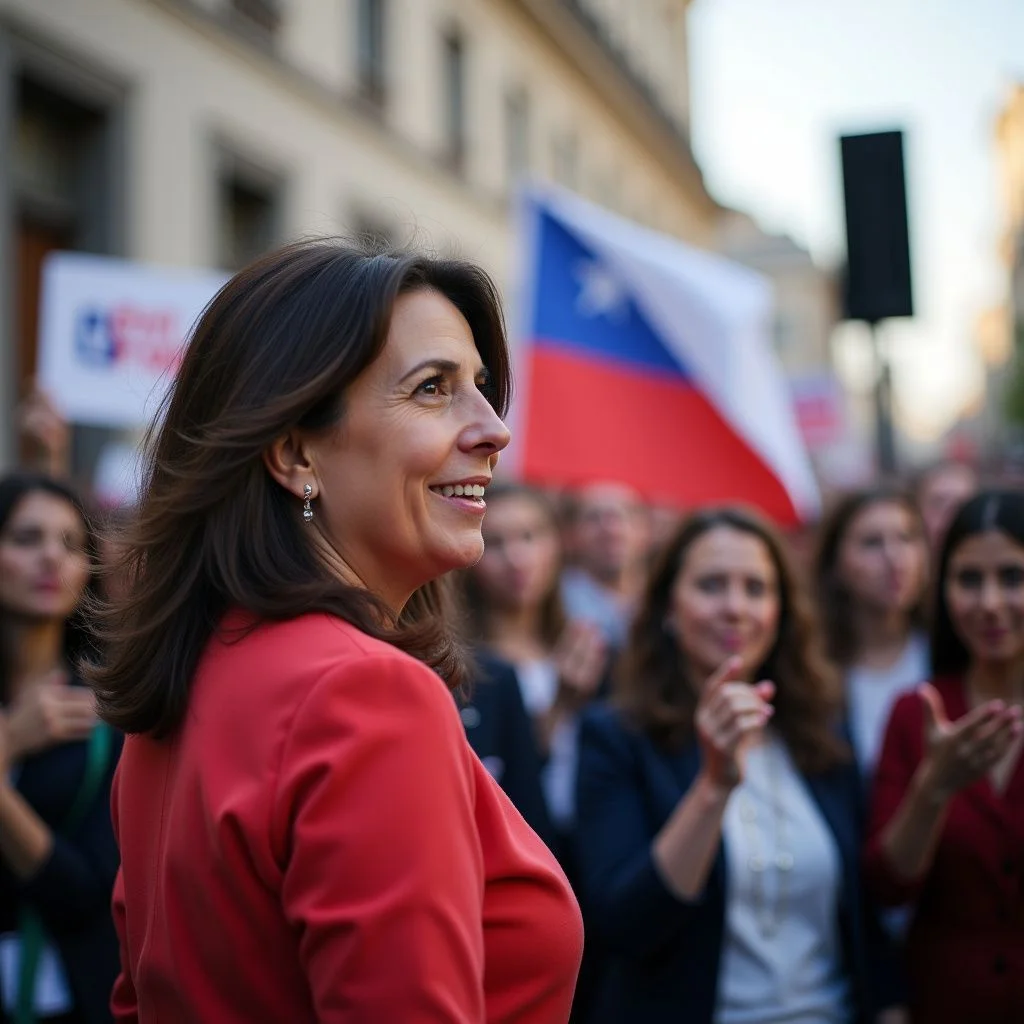
Chile faces a runoff election in a context shifted to the right, with the progressive candidate needing to regain the moderate vote to avoid a drift towards ultraconservatism. On December 14, one of the two candidates who passed to the second round in this mid-November Sunday will succeed Gabriel Boric as President of Chile. The two candidates are Jeanette Jara, who arrived first with 26.8% of the votes, a communist and former Minister of Labor, representing the progressive bloc, and José Antonio Kast, an ultraconservative leader of the Republican Party, who ranked second with 23.9% of the votes. Although polls had correctly predicted the candidates for the runoff, they did not predict the result obtained by the other right-wing parties, which were displaced from third place by the unexpected success of the Party of the People of Franco Parisi, which totalized 19.7% of the votes. Johannes Kaiser, representative of an even more radical extreme right than that of Kast, ranked fourth with 13.9% of the votes, followed by Evelyn Matthei, a representative of traditional right-wing, with a percentage of 12.4%. With the reduction of abstention to a physiological fact in elections that were compulsory for the first time in Chile, Kast presents himself as the big favorite for the second round. Kaiser and Matthei have already confirmed the convergence of their votes on his candidacy, and the three right-wing parties, added together, represent 50% of the electorate.
The Chilean parliament has shifted to the right with the vote of this Sunday, which also renewed the entire Chamber of Deputies (155 seats) and half of the Senate (23 out of 50 seats). However, from Jara’s headquarters, they insist that the December vote will be completely different from this one, where there were eight candidates competing, and that therefore the game is all to be played. Boric, in 2021, arrived second in the first round behind Kast, then won the second round with the fundamental vote of women and young people. This happened four years ago, two years after the social explosion in Chile, which the country managed to channel into institutions. The world has changed a lot since then, with a reactionary wave crossing it in the wake of Trump, imposing a security logic and manipulating communication with fake news and negationist theorems.
Jeanette Jara is no longer the favorite and will have to reinvent a campaign capable of attracting part of the moderate vote and at the same time warning of the risks of a drift towards antidemocratic represented by her opponent. In June, she had won the primaries of the progressive bloc with 60% of the votes, beating the socialist Carolina Tohá. Born in Santiago, 51 years ago, Jara, a communist since she was 14, boasts popular origins. Entered the government for the first time during Michelle Bachelet’s second term as undersecretary of social security, as Minister of Labor in the Boric government, she implemented important reforms of pensions, the reduction of working hours to 40 hours and the increase of the minimum wage.
José Antonio Kast is a 59-year-old lawyer and, after being part of the conservative party of the right (Udi), he founded the Republican Party in 2019. His philosophy is liberal in economics, with the reduction of the state’s weight, and reactionary in citizenship rights, with the derogation of the abortion law. In the past, he has defended the legacy of Pinochet’s dictatorship and is a very active leader in the international extreme right, often convened in Madrid by Vox.
The Chilean political system is often described as a “Chilean pendulum”, according to which the opposition is favored in electoral competitions in the name of a change that is chimerical. In addition, a president in Chile cannot immediately run for a second term, so Boric knew from the beginning that he would govern for only four years, which are certainly not many for a profound change. He has made some reforms with a fragmented parliament, he had promised much more, but he has clashed with the resistance to change, because change generates a defensive attitude on the part of those who want to conserve privileged positions.
There is also a question related to the narrative. The Boric presidency inherited the process of constitutional reform and its defeat, just six months after his inauguration. The first text of the new constitutional project was rejected in a popular referendum with 62% of the votes. It was read as a failure of the Boric government, although he was not directly responsible.
Chile is facing a runoff election in a shifted political context to the right, with the progressive candidate who must regain the moderate vote to avoid an ultraconservative drift. On December 14, one of the two candidates who passed to the second round in this mid-November Sunday will succeed Gabriel Boric as President of Chile. The two candidates are Jeanette Jara, who arrived first with 26.8% of the votes, a communist and former Labor Minister, representing the progressive bloc, and José Antonio Kast, an ultraconservative leader of the Republican Party, who ranked second with 23.9% of the votes.
Although the polls correctly predicted the candidates for the runoff, they did not predict the result obtained by the other right-wing parties, which were displaced from the third position by the unexpected success of the People’s Party of Franco Parisi, which totalized 19.7% of the votes. Johannes Kaiser, a representative of an even more radical extreme right than that of Kast, was ranked fourth with 13.9% of the votes, followed by Evelyn Matthei, a traditional right-wing representative, with a percentage of 12.4%. With the reduction of abstention to a physiological fact in elections that were compulsory for the first time in Chile, Kast presents himself as the big favorite for the second round. Kaiser and Matthei have already confirmed the convergence of their votes on his candidacy, and the three right-wing parties, added together, represent 50% of the electorate.
The Chilean parliament has shifted to the right with the vote of this Sunday, which also renewed the entire Chamber of Deputies (155 seats) and half of the Senate (23 out of 50 seats). However, from Jara’s headquarters, they insist that the December vote will be completely different from the last one, where there were eight candidates competing, and that therefore the game is all to be played. Boric, in 2021, came second in the first round behind Kast, then won the second round with the fundamental vote of women and young people. This happened four years ago, two years after the social explosion in Chile, which the country was able to channel into institutions.
The world has changed a lot since then, with a reactionary wave that crosses it following Trump, imposing a security logic and manipulating communication with fake news and negationist theorems. Jeanette Jara is no longer the favorite and will have to reinvent a campaign capable of attracting part of the moderate vote and at the same time warning of the risks of an antidemocratic drift represented by her opponent. In June, she won the primaries of the progressive bloc with 60% of the votes, beating the socialist Carolina Tohá.
Born in Santiago, 51 years ago, Jara has been a communist since she was 14, a public administrator and lawyer who boasts popular origins. She entered the government for the first time during Michelle Bachelet‘s second term as undersecretary of social security, as Labor Minister in Boric‘s government, she implemented important reforms of pensions, the reduction of working hours to 40 hours and the increase of the minimum wage.
José Antonio Kast is a 59-year-old lawyer and, after being part of the conservative party of the right (Udi), founded the Republican Party in 2019. His philosophy is liberal in economy, with the reduction of the state’s weight, and reactionary in the matter of citizenship rights, with the derogation of the abortion law. In the past, he defended the legacy of Pinochet‘s dictatorship and is a very active leader in the extreme right international, often summoned to Madrid by Vox.
The Chilean political system is often described as a “Chilean pendulum”, according to which the opposition is favored in electoral competitions in the name of a chimeric change. Moreover, a president in Chile cannot immediately run for a second term, so Boric knew from the beginning that he would govern for only four years, which certainly are not many for a deep change. He made some reforms with a fragmented parliament, he had promised much more, but he clashed with the resistance to change, because change generates a defensive attitude from those who want to conserve privileged positions.
There is also a question related to the narrative. The Boric presidency inherited the process of constitutional reform and its defeat, just six months after his inauguration. The first text of the new constitutional project was rejected in a popular referendum with 62% of the votes. It was read as a failure of the Boric government, despite him not being directly responsible.