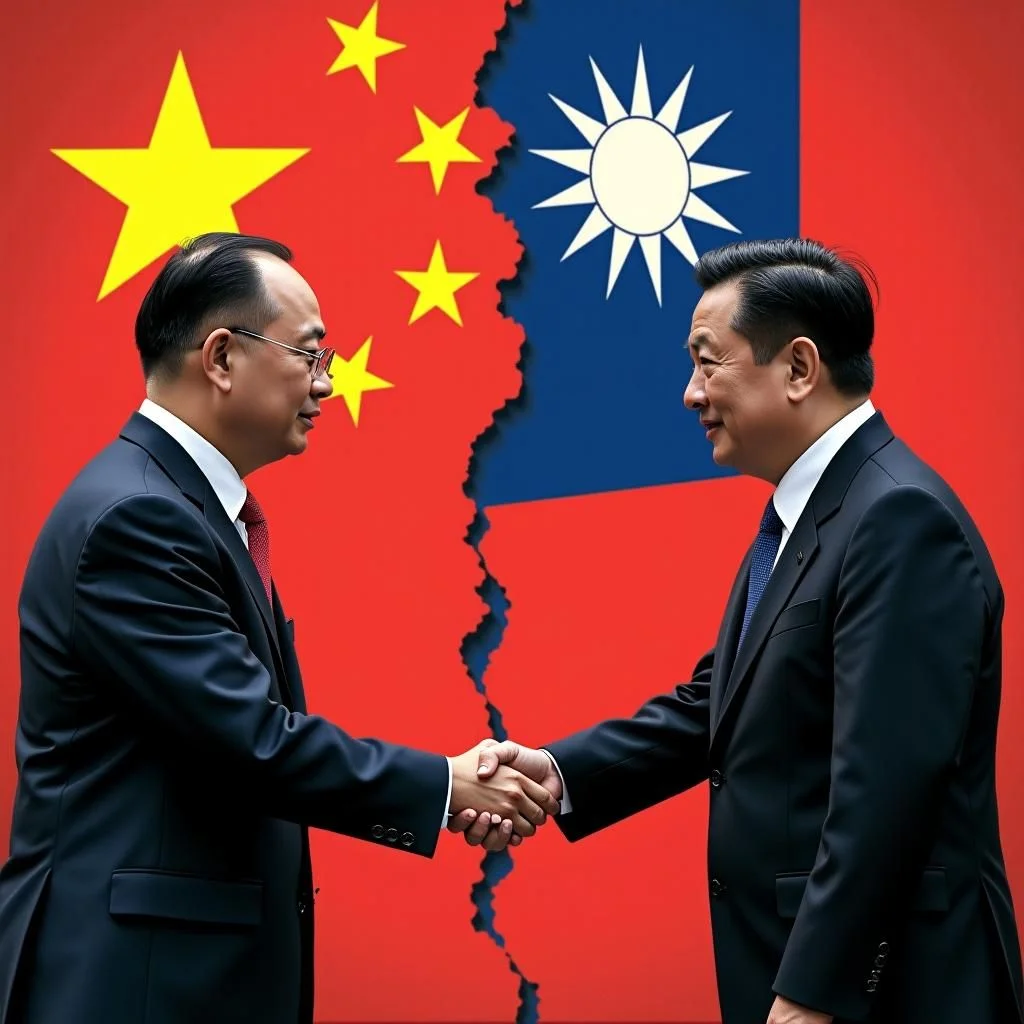
For the last 18 months, Taiwan’s political landscape has been in a state of flux. The recent failure of an attempt to recall 24 Kuomintang (KMT) legislators in a «great recall» effort underscored a fundamental truth: divided government is here to stay. This political stalemate presents an opportunity for a reset, and it is crucial that the political actors seize this moment to move forward.
Political Uncertainty and Partisan Conflict
Taiwan’s January 2024 elections resulted in a fragmented political landscape. The ruling Democratic Progressive Party (DPP) retained control of the executive branch but lost its majority in the legislature. The KMT won a plurality of 52 seats (plus two allied independents) to the DPP’s 51. However, the KMT’s victory was not a clear mandate; it rested on narrow wins in marginal constituencies and significant electoral malapportionment. The party’s candidates won only 40% of the vote to the DPP’s 45%. This ambiguity was further complicated by the emergence of the Taiwan People’s Party (TPP), a centrist party founded by former Taipei mayor and presidential candidate Ko Wen-je. This unprecedented situation injected additional uncertainty into Taiwan’s politics and contributed to the rapid escalation of partisan conflict during President Lai Ching-te’s first year in office.
Historical Context and Institutional Changes
This political divide is not new to Taiwan. During the Chen Shui-bian presidency (2000-2008), the executive and legislative branches were controlled by different parties. This period is remembered for deep partisan polarization and a series of political crises, but it also saw important political reforms. Despite their animosity, the DPP and KMT agreed on several institutional changes, including abolishing the National Assembly, changing the constitutional amendment process, giving the legislature power to approve appointments to other branches of government, creating several new “independent commissions,” and allowing for direct referendums. They also agreed to cut the size of the legislature in half, switch to a mixed-member majoritarian electoral system, and synchronize the presidential and legislative election cycles. Most of these changes took effect only at the end of the Chen era and had not been tested under divided government until 2024.
Uncertainty and Political Maneuvering
The political uncertainty was exacerbated by several factors. First, the TPP’s role was unclear. Ko Wen-je made few concrete policy promises during the election campaign, and his attempt to form a joint presidential ticket with the KMT collapsed. The TPP caucus had significant leverage in the new legislature, but its priorities, strategy, and even leadership were unclear. Would it align with the DPP, the KMT, or neither, perhaps swinging between the two issue by issue?
Second, the effectiveness of recalls as a political tool was uncertain. In 2016, the DPP majority lowered the recall threshold from 50% to 25% of eligible voters, transforming recalls into a potent political weapon. This change led to a series of attempts to oust officeholders across the political spectrum, including the successful recall of Kaohsiung mayor and KMT presidential candidate Han Kuo-yu. Before 2024, recalls had been brought against three legislators, two city councilors, and a mayor, with three succeeding and three failing. This track record reinforced the view that recalls could be employed relatively easily against officeholders who found themselves out of step with their constituents.
Political Hardball and Institutional Blockades
In this uncertain environment, all three parties saw advantages in trying to defeat rather than bargain with the other side. For instance, one of the first measures the KMT and TPP passed over DPP opposition was an executive oversight bill. The DPP had previously supported versions of this bill, and the opposition parties probably could have gotten most of what they wanted via cross-party negotiations. Instead, the KMT and TPP quickly pushed through their version of the law, which included controversial provisions to allow legislators to hold officials and private citizens in contempt, investigate businesses and civil society groups as well as the executive branch, and compel the president to appear before the legislature and answer questions.
The DPP government responded by using every institutional option to try to block KMT-TPP legislation. It consistently submitted bills it opposed back to the legislature for reconsideration and a revote, and it then asked the Constitutional Court to suspend or overturn new legislation. The executive branch was aided by the fact that the entire court had been appointed by the previous DPP government—at least until the opposition rejected President Lai’s new nominees and left it without a quorum. Nor did Lai, who concurrently serves as DPP party chair, show much interest in negotiating with either of the opposition parties despite his party’s diminished position.
The Silver Lining of the Great Recalls
The failure of the great recalls has provided clearer answers to the questions that have plagued Taiwan’s politics. First, the sweeping defeat on July 26 has led to a reassessment of the recall mechanism. In hindsight, it does not appear so easy to qualify recalls for the ballot, as demonstrated by the KMT’s failure to bring even a single counter-recall vote against a DPP legislator. It is also less tempting now to try to pick off political opponents in competitive constituencies before their terms are up. The defeat of the recalls means that we will probably see less use of this tool from now on. The “Pandora’s box” of recalls has been closed again.
Segundo, las convocatorias aclararon qué significa el gobierno dividido para la presidencia de Lai: necesita el apoyo de la oposición. Su propia posición dentro del DPP ha sido debilitada por los resultados, y sería sabio ahora buscar un compromiso con la oposición en un subconjunto de sus prioridades de política declaradas—mitigar los impactos del cambio climático y promover la transición energética de Taiwán, mejorar la defensa y la resiliencia civil, y mejorar la atención médica. Ninguno de esos temas es inherentemente partidista. En las nominaciones, también, la pelota está ahora en su campo: para que nuevos personal sean confirmados en otras ramas del gobierno, tendrá que ceder a las voluntades de la oposición y nominar una lista que ellos aprueben con antelación. La alternativa es la parálisis institucional continua.
Tercero, ambas partes de la oposición ahora tienen incentivos para acercarse al centro, al menos en las relaciones transoceánicas y la defensa nacional. La dirección del KMT debe estar secretamente aliviada de que las convocatorias no se convirtieran en el desastre político que podrían haber sido. El partido realizó encuestas privadas en la primavera que mostraron que al menos una docena de legisladores electos estaban en peligro real de perder sus escaños, y esto desencadenó una desesperada carrera para reunir a los partidarios clave para defenderlos. Aunque finalmente sobrevivieron, fue costoso para los legisladores del KMT tener que campañear mientras sus contrapartes del DPP se sentaron esta una.
Dado el experiencia cercana a la muerte política que algunos de los legisladores del partido enfrentaron, la campaña de convocatorias podría llevar a algunas moderación adicional en el caucus del KMT. Ambas partes de la oposición tomaron un golpe significativo en las relaciones públicas por recortar el presupuesto de defensa, y han estado en modo de reparación desde entonces: En junio, el legislativo levantó la congelación en la mayoría de los artículos de defensa restantes, y el presidente del partido del KMT, Eric Chu, señaló que su partido apoyaría aumentos continuos en el presupuesto de defensa hasta un 3.5% del PIB. También hay indicaciones de que Chu está planeando apartarse para hacer lugar a Lu Shiow-yen, la actual alcaldesa de Taichung. A diferencia de Chu, Lu es una funcionaria actual, y parece ser la candidata más fuerte del partido para la presidencia en 2028. Si ella quiere correr para la presidencia, tendrá sus propias motivaciones para repositionar al KMT hacia el centro político.
Finalmente, tal vez el impacto más interesante es en el TPP. El partido se opuso públicamente a las convocatorias y celebró su derrota—pero también se negó a cooperar con el KMT para aumentar el umbral de convocatorias. Las incentivos del TPP nunca han estado completamente alineados con el KMT, y la brecha entre los dos es probable que se amplíe a medida que se acerque la elección local de 2026 y la cuestión incómoda de cómo presentar candidatos conjuntos vuelva a surgir. El partido también se comprometió a que todos sus legisladores servirían solo dos años antes de cambiar con otros en la lista del partido—un compromiso que recientemente reafirmó. Así que después de las convocatorias, el TPP también tiene una oportunidad para un reset, y Lai haría bien en encontrar algún terreno común con ellos.
El Camino Adelante
Taiwán no puede permitirse otros 30 meses de estancamiento político. Los recientes eventos políticos han proporcionado una oportunidad única para un reset. El fracaso de las convocatorias ha aclarado el paisaje político y destacado la necesidad de compromiso y cooperación. El DPP, el KMT y el TPP deben trabajar juntos ahora para abordar los problemas urgentes que enfrenta Taiwán. Esto incluye mitigar los impactos del cambio climático, promover la transición energética de Taiwán, mejorar la defensa y la resiliencia civil, y mejorar la atención médica. Al enfocarse en estos temas no partidistas, los actores políticos de Taiwán pueden ir más allá del estancamiento actual y trabajar hacia un futuro más estable y próspero.