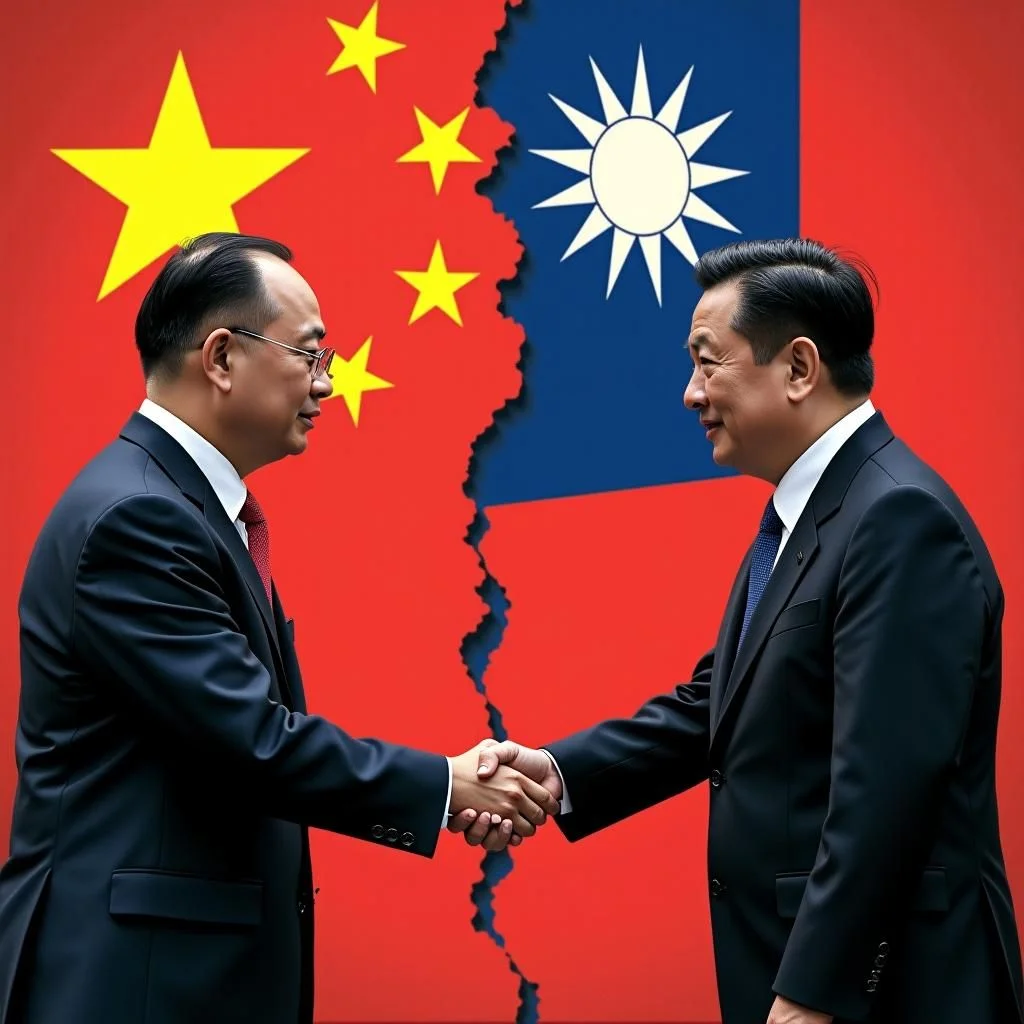
For the last 18 months, Taiwan’s political landscape has been in a state of flux. The recent failure of an attempt to recall 24 Kuomintang (KMT) legislators in a “great recall” effort underscored a fundamental truth: divided government is here to stay. This political stalemate presents an opportunity for a reset, and it is crucial that the political actors seize this moment to move forward.
Political Uncertainty and Partisan Conflict
Taiwan’s January 2024 elections resulted in a fragmented political landscape. The ruling Democratic Progressive Party (DPP) retained control of the executive branch but lost its majority in the legislature. The KMT won a plurality of 52 seats (plus two allied independents) to the DPP’s 51. However, the KMT’s victory was not a clear mandate; it rested on narrow wins in marginal constituencies and significant electoral malapportionment. The party’s candidates won only 40% of the vote to the DPP’s 45%. This ambiguity was further complicated by the emergence of the Taiwan People’s Party (TPP), a centrist party founded by former Taipei mayor and presidential candidate Ko Wen-je. This unprecedented situation injected additional uncertainty into Taiwan’s politics and contributed to the rapid escalation of partisan conflict during President Lai Ching-te’s first year in office.
Historical Context and Institutional Changes
This political divide is not new to Taiwan. During the Chen Shui-bian presidency (2000-2008), the executive and legislative branches were controlled by different parties. This period is remembered for deep partisan polarization and a series of political crises, but it also saw important political reforms. Despite their animosity, the DPP and KMT agreed on several institutional changes, including abolishing the National Assembly, changing the constitutional amendment process, giving the legislature power to approve appointments to other branches of government, creating several new “independent commissions,” and allowing for direct referendums. They also agreed to cut the size of the legislature in half, switch to a mixed-member majoritarian electoral system, and synchronize the presidential and legislative election cycles. Most of these changes took effect only at the end of the Chen era and had not been tested under divided government until 2024.
Uncertainty and Political Maneuvering
The political uncertainty was exacerbated by several factors. First, the TPP’s role was unclear. Ko Wen-je made few concrete policy promises during the election campaign, and his attempt to form a joint presidential ticket with the KMT collapsed. The TPP caucus had significant leverage in the new legislature, but its priorities, strategy, and even leadership were unclear. Would it align with the DPP, the KMT, or neither, perhaps swinging between the two issue by issue?
Political Hardball and Institutional Blockades
In this uncertain environment, all three parties saw advantages in trying to defeat rather than bargain with the other side. For instance, one of the first measures the KMT and TPP passed over DPP opposition was an executive oversight bill. The DPP had previously supported versions of this bill, and the opposition parties probably could have gotten most of what they wanted via cross-party negotiations. Instead, the KMT and TPP quickly pushed through their version of the law, which included controversial provisions to allow legislators to hold officials and private citizens in contempt, investigate businesses and civil society groups as well as the executive branch, and compel the president to appear before the legislature and answer questions.
The Silver Lining of the Great Recalls
The failure of the great recalls has provided clearer answers to the questions that have plagued Taiwan’s politics. First, the sweeping defeat on July 26 has led to a reassessment of the recall mechanism. In hindsight, it does not appear so easy to qualify recalls for the ballot, as demonstrated by the KMT’s failure to bring even a single counter-recall vote against a DPP legislator. It is also less tempting now to try to pick off political opponents in competitive constituencies before their terms are up. The defeat of the recalls means that we will probably see less use of this tool from now on. The “Pandora’s box” of recalls has been closed again.
Second, the recalls clarified what divided government means for Lai’s presidency: he needs opposition support. His own standing within the DPP has been weakened by the results, and he would be wise now to seek a compromise with the opposition on a subset of his stated policy priorities—mitigating the impacts of climate change and promoting Taiwan’s energy transition, enhancing defense and civil resilience, and improving health care. None of those issues is inherently partisan. On nominations, too, the ball is now in his court: to get new personnel confirmed to other branches of government, he will have to bow to opposition wishes and nominate a list that they pre-approve. The alternative is continued institutional paralysis.
Third, both opposition parties now have incentives to tack towards the middle, at least on cross-Strait relations and national defense. The KMT leadership must be secretly relieved that the recalls did not turn into the political disaster they could have been. The party’s own private polling in the spring showed at least a dozen incumbent legislators in real danger of losing their seats, and it set off a desperate scramble to rally core supporters to defend them. Even though they ultimately survived, it was nevertheless costly for KMT legislators to have to campaign while their DPP counterparts sat this one out.
Given the political near-death experience some of the party’s legislators faced, the recall campaign could lead to some additional moderation in the KMT caucus. Both opposition parties took a significant public relations hit for cutting the defense budget, and they have been in damage control mode ever since: In June, the legislature lifted the freeze on most remaining defense items, and KMT Party Chairman Eric Chu signaled that his party would support continued increases in the defense budget up to 3.5% of GDP. There are also indications that Chu is planning to stand aside to make way for Lu Shiow-yen, the current mayor of Taichung. Unlike Chu, Lu is a current officeholder, and she appears to be the party’s strongest candidate for president in 2028. If she indeed wants to run for president, she will have her own motives to reposition the KMT toward the political center.
Finally, perhaps the most interesting impact is on the TPP. The party publicly opposed the recalls and celebrated their defeat—but it also refused to cooperate with the KMT to raise the recall threshold. The TPP’s incentives have never been completely aligned with the KMT, and the gap between the two is likely to widen as the 2026 local elections approach and the vexing question of how to field joint candidates reemerges. The party also pledged that all its legislators would serve only two years before swapping with others on the party list—a pledge it recently reaffirmed. So after the recalls, the TPP also has a chance for a reset, and Lai would do well to find some common ground with them.
The Path Forward
Taiwan can ill afford another 30 months of political stalemate. The recent political events have provided a unique opportunity for a reset. The failure of the recalls has clarified the political landscape and highlighted the need for compromise and cooperation. The DPP, KMT, and TPP must now work together to address the pressing issues facing Taiwan. This includes mitigating the impacts of climate change, promoting Taiwan’s energy transition, enhancing defense and civil resilience, and improving health care. By focusing on these non-partisan issues, Taiwan’s political actors can move beyond the current stalemate and work towards a more stable and prosperous future.