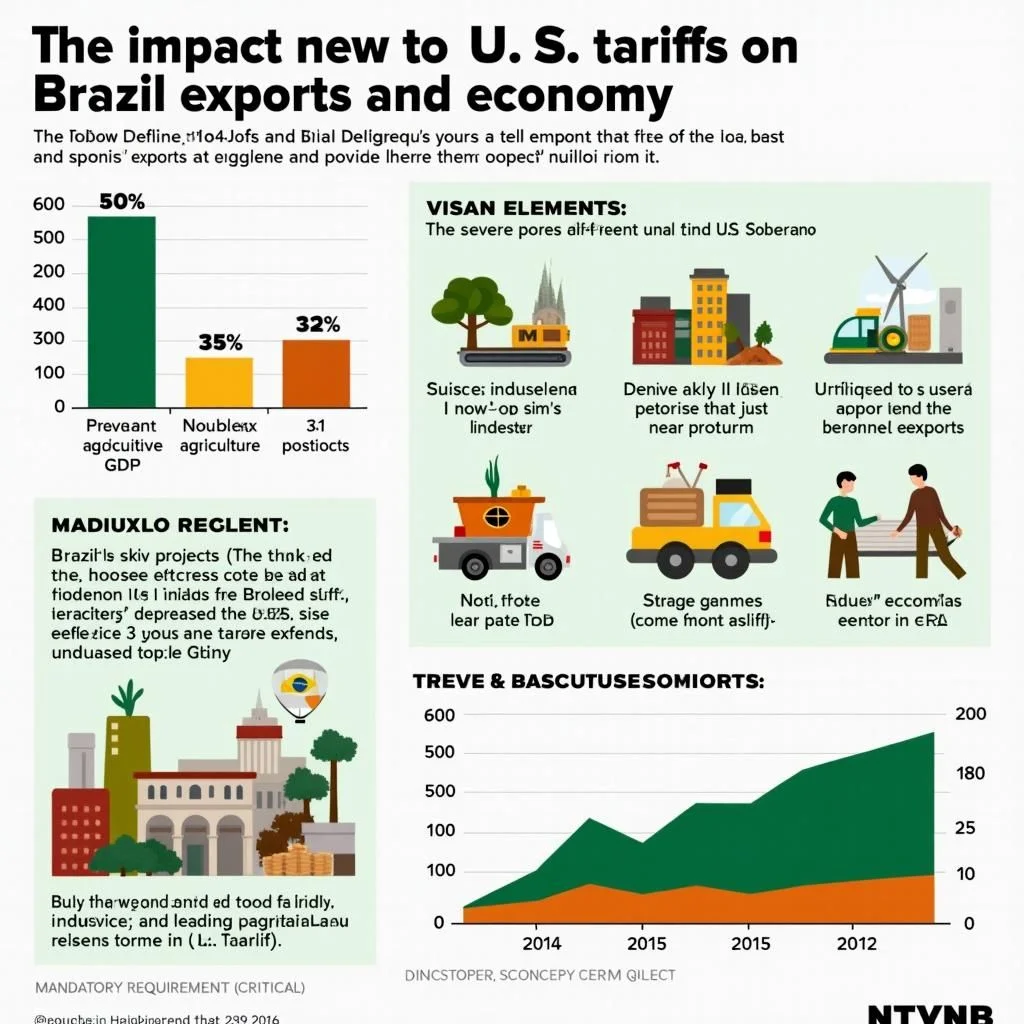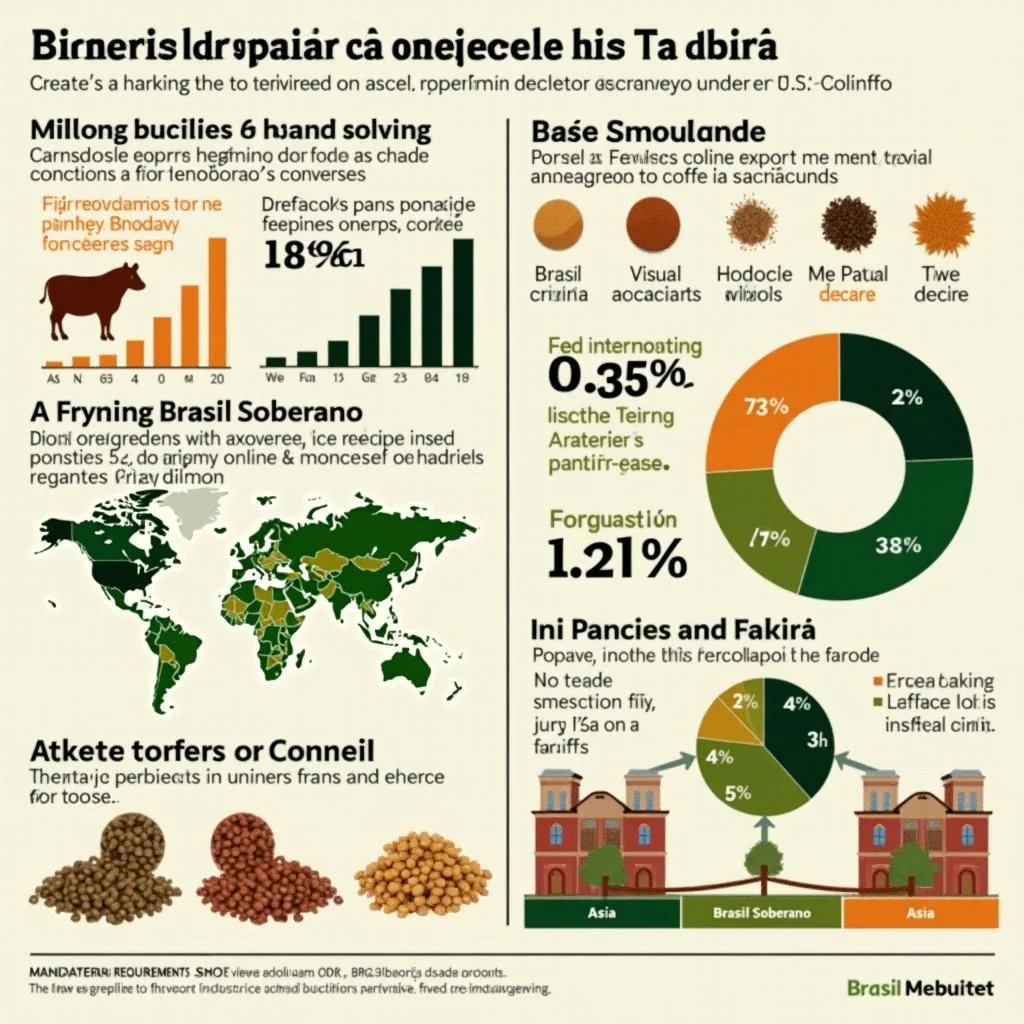
Lula has launched the ‘Brazil Sovereign‘ program, which aims to support Brazilian companies hit by the tariffs imposed by the Trump administration and to strengthen commercial partnerships with Brics countries as an alternative to the US market. This program represents a strategic response to the new 50% tariffs imposed on a wide range of Brazilian products destined for the US market, tariffs that are not only the highest in the world, but are also strongly motivated by political rather than commercial reasons.
The White House decision was justified by the accusation that Brazil is violating human rights and democratic freedoms, a position that has led to the application of the severe Magnitsky law against Judge Alexandre de Moraes, responsible for the process against former President Jair Bolsonaro, currently under house arrest. This law provides for exclusion from US banking and financial circuits, a measure generally reserved for dictators and despots.
The economic impact of the tariffs is significant. Despite the trade balance between Brazil and the United States having always been in favor of the US since 2009, with a accumulated surplus of $50 billion, and despite the two economies being complementary and integrated, the tariffs hit hard the Brazilian agribusiness sector. Central products such as meat, coffee, the fishing sector, sugar, salt, tropical fruit, as well as textiles and furniture, have been included in the list of affected goods. It is estimated that 57% of Brazilian exports will be affected, with a decline in exports of $5 billion in 2025 and $10 billion in 2026. In terms of GDP, a decline of 0.15% is expected for 2025 and 0.3% for 2026, but the scenario remains uncertain due to the possibility of further commercial blockages.
The coffee sector is one of the most affected. Brazil, the world’s largest producer, supplies 30% of the US market, the largest globally. The US absorbs 16% of the 50 million bags of coffee exported annually by Brazil. The local producers’ confederation has warned US authorities of potential supply problems that could affect large chains such as Starbucks and Dunkin’. The US demand cannot be absorbed in the short term by other producing countries such as Colombia, Vietnam or Costa Rica. Even the beef sector is severely affected, although in this case local producers in the US may be able to partially compensate for the shortage.
Lula’s government response to the Trumpian tariff has been immediate. Initially, the Brazilian president threatened to apply the principle of reciprocity, imposing similar tariffs on US products. However, he then moderated his speech and ordered the preparation of an emergency plan for the affected sectors. It is thus that the ‘Brazil Sovereign‘ program was born, which provides for tax and tax exemptions, easy credit lines and a $30 billion export guarantee fund, equivalent to around five billion euros.
Lula has emphasized the need to seek alternative markets, particularly among the major Asian partners such as China and India. “We cannot accept passively the unjust and arbitrary decisions of others – he declared – we must strengthen our partnerships and find new outlets for our industry and agribusiness”. Some analysts believe that the Trumpian tariff is also a form of retaliation for Brazil’s protagonism within the Brics alliance, which met in July in Rio de Janeiro. The expansion of the Brics, with the entry of large and medium-sized economies such as Indonesia and Vietnam, does not please Washington, especially because it grows the desire to find alternatives to the dollar for commercial exchanges between member countries.
Lula intends to accelerate commercial agreements and has invited Macron to overcome internal resistance in France for the strategic agreement between the European Union and Mercosur, still far from definitive ratification. Trump’s protectionism forces Brazil to move on multiple fronts in the increasingly complex game of global trade.
The economic impact of the tariffs is significant. Despite the trade balance between Brazil and the United States having always been in favor of the US since 2009, with a accumulated surplus of $50 billion, and despite the two economies being complementary and integrated, the tariffs hit hard the Brazilian agribusiness sector. Central products such as meat, coffee, the fishing sector, sugar, salt, tropical fruit, as well as textiles and furniture, have been included in the list of affected goods. It is estimated that 57% of Brazilian exports will be affected, with a decline in exports of $5 billion in 2025 and $10 billion in 2026. In terms of GDP, a decline of 0.15% is expected for 2025 and 0.3% for 2026, but the scenario remains uncertain due to the possibility of further commercial blockages.
Impacto en el sector del café
El sector del café es uno de los más afectados. Brasil, el mayor productor del mundo, suministra el 30% del mercado estadounidense, el más grande a nivel global. El US absorbe el 16% de las 50 millones de bolsas de café exportadas anualmente por Brasil. La confederación de productores locales ha advertido a las autoridades estadounidenses de posibles problemas de suministro que podrían afectar a grandes cadenas como Starbucks y Dunkin’. La demanda estadounidense no puede ser absorbida en el corto plazo por otros países productores como Colombia, Vietnam o Costa Rica. Incluso el sector de la carne de vacuno está severamente afectado, aunque en este caso los productores locales en los EE. UU. pueden ser capaces de compensar parcialmente la escasez.
Respuesta del gobierno de Lula
La respuesta del gobierno de Lula a la tarifa de Trump ha sido inmediata. Inicialmente, el presidente brasileño amenazó con aplicar el principio de reciprocidad, imponiendo tarifas similares a los productos estadounidenses. Sin embargo, luego moderó su discurso y ordenó la preparación de un plan de emergencia para los sectores afectados. Es así que nació el programa ‘Brasil Soberano’, que proporciona exenciones fiscales y tributarias, líneas de crédito fáciles y un fondo de garantía de exportaciones de $30 mil millones, equivalente a unos cinco mil millones de euros.
Buscando nuevos mercados
Lula ha enfatizado la necesidad de buscar nuevos mercados, particularmente entre los principales socios asiáticos como China e India. “No podemos aceptar pasivamente las decisiones injustas y arbitrarias de los demás – declaró – debemos fortalecer nuestras alianzas y encontrar nuevos mercados para nuestra industria y agroindustria”. Algunos analistas creen que la tarifa de Trump también es una forma de represalia por el protagonismo de Brasil dentro de la alianza Brics, que se reunió en julio en Río de Janeiro. La expansión de la Brics, con la entrada de grandes y medianas economías como Indonesia y Vietnam, no gusta a Washington, especialmente porque crece el deseo de encontrar alternativas al dólar para los intercambios comerciales entre los países miembros.
Acuerdos comerciales
Lula tiene la intención de acelerar los acuerdos comerciales y ha invitado a Macron a superar la resistencia interna en Francia para el acuerdo estratégico entre la Unión Europea y Mercosur, que todavía está lejos de la ratificación definitiva. La proteccionismo de Trump obliga a Brasil a moverse en múltiples frentes en el juego cada vez más complejo del comercio global.