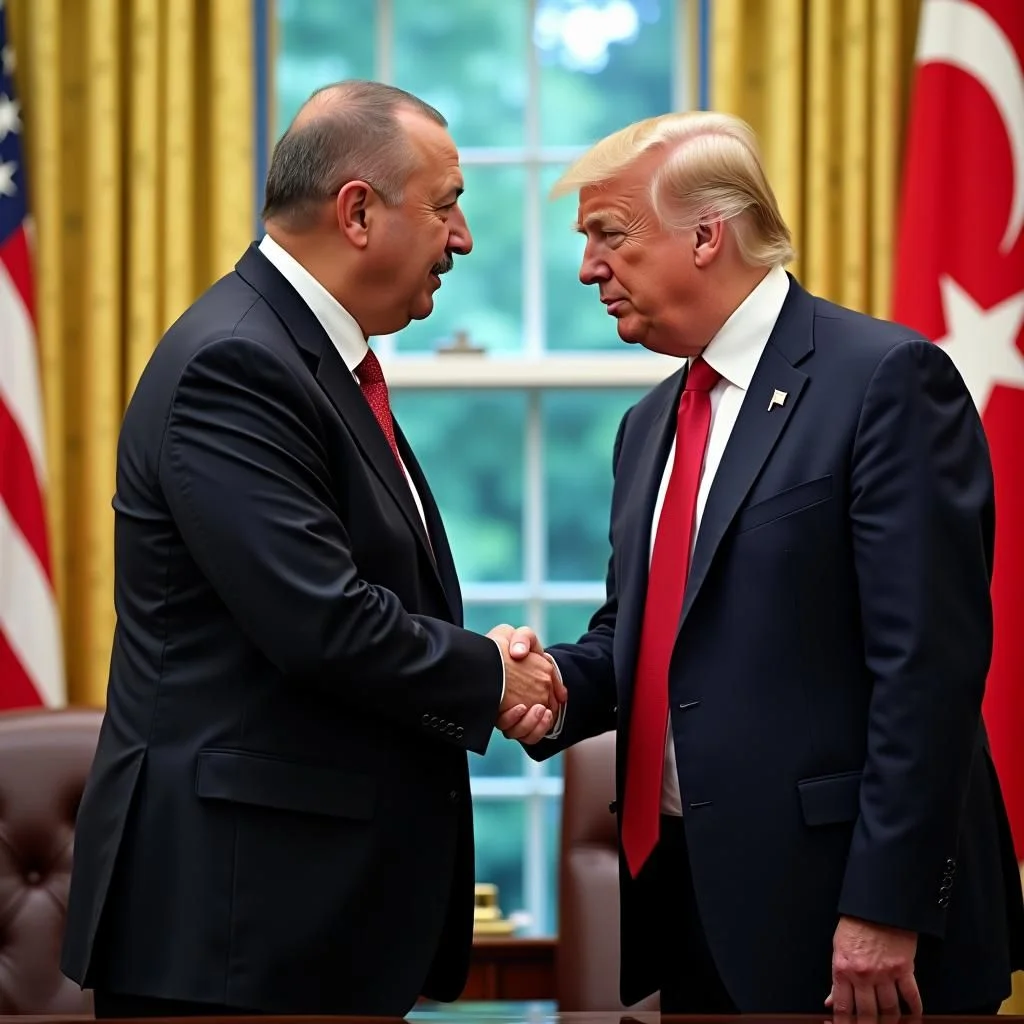
When Turkish President Recep Tayyip Erdogan visits the White House on September 25, it marks not just a return after four years but a personal reunion of two leaders who share a worldview about the global order and govern with increasingly similar instincts. Erdogan, often seen as the original “Make [X] Great Again” right-wing populist, and U.S. President Donald Trump both rose to power on the back of rejection from their countries’ elites. They share a disdain for the liberal hegemony that has shaped the international system for the past three decades and firmly believe in their place in history.
Erdogan’s return to the White House is designed as a victory lap. After four years of strained U.S.-Turkey ties, shaped by the Biden administration’s reluctance to engage due to democratic backsliding and geopolitical hedging, expect a full display of the Trump-Erdogan bromance, with bold gestures and surprising announcements. Both capitals aim to highlight short-term wins, including Turkey’s multibillion-dollar purchase of a new batch of Boeing planes and Trump’s potential, at least rhetorical, support for Ankara’s reentry into the F-35 program.
Turkey and the United States are more aligned than ever on Syria. Trump ally and Washington’s powerful new Turkey envoy, Tom Barrack, serves as the connective tissue in synchronizing U.S.-Turkish ties with Washington’s new Syria policy. Like Ankara, Barrack has embraced the post-Assad regime in Damascus, led by interim President Ahmad al-Sharaa; supports the idea of a unified Syria; and broadly accepts the integration of U.S.-backed Syrian Kurds, the Syrian Democratic Forces (SDF), into the Syrian military, though with greater local autonomy than Ankara would prefer.
While pursuing an “America First” agenda, Trump also seems to recognize Turkey’s potential as a hefty middle power in a multipolar world. Washington and Ankara are seeking to expand trade toward the $100 billion target set during Trump’s first term and eyeing regional economic opportunities tied to Syria’s reconstruction and the construction of the Trump Route for International Peace and Prosperity (TRIPP), announced in August as part of a recent peace deal between Armenia and Azerbaijan.
Despite the Trump-Erdogan nexus, significant bilateral issues remain unresolved. The S-400 dispute is still on the table, with Countering America’s Adversaries Through Sanctions Act (CAATSA) sanctions intact. Stalled talks between Damascus and U.S.-backed Syrian Kurds mean Syria’s future and stability remain uncertain. An uneasy peace on the ground could be upended by a new Turkish incursion if there is no deal on the horizon. More importantly, tensions between Ankara and Jerusalem over Gaza and Syria have become a permanent risk factor for U.S. policy in the region, requiring constant U.S. arbitration to prevent direct military confrontation inside Syria.
Trump and Erdogan share a mutual appreciation for strong leadership and personalized diplomacy, but these problems are complex and require institutional, deliberate policymaking processes. During Trump 1.0, the two leaders discovered that sidelining bureaucracy and relying solely on phone calls and personal favors did not make disputes disappear—instead, it often created blowback. They should not repeat that mistake.
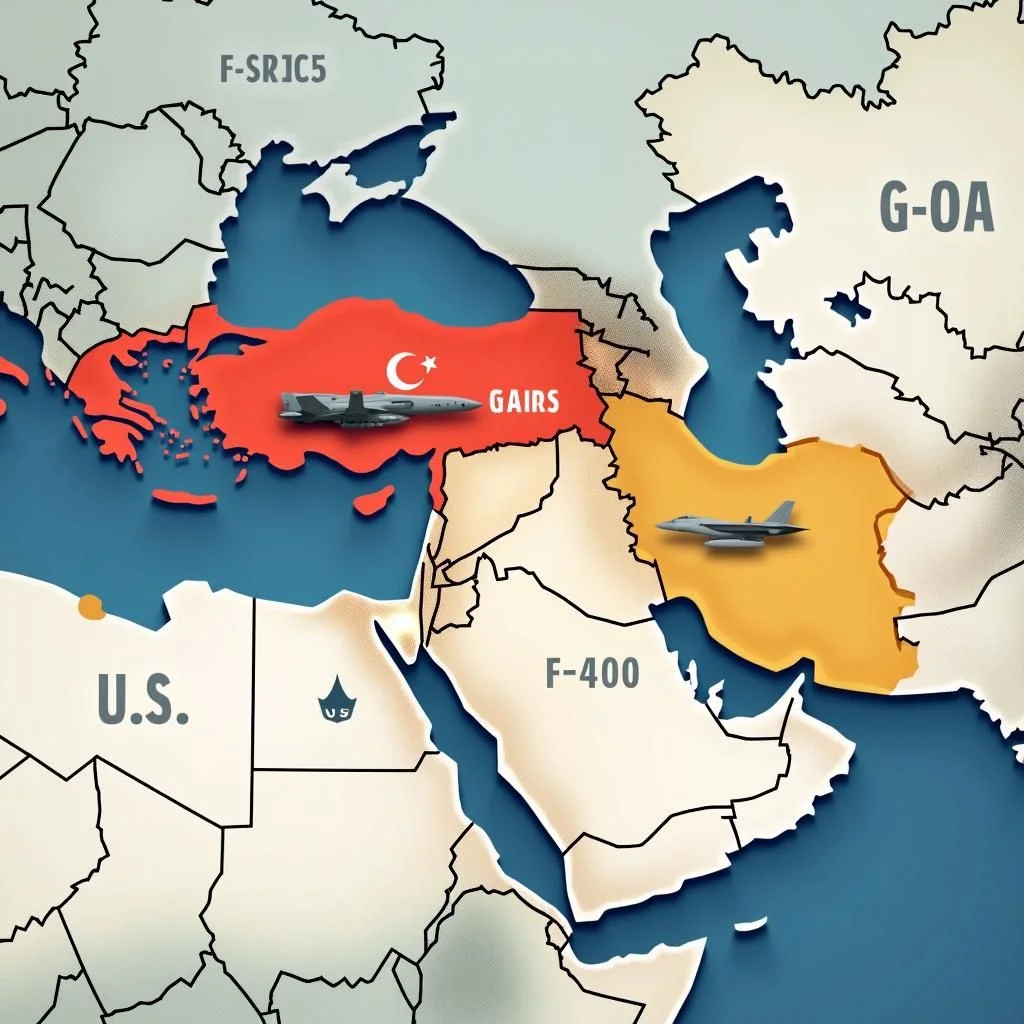
On September 25 and after, several signals will be especially revealing. The success of the meeting will not depend on Oval Office optics but on whether Washington and Ankara can chart durable policy prescriptions. The thorniest agenda item is Turkey’s 2019 purchase of Russian S-400 air defense systems, which triggered CAATSA sanctions and Ankara’s expulsion from the F-35 program. Erdogan will press for reentry, arguing that it is unfair to punish a NATO ally when the alliance needs stronger defense capabilities. Trump, eager for a win, may hint at future sales, but Congress remains hostile to Turkey’s Russian ties and human rights record, and Israel will oppose any move to strengthen Turkey’s air force. Greece was promised a qualitative military edge over Turkey during the Biden administration and will similarly oppose the sale of F-35s to Turkey. Even if the administration pushes ahead, F-35 production is facing delays amidst rising demand, meaning delivery could be delayed four to five years, creating risks of reversal under a future U.S. president.
Gaza has become the defining fault line between Ankara and Washington. Turkey resents Israel’s rise as a regional hegemon and its strategy of “mowing the grass” to preserve military dominance over neighbors. Erdogan has positioned Turkey as Israel’s fiercest critic and the Palestinians’ advocate, while Trump has restored Washington’s full-throated backing of Israel’s security. With Syria’s future, Gaza’s reconstruction, and regional stability at stake, the White House may again find itself refereeing between the two to reduce risks of confrontation inside Syria, especially as Ankara seeks to expand its military footprint there.
Thanks to Ambassador Tom Barrack, Washington and Ankara are more aligned than at any point in recent memory. Both see al-Sharaa’s interim government as a chance for stabilization and reconstruction. Both support some integration of the SDF into the national army, though Erdogan insists Kurdish autonomy cannot cross Turkey’s red lines, loosely defined as the establishment of a federation and the SDF retaining full control of its forces. Success depends on the fragile Kurdish peace process inside Turkey and on whether U.S. officials can broker a governance deal between Damascus and the SDF, agreed to in principle in March, that averts another Turkish military incursion.
La guerra en Ucrania y el papel potencial de Turquía en un acuerdo de posguerra probablemente se discutirán durante la reunión en la Oficina Oval, pero sin mucha resonancia en el debate europeo actual. Ankara y la administración de Trump comparten opiniones similares sobre Rusia y el final de juego en Ucrania, moldeadas por una creencia cínica en las capacidades militares rusas y la idea de que la paz solo vendrá a través de concesiones territoriales y políticas de Ucrania. Turquía contribuiría a un acuerdo de posguerra asegurando el Mar Negro, pero se alejaría de una fuerza europea sin un respaldo estadounidense.
Más allá de la geopolítica, ambos líderes quieren destacar las relaciones económicas. Ankara espera revivir el objetivo de comercio de $100 mil millones dormido desde el primer término de Trump y ha levantado recientemente los aranceles a importaciones estadounidenses, mientras que Trump ve la reconstrucción de Siria y TRIPP como vías para inversiones conjuntas. Los acuerdos de energía, las compras de aviones y los contratos de construcción podrían proporcionar ganancias rápidas, pero mantener tal comercio requerirá que Turquía se mueva más allá de la dependencia de la construcción y el sector de defensa y adapte su economía a la transformación tecnológica en una era de inteligencia artificial.
Democracia y derechos humanos en Turquía
Una área en la que la política estadounidense ha divergido ampliamente a lo largo de las administraciones es la democracia y los derechos humanos en Turquía. Bajo el presidente Joe Biden, la retrocesión de Ankara fue razón suficiente para mantener a Erdogan a distancia. Bajo Trump, esas preocupaciones han desaparecido en gran medida de la agenda. La represión de Erdogan contra la oposición en casa tiene consecuencias para la política exterior. Europa, en particular, ve la trayectoria democrática de Turquía como central a su relación con Ankara. El reciente objetivo de la principal oposición del Partido Republicano Popular ha reforzado las preocupaciones de que Turquía se está deslizando más lejos de las normas europeas. Los gobiernos de la Unión Europea han hecho claro que el progreso en el comercio, los visados y el lugar de Turquía en la arquitectura de seguridad europea depende de mejoras en la ley y las libertades políticas. El curso interno de Turquía puede no ser un problema para Trump, pero lo será para aliados europeos y podría endurecer su resolución para mantener a Turquía a distancia, como lo hicieron durante el primer término de Trump, con implicaciones para la economía y la asociación militar industrial de Turquía con Europa.