COP28 comes at a critical moment for international climate action. Temperature records are repeatedly being broken, and the impacts of climate change are being felt in unprecedented wildfires, floods, storms, and droughts around the world. The synthesis report of the UN’s global stocktake shows that much more needs to be done to meet the goals of the historic Paris Agreement. COP28 offers a critical opportunity to put the world on a more sustainable trajectory.
The COP is the United Nations’ annual climate change conference, also known as the ‘Conference of the Parties’ or ‘COP’. It brings together world leaders, ministers, and negotiators to agree on how to address climate change. The negotiating parties include governments that have signed the United Nations Framework Convention on Climate Change (UNFCCC), the Kyoto Protocol, and/or the Paris Agreement. The COPs are also assisted by thousands of representatives from civil society, the private sector, international organizations, and the media.
Since COP21 in 2015, the COPs have focused on how to implement the Paris Agreement, which has three main objectives: to keep the global average temperature increase ‘well below’ 2°C and strive to limit the increase to 1.5°C above pre-industrial levels; to adapt to climate change and build resilience; and to align financial flows with ‘a pathway towards low greenhouse gas emissions and climate-resilient development’.
The COP is held in a different country each year. COP28 will be hosted by the United Arab Emirates (UAE) and will take place between November 30 and December 12, 2023, in Dubai. The host country appoints a president to lead the discussions, who plays an important role in consulting with governments and other stakeholders, providing leadership and vision, and ultimately mediating the agreements reached.
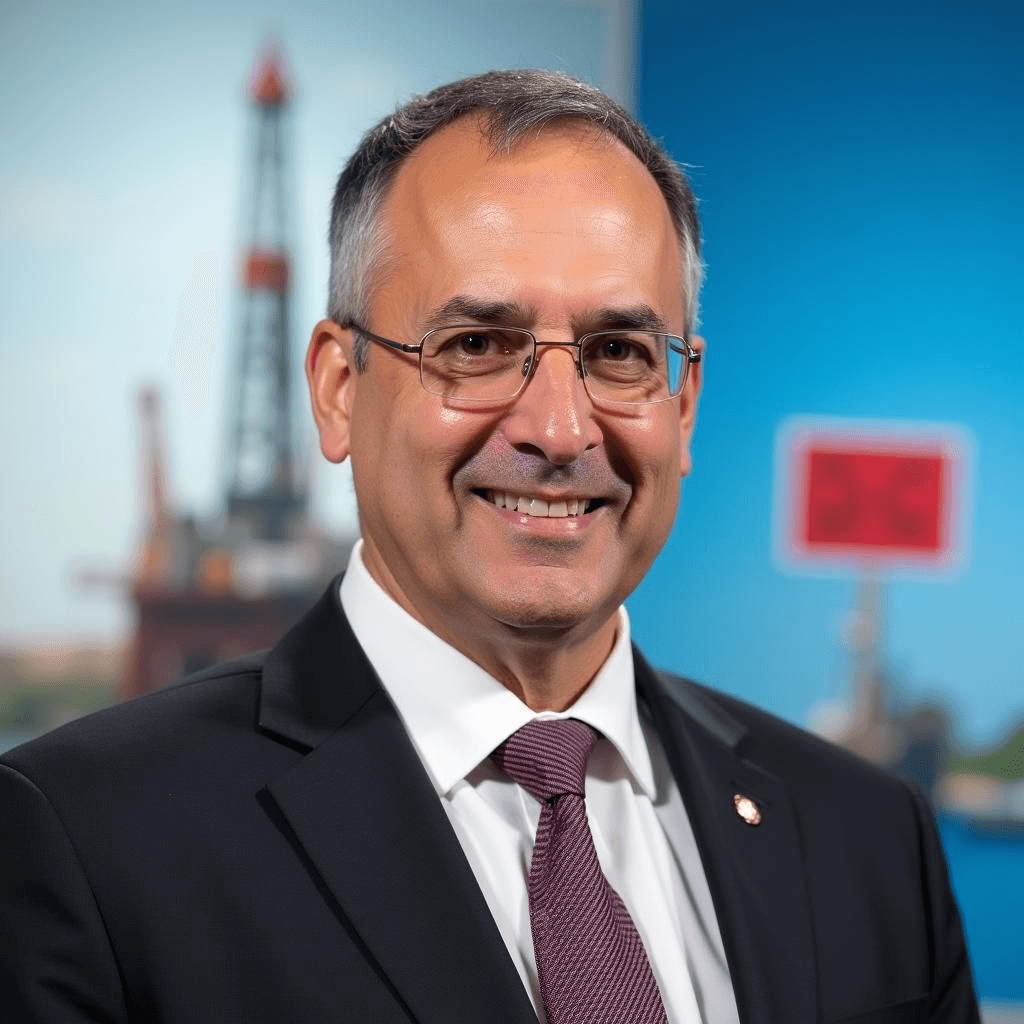
Dr. Sultan al-Jaber, Minister of Industry and Advanced Technology for the UAE and CEO and Group CEO of the Abu Dhabi National Oil Company (ADNOC Group), will preside over the negotiations in Dubai. Al-Jaber’s position in the fossil fuel industry, along with the growing influence of fossil fuel lobbyists in the COPs in general, has caused controversy and raised concerns about impartiality in climate talks.
Decisions at the COP are made by consensus. When combined with the different needs and interests of the parties, this means that reaching an agreement can be a painful and highly charged process.
COP28 is important for several reasons, not least because it marks the conclusion of the first global stocktake (GST), the main mechanism through which progress under the Paris Agreement is assessed.
It is clear that the world is not on track to meet the agreement’s goals, but the hope is that governments at COP28 will present a plan to accelerate climate action.
Other critical tasks facing negotiators in Dubai include launching the loss and damage fund (established at COP27) and agreeing on a framework for the Paris Agreement’s Global Goal on Adaptation (GGA). Other topics that are likely to receive much attention and even be reflected in various negotiation streams include the energy transition and the transformation of food systems.
And, as is often the case, discussions and negotiations on climate finance are likely to be center stage.
The GST
The GST is a mechanism for assessing the world’s collective progress towards the Paris Agreement’s goals and purposes and providing guidance to governments on how to strengthen climate action, support, and international cooperation on climate change.
The GST takes place every five years. The first began at COP26 in 2021 and will conclude at COP28. The GST consists of three components, which build on each other.
The first phase focused on collecting and synthesizing information on climate change and climate action from governments, international organizations, research institutions, civil society organizations, and other stakeholders.
Based on the material received in the first phase, the second phase reviewed the progress made in implementing the Paris Agreement and identified opportunities to strengthen climate action, support, and international cooperation on climate change.
A synthesis report containing key messages and recommendations from the second phase was published on September 8, 2023. It shows that the Paris Agreement has galvanized global climate action and that significant progress has been made since the UNFCCC came into force three decades ago.
However, it also makes clear that much more needs to be done and describes how to get implementation on the right track.
The third component of the GST will conclude at COP28. During this ‘political’ phase, governments discuss and consider the findings of the technical phase of the GST and what this means for strengthening climate action.
To do this, a series of high-level events will be convened at COP28, which should generate key political messages. Governments will also negotiate a decision and/or declaration.
Given the urgency of the climate crisis, it is important that the outcome of the GST includes commitments and recommendations to drive ambitious climate action.
Adapting and building resilience to the impacts of climate change and addressing climate-induced loss and damage will be prominent themes in the Dubai negotiations.
First, governments must agree on how to operationalize the main legacy of COP27: the loss and damage fund, established as part of broader financial arrangements for loss and damage. When the fund was agreed upon, critical questions remained unresolved: should its focus be narrow or broad? Which countries should be eligible for support? And where should the money come from? These issues are among those being considered by a transitional committee composed of representatives from developed and developing countries, tasked with producing recommendations for governments before COP28.
Second, governments at COP28 are scheduled to adopt a framework to achieve the global goal on adaptation of the Paris Agreement. The GGA aims to focus countries’ efforts to improve adaptive capacity, strengthen resilience, and reduce vulnerability to climate change, but the Paris Agreement does not provide a clear definition of the goal, and little progress has been made to define it since then. The new framework is expected not only to define the goal but also to offer ways to measure progress toward its achievement. This clarity should enable governments and relevant organizations to pursue and measure adaptation progress with greater focus, comparability, and precision, including as part of the second GST.
Third, the Standing Committee on Finance (SCF) is preparing a report on the commitment of developed countries to double adaptation finance from 2019 levels by 2025, as agreed at COP26. Financing for adaptation is far below what is needed and is a fraction of the scale of future needs. In 2022, the United Nations Environment Programme estimated that the annual adaptation needs of developing countries would be $160-340 billion by 2030 and $315-565 billion by 2050. To put this in perspective, the IMF estimates that global fossil fuel subsidies were $7 trillion in 2022.
Given that emissions from the burning of coal, oil, and gas constitute the main driver of climate change, it is surprising that the cover decision of COP26 was the first COP decision to include a reference to any type of fossil fuel, with parties agreeing to accelerate ‘efforts towards the phase-out of unabated coal energy and the phase-out of inefficient fossil fuel subsidies’. At COP27, a coalition of more than 80 countries pushed for the language of COP26 on coal to be expanded to include all fossil fuels. Although such a reference was not included in the formal decision text, it shows that the pressure for the UNFCCC to address the issue is increasing.
The phase-out of fossil fuels
The phase-out of fossil fuels is likely to receive much attention in the Dubai negotiations. Although it does not have a dedicated negotiation track, it could be incorporated into a variety of workstreams, such as the GST, the cover decision, and the ‘mitigation work programme’. The need to phase out unabated fossil fuels is highlighted in the synthesis report of the GST. There is a concern that a focus on reducing unabated fossil fuels or fossil fuel emissions could divert attention from the need to phase out the actual production and use of coal, oil, and gas.
Divergent views on the role and potential of carbon capture and storage (CCS) technologies are likely to be a point of contention in the discussions. There is a concern that a focus on reducing unabated fossil fuels or fossil fuel emissions could divert attention from the need to phase out the actual production and use of coal, oil, and gas.
Language used by the incoming COP president
The language used by the incoming COP president on this topic has shifted over the year, with Dr. Sultan al-Jaber referring to the phase-out of fossil fuels as ‘inevitable’ and ‘essential’. The phase-out of fossil fuels is being discussed as part of a broader package on energy that also includes goals on expanding renewable energy capacity and improving energy efficiency.
Reaching a COP agreement on a renewable energy target took a significant step forward at the G20 Leaders’ Summit in September 2023, where G20 members agreed to ‘pursue and encourage efforts to triple global renewable energy capacity’.
En el umbral de COP28, los sistemas alimentarios y la agricultura están recibiendo una atención diplomática creciente. La Agenda de Sistemas Alimentarios y Agricultura de COP28 fue lanzada por la presidencia de COP28 y el Centro de Coordinación de Alimentos de las Naciones Unidas en julio. Solicita a los países que alineen sus políticas nacionales de alimentos y agricultura con las Contribuciones Determinadas Nacionales (CND) y los Planes Nacionales de Adaptación (PNA), y que incluyan objetivos para la decarbonización de los sistemas alimentarios en estos y sus planes estratégicos y acciones nacionales de biodiversidad (NBSAP). Aunque los sistemas alimentarios fueron un tema de discusión en COP27 – a diferencia de en COPs anteriores – hubo todavía una resistencia política significativa para adoptar un enfoque sistemático. La presidencia de COP28 está solicitando a los interesados del sector público y privado que se comprometan a financiar y tecnificar la transformación de los sistemas alimentarios y agrícolas, y ha resaltado que los sistemas alimentarios contribuyen a un tercio de todas las emisiones de gases de efecto invernadero humanas generadas.
La colaboración tecnológica
La colaboración entre los Emiratos Árabes Unidos y los Estados Unidos estará en el enfoque, con la promoción de su Misión de Innovación Agrícola para el Clima (AIM4C).
El enfoque en los alimentos en COP28 ha sido bien recibido por muchos, y el informe de síntesis de GST resalta la necesidad de abordar cuestiones difíciles relacionadas con medidas de demanda, cambio de uso de la tierra y deforestación. Las acciones para cambiar los sistemas alimentarios deben complementar, no competir con, esfuerzos para acelerar la transición energética, ya que transformaciones son necesarias en ambos sectores para cumplir con los objetivos climáticos.
El financiamiento climático
El financiamiento climático – como en todos los COPs – será un tema clave. Los países en desarrollo necesitan recursos financieros, así como transferencia de tecnología y capacitación, para ayudarles a reducir las emisiones, adaptarse al cambio climático y abordar la pérdida y daño. Por lo tanto, la provisión y movilización del financiamiento climático es una prioridad clave para muchos países en las negociaciones.