The relaunch of economic cooperation between the two countries is fundamental to meet Bangladesh’s infrastructure needs. India views its strategic neighborhood with suspicion. South Asia is a region of very high strategic interest for China’s connectivity projects, which include the China-Pakistan Economic Corridor (CPEC), the main initiative of the Belt and Road Initiative (BRI). Beijing’s strategy involves numerous initiatives linked to other countries in the region. In this context, Bangladesh stands out for several reasons: its strategic position at the center of the Bangladesh-China-India-Myanmar (BCIM) Economic Corridor, despite the continuous delays of the project due to rivalry between New Delhi and Beijing; the need for investments in energy and connectivity infrastructure to support the national economy; and the historical political situation of balancing between India and China.
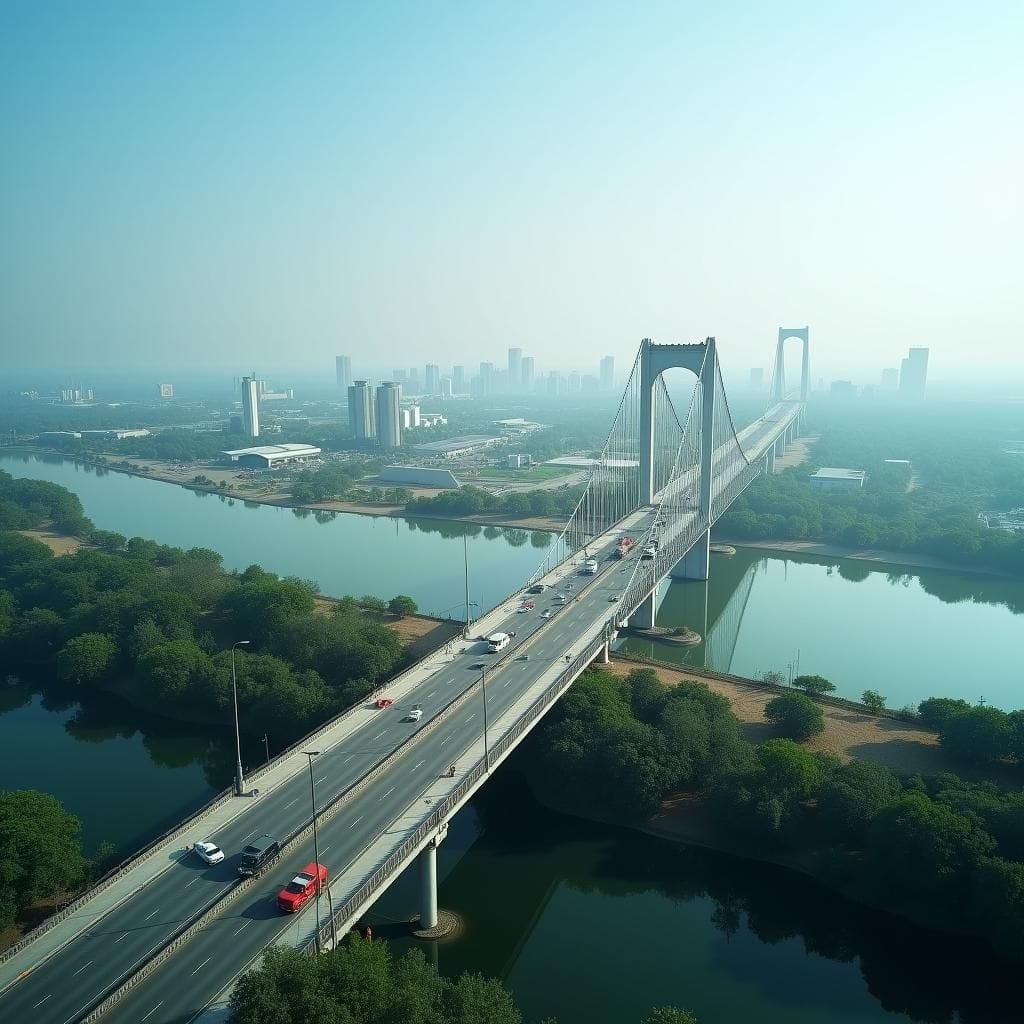
Bangladesh is the second largest recipient of Chinese loans under the BRI, with 31 energy projects and 21 bridge constructions financed by 2024, in addition to several highways and railways. Among the main completed projects is the Padma Bridge, built by China Railway Major Bridge Engineering Group for a value of 3.6 billion dollars and inaugurated in 2022. This bridge, considered the most complex construction in Bangladesh’s history, includes a six-kilometer surface highway and an underground railway line, connecting the southwest to the northeast of the country.
Meeting between Xi Jinping and Muhammad Yunus
The meeting on March 28 between the President of the People’s Republic of China Xi Jinping and the Chief Adviser of the interim government of Bangladesh Muhammad Yunus marked a new momentum for economic cooperation and investments between the two parties. This has restarted delayed projects and given new energy to initiatives that required greater economic efforts. The relaunched cooperation projects in the joint declaration signed by the two leaders mainly concern investments and development for the creation of new industrial sites, connectivity infrastructure such as roads, highways, railways, and ports, as well as energy infrastructure.
The Chinese Economic and Industrial Zone (CEIZ)
The Chinese Economic and Industrial Zone (CEIZ) is an area of about three square kilometers located in the Anwara sub-district of Chattogram, destined to host a large industrial hub thanks to massive Chinese investments. After the signing of an agreement between the Chinese government and that of Dhaka in 2016, the works have suffered several delays until the new vital momentum following the meeting between Xi and Yunus. The investment exceeds one billion dollars and involves nearly 200 Chinese companies, creating about 200,000 jobs and developing industrial productions in the textile, energy, and clothing sectors. The project will be carried out jointly by the Bangladesh Economic Zones Authority (BEZA) and the China Road and Bridge Corporation (CRBC), a subsidiary of China Communications Construction Company (CCCC), which has replaced China Harbour Engineering Company Limited as the contractor. CCCC has already carried out the reinforcement of the Bangabandhu Bridge, the longest in South Asia, and built the Bangabandhu Sheikh Mujibur Rahman Tunnel, a 3.4-kilometer underwater road link inaugurated in 2022.
Water Disputes and Infrastructure Projects
Years of dam and barrage construction along the Indian stretch of the Tista River, which originates in the Indian state of Sikkim, have significantly reduced the water flow reaching Bangladesh. In 2011, the signing of a water-sharing agreement failed due to opposition from the Indian state of West Bengal. The Tista River is fundamental for Bangladesh, being the main source of irrigation for the north of the country, which contributes to 35% of rice production and 40% of the food surplus. However, the recent drought has led to a loss of 1.5 million tonnes per year.
Bangladesh has set the goal of implementing the Teesta River Comprehensive Management and Restoration Project (TRCMRP), which aims to dredge the river to restore its flow, build new and improved embankments over a length of nearly 100 kilometers to reduce flood and disaster risks, and implement irrigation structures and water storage systems for dry periods. The main environmental concerns relate to the alteration of the river’s natural state and the risk of lack of transparency and corruption related to the Bangladesh Water Development Board.
China has shown interest in financing the TRCMRP project, submitting a proposal worth about one billion dollars as early as 2016. However, with the initiative stalled, India has expressed its willingness to participate in the funding of the plan in 2024. The government of Sheikh Hasina, which had favored relations with New Delhi in recent years, had decided to award the project to India, but the March agreement between Xi and Yunus allowed the participation of Chinese companies, overturning Hasina’s decision. The issue of the Tista River is part of a broader context of water basins shared by several Asian states, around which disputes arise over the construction of dams that modify the water flow for neighboring countries.
By the end of 2024, New Delhi and Dacca saw China approve the start of construction of a new mega-dam on the Yarlung-Zangbo River in Tibet. The watercourse runs near the border with the Indian state of Arunachal Pradesh, then enters from the eastern border with China and flows into the Brahmaputra River, one of the region’s major river basins, which then enters Bangladesh as the Jamuna and flows into the Bay of Bengal. Among the memorandums signed by Xi and Yunus, one concerned the exchange of information on the construction of the dam on the Yarlung-Zangbo to update the government of Dacca on the hydrological impact of the project.
Modernization of the Port of Mongla
Another fundamental hub of China’s economic presence in Bangladesh is linked to the modernization of the port of the city of Mongla, a key node for trade in the textile sector, which constitutes over 80% of the country’s exports. The idea was already included in a list of 27 projects signed by Xi Jinping and Sheikh Hasina during a visit by the Chinese president to Dhaka in 2016. After several years of attempts at agreements, the PRC returned to the center of the game after a visit by the Foreign Policy Advisor Touhid Houssain to China in January 2025. Beijing is ready to provide a government-to-government loan worth nearly 300 million dollars (35 billion Bangladeshi taka) for the implementation of the works by the Mongla Port Authority by December 2028. The project aims to modernize the structure, create new jobs, and ensure faster and better functioning of container loading and unloading procedures in transit through the port.
Energy Infrastructure
Regarding energy infrastructure, the two countries have relaunched work on the implementation of the second phase of the Payra coal-fired power plant, located in the Patuakhali sub-district, in southwestern Bangladesh. The two units that make up the first phase of the plant were built starting in January 2020 and became operational from the beginning of 2021, reaching a total capacity of 660 megawatts for each unit. This level should also be reached by the new plants that are part of this new phase of the project, the works of which should start between 2025 and 2026.
The relaunch of economic cooperation and Chinese infrastructure investments in Bangladesh confirms a lasting interest from Beijing. China aims to serve multiple purposes, including the use of coal for power plants, the security dimension of ports, and the relocation of production centers of Chinese industries seeking cheaper labor and aiming to avoid the risks of stormy commercial relations between the PRC and the USA. The availability of Chinese investment runs parallel to Bangladesh’s need for infrastructure and also strengthens the prospects of bilateral trade. Beijing has been Dacca’s first trading partner for 15 consecutive years, as well as the main source of imports and the top investor in the country, consolidated by the relaunch of cooperation in March and the meeting of the Bangladesh-China Joint Economic and Trade Commission in early June.
Competition with India
At the same time, the dimension of competition with India remains evident. Agreements such as the financing of works on the Tista River, near the India-Bangladesh border, or on the hydrological monitoring of the Yarlung-Zangbo dam concern New Delhi, which risks losing the firm influence it has had on the country in recent years under Hasina’s government. In an attempt to fill the gap of diplomatic engagement with Dacca that lasted for the first eight months after the ex-premier’s escape, Indian Prime Minister Narendra Modi met Yunus on the sidelines of the BIMSTEC summit in Thailand. The meeting confirmed India’s intention to establish a “positive and constructive relationship based on pragmatism,” which took place a few days after the Xi-Yunus joint declaration.