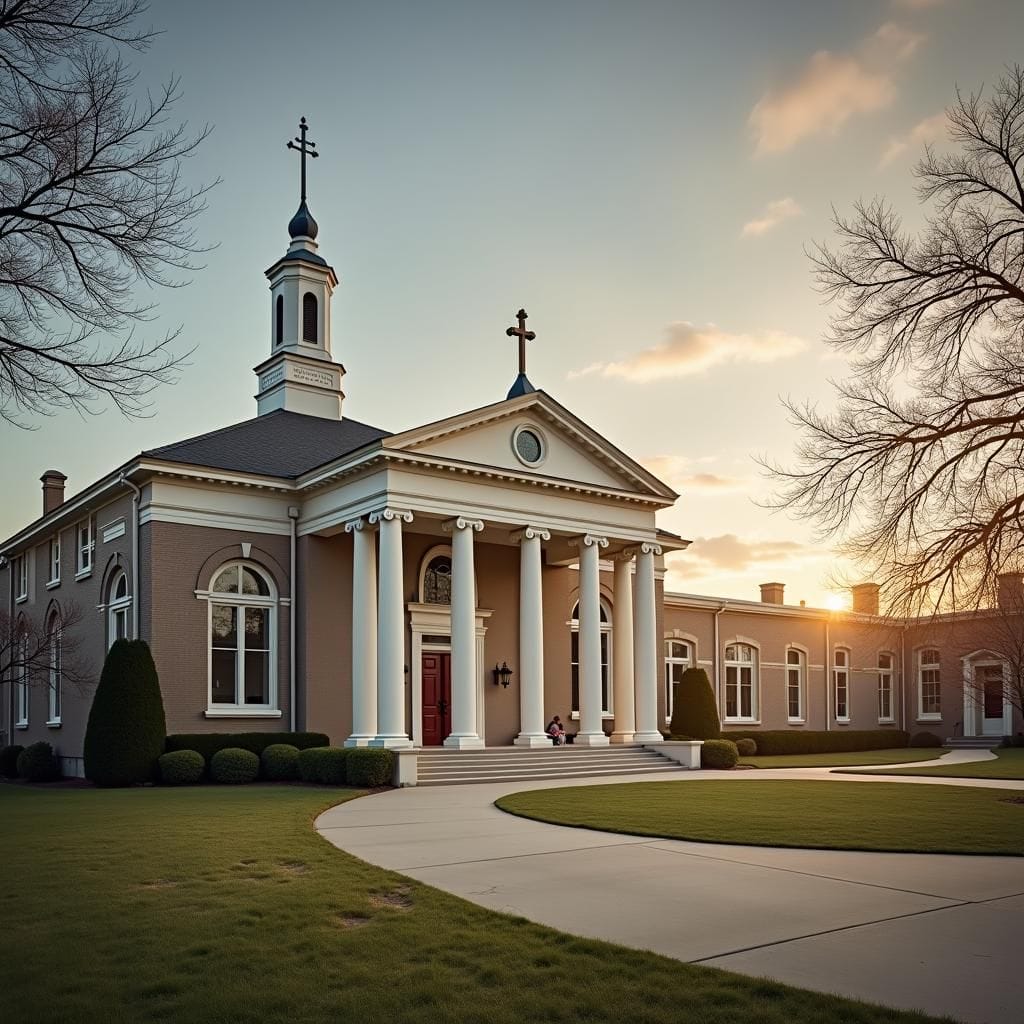
The 2024-2025 term of the Supreme Court proved crucial for K-12 public education. The Court considered the legality of religious charter schools (Oklahoma Statewide Charter School Board v. Drummond), the rights of students with disabilities to access public education (A. J. T. v. Osseo Area Schools), and whether parents should be able to opt out of lessons or curricular materials that conflict with their religious beliefs (Mahmoud v. Taylor). This analysis invites experts in law and education policy to share their reactions to the Supreme Court’s recent decisions this term.
Significant Decisions Affecting K-12 Public Education
The Supreme Court of the United States has issued significant decisions that directly affect K-12 public education. In the case AJT v. Osseo School District (2025), the Court determined that parents of students with disabilities suing public schools for discrimination in violation of federal disability rights laws must prove only what other plaintiffs in similar contexts of disability discrimination should prove. This ruling is consistent with recent decisions that affirm the rights of students with disabilities and remove legal administrative obstacles in their path.
In Mahmoud v. Taylor (2025), the Court ruled that denying parents the ability to opt out of an inclusive LGBTQ+ curriculum violates their rights to free exercise of religion under the First Amendment. This ruling does not prohibit public schools from adopting an inclusive curriculum on LGBTQ+ topics nor alter the basic principle of equal protection, under which public schools must treat all students equally. Parents have historically had the ability to opt out of various school activities and curricula, so Mahmoud simply reinforces an existing right with greater First Amendment protection.
Finally, in Oklahoma Statewide Charter School Board v. Drummond (2025), the Court issued a brief per curiam opinion (unsigned), announcing that it was “equitably divided” due to the recusal of Justice Amy Coney Barrett. The 4-4 tie upheld a previous ruling by the Oklahoma Supreme Court that prohibited the creation of the first religious public school in modern U.S. history.
However, removing the minimalist glasses, the implications of these last two cases on religion are deeply concerning for the future. The language of the majority opinion in Mahmoud suggests that the Court wishes to resist the growing perception, in part driven by its own recent rulings legalizing same-sex marriage and prohibiting discrimination against LGBTQ+ employees, that LGBTQ+ equality is a normative value in U.S. law and society. Moreover, had it not been for Justice Barrett’s recusal in Drummond, the Court likely would have approved the creation of a Catholic Church-run public school.
Both cases, Mahmoud and Drummond, show that the Court remains deeply influenced by the Free Exercise Clause, to the point of being willing to elevate religious rights above other constitutional interests, including the separation of church and state and equal protection. These indicators suggest that the Court will continue to lean towards religious rights, which could have profound implications for public education and student rights in the coming years.
The Supreme Court has avoided a decision that could have been devastating for public education, at least for now. In Drummond, the creation of religious charter schools would have transferred control over public education to private hands. Taxpayers would have had to fund religious schools without control over what they teach or whether all students have equal access. Additionally, religious schools that historically operated with tuition could have shifted their costs to taxpayers, and many new religious charter schools likely would have emerged. This would have forced states to raise taxes or cut even more from the already insufficient educational budget. The consequences of religious charter schools are important to understand, as the issue is likely to return to the Court in the coming years.
Mahmoud presents more complex challenges. The central question was whether the schools LGBTQ+ books and curriculum imposed a burden on parental rights. Previous jurisprudence would have said no, but courts have been extremely restrictive in recognizing burdens on parental rights and excessively deferential regarding school curriculum and the possibility of censorship, almost to the point of absurdity. The line between what can and cannot be censored remains uncertain, but it is clear that the Court has lowered the barrier for establishing a religious burden. This means that schools can expect new challenges on issues such as vaccination requirements, absences, and student conduct codes. However, schools can still continue to promote values and inclusion in the curriculum and prohibit inappropriate behavior based on religious beliefs.
The ability of parents to opt out of lessons that conflict with their religious beliefs has been a recurring point of dispute. From topics such as Black History Month, evolution, and ethnic studies requirements, parents have sought to opt out of lessons that do not align with their family values. Federal courts generally have rejected these claims, arguing that mere exposure in the classroom to lessons that do not align with parents religious beliefs does not prevent parents from educating their children according to their family values.
In Mahmoud v. Taylor, the Supreme Court decided that public schools must allow parents to opt out of lessons that conflict with their religious beliefs. In this case, parents objected to a school policy that did not allow them to opt out of lessons that included inclusive LGBTQ+ books. The Fourth Circuit ruled against the parents, but in a 6-3 decision, the Supreme Court granted a preliminary injunction, finding that the district’s policy of not allowing opt-out infringed on the parents free exercise rights. As a result, schools will have to provide notice and opt-out opportunities for books, movies, and other classroom content that may conflict with parents religious beliefs.
It is important to note that this decision focuses on opt-outs and not on the inclusive LGBTQ+ curriculum in general. Therefore, schools can continue to include an inclusive curriculum while allowing parents to opt out based on religious beliefs. This also means that the implications of this opinion extend beyond inclusive LGBTQ+ books. In other words, given the Court’s ruling, parents will have more freedom to opt out of classroom content that conflicts with their religious beliefs. This includes, for example, when discussing the Bible or when a teacher includes a book about World War II during a social studies class.
Allowing families to opt out for religious reasons will increase the administrative burden on schools, as teachers will have to accommodate various parental religious beliefs. This administrative complexity could lead to preemptive censorship in schools, where administrators and teachers avoid including certain materials to avoid conflicts. The additional administrative burden could also divert resources that could have been dedicated to improving educational quality.
Protecting Against Future Decisions
To protect against the consequences of a future decision in favor of religious charter schools, state legislators may consider developing laws that ensure charter schools are public entities for all constitutional purposes. For example, states could modify their laws to convert the entities operating these schools into government-created and controlled corporations. Additionally, states can develop approaches that manage the scope of charter school programs in threatened school districts. This could include restrictions on the number of charter schools that can operate in a district or additional requirements to ensure that charter schools remain public entities.
The public education system faces multiple threats, from the expansion of universal private school choice programs that divert funds from already underfunded public schools to recent efforts to dismantle the federal Department of Education and the retention of federal school funding. The decisions in Drummond and Mahmoud indicate that the Court is more inclined to accelerate attacks on public education than to slow them down. Both Drummond and Mahmoud, along with other recent decisions by this court, are evidence of a rapid erosion of the divisions between religion and public life. Public schools narrowly avoided a catastrophe with the 4-4 split decision in Drummond, but the issue of religious charter schools will almost certainly return to the Court, and possibly under more favorable conditions.
The implications of religious charter schools would be profound for the health of the public education system, the charter school sector, and educational funding. In Mahmoud, the Court ruled that parents should be able to opt out of school programming and curriculum that conflicts with their religious beliefs. Where future courts will draw the line between legitimate and illegitimate concerns remains unclear. However, what we do know is that this decision adds another costly layer of complexity to the already challenging landscape faced by school districts, given the increase in universal private school choice programs, enrollment declines, and budget deficits.
Worse still, the decision in Mahmoud will undermine local efforts to make school programming and curriculum more pluralistic and inclusive. As noted by Justice Sonia Sotomayor in her dissent, because school districts are limited in resources and reluctant to take risks, “schools might instead censor their curricula, eliminating material that risks generating religious objections.” This type of preemptive censorship has already occurred. After the wave of anti-critical race theory state laws in 2021 and 2022, many teachers reported that they preemptively changed their instruction to avoid potentially costly conflicts. At a time when schools desperately need more resources and support, the Court has added only more challenges to their plate.