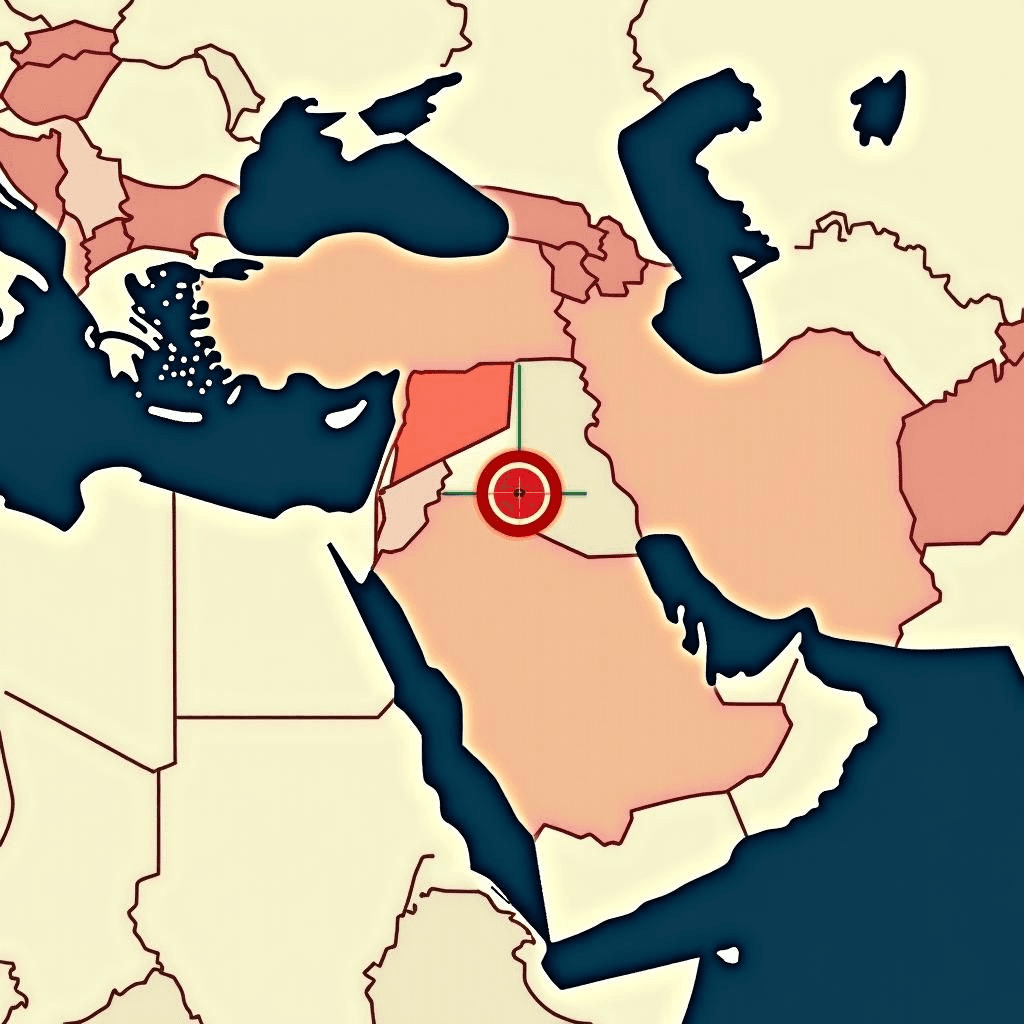
**Trump II** adopts an assertive approach in the Middle East, supporting Israel, isolating Iran, and marginalizing the Palestinians, with an “America First” policy that risks destabilizing the region. The return of **Trump** to the White House is set against a backdrop of global geopolitics increasingly characterized by strategic fluidity and new international priorities. In this scenario, the Middle East continues to represent a crucial node for US foreign policy, albeit in different forms than in the past. From the Gaza Strip to the Persian Gulf, from the Red Sea to Syria, Washington’s actions in the region move along constant directions, albeit with different approaches between various administrations. Analyzing the last decade, which has seen the alternation between the first **Trump** administration, Biden’s, and now **Trump**’s second term, it is clear that the Democratic presidency has been distinguished by a more cautious and moderate stance, in contrast to **Trump**’s, often perceived as assertive and muscular. However, what fundamentally distinguishes the two leaderships is not only the political approach but also the style and predictability. Biden and his team have generally been considered reliable interlocutors by regional leaders, while **Trump**’s unpredictability, both personally and politically, has generated mistrust in many Middle Eastern chancelleries. This characteristic could have a significant impact on institutional relations with regional leaders, especially in light of the growing local instability, exacerbated by 20 months of war in Gaza and the escalation of the conflict between Israel and Iran.
Not surprisingly, from his second inaugural address, **Trump** has shown a clear willingness to redefine the traditional US posture in the area between the Middle East and North Africa (MENA), with a return to an assertive and ideologically marked stance. Consistent with the approach already experienced in the first term, **Trump** has strengthened political and military support for Israel, abandoning the multilateral and diplomatic paths that characterized the Biden presidency, particularly those aimed at détente with Tehran and the resumption of negotiations for a nuclear deal. The current approach is dominated by a bilateral and muscular logic, in which the isolation of Iran is pursued through a strengthening of economic sanctions, aggressive rhetoric, and limited military actions. Such an assertive stance risks not only exacerbating existing tensions but also leading to structural destabilization of the Middle East. A condition exacerbated by the absence of both a stable and shared multilateral framework of values and actions with partners and a real and defined US strategic vision capable of navigating regional storms. This is why the opening of the military front between Tel Aviv and Tehran, to which US raids on Iranian nuclear sites have been added, seems to fit into this scenario. Israeli and US military operations against the Islamic Republic have reignited not only regional confrontation dynamics but have also raised fears of US involvement in yet another Middle Eastern war, contradicting the promises of a “peacemaker” and “unifier” that President **Trump** himself made during his second inaugural address at the White House.
Although the truce between the parties, mediated by Qatar, has temporarily ended the so-called “12-day war,” numerous uncertainties remain regarding the real intentions and actual capabilities of the current US administration in managing the dossier, as well as the type of involvement it intends to pursue in the region. Even in **Trump**’s second term, US policy has followed a line of continuity with previous trends, strongly reaffirming the concept of “America First.” This policy has been adopted not only as a rhetorical formula but as the structural foundation of a new approach to international politics, centered on a form of strategic sovereignty and more selective and targeted global engagement. Based on this assumption, the US rejects the role of global guarantor of the liberal order and limits its intervention to where vital interests—strictly economic, security, or geopolitical—are directly threatened or called into question. Thus, a political practice emerges that is imbued with an opportunistic vision of international relations, suspended between non-interventionism, protectionism, unilateralism, and transactionalism. In this anomalous conception of the world, however, some realist elements can be discerned, such that part of the doctrine has evoked the so-called “madman theory,” elaborated during the Cold War, which materializes in a foreign policy assumption based on absolute unpredictability and the often abstract claim of an exceptionalism that legitimizes unconventional political behavior.
In the specific case of the Middle East, this logic translates into militant anti-globalism and a return to a transactional vision of relations, where alliances, assistance, and commitments are subordinated to a cost-benefit evaluation. This dynamic is also manifested in official narratives: human rights, democracy, and forms of normative intervention are downgraded or ignored as expressions of a liberal-internationalist order considered failed or ideologically “globalist.” Instead, reliable partners on the military and economic front, even if authoritarian or illiberal, are rewarded as long as they guarantee stability and are interested in containing strategic adversaries. A complementary role in this configuration would be played by the ideological weight of a certain type of religious nationalism that moves around the US right, which has become a significant electoral base for the Republican base and the **Trump** movement. The growing influence of evangelical-sionist circles and the open support of pro-Israeli lobbies or the military industry have strongly conditioned strategic choices in favor of Tel Aviv. In particular, the axis between messianic-evangelicals and Israelis reflects an ideologically aggressive rhetoric made up of opposition to theocracy only in Islamic terms, masking their own fanaticism with slogans that invoke “Judeo-Christian values” and the “struggle for the West.” A significant portion of the evangelical electorate perceives itself as engaged in a battle against “evil,” identified internationally with Iran and political Islam, and domestically with the Democratic Party. In this context, many seem to consider **Trump** as a leader invested with a “divine mission.” The policies adopted reflect a peculiar convergence of interests between these actors and the **Trump** administration, pushing for full legitimization of Israeli claims, the erosion of the Palestinian issue as an autonomous diplomatic theme, and increasing militarization of the confrontation with Iran.
At least in intent, therefore, the prospects of the **Trump** administration seem to aim for a decisive reorientation of US positions in the Middle East, moving away from over two decades of military interventions focused on the fight against terrorism and the export of democracy. The incumbent president has signaled his intention to adopt a more pragmatic and realistic position, characterized by economic and commercial commitments and devoid of moralism on issues of governance within regional states. An eloquent manifesto of this approach was **Trump**’s state visit to Saudi Arabia, the United Arab Emirates (UAE), and Qatar, where, through commercial agreements, billion-dollar contracts, removal of sanctions, and normalization of relations with Syria, the path that the US will pursue in the area was defined: “business first,” fewer ethical-political concerns, and regional stability that passes through the closer involvement of Arab Gulf monarchies in American strategy. In this way, the multilateral initiatives launched by the previous Biden administration—including the attempt to revive the dialogue on the Iranian nuclear issue or to slightly rebalance US policy toward the Palestinian cause—are archived in favor of clear-cut choices, even irrational ones. In their place, a bilateral and muscular approach prevails, which favors three key interwoven elements: strengthening strategic alliances with key states such as Saudi Arabia, the United Arab Emirates (UAE), Egypt, and Turkey; isolating Iran through a combination of economic sanctions, diplomatic pressures, and limited military operations; and using a pragmatic posture aimed at achieving mutual benefits in bilateral relations with major regional leaders. These foundations are considered the only possible and functional tools for US power projection, as well as for regional stabilization.
In the context of growing multipolar competition, Iran is seen as a destabilizing actor, while China and Russia represent systemic enemies—Peking of a structural and global type, while Moscow as a key to dividing the front with Peking and Tehran. The containment of the former and the deterrence of the latter are united in a logic of “double pressure” that guides many of the administration’s operational choices. This has already produced direct consequences: increased US military deployment in the region, strengthening of intelligence and defense ties with Israel, and intensification of diplomatic pressures on allies and partners to align with the US posture. Clearly, such a vision risks producing profound changes in light of the latest developments caused by Israeli and US raids against Iran, which could change the cards on the table and also the type of transactional involvement in turn by Russia and China. The result is a selective, disillusioned, and deeply divisive foreign policy that could fuel new regional fault lines, thus contributing to the general chronic instability of the MENA area.
In the ideological framework adopted by the **Trump** establishment, even the main tools of US foreign policy (diplomacy, economy, security, and cooperation) undergo significant introversions. The second **Trump** term has shown a substantial disinterest in the multilateral dimension of diplomacy, considered ineffective, dispersive, and hostage to bureaucratic or moral constraints. Instead, a transactional and muscular logic is asserted: alliances and partnerships are built on contractual bases, where each involved actor is called to provide a concrete, measurable, and immediately useful contribution to Washington. Agreements are based on concrete exchanges—such as the sale of weapons, diplomatic recognition of strategic partners, or direct political advantages for the United States. This logic has led to the construction of ad hoc coalitions, flexible structures, and without lasting commitments, which operate on specific dossiers and often dissolve once the objective is reached. At the same time, this type of action risks irreversibly weakening international law and respect for its rules, projecting us toward a global order based on the law of the strongest and marked arbitrariness. Thus, a system of different norms and standards would be consolidated, applied selectively and according to cases, becoming binding for some, optional for others.
Economic tools: trade, energy, and infrastructure The second **Trump** course has adopted an unscrupulous and functional approach to trade and infrastructure agreements as geostrategic influence tools. Projects like the India-Middle East-Europe Economic Corridor (Imec) and, to some extent, the Abraham Accords themselves, originally conceived for macro-regional economic development and stabilization, are reinterpreted as platforms to guarantee the expansion of American influence and define a simultaneous containment of China, Russia, and Iran. Energy and industrial policy assumes a central role: fossil fuels, high-tech, artificial intelligence, and the defense industry become privileged tools of pressure and influence. Contracts for the supply of advanced military weapons and technologies are used to consolidate alliances, rebalance power relations, and create strategic dependencies with regional partners, particularly in the Gulf and the Levant.
Security and counter-terrorism Security remains a central pillar of American strategy, but it undergoes a significant evolution. The new administration has focused on reducing troops in the area, consistent with the selective disengagement sought. At the same time, however, targeted ground operations have been intensified with drone missions, intelligence activities, and strengthening of regional security partnerships. The main focus is on containing Shiite pro-Iran groups (Hezbollah, militias in Iraq, Syria, and Yemen) and the remnants of Sunni jihadism, such as Qaeda and Islamic State (IS) cells active in unstable areas. In this context, a model of “intelligent proxy war” is privileged, in which the United States provides technical, logistical, and intelligence support but limits direct exposure. At the same time, there has been a clear closure on issues such as immigration from the area, with the reintroduction of the travel ban against countries considered supporters of international Islamic terrorism.
International cooperation On the front of international cooperation, there is a substantial and generalized redefinition of aid tools, marking a decisive departure from historical models embodied by the US Agency for International Development (Usaid) or support provided for decades to various UN agencies. Development aid is reduced, restructured, or privatized, and subordinated to political logics and conditionalities. In other words, economic assistance is granted only if consistent with US strategic interests: it becomes part of a broader strategy of containing rival influences, incentivizing diplomatic alignment, or compensation within bilateral negotiations. The effect is a structural politicization of development aid, which moves away from humanitarian purposes to assume an instrumental role in the global power game.
A clear example of this is the dismantling of Usaid or the establishment of an Israeli-American NGO based in Geneva, such as the Gaza Humanitarian Foundation, tasked with centralizing the management of humanitarian support instead of the UN Relief and Works Agency for Palestine Refugees in the Near East (Unrwa). It is therefore evident that the tools adopted by the **Trump** administration are now aimed at achieving maximum short-term effectiveness, raising relevant questions about their long-term sustainability, political costs both internally and internationally, and regional and global consequences in the medium to long term. In this context, a US perspective emerges in which the Middle East is increasingly structured around bilateral axes and informal coalitions, in which Washington exercises influence without fully assuming responsibility for commitments.
Gaza and the West Bank In the US projection towards the region, the Palestinian issue retains a certain centrality, although the **Trump** administration has adopted a line of unconditional strategic support for Israel, consolidating and radicalizing the posture already assumed during the first term. Such support has translated into full operational coverage by Washington, legitimizing politically the operations in the Gaza Strip and, more generally, Tel Aviv’s vision regarding the Palestinian dossier. In this context, Hamas is considered by the United States a terrorist actor to be annihilated and not a recognizable political interlocutor, with the consequent systematic denial of any negotiating or institutional role for the movement in the future post-conflict management of the Gaza Strip. Similarly, at Israel’s behest, the Palestinian National Authority (PNA) is progressively delegitimized and marginalized through exclusion from direct negotiating channels and a substantial reduction in US funds for cooperation, especially towards Unrwa. The official justification lies in the perception of the PNA’s structural weakness, judged ineffective, fragmented, and incapable of representing a real counterpart in building a new regional order, increasingly designed according to Israeli coordinates. In this context, the informal proposal, already advanced in the first months of 2025, of an updated version of the Abraham Accords: it configures as a plan for economic-regional integration functional to the normalization of diplomatic relations between Israel and the Arab world, but completely detached from implementing a political solution for the Palestinian issue. On the contrary, this dimension is further depowered, treated as an internal Israeli issue, to be managed with technical tools and economic incentive packages, and not as the unresolved heart of the Arab-Israeli conflict. The apex of this approach is the provocative proposal of a “Mediterranean Riviera” for Gaza, a project of urban requalification and economic development—officially rejected by the entire Arab community—that aims to transform the Palestinian enclave into a commercial and tourist hub under international or regional tutelage, excluding any recognition of the Palestinians’ right to self-determination. Central elements such as the status of East Jerusalem, the 1967 borders, the right of return of refugees, and the very notion of a Palestinian state are categorically ignored or archived for clear US political will. All this seems to prefigure a definitive restructuring of the classic US approach to the “two-state solution,” which would be replaced in fact by a “one-state solution” in favor of Israel, in which Tel Aviv, with full **Trump**ian consent, would also assume responsibility for the political, economic, and demographic future of the Palestinians. In this vision, the issue is not resolved but absorbed and transformed into a managerial variable of integrated Israeli security, part of a new regional order functional to the balances between Washington, Tel Aviv, and Arab Gulf monarchies. According to some observers, an asymmetric dynamic emerges, in which the United States no longer acts as an impartial mediator but assumes the role of guarantor of a balance based on selective exclusion of Palestinians from the Middle Eastern agenda, with profound implications for the future of international law, Palestinian representation, and the legitimacy of any peace process.
Syria and the Levant In the context of the recent regime change in Damascus and the partial removal of US sanctions on the country, the White House’s approach to Syria has undergone a significant transformation in 2025. The **Trump** administration has interpreted the end of the Assad family’s power as a useful opportunity to redefine the regional balance in an anti-Iranian function, aiming to empty Syria of its historical role as Tehran’s strategic rear and the affiliated militias. Without formally and directly engaging in the management of the political transition and post-war reconstruction, Washington has chosen a strategy of tactical and conditional support for the new Syrian government, subordinating support to a gradual “de-Iranization” of the country and its willingness to coordinate with pro-Western actors in the region. In this context, a proposal for diplomatic normalization between Syria and Israel, on the extended model of the Abraham Accords, has been promoted, which should facilitate Damascus’ reintegration into the international community, prior to the exclusion of Iran as a strategic guarantor. One of the key—but also most controversial—elements of this scenario is the role of Turkey, whose involvement is tolerated and, in part, encouraged by the United States, albeit with ambiguities and tensions. Ankara is considered, in this context, a “variable geometry” stabilizer, whose action on the ground has contributed to containing both Iranian influence and Kurdish ambitions. However, Turkey’s positioning is highly ambiguous: while formally a member of NATO and part of Western security mechanisms, it maintains operational, energy, and diplomatic ties with Russia and an autonomous regional projection strategy, often not in line with Western strategic priorities. Turkey’s action, while useful to certain US objectives, is also a source of concern for the management of buffer zones, the Kurdish issue, and the militarization of the border. Moreover, Ankara exerts increasing influence on segments of the new Syrian power, fueling a system of cross-dependencies that makes the transition less linear than Washington hopes. On the military front, the United States maintains a restricted but high-capability presence in northeastern Syria, focused on three priorities. However, the distinctive trait of the new US posture remains that of indirect management of the Syrian transition: a model that privileges distant influence, regional delegation, and selective conditioning over direct interventions or structured reconstruction plans. In this context, post-Assad Syria is treated as a negotiable geopolitical hinge, more than as a theater of political transformation. In this logic, all discussions on Damascus’ involvement in the Abraham Accords, advanced by **Trump** himself during the meeting in Riyadh with the interim Syrian president, could also be included. The country thus fits into a US logic of containing rival powers (Iran and Russia) and selectively aggregating functional allies, including a Turkey whose role remains fundamental but structurally ambiguous, autonomous, and sometimes divergent.
Red Sea and Yemen In the Yemeni quadrant and along the maritime axis of the southern Red Sea, the **Trump** administration has shown a more flexible and multi-level approach, maintaining an essentially security posture. The primary objective remains the protection of commercial routes and strategic infrastructure between Bab el-Mandeb, Aden, and Djibouti, vital for global energy flows and Western logistical-military interests. In a context of growing regional instability, the United States reached a tactical de-escalation agreement with the Houthis in May 2025, mediated through Omani and Qatari channels. This agreement provides for a selective limitation of hostile actions by Yemeni militias in the Red Sea against US (but not Israeli) targets in exchange for humanitarian openings (food and medical aid), a targeted reduction in secondary sanctions, and indirect political recognition of their autonomy in some areas of northern Yemen. However, this partial truce is extremely fragile, as it is inserted into a multi-level conflict scenario. Indeed, with the opening of a direct front between Israel and Iran, the entire maritime arc from the Levant to the Persian Gulf has become an integrated operational theater, in which Shiite pro-Iranian militias, including the Houthis, can reactivate as asymmetric actors. Iran’s strategic projection through its proxies is thus considered part of a single operational chain, and potential attacks in the Red Sea are read in a coordinated manner with possible crises in the Strait of Hormuz.
North Africa and the Mediterranean Compared to other operational quadrants, North Africa and the Mediterranean present as secondary scenarios for US strategy. They are interesting only in terms of anti-terrorism, migration control, and containment of regional instability. Even in this context, the **Trump** administration has expressed its intention to extend and channel these dynamics through the interpretive lens of the Abraham Accords. Not surprisingly, during the first term, the White House managed to extend the normalization agreements between Israel and the Arab world to Morocco, overturning decades of official US policy through recognition of Rabat’s sovereignty over the contested territory of Western Sahara in exchange for Morocco’s recognition of Israel. Based on this logic, the **Trump** administration would like to expand the discourse to Tunisia and Libya, which, for different reasons, are still far from any involvement in the Abrahamic game. Tunis officially has always refused the US offer due to the country’s historical closeness to the Palestinian cause, but President Kaïs Saïed could instrumentally exploit these US openings to strengthen the regime and further repress internal dissent. Tripoli, on the other hand, appears still disoriented by the diplomatic chaos unleashed by Israel in August 2023, when the announcement of an imminent normalization agreement with the North African state sparked strong protests and tensions throughout Libya, culminating in a political crisis that led to the removal of then-Foreign Minister Najla al-Mangoush. To date, however, there are no clear prospects regarding a possible involvement of Tripoli or Tunis, although the latter could show some willingness in exchange for clear and evident advantages. If the US, for example, were to push for normalization between Tunisia and Israel, Washington could be able to provide significant concessions (especially of an economic and financial nature) to the North African country, perhaps through direct involvement of the IMF, emulating aid and assistance packages similar to those done in recent years with Egypt. Nevertheless, the country continues to hold some relevance for the United States, especially in relation to the threat posed by the proliferation of jihadist cells in the Sahel and the need to contain irregular migration flows from the African continent. However, its weight within US strategic priorities remains marginal. For a long time, indeed, Washington has shown limited interest and clear reluctance to become actively involved in a crisis considered primarily European. This disengagement has favored the proliferation of underground competition between local and regional actors, giving rise to a tactical stalemate aimed at preventing the rise of a dominant actor. The American approach has thus translated into fragmented and little incisive action, devoid of a long-term strategic vision on Libya’s future. In this scenario, it is also evident the scant attention paid to the growing penetration of Russia and China in the North African country, which proceeds in an anti-NATO key with the aim of eroding Western influence in Libya and more generally in Africa. With regard to the area, US interest remains essentially focused on maintaining strong relations with Egypt, intended as a stabilizer of balances between the Mediterranean and Eastern Africa. This also explains the US endorsement of Egypt’s positions regarding a solution to the management of Nile waters with Ethiopia. In this perspective, the relationship with President Abdel Fattah al-Sisi remains central: Cairo is seen as an important partner with whom to maintain relations based on military and strategic cooperation, without imposing democratic or humanitarian conditions on the country’s domestic policies.
Iran and the nuclear issue The Iranian dossier represents one of the main nodes of tension and strategic maneuvering for the US in the region. The **Trump** administration has distinguished itself by relaunching with force a more assertive version of the “maximum pressure” strategy, marking a clear discontinuity with the multilateral negotiating approach adopted by his predecessor Joe Biden. Such a strategy has effectively obstructed any possibility of returning to the Joint Comprehensive Plan of Action (JCPOA). Sanctions have been reintroduced and strengthened, while official rhetoric has once again described Iran as a direct threat to regional and global security. Beyond the harshness of the tones and attitudes, no strategic US design emerges aimed at preventing Tehran from acquiring nuclear capability. Rather, a broad and hard containment strategy has consolidated: political isolation of Iran, targeted attacks against military infrastructure, secondary economic sanctions, and support for Israeli operations against proxy militias in Lebanon, Syria, Iraq, and Yemen. Washington’s approach remains anchored in a binary logic: deterrence combined with opportunistic diplomacy, coercion accompanied by targeted openings. Tehran continues to be considered a destabilizing actor to be circumscribed, more than a potential interlocutor to be integrated into the international system. In this context, any diplomatic openings, such as the mediation proposed by Qatar following the signing of the June 24 truce, as well as the previous negotiation rounds led by Oman, are conceived as tools functional to the primary US and Israeli objective: preventing Iran from becoming a de facto nuclear power and limiting its regional influence. What makes the initiative by Muscat and Doha ineffective is, in particular, the issue of Iran’s uranium enrichment, now well beyond the limits set by the 2015 JCPOA agreement, with the concrete risk of seeing the country now close to the capability of building a nuclear weapon. To this are added political and strategic obstacles, such as the limitation of access to Iranian sites by international inspectors from the International Atomic Energy Agency (IAEA), as well as Tehran’s request to revoke all international economic sanctions against it and obtain guarantees against future unilateral US actions. It is therefore not surprising that after the unilateral withdrawal from the JCPOA decided by **Trump**’s first administration in 2018, neither Washington nor Tel Aviv have succeeded in stopping Iran’s nuclear program or outlining a coherent strategy. According to IAEA estimates, Iran would have approached the threshold necessary for a nuclear test, thanks to the enrichment of 400 kg of uranium enriched to 60%. To avert this eventuality, Israel and the United States have launched a series of military operations—respectively “Rising Lion” and “Midnight Hammer”—aimed at destabilizing Tehran’s regime, with the implicit ambition of provoking a change of government. However, the June 24 truce does not seem to have shifted the strategic scenario much. Indeed, military operations have not slowed down Iran’s nuclear race more than the agreement wanted by Barack Obama and European allies in 2015. However, according to President **Trump**’s reasoning, recent events in Iran would not necessarily lead to a military escalation in the Middle East but would offer an opportunity to reopen negotiations on the nuclear program. Following this hypothesis, an agreement between the US and Iran would still be possible provided that Tehran shows flexibility in nuclear program negotiations—and Washington adopts an integralist posture towards the Islamic Republic’s claims, even through the proposal of economic compensations (financial packages of 30 billion dollars to abandon nuclear ambitions). However, this prospect appears increasingly implausible, as military operations against the Islamic Republic do not seem to have created the conditions for a resumption of dialogue. Moreover, the military escalation of the Israel-US axis has radically altered the operational framework, opening the way to more unpredictable scenarios.
Abraham Accords and marginalization of the Palestinian issue If during the first term the Abraham Accords were the distinctive element of **Trump**’s diplomacy, their strengthening represents a cornerstone of US regional policy not only in terms of diplomatic normalization between Israel and some Gulf Arab countries but also as the pivot of a new security architecture in the Middle East. Such agreements are conceived as a multi-level process aimed at redefining regional balances, bypassing the most divisive issues and focusing on the convergence of economic, technological, and strategic interests. In a context marked by growing military escalation between Israel and Iran and the persistence of the crisis in Gaza, Washington’s objective is to expand the normalization framework, including key actors such as Saudi Arabia and, prospectively, extending the initiative to other Asian Muslim-majority actors (such as Indonesia, Uzbekistan, or Malaysia). This process would be incentivized by multilateral packages comprising economic cooperation, technology transfers, and security guarantees. This dynamic responds to a well-defined logic: In this vision, normalization is not subordinated to progress on the Israel-Palestine front but is completely detached from it, configuring itself as an autonomous path aimed at redefining the regional agenda’s priorities. In this perspective, despite the dramatic humanitarian crisis, the war in Gaza has not substantially altered the structural approach of the US administration. The Palestinian cause continues to be interpreted as an internal Israeli political issue rather than the central and unresolved geopolitical node of the regional conflict. In this context, initiatives such as the proposal for a “Mediterranean Riviera” in Gaza—presented as an economic development and stabilization driver—are configured as attempts to depoliticize the Palestinian issue.