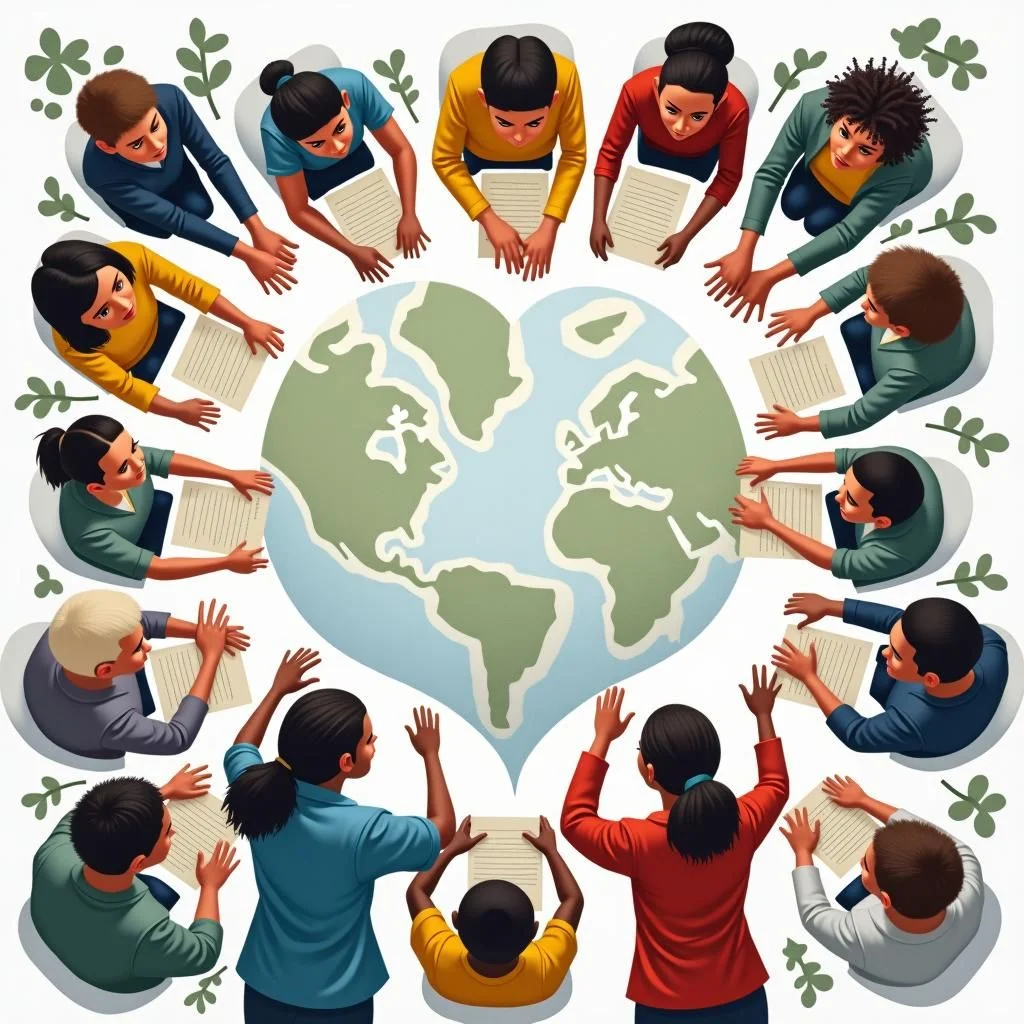
Young people under the age of 24 constitute 41% of the world’s population. Despite global recognition of their right to inform and participate in decisions affecting them, education systems often fail to provide substantial roles for youth in shaping global agendas and dialogues. Youth are increasingly demanding meaningful opportunities to influence policies and agendas that impact their present and future. While some are involved in local education decisions through youth councils and school boards, many are redefining civic engagement through social media, protests, and activism.
Meaningful youth engagement involves the intentional and ongoing participation of youth in decision-making processes. This requires moving beyond merely giving youth a voice to centering their voice in decision-making by breaking down barriers to entry and creating opportunities for shared decision-making. Intergenerational partnerships are crucial in this effort. The Center for Universal Education’s work on youth agency in and through education has shown the importance of these partnerships in tackling student disengagement, strengthening girls’ agency, and more.
International Youth Day Reflections
In celebration of International Youth Day, it is essential to reflect on intergenerational partnerships that have shaped significant events, such as the annual Symposium on education systems transformation. In this symposium, youth were not asked to fit into an existing structure but were invited to shape the year’s theme: Centering young people’s voice and agency in and through research and policy. Youth were recognized as experts in various topics, including education research, communications, and generative AI. Adults and youth collaborated to support each other, leading in ways that aligned with their strengths and interests.
The following points outline collective lessons learned from building learning spaces that center young people, with young people:
1. Recognize that young people are not a monolith: There is no single “youth perspective.” Young people hold intersecting identities shaped by age, geography, race, disability, class, language, and culture. Effective engagement starts by recognizing this diversity and designing with it in mind. Avoid assumptions and instead, ask young people about their preferred modes of participation. Provide materials in accessible formats and multiple languages, and create opportunities for different kinds of contributions—spoken, written, digital, and visual. Inquire about disability accommodations for youth with disabilities.
2. Honor intergenerational expertise: Young people lead every day, bringing expertise, relevant skills, lived experience, and creative insight that can enrich any space. Rather than asking them to speak broadly “as youth,” invite them to lead sessions, facilitate dialogue, and speak on the issues they know best. Assign roles based on skill and substance, not age. Invite adults to enter the space not only to mentor but also to learn. When all generations are seen as knowledge-holders, productive collaboration becomes possible.
3. Ensure safety and consent: When young people feel safe, they are more likely to participate, ask questions, and disagree. Diversity in factors such as age, race, gender, class, and geography can create power imbalances where young people may be uncomfortable expressing their views freely. Provide training, resources, and expectations to adults on promoting positive social norms and behaviors that position young people as partners and encourage their equal participation. Young people’s participation must always be voluntary at all levels of engagement. Consent must be ongoing and fully informed, not something collected once and forgotten. This includes consent from young people with regard to overall participation as well as audio, photo, and video documentation at the event.
4. Compensate young people’s expertise: Participation is labor, and labor should be acknowledged, especially when it draws on time, emotional energy, and expertise. Compensation should reflect local laws, cultural norms, and the preferences of the young people involved. This might include honoraria, stipends, school credit, or other meaningful forms of recognition for their contributions as partners.
5. Co-create, don’t just consult: Young people should help shape the purpose, audience, and structure of the event from the outset. Co-creation happens on a continuum, from tokenistic participation to shared decision-making and leadership. Their role must go beyond filling a seat or checking a box. When students are brought in early, their ideas influence the direction, not just the delivery. This requires clear conversations about why they are involved and what value they bring. Without early input, youth participation risks becoming performative.
6. Sustain structures of trust and support: Trust is built through consistent two-way communication, early preparation, and clear expectations. Young people engage more fully when they understand how their role connects to the broader goals. This means sharing information ahead of time, checking in regularly, and creating space for questions and feedback. When students are given time to prepare and adults follow through on what they promise, the dynamic shifts. Participation becomes deeper, more confident, and more collaborative. Strong support signals that youth are not being included symbolically but as valued partners.
7. Reimagine the physical space to encourage intergenerational learning: Physical space can reflect both power dynamics and how people learn. At events, seating charts, stage design, and facilitation styles can either reinforce hierarchies or dismantle them. Encourage intergenerational seating to foster more balanced conversations. Rather than isolating young people at the margins, place them in dialogue with researchers, educators, and policymakers.
8. Make youth engagement a long-term commitment: Leverage the event and intergenerational planning group to create meaningful connections with youth participants over time. Follow up with young people to get their feedback and advice on future events that incorporate youth voice and participation. Consider how this experience might open up personal or organizational practice to deepen youth participation and collaboration for future events and projects.
La participación juvenil no debe limitarse a discusiones donde los jóvenes son el centro del tema
Deben haber siempre un espacio en la mesa. En un momento en que todo, desde la libertad de expresión hasta la libertad académica, está cada vez más bajo amenaza, los espacios de discusión de políticas deben considerarse incompletos sin la participación activa de los jóvenes. Las alianzas intergeneracionales deben trascender los simposios o espacios donde los jóvenes son vistos pero no escuchados. La reimaginación radical de sistemas educativos, económicos y sociales más justos y democráticos comienza cediendo el poder a una generación que hereda un mundo en crisis. Nada sobre los jóvenes, sin ellos.