The September 2024 report on European Union competitiveness policy identified high energy prices as a major challenge. This issue has been exacerbated by Russia’s invasion of Ukraine, which has significantly altered Europe’s energy markets and widened the gap between US and EU energy prices. To mitigate the impact on EU competitiveness, several measures have been proposed, including leveraging Europe’s market power in international gas markets through EU joint purchasing, pushing for European electricity market integration, and implementing short-term steps to decouple electricity prices from volatile gas prices.
Long-term arrangements such as power-purchase agreements (PPAs) and contracts-for-difference (CfDs) are essential for rapidly reducing electricity costs and allowing consumers to benefit from renewable energy. PPAs and CfDs provide revenue stability for energy producers and price certainty for buyers or governments. The European Commission’s Affordable Energy Action Plan, published in February 2025, endorsed several of these proposals, particularly the push for PPAs and CfDs. However, the implementation of these measures remains uncertain.
Initiatives like a platform to jointly procure energy and raw materials have not yet succeeded in projecting European purchasing power effectively. External conditions are changing rapidly, and Europe has committed to buying $750 billion of energy products from the US by the end of 2028 as part of the EU-US trade deal. This context complicates the implementation of joint purchasing strategies, especially for US liquified natural gas (LNG).
Challenges in Implementing Joint Purchasing Strategies
Calls to artificially suppress electricity prices below production costs continue to surface. For instance, the Commission adopted a new State Aid Framework in July, giving EU countries greater leeway to subsidize energy for industry. These subsidies are conditional on industry making decarbonization investments. However, this move is risky for several reasons. First, it could have difficult distributional implications at the national level, as households might end up paying the bill for energy-intensive industries. Second, it risks fostering a dangerous subsidy race between EU countries. Third, it could keep energy demand high and electricity expensive by subsidizing energy-intensive production stages that should move to areas with cheaper clean energy sources, whether within the EU or outside.
Ambitious Reforms for Energy Integration
To address Europe’s energy problems more structurally, ambitious reforms are needed to further integrate the European electricity market and accelerate the expansion of clean energy. This includes shorter permitting times for clean energy projects and electricity grid expansion, and the removal of national political obstacles to the development of interconnectors. The Affordable Energy Action Plan does not address these issues directly, but the Commission is set to propose a European Grid Package by the end of 2025. This package aims to help upgrade and expand grids to support rapid electrification and speed up permitting, providing a strong toolkit to deliver energy infrastructure that underpins European competitiveness. An increase in funding for electricity infrastructure from €6 billion to €30 billion in the proposed EU 2028-2034 budget signals the Commission’s commitment to this goal.
EU Countries Should Embrace Closer Integration
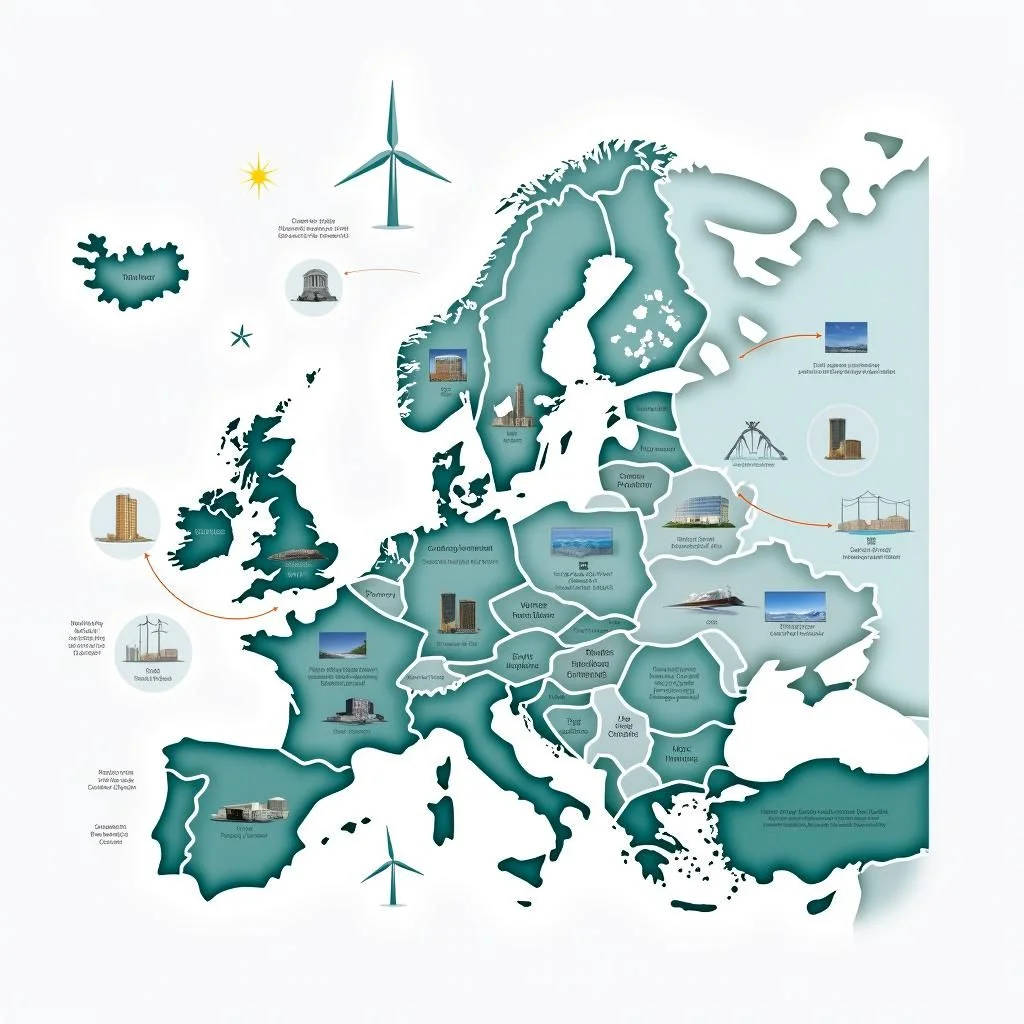
EU countries should embrace closer integration of the European electricity market, which is crucial for accelerated decarbonization, lower energy costs, and reinforced European energy security. To integrate the European electricity system effectively, both hardware and software need upgrading. This includes an overhaul of Energy Union governance, ensuring that major system-development decisions of direct cross-border relevance are taken centrally. The Commission has not yet proposed any fundamental changes in this area, limiting itself to the launch of an Energy Union Task Force in June 2025. Measures to deepen electricity market integration, planned for proposal in early 2026, must mark a genuine step towards a real EU electricity union to boost competitiveness, security, and decarbonization.
Creating a Robust and Integrated Energy Market
The response to the call for action on energy has thus far been more incremental than disruptive. However, potentially significant initiatives are on the way. These initiatives will represent Europe’s moment of truth for energy integration and will show whether the recommendations on energy will have any real lasting impact. The focus should be on creating a robust and integrated energy market that can withstand external shocks and support the transition to a sustainable energy future. This involves not only technological upgrades but also policy reforms that ensure a level playing field and prevent harmful subsidies. The success of these initiatives will depend on the willingness of EU countries to collaborate and implement the necessary changes.