Over the last decade, Europe has faced significant challenges, including the erosion of the post-war international order, economic coercion from both China and the United States, and military aggression from Russia. This analysis places these changes in a historical context, examines their immediate consequences, develops scenarios for 2030-2035, and outlines the policy implications for the next one to five years.
The short-term economic impact of tariff and policy uncertainty, particularly since the beginning of the second Trump Presidency, is expected to be moderate. However, Europe faces very high risks. Plausible short-term dangers include a collapse of the US bond market, escalation of Russian military aggression against Ukraine or the European Union directly, a fiscal crisis triggered by a populist election victory in a high-debt euro-area member, or a trade shock triggered by increasing tensions between the US and China and/or hostile Chinese actions in East Asia.
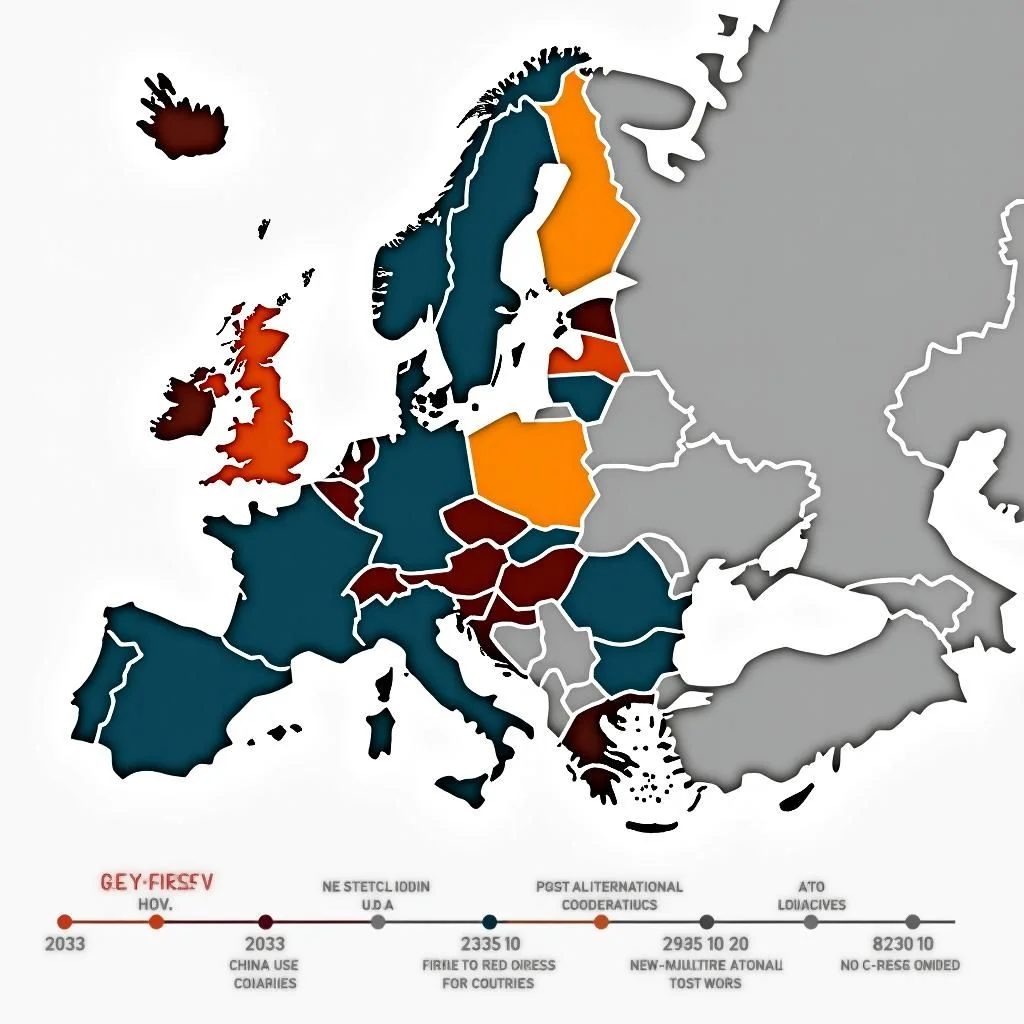
Three benchmark scenarios are developed for the world in 2035, all of which involve continued US-China rivalry and greater multipolarity than in the past:
1. Further Retreat from International Cooperation
This scenario involves a significant retreat from or dismantling of international cooperation, with continuing protectionism in the US and minimal global public goods. This would likely lead to increased isolationism and a fragmented global economy, where countries prioritize their own interests over collective global benefits.
2. Three-Bloc World
This scenario envisions a world divided into three blocs: one led by China, one led by the US, and a non-aligned set of countries. International public goods would be provided within and partially between these blocs. This configuration could lead to a more stable but less integrated global system, with each bloc pursuing its own agenda and potentially engaging in limited cooperation with others.
3. New Multilateral Order
This scenario involves a renewed commitment to international cooperation over the provision of global public goods. This would likely result in a more stable and integrated global system, with countries working together to address common challenges such as climate change, pandemics, and economic inequality.
Actual outcomes could consist of combinations of these scenarios or variants of them. Scenario 1 would be least desirable for the EU, most countries individually, and countries collectively, while scenario 3 would be most desirable. In scenario 2, Europe’s decision to align with the US or to choose non-alignment would depend on whether the US acts in a benevolent or coercive manner. Short-to-medium-term policy must both prepare Europe for adverse future scenarios and contribute to greater international stability and cooperation.
This requires policies that increase Europe’s strategic autonomy from the two superpowers, both for its protection and to increase its bargaining power. The policy focus should include much greater defense, tech, and financial autonomy from the US. This involves investing in domestic defense capabilities, reducing reliance on foreign technology, and fostering a robust financial sector. Additionally, Europe needs a far more resilient and integrated energy system, secure access to critical minerals, and a fiscal framework that gives greater flexibility to low-risk countries. This framework should allow for fiscal stimulus during economic downturns and ensure fiscal sustainability during periods of growth.
Internationally, Europe should defend and promote the reform of the rules-based international order by forming coalitions with other countries from the Global North and some from the Global South. The two priority areas should be trade policy and climate policy. Trade policy should focus on reducing barriers to trade, promoting fair competition, and ensuring that trade agreements benefit all parties involved. Climate policy should aim to reduce greenhouse gas emissions, promote renewable energy, and support adaptation measures in vulnerable regions.
To achieve these goals, Europe must enhance its strategic autonomy in several key areas:
1. Defense Autonomy
Europe should invest in its own defense capabilities to reduce dependence on the US. This includes developing advanced military technologies, increasing defense spending, and fostering closer defense cooperation among EU member states.
2. Technological Autonomy
Europe must reduce its reliance on foreign technology, particularly from the US and China. This involves investing in research and development, promoting innovation, and fostering a competitive tech industry. Key areas of focus should include artificial intelligence, cybersecurity, and 5G technology.
3. Financial Autonomy
Europe should develop a robust financial sector that is less dependent on external influences. This includes strengthening the Eurozone’s financial stability, promoting financial integration, and ensuring a level playing field for European financial institutions.
4. Energy Autonomy
Europe needs a resilient and integrated energy system that reduces dependence on external energy sources. This involves diversifying energy supplies, promoting renewable energy, and enhancing energy infrastructure. Secure access to critical minerals is also essential for maintaining energy autonomy.
5. Fiscal Autonomy
Europe should have a flexible fiscal framework that allows for fiscal stimulus during economic downturns and ensures fiscal sustainability during periods of growth. This involves reforming fiscal rules, promoting fiscal coordination, and ensuring that fiscal policies are aligned with economic objectives.
Europe should defend and promote a rules-based international trade system, reducing barriers to trade, promoting fair competition, and ensuring that trade agreements benefit all parties involved. This involves working with other countries to reform the World Trade Organization (WTO) and strengthen global trade governance.
Trade Policy
Europe should also work with other countries to promote a rules-based international trade system, reducing barriers to trade, promoting fair competition, and ensuring that trade agreements benefit all parties involved. This involves reforming the World Trade Organization (WTO) and strengthening global trade governance.
Europe should lead global efforts to combat climate change, reducing greenhouse gas emissions, promoting renewable energy, and supporting adaptation measures in vulnerable regions. This involves working with other countries to strengthen global climate governance and ensure that climate policies are aligned with economic objectives.
Climate Policy
Europe faces significant challenges in the coming years, including economic coercion, military aggression, and a changing international order. To navigate these challenges, Europe must enhance its strategic autonomy, promote international cooperation, and develop policies that increase its resilience and bargaining power.
By focusing on defense, tech, financial, energy, and fiscal autonomy, as well as trade and climate policy, Europe can prepare for adverse future scenarios and contribute to greater international stability and cooperation.