Trade and other tensions between the European Union and China should not derail joint efforts to cut emissions. The COP30 United Nations Climate Change Conference in Belém, Brazil, in November 2025, will convene at a critical juncture. The Paris Agreement’s architecture is established, but the political will to implement it is waning. The United States has withdrawn from the Paris Agreement for a second time and recommitted to fossil fuels. While the direct emissions impact might be modest, the credibility shock is significant: if the US can withdraw twice, why should others commit beyond minimal efforts? Additionally, the US cutting or abandoning programs relevant to global climate cooperation, including slashing USAID climate aid and dropping support for the Green Climate Fund, threatens global climate finance and undermines trust in multilateral climate action. This has left the European Union and China as the global leaders on climate change. However, their nationally determined contributions (NDCs) or emissions reduction pledges fall short of leadership expectations.
China’s Role in Global Climate Outcomes
China is both the world’s largest emitter and the largest clean-tech manufacturer, playing a dual role that can shape global climate outcomes. The EU remains indispensable but cannot lead alone. The US withdrawal from the Paris Agreement opens up new diplomatic space for EU-China cooperation, though under tighter geopolitical and economic constraints. For the EU, the task is to pursue a new strategy of climate realpolitik fit for a fragmented international order: maintain regulatory strength at home, engage in selective cooperation with China abroad, and build multilateral coalitions to raise global ambition.
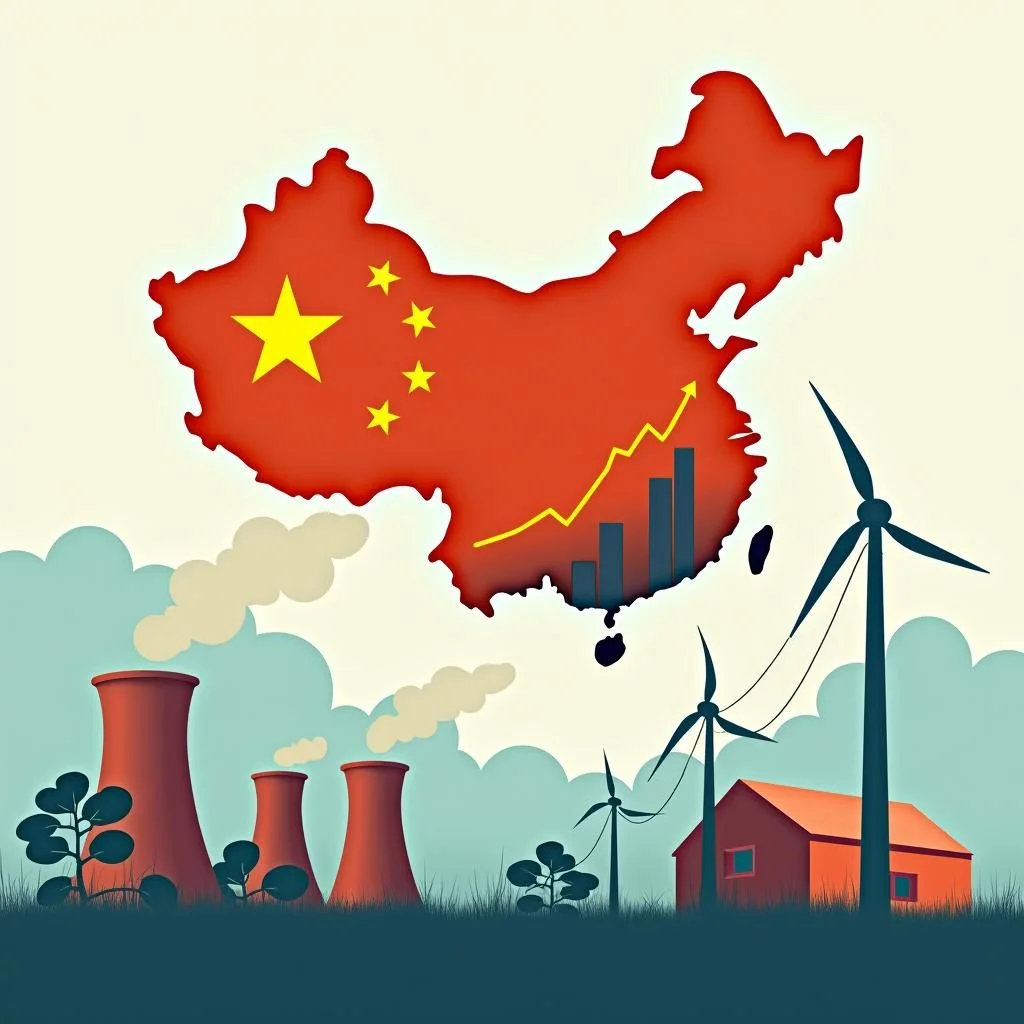
Since the signing of the Paris Agreement in 2015, China has been responsible for over 60 percent of the rise in global CO2 emissions, while US and EU emissions have declined. China now produces more than 30 percent of the annual global emissions total, more than all developed countries combined. However, structural shifts in China’s economy and energy mix suggest a possible inflection point.
Emissions growth in China has declined sharply, from around nine percent annually in the 2000s to 0.7 percent year-on-year growth in 2024. In the first quarter of 2025, China’s emissions might even have begun to decline, driven by a surge in renewable energy deployment and slowing industrial activity. In May 2025, China installed 93 gigawatts of solar capacity, four times more than in the same period in 2024 and more than any other country installed in the entire previous year. These gains were accelerated by a final push to meet provincial targets under the 14th Five-Year Plan. So, while some deceleration is expected because of grid bottlenecks and land availability constraints, the direction of travel seems clear.
But in parallel, coal still plays a dominant role in China’s electricity mix: in 2024, coal generated about 58 percent of China’s electricity. China’s Energy Law explicitly recognizes coal as a “basic safeguard and system regulator” in the national energy system. Since 2015, China has added 294 gigawatts of operating coal power capacity, and today accounts for more than half of the world’s coal fleet and 70 percent of new global coal projects. This simultaneous expansion of renewables and coal reflects a deliberate policy approach, in which climate measures are explicitly designed to coordinate with economic development and social stability—a principle formally enshrined in the 14th Five-Year Plan (2021-2025).
China’s Climate Diplomacy
Mounting domestic economic pressures, from lower domestic demand to slowing GDP growth, reinforce this dynamic by pushing Beijing to treat clean tech and energy security not merely as climate solutions, but as strategic responses to economic vulnerabilities that maintain industrial competitiveness. This duality reflects China’s core narrative of ‘development-first climate responsibility’ and underpins its global climate diplomacy.
Under the Belt and Road Initiative, China has been a major public backer of overseas fossil-fuel infrastructure. However, China pledged in September 2021 to stop building new coal power plants abroad and has dramatically increased renewable energy engagement both in absolute terms ($9.7 billion in the first half of 2025 compared to $4.4 billion in the first half of 2024), and as a percentage of total energy funding. China prefers bilateralism and South-South cooperation over formal multilateral commitments, showcasing soft power but avoiding systemic burden-sharing. As of late 2024 and early 2025, China had signed more than 50 climate cooperation agreements with 42 developing countries, from low-carbon demonstration zones, climate mitigation and adaptation projects and capacity-building workshops, to initiatives such as the Africa Solar Belt. However, despite being the world’s second-largest economy, China continues to self-classify as a developing country under the UN Framework Convention on Climate Change. It has not contributed to the Green Climate Fund or the Loss and Damage Fund. Together, these patterns—a dual approach domestically, selective bilateralism and continued self-identification as a developing country—underscore China’s strategy as a climate hedger: projecting leadership where interests align, while preserving flexibility on finance and responsibility.
EU-China Climate Cooperation: A Complex Relationship
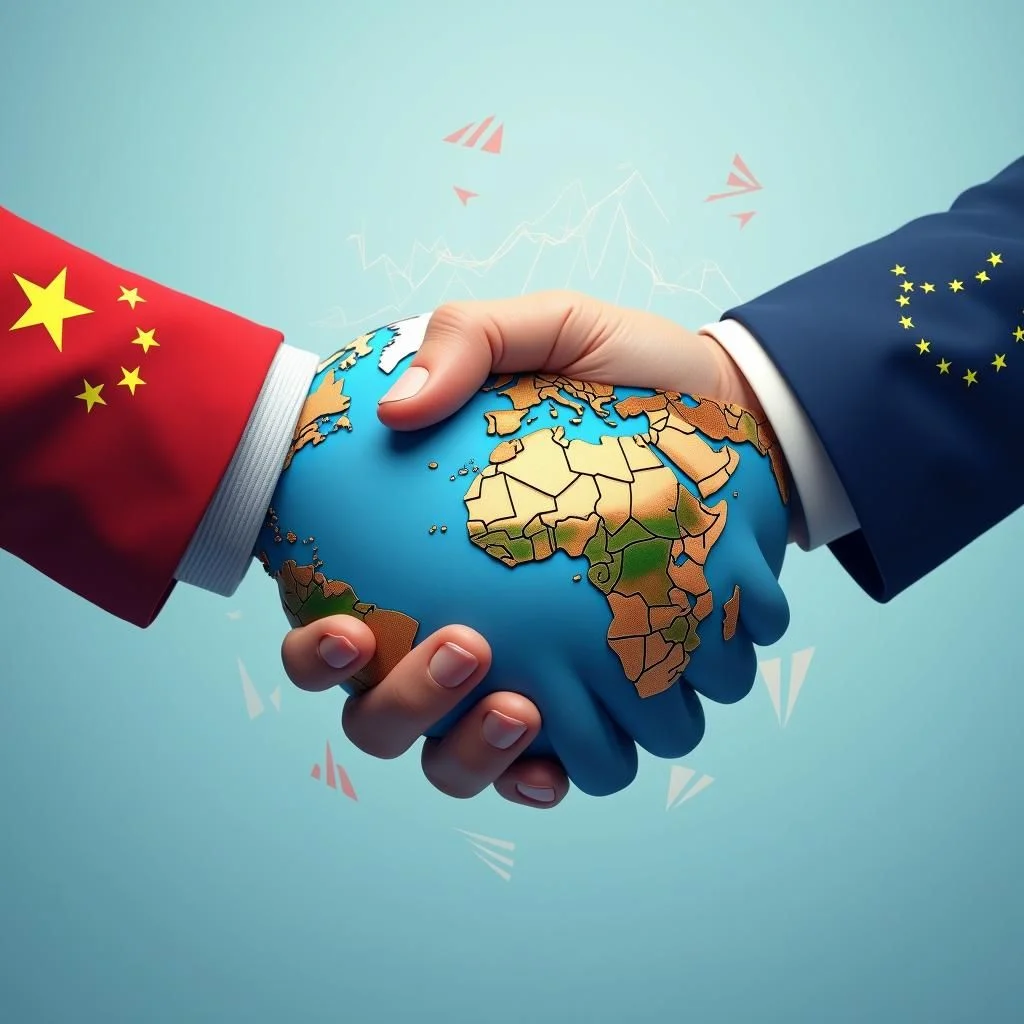
From the EU’s perspective, China is simultaneously a partner, competitor, and systemic rival. China and the EU are the world’s two largest clean tech markets and are influential players in global standard-setting for carbon markets, emissions tracking, and sustainable finance. The challenge is to manage the rivalry while securing convergence on mutually beneficial outcomes. Given the general mistrust on both sides, cooperation must proceed through pragmatic, issue-specific channels that align economic incentives rather than rely on broad political declarations. The most immediate barrier to EU-China climate cooperation is the collision between trade and climate policy. Trade tensions, such as EU duties on Chinese electric vehicles or Beijing doubling down on export restrictions on crucial battery materials, increasingly spill over into climate diplomacy. Instruments such as the EU’s carbon border adjustment mechanism (CBAM)—a levy on imports based on their carbon content—are particularly sensitive. While designed as a climate tool, CBAM is increasingly viewed as a protectionist tool by others. This framing risks derailing dialogue in areas in which technical engagement remains both feasible and necessary. The risk is less about the intrinsic value of the instruments and more about whether they are perceived as a barrier to building inclusive coalitions. To avoid this, the EU must prioritize diplomatic outreach to vulnerable states and emerging economies to align standards and commitments in ways that are also open to China. Such an approach would reinforce multilateral norms and create pathways for EU-China convergence, while avoiding the perception of a West-versus-the-rest attitude.
Building Trust through Targeted Cooperation
Beyond managing friction, the EU and China can build trust through targeted, outcome-oriented cooperation in areas where their economic interests align. Existing platforms such as the Ministerial on Climate Action (MoCA)—a forum co-founded by the EU, China, and Canada in 2017 to sustain political momentum on the Paris Agreement—and the High-Level Environment and Climate Dialogue (HECD)—established in 2020 and co-chaired by the EU climate commissioner and China’s climate envoy—already provide the necessary institutional infrastructure. For instance, EU support for China’s national emissions trading system (ETS), ongoing since 2014, has helped improve monitoring and verification standards. As China expands ETS coverage, including to cement and steel in 2025, the EU should encourage technical convergence with EU ETS practices, not least to ease future compliance with CBAM. Methane reduction should also be a bilateral priority. Considering that China is not part of the Global Methane Pledge and that methane is responsible for around 14 percent of Chinese greenhouse-gas emissions, coordinated initiatives in coal mining, agriculture, and waste management could generate rapid emissions reductions in sectors in which technology and expertise are readily transferable.
Green Finance: A Pathway for Cooperation
A deeper layer of cooperation could emerge in relation to green finance, since it is driven largely by investor needs rather than political signalling. The launch of the Common Ground Taxonomy (CGT) in 2021 has already established a framework for comparing EU and Chinese approaches to defining sustainable investments. The next step should be to enhance interoperability between the EU sustainable finance taxonomy and China’s green bond catalogue, enabling investors to allocate capital across both markets with reduced transaction costs. Joint development of biodiversity and social taxonomies would also broaden the scope of green finance standards, while harmonized disclosure rules could make cross-border investment flows more transparent. Such initiatives would help unlock larger pools of international capital for green projects through a gradual, technical convergence focused on interoperability rather than full harmonization.
Finalmente, la cooperación puede extenderse a países terceros a través de la prometedora pero subutilizada área de adaptación a los impactos del cambio climático. Ambos la UE y China son proveedores activos de apoyo a la adaptación: la UE a través de sus programas de desarrollo y fondos multilaterales, y China a través de la cooperación Sur-Sur enmarcada como parte de la Iniciativa de la Ruta de la Seda. La oportunidad reside en alinear estos esfuerzos. Iniciativas conjuntas podrían incluir la cofinanciación de sistemas de alerta temprana en regiones vulnerables al clima, el intercambio de expertos en agricultura y gestión del agua resistentes al clima, y la coordinación en marcos multilaterales de adaptación para evitar la duplicación y maximizar la efectividad.
La oportunidad de alinear esfuerzos
La alianza entre la UE y China en la adaptación al cambio climático ofrece una oportunidad única para avanzar en la cooperación internacional. La UE y China pueden trabajar juntas para desarrollar iniciativas conjuntas que beneficien a ambos países y a otros países en desarrollo. Algunas posibilidades incluyen: la cofinanciación de proyectos de adaptación en países vulnerables, el intercambio de expertos en tecnologías de adaptación y la coordinación de esfuerzos en marcos multilaterales.