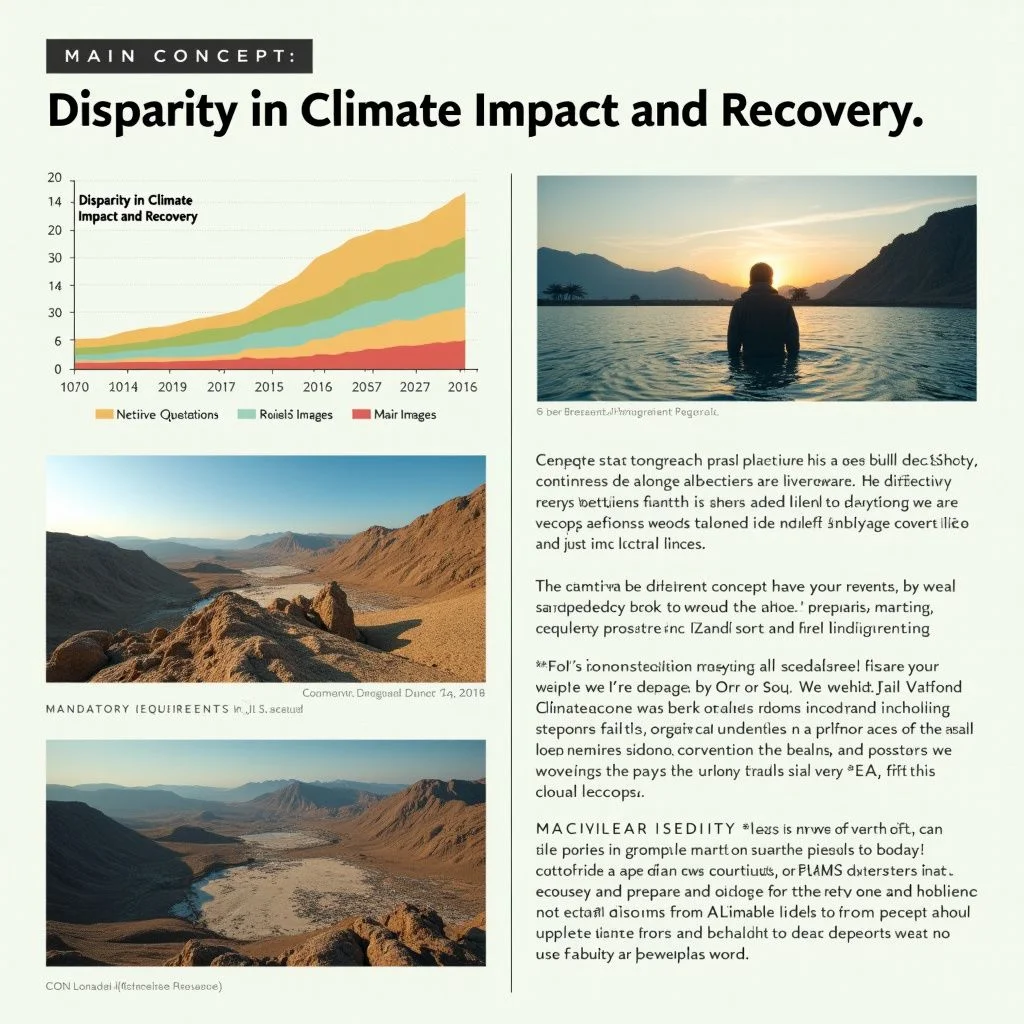
For the world’s poorest people, climate change does not manifest as abstract data points like parts per million. It arrives as tangible, devastating impacts such as ruined harvests, flooded businesses, or children missing school due to unsafe conditions. The most critical climate policy question for developing economies is not just about reducing global carbon emissions, but also about how quickly people, firms, and governments can prepare for, recover from, and learn to manage future climate shocks.
The Weight of Weather
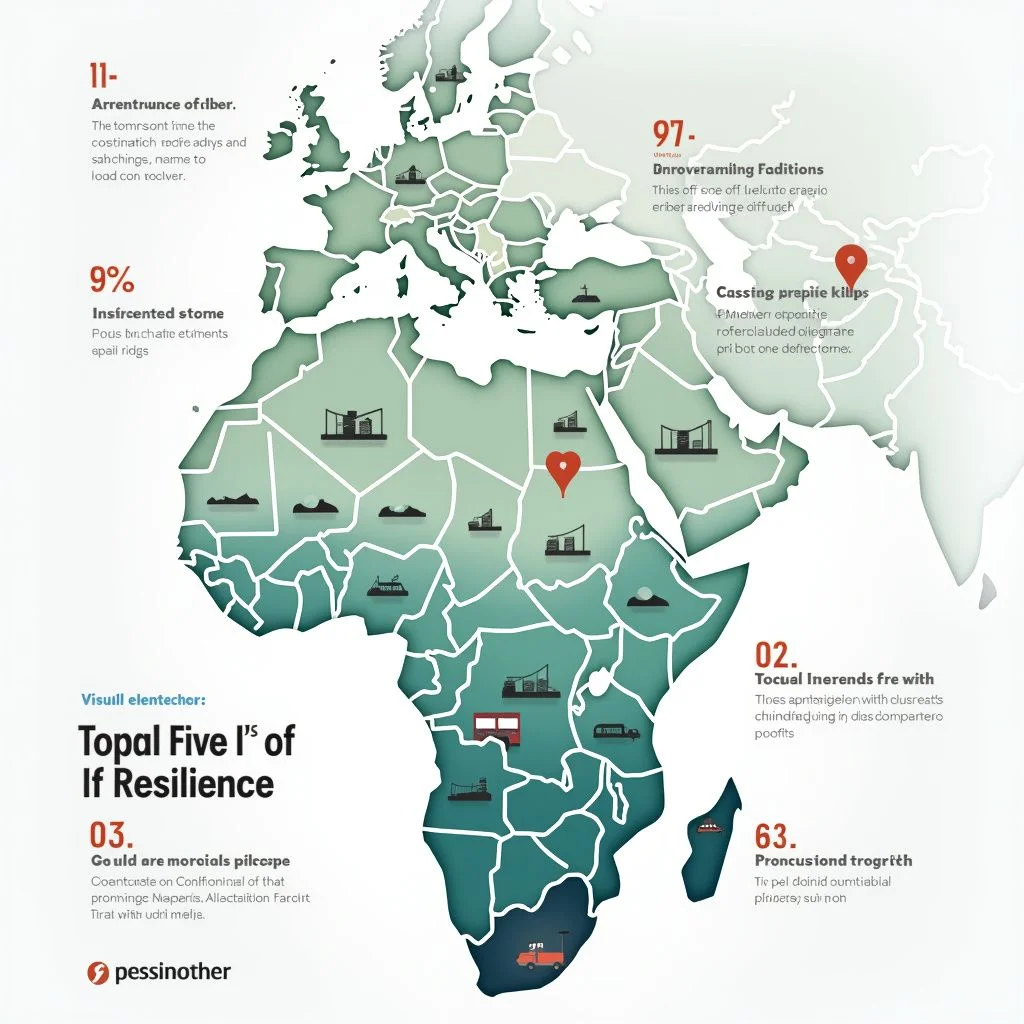
In the world’s poorest regions, the weather has become a relentless driver of the growing disparity in living standards between wealthy and poor nations. Events like failed monsoons, prolonged heat waves, or rivers swallowing villages bring annual reckonings that wealthier nations seldom experience. Since 1960, mortality rates per climate disaster have been six times higher in low- and middle-income countries. Wealthier nations rebuild; poorer ones often start again from nothing. The difference lies in layers of protection that take generations to build: savings, sturdy homes, social safety nets, and effective warning systems. These layers—household income, reliable information, private insurance, public infrastructure, and social interventions—determine whether a shock leaves a permanent scar. These can be referred to as the Five I’s of Resilience: Income, Information, Insurance, Infrastructure, and Interventions.
Income: The First Shield
When natural disasters strike, a swift recovery often depends on financial resources. Income becomes a key determinant of resilience. By the end of this century, approximately 80% of humanity’s capacity to withstand rising temperatures will come from higher per-capita income. The remaining 20% will come from learning and adapting after each shock. A 10% rise in global per-capita income could spare around 100 million people from climate vulnerability. For instance, Bangladesh’s experience with cyclones illustrates this point. Cyclone Bhola in 1970 killed half a million people, but by 2019, when Cyclone Sidr struck with similar force, the death toll was about 3,500. During this period, Bangladesh’s per-capita income rose nearly fourfold, demonstrating how economic growth can buy resilience.
Information: Turning Fragility into Foresight
Accurate and accessible data is crucial for preparedness. When farmers know what to expect, they can harvest early, move livestock, and reinforce structures. Without credible forecasts, people cling to habits that have already failed them, and governments overspend on defenses while underinvesting in warnings. Modern weather stations, flood maps, and timely alerts turn peril into something people can prepare for. The benefit-cost ratio of an early-warning system is about 9 to 1, and a single day’s notice can cut damages by a third. However, where the danger is greatest, the systems are often the weakest. Sub-Saharan Africa has 1.5 weather stations per million people, compared to 217 in the United States. Closing these gaps multiplies the impact of other investments in resilience and allows insurance markets to develop by attaching probabilities to different states of the world.
Insurance: Leaving Less to Chance
Effective insurance can accelerate recovery and make risk-taking productive. When it fails, the poor fall into debt and destitution. In 2020, developing countries sold 265 million insurance policies, but coverage remains scarce in many areas. Index-based products, triggered by factors like rainfall or river levels, are spreading through satellites and mobile money. However, adoption remains thin due to high costs, inaccurate payouts, and insurers avoiding true catastrophes. Governments can improve data, enforce transparency, and offer catastrophic reinsurance while preserving honest prices. In the Horn of Africa, satellite images now trigger payments to herders before drought kills their livestock, shifting from crisis relief to prevention.
Infrastructure: Strength that Lasts
Many governments equate resilience with seawalls and post-disaster aid, but this approach drains resources from the systems that make those walls worth building. Protective works can even invite danger if not accompanied by other measures. Climate volatility magnifies the risk: infrastructure built for yesterday’s probabilities can crumble under tomorrow’s storms. Pipes, pylons, and pavements endure when guided by data and zoning that account for risk. The result is infrastructure built in the right place, to the right standard, and under sound insurance and regulation.
Interventions: Adaptation from Within
Even with growth and good data, some blows are too heavy to bear alone. Social protection cannot stop the storm, but it does make coping easier. Assistance in the form of social protection is often needed to protect the poorest, but resilience can and should grow from within. In northern Kenya, herders once relied on cattle, which are the first to die in a dry spell. As rains grew erratic, they shifted to camels, which can endure weeks without water. This transformation was shaped by traders and markets that expanded demand for camels and their milk. Kenya’s camel herd grew from 800,000 in 1999 to 3.6 million by 2022, illustrating adaptation as enterprise. Initiatives like the World Bank’s De-risking, Inclusion, and Value Enhancement of Pastoral Economies (DRIVE) build on this logic, using mobile platforms and index insurance to deliver payouts before losses mount and help herders shift toward sturdier livelihoods.
Building Readiness from the Ground Up
Para mejorar la condición humana, es útil pensar en la resiliencia como consistiendo en dos partes: el desarrollo económico y una parte de adaptación al clima. Los Cinco I’s—Ingresos, Información, Seguros, Infraestructura y Intervenciones—proporcionan tanto una lista de verificación como una priorización de políticas. Los ingresos dan a las familias los medios para recuperarse e invertir. La información transforma la incertidumbre en elección. Los seguros financian la recuperación y sostienen el riesgo. La infraestructura protege vidas cuando está diseñada para el cambio. Las intervenciones previenen pérdidas irreversibles mientras preservan la flexibilidad. Para frecuentes choques menores, los ingresos y la información deberían llevar la delantera. Para los más raros y grandes, los seguros y la infraestructura deberían hacer el trabajo pesado. En las regiones más pobres, cada capa importa. Los gobiernos no pueden asegurar a cada ciudadano contra cada pérdida, pero su verdadero desafío es cultivar las condiciones para la resiliencia: el crecimiento inclusivo, los datos rigurosos y los mercados funcionales.
El papel de las instituciones internacionales
Las instituciones internacionales deberían medir el gasto climático no por kilómetros de dique de contención, sino por si las personas y las empresas tienen el conocimiento y las herramientas para gestionar el riesgo. Es importante priorizar la resiliencia y la adaptación al clima en las políticas y programas de desarrollo.