Meeting the European Union’s climate and industrial objectives necessitates scaling the supply of critical raw materials (CRMs) while ensuring that production adheres to environmental, social, and governance (ESG) standards. However, greener extraction, processing, and recycling processes are inherently more costly. Current market conditions, characterized by an oversupply of low-cost, high-emission production and buyers’ limited willingness to pay for sustainability, prevent these additional costs, known as the ‘green premium,’ from being recovered. With supply security now a central focus of EU industrial strategy, supporting green CRM supply and demand can enhance long-term resilience by fostering diversified supply chains.
A differentiated market for sustainable CRMs is unlikely to emerge without targeted regulatory intervention. Market-driven approaches, such as separate price benchmarks for green CRMs, show promise and are gaining attention. However, these approaches face challenges due to inconsistent definitions, limited traceability, and insufficient liquidity. Exchanges can play a supportive role by enhancing transparency, disclosure, and verification of ESG claims. This can lower transaction costs and prepare the ground for the formation of a premium market.
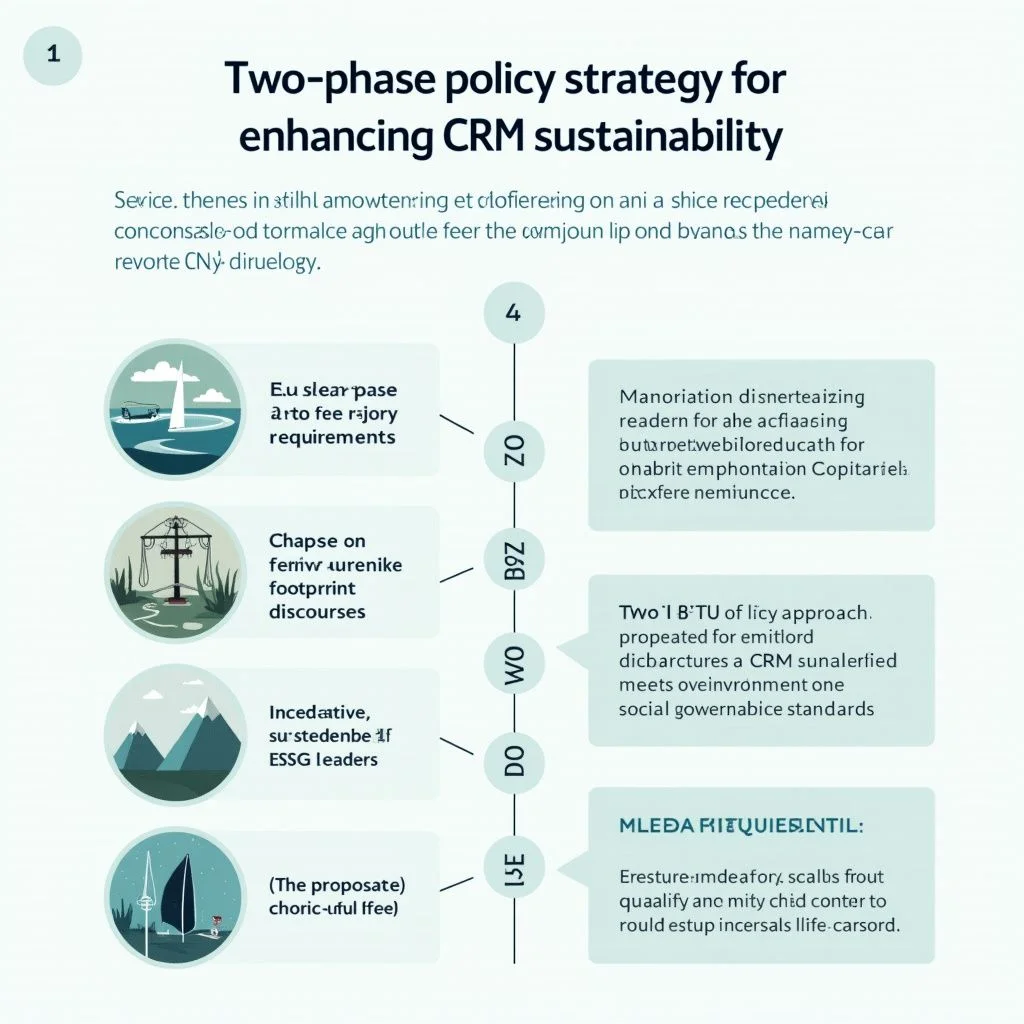
A phased, two-tier policy strategy is proposed to address these challenges. The first tier involves building on and harmonizing existing CRM-relevant frameworks to establish minimum market-access requirements. These requirements include mandatory due diligence, traceability, and environmental-footprint disclosure for all CRMs placed on the EU market. Additionally, performance-based thresholds, such as maximum carbon intensity, can be gradually introduced for priority materials. This can be achieved through a targeted expansion of the Carbon Border Adjustment Mechanism (CBAM).
The second tier of the policy strategy comprises conditional incentives for frontrunners adhering to high ESG standards. Public procurement, price or volume guarantees, and other forms of offtake support can de-risk investment and create clear premium signals when conditioned on robust and verifiable ESG performance. These incentives can stimulate demand for sustainable CRMs and support a more secure and responsible CRM supply base for the EU.
Given the global nature of CRM supply chains, EU measures should align with bilateral trade instruments, strategic partnerships, and wider multilateral efforts. Notably, alignment with the G7 initiative to create a standard-based global CRM marketplace is crucial. This alignment ensures sufficient leverage and impact, reducing competitive distortions and supporting the development of a sustainable CRM market.
The first tier of the policy strategy focuses on establishing a baseline for sustainability in the CRM market. By mandating due diligence, traceability, and environmental-footprint disclosure, the EU can ensure that all CRMs meet minimum ESG standards. This approach not only enhances transparency but also creates a level playing field for all market participants. The introduction of performance-based thresholds, such as maximum carbon intensity, further incentivizes the adoption of greener practices. This can be achieved through the expansion of CBAM, which ensures that the environmental costs of high-emission production are reflected in the price of CRMs.
The second tier of the policy strategy aims to incentivize frontrunners in the CRM market to adopt even higher ESG standards. Public procurement policies can prioritize sustainable CRMs, creating a steady demand for these materials. Price or volume guarantees can provide financial stability for companies investing in green technologies, while other forms of offtake support can mitigate the risks associated with sustainable production. These incentives can create a clear premium signal, encouraging more companies to adopt sustainable practices and invest in green technologies.
To ensure the effectiveness of these policy measures, alignment with global initiatives is essential. The EU’s efforts should be coordinated with bilateral trade instruments, strategic partnerships, and multilateral efforts. This alignment ensures that the EU’s policies are not undermined by less stringent standards in other regions. Notably, the G7 initiative to create a standard-based global CRM marketplace provides a framework for international cooperation. By aligning with this initiative, the EU can enhance the leverage and impact of its policies, reducing competitive distortions and supporting the development of a sustainable CRM market.
In summary, the proposed policy strategy involves two tiers: establishing minimum market-access requirements and providing conditional incentives for frontrunners. These measures, combined with alignment with global initiatives, can reduce competitive distortions, stimulate demand for sustainable CRMs, and support a more secure and responsible CRM supply base for the EU. By enhancing transparency, disclosure, and verification of ESG claims, the EU can lower transaction costs and prepare the ground for the formation of a premium market for sustainable CRMs. This approach ensures that the EU’s climate and industrial objectives are met while promoting a more sustainable and resilient CRM supply chain.