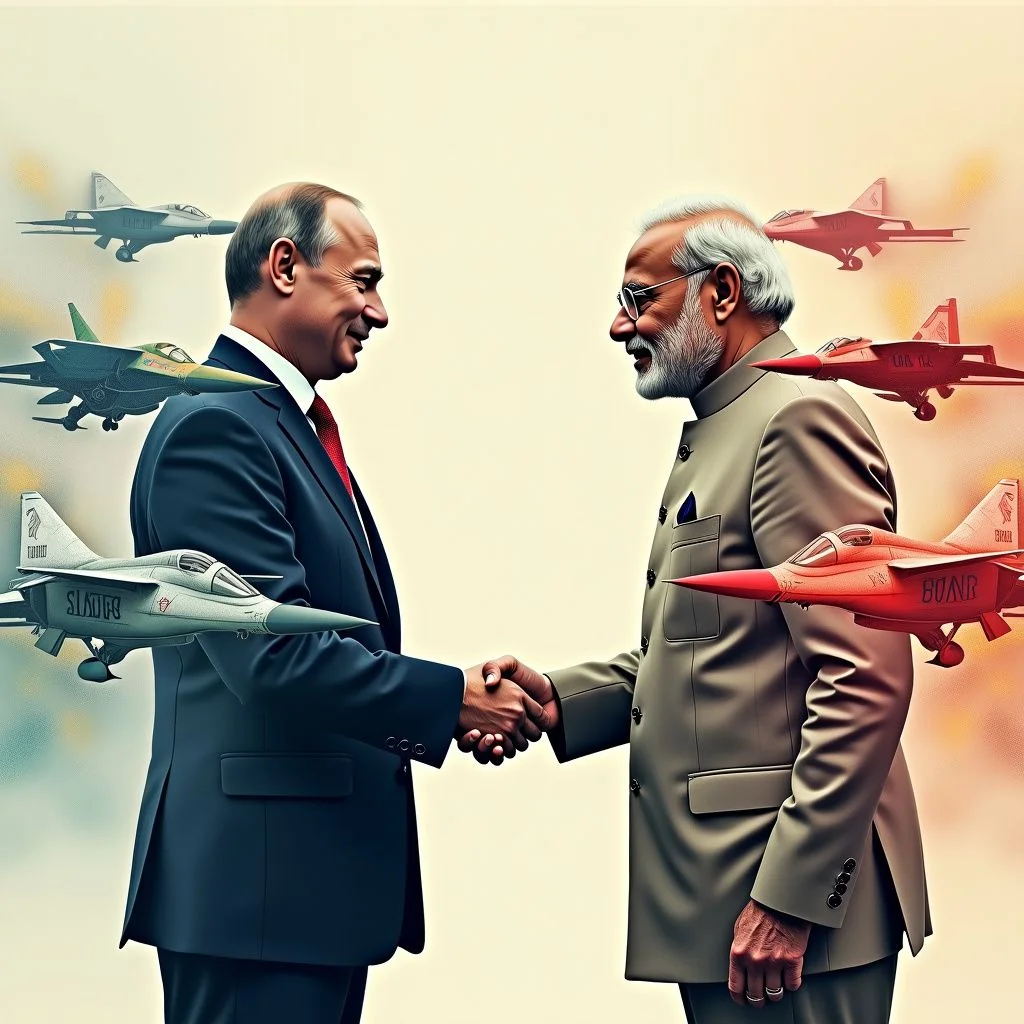
Russian President Vladimir Putin has flown to Delhi to meet with Narendra Modi, with both leaders seeking to strengthen their strategic alliance to resist US pressure and face a increasingly powerful China. Putin’s visit to India has not gone unnoticed, as the Russian president has been at the center of international news for his rejection of the US plan on Ukraine. The annual meeting between Russia and India takes place in a context of deep international tensions, with Modi receiving Putin with all the honors reserved for heads of state. This gesture underscores that the “Special and Privileged Strategic Partnership” between Russia and India, established in 2010, remains strong despite the war in Ukraine and Western pressure.
The Financial Times notes that this annual summit demonstrates that India intends to maintain all channels of communication with Moscow open, despite the deterioration of the global geopolitical landscape and the increase in US pressure on Russian oil imports. On the agenda for the meeting in New Delhi, in addition to the new arms systems such as the Su-57 fighter jets and advanced versions of the S-500 anti-missile system, cooperation in defense, energy, technology, and investments will be discussed. This is a clear political message to Washington, indicating that Delhi will not be intimidated by US pressure to distance itself from Moscow.
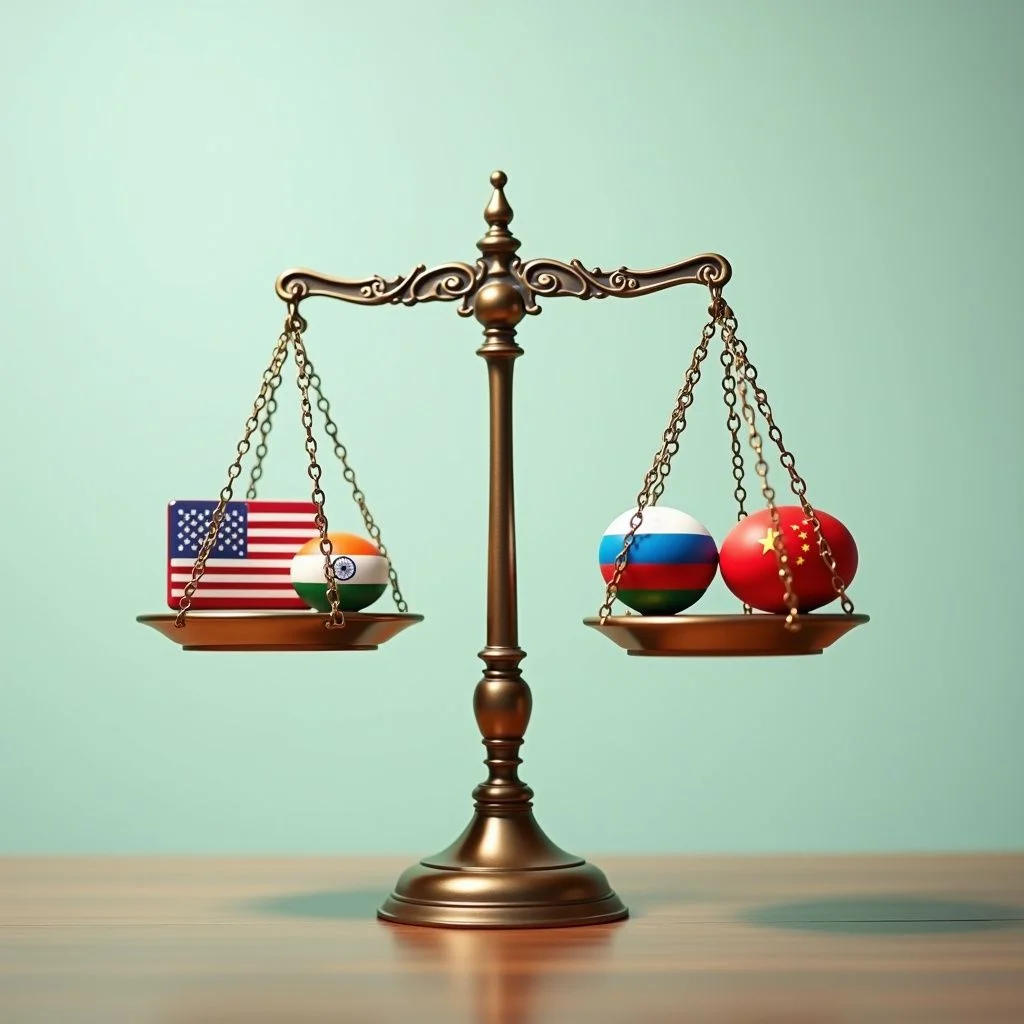
India considers Russia an indispensable partner to maintain a balance between the great powers and avoid forced alignment with Washington in its competition with China. India faces a complex scenario with a semi-isolationist America, a weaker Russia, and a stronger and more assertive China. This makes it necessary to diversify alliances and not depend on a single security umbrella. India fears that Western isolation could push Moscow towards Beijing’s arms, so receiving Putin with all honors is a form of “strategic prevention”. Modi’s goal is to maintain Russia as a key military supplier and avoid making Russian dependence on China irreversible.
Putin’s visit is well-received in India’s internal political scene. According to polls, Putin and Russia enjoy strong public support among the majority of Indians. Many in India see the Russian leader’s visit as a way to challenge the constant pressure from the Trump administration, which has disturbed Indian public opinion. For Putin, the visit to Delhi is a success in itself, as it allows him to demonstrate to Washington and the rest of the West that Russia is not isolated despite years of sanctions and ostracism.
Moscow has a deeper calculation: at a time when Russia depends increasingly on China in economic and geopolitical terms, strengthening ties with India helps to avoid a subordinate position vis-à-vis Beijing. Additionally, Russia has a strong economic interest in maintaining India as the main buyer of Russian oil, crucial for financing the war, and as a market for Russian arms systems. The annual India-Russia summit, which was suspended during the war in Ukraine, is reactivated today to show that the Kremlin still retains at least part of its traditional diplomatic capacity.
A key variable that has strengthened the partnership between Delhi and Moscow has been the return of Donald Trump to the White House. In the last three years, the US and Europe had tolerated India’s ambiguous stance, allowing it to become one of the main buyers of Russian oil at low cost without formally violating sanctions. However, with Trump, everything changed. The administration accused India of financing the Russian war, requested a drastic reduction in Russian energy imports, and imposed punitive tariffs of 25% on certain categories of Indian goods. Delhi’s reaction has been one of irritation and growing distrust, as US pressure is seen as an attempt to force India to align with Washington. Paradoxically, this has led India to accelerate its rapprochement with Moscow to balance a relationship with Washington that now seems more volatile than ever.
The message that emerges from the summit is clear: India and Russia will continue to cooperate in various strategic sectors because both consider their relationship crucial for navigating an increasingly unstable international system. In this context, Putin’s visit to Delhi confirms how the international system is evolving beyond the geopolitical categories of the past. India cultivates its relationship with Moscow to preserve its strategic autonomy despite growing pressure from Washington and Europe, while Russia uses the Indian platform to demonstrate that it is not isolated. In today’s fluid multipolarism, the relationship between India and Russia suggests that what matters are options rather than rigid alignments, a dynamic with which the West will have to deal.
Vladimir Putin has flown to Delhi to meet with Narendra Modi, with both leaders seeking to strengthen their strategic alliance to resist US pressure and face an increasingly powerful China. Putin’s visit to India has not gone unnoticed, as the Russian president has been at the center of international news for his rejection of the US plan on Ukraine. The annual meeting between Russia and India takes place in a context of deep international tensions, with Modi receiving Putin with all the honors reserved for heads of state. This gesture underscores that the “Special and Privileged Strategic Partnership” between Russia and India, established in 2010, remains strong despite the war in Ukraine and Western pressure.
The Financial Times highlights that this annual summit demonstrates that India intends to keep all channels of communication with Moscow open, despite the deterioration of the global geopolitical landscape and the increase in US pressure on Russian oil imports. On the agenda of the meeting in New Delhi, in addition to the new arms systems such as the Su-57 fighter jets and advanced versions of the S-500 anti-missile system, cooperation will be discussed in defense, energy, technology, and investment. This is a clear political message to Washington, indicating that Delhi will not be intimidated by US pressure to distance itself from Moscow.
India considers Russia an indispensable partner to maintain a balance between the great powers and avoid a forced alignment with Washington in its competition with China. India faces a complex scenario with a semi-isolationist America, a weaker Russia, and a more powerful and assertive China. This makes it necessary to diversify alliances and not rely on a single security umbrella. India fears that Western isolation could push Moscow towards Beijing, so receiving Putin with all honors is a form of “strategic prevention.” Modi’s goal is to maintain Russia as a key military supplier and prevent Russian dependence on China from becoming irreversible.
Putin’s visit is well-received in India’s internal political scene. According to polls, Putin and Russia enjoy strong public support among the majority of Indians. Many in India see Putin’s visit as a challenge to the constant pressure from the Trump administration, which has disrupted Indian public opinion. For Putin, the visit to Delhi is a success in itself, as it allows him to demonstrate to Washington and the rest of the West that Russia is not isolated despite years of sanctions and ostracism.
Moscow has a deeper calculation: at a time when Russia depends increasingly on China in economic and geopolitical terms, strengthening ties with India helps to avoid a subordinate position vis-à-vis Beijing. Additionally, Russia has a strong economic interest in maintaining India as its main buyer of Russian oil, crucial for financing the war, and as a market for Russian arms systems. The annual India-Russia summit, which was suspended during the war in Ukraine, is reactivated today to show that the Kremlin still retains at least part of its traditional diplomatic capacity.
A key variable that has strengthened the partnership between Delhi and Moscow has been the return of Donald Trump to the White House. Over the past three years, the US and Europe had tolerated Delhi’s ambiguous stance, allowing it to become one of the main buyers of cheap Russian oil without formally violating sanctions. However, with Trump, everything changed. The administration accused India of financing the Russian war, demanded a drastic reduction in energy imports from Russia, and imposed punitive tariffs of 25% on certain categories of Indian goods. Delhi’s reaction has been one of irritation and growing distrust, as US pressure is perceived as an attempt to force India to align with Washington. Paradoxically, this has led India to accelerate its approach to Moscow to balance a relationship with Washington that now seems more volatile than ever.
The message emerging from the summit is clear: India and Russia will continue to cooperate in various strategic sectors because both consider their relationship crucial for navigating an increasingly unstable international system. In this context, Putin’s visit to Delhi confirms how the international system is evolving beyond the old geopolitical categories. India cultivates its relationship with Moscow to preserve its strategic autonomy despite growing pressure from Washington and Europe, while Russia uses the Indian platform to demonstrate that it is not isolated. In today’s fluid multipolarism, the relationship between India and Russia suggests that what matters are options rather than rigid alignments, a dynamic that the West will have to deal with.
The Financial Times highlights that this annual summit demonstrates that India intends to keep all channels of communication with Moscow open, despite the deterioration of the global geopolitical landscape and the increase in US pressure on Russian oil imports. On the agenda of the meeting in New Delhi, in addition to the new arms systems such as the Su-57 fighter jets and advanced versions of the S-500 anti-missile system, cooperation will be discussed in defense, energy, technology, and investment. This is a clear political message to Washington, indicating that Delhi will not be intimidated by US pressure to distance itself from Moscow.
India considers Russia an indispensable partner to maintain a balance between the great powers and avoid a forced alignment with Washington in its competition with China. India faces a complex scenario with a semi-isolationist America, a weaker Russia, and a more powerful and assertive China. This makes it necessary to diversify alliances and not rely on a single security umbrella. India fears that Western isolation could push Moscow towards Beijing, so receiving Putin with all honors is a form of “strategic prevention.” Modi’s goal is to maintain Russia as a key military supplier and prevent Russian dependence on China from becoming irreversible.
Putin’s visit is well-received in India’s internal political scene. According to polls, Putin and Russia enjoy strong public support among the majority of Indians. Many in India see Putin’s visit as a challenge to the constant pressure from the Trump administration, which has disrupted Indian public opinion. For Putin, the visit to Delhi is a success in itself, as it allows him to demonstrate to Washington and the rest of the West that Russia is not isolated despite years of sanctions and ostracism.
Moscow has a deeper calculation: at a time when Russia depends increasingly on China in economic and geopolitical terms, strengthening ties with India helps to avoid a subordinate position vis-à-vis Beijing. Additionally, Russia has a strong economic interest in maintaining India as its main buyer of Russian oil, crucial for financing the war, and as a market for Russian arms systems. The annual India-Russia summit, which was suspended during the war in Ukraine, is reactivated today to show that the Kremlin still retains at least part of its traditional diplomatic capacity.
A key variable that has strengthened the partnership between Delhi and Moscow has been the return of Donald Trump to the White House. Over the past three years, the US and Europe had tolerated Delhi’s ambiguous stance, allowing it to become one of the main buyers of cheap Russian oil without formally violating sanctions. However, with Trump, everything changed. The administration accused India of financing the Russian war, demanded a drastic reduction in energy imports from Russia, and imposed punitive tariffs of 25% on certain categories of Indian goods. Delhi’s reaction has been one of irritation and growing distrust, as US pressure is perceived as an attempt to force India to align with Washington. Paradoxically, this has led India to accelerate its approach to Moscow to balance a relationship with Washington that now seems more volatile than ever.
The message emerging from the summit is clear: India and Russia will continue to cooperate in various strategic sectors because both consider their relationship crucial for navigating an increasingly unstable international system. In this context, Putin’s visit to Delhi confirms how the international system is evolving beyond the old geopolitical categories. India cultivates its relationship with Moscow to preserve its strategic autonomy despite growing pressure from Washington and Europe, while Russia uses the Indian platform to demonstrate that it is not isolated. In today’s fluid multipolarism, the relationship between India and Russia suggests that what matters are options rather than rigid alignments, a dynamic that the West will have to deal with.
India considers Russia an indispensable partner to maintain a balance between the great powers and avoid a forced alignment with Washington in its competition with China. India faces a complex scenario with a semi-isolationist America, a weaker Russia, and a more powerful and assertive China. This makes it necessary to diversify alliances and not rely on a single security umbrella. India fears that Western isolation could push Moscow towards Beijing, so receiving Putin with all honors is a form of “strategic prevention.” Modi’s goal is to maintain Russia as a key military supplier and prevent Russian dependence on China from becoming irreversible.
Putin’s visit is well-received in India’s internal political scene. According to polls, Putin and Russia enjoy strong public support among the majority of Indians. Many in India see Putin’s visit as a challenge to the constant pressure from the Trump administration, which has disrupted Indian public opinion. For Putin, the visit to Delhi is a success in itself, as it allows him to demonstrate to Washington and the rest of the West that Russia is not isolated despite years of sanctions and ostracism.
Moscow has a deeper calculation: at a time when Russia depends increasingly on China in economic and geopolitical terms, strengthening ties with India helps to avoid a subordinate position vis-à-vis Beijing. Additionally, Russia has a strong economic interest in maintaining India as its main buyer of Russian oil, crucial for financing the war, and as a market for Russian arms systems. The annual India-Russia summit, which was suspended during the war in Ukraine, is reactivated today to show that the Kremlin still retains at least part of its traditional diplomatic capacity.
A key variable that has strengthened the partnership between Delhi and Moscow has been the return of Donald Trump to the White House. Over the past three years, the US and Europe had tolerated Delhi’s ambiguous stance, allowing it to become one of the main buyers of cheap Russian oil without formally violating sanctions. However, with Trump, everything changed. The administration accused India of financing the Russian war, demanded a drastic reduction in energy imports from Russia, and imposed punitive tariffs of 25% on certain categories of Indian goods. Delhi’s reaction has been one of irritation and growing distrust, as US pressure is perceived as an attempt to force India to align with Washington. Paradoxically, this has led India to accelerate its approach to Moscow to balance a relationship with Washington that now seems more volatile than ever.
The message emerging from the summit is clear: India and Russia will continue to cooperate in various strategic sectors because both consider their relationship crucial for navigating an increasingly unstable international system. In this context, Putin’s visit to Delhi confirms how the international system is evolving beyond the old geopolitical categories. India cultivates its relationship with Moscow to preserve its strategic autonomy despite growing pressure from Washington and Europe, while Russia uses the Indian platform to demonstrate that it is not isolated. In today’s fluid multipolarism, the relationship between India and Russia suggests that what matters are options rather than rigid alignments, a dynamic that the West will have to deal with.
Vladimir Putin has flown to Delhi to meet with Narendra Modi, with both leaders seeking to strengthen their strategic alliance to resist US pressure and face a increasingly powerful China. Putin’s visit to India has not gone unnoticed, as the Russian president has been at the center of international news for his rejection of the US plan on Ukraine. The annual meeting between Russia and India takes place in a context of deep international tensions, with Modi receiving Putin with all the honors reserved for heads of state. This gesture underscores that the “Special and Privileged Strategic Partnership” between Russia and India, established in 2010, remains strong despite the war in Ukraine and Western pressure.
The Financial Times highlights that this annual summit demonstrates that India intends to keep all channels of communication with Moscow open, despite the deterioration of the global geopolitical landscape and the increase in US pressure on Russian oil imports. On the agenda of the meeting in New Delhi, in addition to the new arms systems such as the Su-57 fighter jets and advanced versions of the S-500 anti-missile system, cooperation will be discussed in defense, energy, technology, and investment. This is a clear political message to Washington, indicating that Delhi will not be intimidated by US pressure to distance itself from Moscow.
Vladimir Putin ha volado a Delhi para reunirse con Narendra Modi, con ambos líderes buscando fortalecer su alianza estratégica para resistir la presión de EE. UU. y enfrentar a un China cada vez más poderosa. La visita de Putin a la India no ha pasado desapercibida, ya que el presidente ruso ha estado en el centro de las noticias internacionales por su rechazo del plan de EE. UU. sobre Ucrania. La reunión anual entre Rusia e India tiene lugar en un contexto de profundas tensiones internacionales, con Modi recibiendo a Putin con todos los honores reservados para los jefes de estado. Este gesto subraya que la “Alianza Estratégica Especial y Privilegiada” entre Rusia e India, establecida en 2010, sigue siendo fuerte a pesar de la guerra en Ucrania y la presión occidental.
El Financial Times destaca que este cumbre anual demuestra que la India pretende mantener todos los canales de comunicación con Moscú abiertos, a pesar de la deterioración del panorama geopolítico global y el aumento de la presión de EE. UU. sobre las importaciones de petróleo ruso. En el orden del día de la reunión en Nueva Delhi, además de los nuevos sistemas de armas como los cazas Su-57 y versiones avanzadas del sistema antimisilista S-500, se discutirá la cooperación en defensa, energía, tecnología e inversión. Este es un claro mensaje político a Washington, indicando que la India no se dejará intimidar por la presión de EE. UU. para alejarse de Moscú.
La India considera a Rusia un socio indispensable para mantener un equilibrio entre las grandes potencias y evitar una alineación forzosa con Washington en su competencia con China. La India se enfrenta a un escenario complejo con una América semi-isolacionista, una Rusia más débil y un China más poderoso y asertivo. Esto hace necesario diversificar las alianzas y no confiar en un solo paraguas de seguridad. La India teme que la aislación occidental pueda empujar a Moscú hacia Beijing, por lo que recibir a Putin con todos los honores es una forma de “prevención estratégica”. El objetivo de Modi es mantener a Rusia como un proveedor militar clave y prevenir la dependencia rusa de China de convertirse en irreversible.
La visita de Putin es bien recibida en el escenario político interno de la India. Según las encuestas, Putin y Rusia disfrutan de un fuerte apoyo público entre la mayoría de los indios. Muchos en la India ven la visita de Putin como un desafío a la presión constante de la administración de Trump, que ha desestabilizado la opinión pública india. Para Putin, la visita a Delhi es un éxito en sí mismo, ya que le permite demostrar a Washington y al resto del Oeste que Rusia no está aislada a pesar de años de sanciones y ostracismo.
Moscow tiene un cálculo más profundo: en un momento en que Rusia depende cada vez más de China en términos económicos y geopolíticos, fortalecer los lazos con la India ayuda a evitar una posición subordinada frente a Beijing. Además, Rusia tiene un fuerte interés económico en mantener a la India como su principal compradora de petróleo ruso, crucial para financiar la guerra, y como mercado para los sistemas de armas rusos. La cumbre anual India-Rusia, que se suspendió durante la guerra en Ucrania, se reactiva hoy para mostrar que el Kremlin sigue teniendo al menos parte de su capacidad diplomática tradicional.
Una variable clave que ha fortalecido la alianza entre Delhi y Moscú ha sido el regreso de Donald Trump a la Casa Blanca. Durante los últimos tres años, EE. UU. y Europa habían tolerado la postura ambigua de la India, permitiéndole convertirse en uno de los principales compradores de petróleo ruso a bajo precio sin violar formalmente las sanciones. Sin embargo, con Trump, todo cambió. La administración acusó a la India de financiar la guerra rusa, exigió una reducción drástica en las importaciones de energía de Rusia y impuso aranceles punitivos del 25% en ciertas categorías de bienes indios. La reacción de la India ha sido una de irritación y creciente desconfianza, ya que la presión de EE. UU. se percibe como un intento de forzar a la India a alinearse con Washington.
Paradójicamente, esto ha llevado a la India a acelerar su enfoque hacia Moscú para equilibrar una relación con Washington que ahora parece más volátil que nunca. El mensaje que emerge de la cumbre es claro: la India y Rusia seguirán cooperando en varios sectores estratégicos porque ambos consideran que su relación es crucial para navegar por un sistema internacional cada vez más inestable. En este contexto, la visita de Putin a Delhi confirma cómo el sistema internacional está evolucionando más allá de las categorías geopolíticas antiguas. La India cultiva su relación con Moscú para preservar su autonomía estratégica a pesar de la creciente presión de Washington y Europa, mientras que Rusia utiliza la plataforma india para demostrar que no está aislada. En el fluido multipolarismo de hoy, la relación entre la India y Rusia sugiere que lo que importa son las opciones en lugar de las alineaciones rigidas, un dinamismo al que el Oeste tendrá que hacer frente.
Moscow tiene un cálculo más profundo: en un momento en que Rusia depende cada vez más de China en términos económicos y geopolíticos, fortalecer los lazos con India ayuda a evitar una posición subordinada frente a Beijing. Además, Rusia tiene un interés económico fuerte en mantener a India como su principal comprador de petróleo ruso, crucial para financiar la guerra, y como mercado para los sistemas de armas rusos. El cumbre anual India-Rusia, que se suspendió durante la guerra en Ucrania, se reactiva hoy para mostrar que el Kremlin todavía retiene al menos parte de su capacidad diplomática tradicional.
La vuelta de Donald Trump al Pentágono cambia todo
Una variable clave que ha fortalecido la alianza entre Delhi y Moscú ha sido el regreso de Donald Trump a la Casa Blanca. Durante los últimos tres años, EE. UU. y Europa habían tolerado la postura ambigua de Delhi, permitiéndole convertirse en uno de los principales compradores de petróleo ruso barato sin violar formalmente las sanciones. Sin embargo, con Trump, todo cambió. La administración acusó a India de financiar la guerra rusa, exigió una reducción drástica en los importes de energía de Rusia y impuso aranceles punitivos del 25% en ciertas categorías de bienes indios. La reacción de Delhi ha sido de irritación y creciente desconfianza, ya que la presión de EE. UU. se percibe como un intento de obligar a India a alinearse con Washington. Paradoxalmente, esto ha llevado a India a acelerar su aproximación a Moscú para equilibrar una relación con Washington que ahora parece más volátil que nunca.
El mensaje de la cumbre es claro
El mensaje emergente de la cumbre es claro: India y Rusia seguirán cooperando en varios sectores estratégicos porque ambos consideran su relación crucial para navegar un sistema internacional cada vez más inestable. En este contexto, la visita de Putin a Delhi confirma cómo el sistema internacional está evolucionando más allá de las categorías geopolíticas antiguas. India cultiva su relación con Moscú para preservar su autonomía estratégica a pesar de la creciente presión de Washington y Europa, mientras que Rusia utiliza la plataforma india para demostrar que no está aislada. En el contexto actual de fluidos