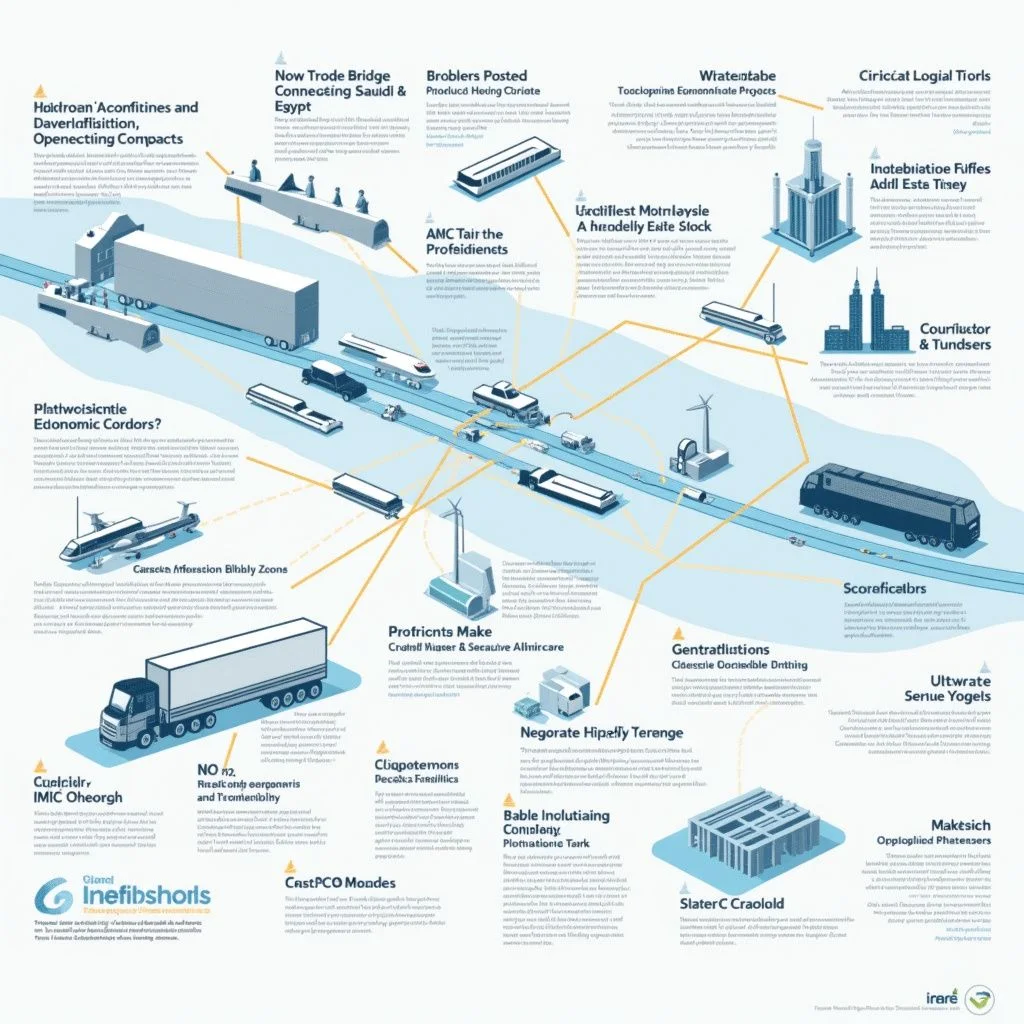
The India-Middle East-Europe (IMEC) economic corridor continues to progress despite the geopolitical uncertainties in the Middle East. The main geopolitical obstacle for IMEC comes from the Gulf region, particularly the lack of diplomatic normalization between Saudi Arabia and Israel. During the visit of the Saudi crown prince to Washington, Riyadh reiterated that without a concrete path to the creation of a Palestinian state, it will not recognize Israel. However, the IMEC project is not stalled, and the current phase of geopolitical impasse could be useful for expanding the corridor, highlighting its strategic and trans-regional potential.
Recent Developments
The recent visit of the Italian Prime Minister to Manama has strengthened the hypothesis that Bahrain could join the IMEC project. Bahrain would represent an added value for three main reasons. Firstly, Manama signed the Abraham Accords in 2020, facilitating potential relations with Israel. Secondly, Bahrain’s membership in IMEC would highlight the interest of Saudi Arabia, as Bahrain’s political choices often reflect those of Saudi Arabia. Thirdly, Bahrain is a financial and banking hub with an advanced system of free trade zones, including the Bahrain Logistics Zone, the Bahrain International Investment Park, and the Bahrain International Airport, which is crucial for transhipment.
From a geostrategic perspective, Bahrain’s involvement in IMEC could generate positive synergies with the north of the Gulf, which has been isolated from the project so far. Manama would serve as a logistics hub for commercial flows towards and from Qatar, Kuwait, and potentially Iraq. Additionally, investments in railway connectivity are growing in the entire area. Saudi Arabia and Qatar have recently announced an agreement to build a high-speed railway between Riyadh and Doha. Saudi Arabia has also relaunched the plan to build a bridge or tunnel, known as Moses, which would connect the kingdom with Egypt in about 20 minutes. This bridge, funded by Riyadh with $4 billion, would connect Ras Hamid in Saudi Arabia with the Egyptian peninsula of Sinai, passing through the island of Tiran, which Egypt has recently ceded sovereignty to Saudi Arabia.
The Egyptian-Saudi bridge would mark a turning point in the commercial integration between the Gulf and Africa, encouraging road, rail, and maritime connections from African countries to Sinai. It would also benefit from its proximity to Saudi Arabia’s NEOM. Despite some observations that see Moses as an alternative route to IMEC, bypassing Israel, the project could be complementary to the Corridor, providing an African artery that would give “infrastructure substance” to the increasingly present African strategies in the agendas of the signatory countries of the Corridor. This would include economic, port, and mining investments by the UAE and Saudi Arabia in Africa, as well as those of India and the Italian Mattei Plan.
Including Oman in the Corridor would allow for the resolution of a long-standing issue: the security risks in the Strait of Hormuz. IMEC should connect northwestern India with the Emirati ports of Fujairah, Jebel ‘Ali, and Khalifa, all located before the Strait. Although Iran has never blocked Hormuz during the 12-day war with Israel, the risk has been high, and commercial flows have suffered. In addition, in 2019-2021, Iran attacked commercial ships between the Strait of Hormuz and the Gulf of Oman in response to the “maximum pressure” policy of the first Trump presidency. Integrating Oman into IMEC would offer a reliable alternative for east-west connectivity, a different route from the disorder of the Red Sea and the constant tensions of Hormuz. Involving Muscat in the Corridor would not alter the original route.
Oman and India have excellent bilateral relations, and New Delhi has economic and strategic interests in the port city of Duqm on the Indian Ocean. The Omani port of Sohar, in the north of the country, is at the center of a plan for land connectivity with the UAE: a railway will connect Sohar to Abu Dhabi in 100 minutes, with reciprocal commercial benefits. In addition, an agreement for the hydrogen green corridor, signed during the recent visit of the Sultan to the Netherlands, will bring energy from Duqm to Amsterdam via Germany. Therefore, the paths that connect Oman to IMEC already exist and should only be integrated.
In this context, the possible routes for expanding the IMEC project, making it even more competitive and secure, are many and pass through the Gulf states. The Arab capitals of the Gulf see infrastructure as multidirectional networks, not as binary routes. A strategically flexible approach, useful for accompanying IMEC beyond the geopolitical stalemate between Saudi Arabia and Israel.
El proyecto de interconexión económica conocido como el Corredor Económico India-Medio Oriente-Europa (IMEC) continúa avanzando a pesar de las incertidumbres geopolíticas en el Medio Oriente. El principal obstáculo geopolítico para IMEC proviene del Golfo Pérsico, particularmente la falta de normalización diplomática entre Arabia Saudita e Israel. Durante la visita del príncipe saudita a Washington, Riad reiteró que sin un camino concreto para la creación de un estado palestino, no reconocería a Israel. Sin embargo, el proyecto IMEC no se ha estancado y la actual estancada geopolítica podría ser útil para expandir el corredor, valorando su potencial estratégico y trans-regional.
La reciente visita del primer ministro italiano a Manama ha fortalecido la hipótesis de que Bahrain podría unirse al proyecto IMEC. Bahrain representaría un valor adicional por tres razones principales. En primer lugar, Manama firmó los Acuerdos ABRAMO en 2020, facilitando posibles relaciones con Israel. En segundo lugar, la adhesión de Bahrain a IMEC destacaría el interés de Arabia Saudita, ya que las decisiones políticas de Bahrain a menudo reflejan las de Arabia Saudita. En tercer lugar, Bahrain es un centro financiero y bancario con un sistema avanzado de zonas de libre comercio, incluyendo la Zona Logística de Bahrain, el Parque de Inversión Internacional de Bahrain y el Aeropuerto Internacional de Bahrain, cruciales para la transhipment.
Desde una perspectiva geoestratégica, la inclusión de Bahrain en IMEC podría generar sinergias positivas con el norte del Golfo, que ha estado aislado del proyecto hasta ahora. Manama funcionaría como un centro logístico para los flujos comerciales hacia y desde Catar, Kuwait y potencialmente Irak. Además, las inversiones en la conectividad ferroviaria están creciendo en toda la región. Arabia Saudita y Catar han anunciado recientemente un acuerdo para la construcción de una línea de ferrocarril de alta velocidad entre Riad y Doha. Arabia Saudita también ha re-lanzado el plan para la construcción de un puente o túnel, llamado Moisés, que conectaría el reino con Egipto en unos veinte minutos. Este puente, financiado por Riad con 4 mil millones de dólares, conectaría Ras Hamid en Arabia Saudita con la península del Sinaí en Egipto, pasando por la isla de Tirán, que Egipto ha transferido recientemente la soberanía a Arabia Saudita.
El puente de Moisés marcaría un punto de inflexión en la integración comercial entre el Golfo y África, alentando los enlaces por carretera, ferroviaria y marítima desde países africanos a la península del Sinaí. También beneficiaría de su proximidad a Neom. A pesar de algunas observaciones que ven a Moisés como una ruta alternativa a IMEC, que bypassaría a Israel, el proyecto podría ser complementario a la corredor, proporcionando una arteria africana que daría “sustancia infraestructural” a las estrategias africanas cada vez más presentes en los agendas de los países que firman el corredor. Esto incluiría inversiones económicas, portuarias y mineras por parte de los Emiratos Árabes Unidos y Arabia Saudita en África, así como las de la India y el Plan Mattei italiano. Con esta perspectiva, IMEC podría convertirse en el Corredor Económico India-Medio Oriente-Europa y África.
La inclusión de Omán en el corredor permitiría resolver un nodo largo sin resolver: los riesgos de seguridad en el estrecho de Ormuz. IMEC debería conectar el norte de la India con los puertos emiratíes de Fujairah, Jebel ‘Ali y Khalifa, todos ubicados antes del estrecho. A pesar de que Irán no haya bloqueado Ormuz durante la guerra de 12 días con Israel, el riesgo ha sido alto y los flujos comerciales han sufrido. Además, en 2019-2021, Irán atacó barcos comerciales entre el estrecho de Ormuz y el golfo de Omán en respuesta a la “presión máxima” de la primera presidencia de Trump. La integración de Omán en IMEC ofrecería una alternativa confiable para la conectividad este-oeste, una ruta diferente del caos del mar Rojo y las constantes tensiones de Ormuz. Involucrar a Múscat en el corredor no perturbaría la trayectoria original.
Omán e India tienen relaciones bilaterales excelentes, y Nueva Delhi tiene intereses económicos y estratégicos en la ciudad puerto de Duqm, en el océano Índico. El puerto omání de Sohar, en el norte del país, está en el centro de un plan para la conectividad terrestre con los Emiratos Árabes Unidos: un ferrocarril conectará Sohar a Abu Dabi en 100 minutos, con beneficios comerciales mutuos. Además, un acuerdo para la corriente verde de hidrógeno, firmado durante la reciente visita del sultán a los Países Bajos, llevaría energía de Duqm a Ámsterdam a través de Alemania. Por lo tanto, las rutas que conectan Omán con IMEC ya existen y solo necesitarían ser integradas.
En este contexto, las posibles trayectorias para expandir el proyecto del corredor económico, haciéndolo aún más competitivo y seguro, son muchas y pasan por los estados del Golfo. Las capitales árabes del Golfo ven las infraestructuras como redes de red de múltiples direcciones, no como trayectorias binarias. Un enfoque estratégicamente flexible, útil para acompañar a IMEC más allá de la estancada geopolítica entre Arabia Saudita e Israel.