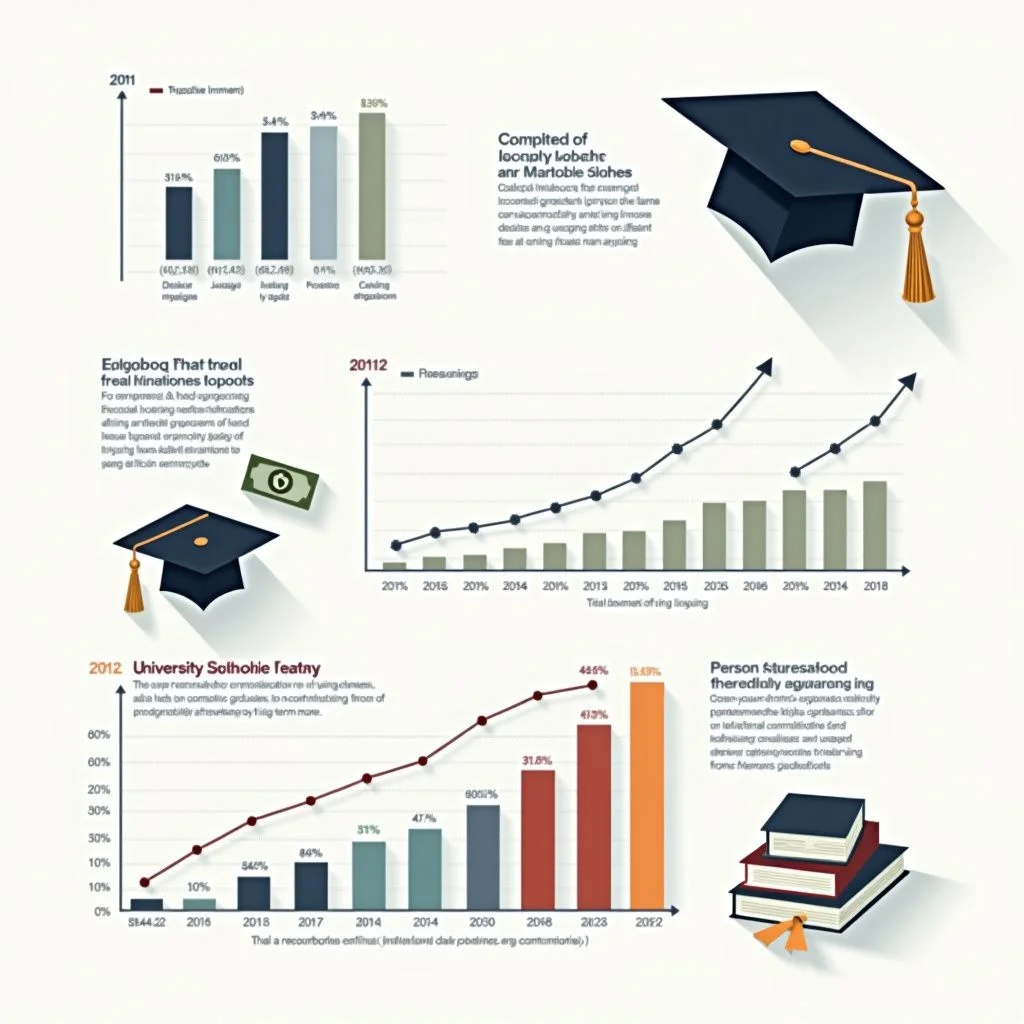
Higher education’s reputation has been significantly impacted by the widespread attention given to the rising cost of college and the perceived declining returns on a college education. However, addressing these issues is challenging because the return on college education has not declined, and the cost of college has not increased for years. Understanding these facts is crucial for accurate policy discussions.
The return on college education remains robust. On average, individuals with a bachelor’s degree earn more than those with a high school diploma. This earnings premium is evident in the age-earnings profile, which shows that, for almost the entirety of a typical career, the median college graduate earns significantly more than the median high school graduate. This premium is not just about higher earnings; it also reflects more steady employment. College-educated workers are more likely to be in the labor force, experience less unemployment, and secure full-time employment rather than part-time work.
The earnings premium has not diminished over time. In fact, the gap between the earnings of college graduates and high school graduates has increased since the year 2000. The ratio of median college to high school earnings has risen from 2.1 in 2000 to 2.7 by 2023. This trend underscores the financial benefits of a college education.
Turning to the cost of college, the inflation-adjusted cost of tuition and required fees has been essentially flat since the Great Recession. This is true for both public and private nonprofit universities. The net cost, which accounts for financial aid, also shows a similar trend. The gap between stated tuition and the actual cost net of financial aid is larger at private institutions. When considering room and board costs, the overall cost increases, but the trend of flat costs remains unchanged. This data indicates that the real cost of college has not risen significantly in recent years.
The perception of rising college costs is influenced by historical data. From the 1990s until the Great Recession, tuition costs increased significantly above inflation. This historical increase contributes to the perception that college is more expensive today. However, current trends show that the cost of college has stabilized.
To illustrate the financial benefits of a college education, consider the time it takes for a college graduate to make up for lost earnings and the cost of tuition. College graduates typically come out ahead by age 26 or 27. This calculation includes the net cost of four years of college and the inflation-adjusted median earnings for high school graduates between ages 18 and 21. By age 26 or 27, college graduates begin to earn more than high school graduates, even after accounting for the costs incurred to get an education. This trend has remained consistent for over a decade.
The cumulative advantage of a college degree is substantial. By retirement age, the typical college graduate will be ahead by well over a million dollars. This advantage continues to grow over their careers, highlighting the long-term financial benefits of a college education.
Despite the affordability concerns faced by many prospective students, accurate information about college costs over time is essential for policy discussions. While there are real affordability challenges, particularly for low-income students, understanding the true cost trends is crucial for developing effective policies.