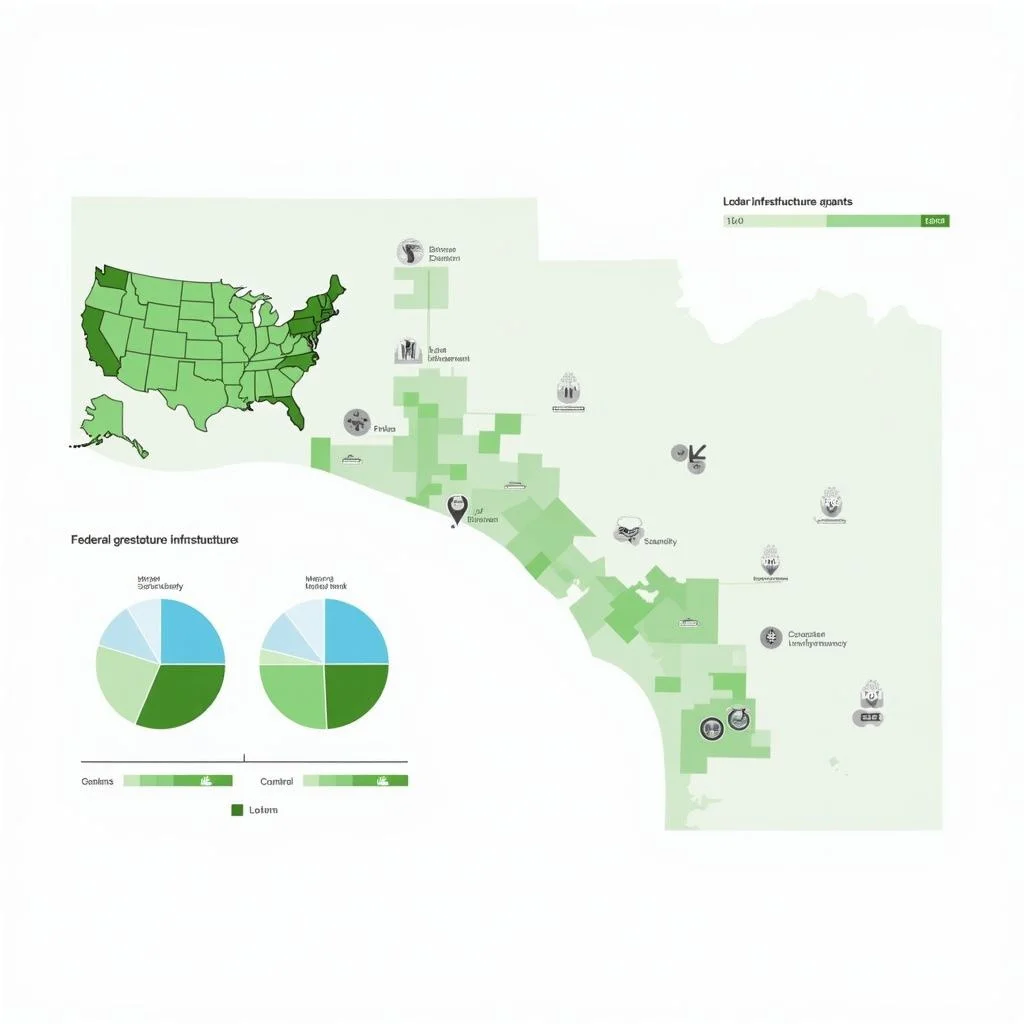
The Infrastructure Investment and Jobs Act (IIJA) and Inflation Reduction Act (IRA), enacted in 2021 and 2022, respectively, supported thousands of projects across the United States to improve transportation, energy, and water systems. These laws generated significant interest in leveraging these investments to expand career opportunities for people often left behind in the labor market. However, the complexity of infrastructure funding, which flows from numerous federal departments and supports a wide range of activities and organizations, makes it challenging to see the full picture. Moreover, these laws largely sidelined federal, state, and local entities that are most knowledgeable about education, training, and job placement.
This analysis aims to demystify the infrastructure landscape for state and local leaders, helping them narrow the task of “infrastructure workforce development” into more manageable pieces. It identifies the subsectors within the infrastructure field, key actors, and how they relate to each other. It also examines federal, state, and local policies and funding patterns that shape the incentives for different actors in a given subsector.
Review of Federal Awards
The analysis reviews federal awards to entities in the public, private, and nonprofit sectors in the Los Angeles area. This review supports local and state leaders in developing strategies to connect workers to jobs associated with these investments. The paper describes the infrastructure field, outlines which entities received federal funding and for what purpose, and lays out how federal, state, and local policy and funding interact.
Armed with this information, state and local leaders can better identify infrastructure subsectors of interest, connect with relevant employers, assess associated labor market needs, and strategize with employers, education and workforce entities, unions, and others to more effectively recruit and prepare people for jobs in that sector.
Findings from Federal Grants Analysis
In the analysis of federal grants awarded between 2022 and 2024, the following conclusions were drawn:
- Local and regional organizations in the Los Angeles area received $5.9 billion in awards via 274 grants.
- These grants came from multiple federal departments, including the departments of Transportation, Energy, Interior, and Agriculture, as well as the Environmental Protection Agency and the National Oceanic and Atmospheric Administration.
- Awards supported a wide range of infrastructure projects, including public transit, water and air quality, zero-emission transportation, urban forestry, road and pedestrian safety, a host of capital improvements, and more.
- The largest share of funding went to public transit.
- Awards went to a wide variety of organizations in the public, private, and nonprofit sectors, with the largest share of funding going to special purpose governments and municipal proprietary agencies that directly manage transportation, energy, water, and air quality systems.
- A small share of awards (7%) incorporated workforce development elements such as skills training, apprenticeships, and job placement programs.
Impact of Federal Funding Cuts
When President Donald Trump took office in January 2025, he upended established priorities and spending across the federal government. While there is no authoritative source of all the funding cuts and cancellations, 12 awards to regional organizations totaling $151 million were identified as having been canceled.
The federal government’s infrastructure priorities and funding are less predictable now than they were before the 2024 election, and the upcoming re-authorization of the IIJA also raises questions. Nonetheless, the federal government will continue to support transportation, energy, and water infrastructure systems in some fashion. The uncertainty is real, though. Funding priorities and amounts may change, awards may be less predictable, and new conditions may be attached to funding.
State and Local Leadership Role
Most infrastructure spending comes from state and local sources, and it is state and local leaders who have the most control over planning, designing, and implementing infrastructure projects.
The state of California has made substantial policy and financial commitments to address climate change, which necessarily involves infrastructure. Whatever the federal role, state and local leaders have to work together to ensure that critical energy, water, and transportation systems all function—and that requires paying attention to the workers who build, maintain, and operate those systems.
Workforce Development Strategies
Ensuring that there are enough workers with the right skills to carry out infrastructure projects should be a standard consideration in project development and implementation. Problems related to quality control, delays, and cost overruns are much more likely to occur if leaders and employers treat recruitment, training, and hiring as an afterthought.
The infrastructure field has long faced challenges with recruiting and retaining workers. If local actors such as employers, policymakers, workforce development organizations, educational institutions, nonprofits, unions, and others work together, they can create more robust talent pipelines to help employers meet their hiring needs while also providing career opportunities to a broad, diverse pool of workers.
Since most infrastructure jobs do not require a college degree—though many incorporate apprenticeships or other on-the-job training—they are accessible to a wide swath of the workforce. Moreover, infrastructure jobs offer above-average median wages and a higher floor for workers at the lower end of the wage distribution.
Este informe hace dos recomendaciones clave. Investir en socios de la fuerza laboral en campos de infraestructura específicos, comenzando con la transporte cero emisiones, así como la calidad y disponibilidad del agua. Las socios de la fuerza laboral se centran en la recluta, capacitación y colocación de empleo para empleadores que producen bienes y servicios similares o que tienen necesidades similares de habilidades y ocupaciones. Estas socios son una práctica estándar en el desarrollo de la fuerza laboral—nacional, estatal y en el área de Los Ángeles—si bien los programas de sector existentes tienen niveles de madurez y capacidad variables. El transporte cero emisiones y el agua son buenos candidatos para socios de la fuerza laboral: están respaldados no solo por inversiones federales sino también por inversiones estatales y locales, y por objetivos de política que probablemente seguirán generando actividades y proyectos que requieren trabajadores calificados.
Recruitar y capacitar a una diversa gama de trabajadores, incluyendo adultos jóvenes. Los líderes locales y programas pueden y deben enfatizar diferentes áreas geográficas o grupos de buscadores de empleo y trabajadores existentes, pero también deben priorizar llegar a adultos jóvenes. Nacional y en Los Ángeles, los sistemas que apoyan la transición de la escuela a un buen empleo están encontrando dificultades para muchos jóvenes. Casi 125,000 jóvenes de 16 a 24 años en el condado de Los Ángeles estaban desconectados de la escuela y el trabajo en 2023—11% de ese grupo de edad—y enfrentan mayores probabilidades de desempleo y trabajo de bajo salario. Cumplir con estas recomendaciones requerirá cartografiar los esfuerzos existentes para construir sobre ellos; identificar brechas; y mantener discusiones importantes y difíciles sobre qué organizaciones deben estar involucradas, qué roles deben jugar, quién debe estar en posiciones de liderazgo y financiamiento.
El trabajo, la educación y la infraestructura en la región de Los Ángeles
El trabajo, la educación y la infraestructura en la región de Los Ángeles tienen recursos y fortalezas considerables, pero necesitan trabajar juntos de manera más efectiva para desarrollar mejores tuberías de talento para empleos de infraestructura y climáticos relacionados. Esto incluye atención a la recluta, las habilidades ocupacionales, las prácticas de aprendizaje, la navegación de carreras, la colocación de empleo y la retención de empleo. No hay un modelo unitario para el éxito, pero la colaboración es esencial. La gobernanza de la coalición y la estructura varían por lugar, y también lo hacen las idiosincrasias de la capacidad organizativa y las relaciones. Pero el éxito dependerá de aprovechar y fortalecer la “infraestructura cívica invisible” que permite a múltiples organizaciones trabajar juntas hacia metas compartidas.
Presupuestos federales de infraestructura y climáticos
Los presupuestos federales de infraestructura y climáticos aumentaron dramáticamente en los últimos años gracias a dos piezas de legislación firmadas por el presidente Joe Biden: la Ley de Inversión en Infraestructura y Empleo de 2021 (IIJA) y la Ley de Reducción de la Inflación de 2022 (IRA). Estas leyes invirtieron en decenas de miles de proyectos en todo el país diseñados para mejorar el transporte, la energía, el agua y los sistemas de banda ancha, apoyar la gestión de incendios y la gestión de tierras, reducir las emisiones de gases de efecto invernadero y más. Todos estos proyectos requieren trabajadores calificados, pero ha sido difícil conectar las inversiones con estrategias de desarrollo de la fuerza laboral robustas y traer a más personas a carreras relacionadas con la infraestructura.
Las leyes permiten pero no requieren actividades de desarrollo de la fuerza laboral como la promoción y la recluta para programas de capacitación y empleo, la capacitación de habilidades ocupacionales, las prácticas de aprendizaje y la colocación de empleo. Proporcionan pocos mecanismos automáticos para vincular a los líderes de la educación y la fuerza laboral con aquellos que planifican o llevan a cabo proyectos de infraestructura. Ni siquiera financian prácticas de aprendizaje, colegios comunitarios, el sistema público de desarrollo de la fuerza laboral o las organizaciones sin fines de lucro que hacen tanto para reclutar y preparar a los trabajadores. Además, los fondos federales fluyen desde muchos departamentos, cubren una amplia gama de actividades y proyectos y van a una amplia gama de receptores, lo que hace difícil evaluar el espectro completo de la inversión en infraestructura.
La infraestructura como supersector
Otra cuestión es que el sector de la infraestructura es fragmentado y descentralizado. Es mejor entendido como un “supersector” que abarca múltiples industrias que se relacionan de alguna manera con los activos físicos en los entornos construidos y naturales. Este supersector incluye sistemas de energía, agua y transporte; redes de banda ancha, obras públicas y gestión de tierras—todos los cuales abarcan diferentes actores, actividades y propósitos. El supersector de la infraestructura es fragmentado en términos de gobernanza. Incluye una variedad de agencias estatales y municipales, empresas de energía que pueden ser propiedad pública o privada, distritos de agua y agencias de transporte que pueden estar gobernadas y financiadas por separado de un gobierno municipal o condal, autoridades de puerto y más. Puede ser un paisaje confuso para los actores de la educación y el desarrollo de la fuerza laboral navegar, al igual que el paisaje de la educación y el desarrollo de la fuerza laboral puede ser confuso para las entidades de infraestructura navegar.
Este informe busca ayudar a los actores en el sector laboral y educativo en la zona de Los Ángeles, o a cualquier persona interesada en ayudar a reclutar, entrenar y colocar a personas en puestos de infraestructura, a entender mejor el sector de la infraestructura. Para lograr esto, el informe evalúa los flujos de gastos federales de infraestructura hacia organizaciones regionales y locales en la zona de Los Ángeles entre aproximadamente 2022 y 2024, describe los tipos de proyectos que se financiaron y los tipos de organizaciones que recibieron financiamiento, y evalúa la medida en que las actividades de desarrollo de la fuerza laboral se incorporaron en estos premios de infraestructura. Por supuesto, el entorno político cambió dramáticamente cuando el presidente Donald Trump asumió el cargo en enero de 2025. Su administración pausó o canceló fondos que no se alineaban con las prioridades de su administración, y él abogó por la Ley del Gran y Hermoso Acto, que modificó o canceló los créditos fiscales del IRA que apoyaban la energía limpia y rescindió los fondos no comprometidos de muchos programas IIJA e IRA.
Otro factor en cualquier análisis de gastos de infraestructura es que los fondos federales, si bien son notables y a menudo catalíticos, no son los únicos fuentes de apoyo. De hecho, los dólares estatales y locales representan la mayoría de los gastos de infraestructura. Por ejemplo, la región de Los Ángeles está en medio de varios proyectos de infraestructura masivos y planes de capital, que se financian en parte pero en modo alguno en su totalidad con fondos federales. Para nombrar algunos ejemplos, el Aeropuerto Internacional de Los Ángeles (LAX) está llevando a cabo un programa de mejora de capital de $30 mil millones, el Departamento de Agua y Energía de Los Ángeles está en medio de un plan de $7 mil millones para mejorar su sistema de agua, y LA Metro está llevando a cabo su Iniciativa de Veintiocho por ’28 para prepararse para los Juegos Olímpicos de 2028. Sin embargo, una revisión de los premios de infraestructura federales proporciona críticas de información para los actores de desarrollo de la fuerza laboral, ya que los premios también señalan las prioridades de las entidades estatales y locales que acceden a los dólares federales y que gestionan proyectos de transporte, agua, energía y aire limpio.
Las conclusiones se basan en un análisis del archivo de hoja de cálculo de “Investing in America” descargado desde el sitio web invest.gov el 14 de enero de 2025, antes de que fuera desmantelado por la administración de Trump. El archivo de hoja de cálculo incluye premios de 2021-2025, pero principalmente incluye premios en el período de 2022-2024. El objetivo era identificar premios IIJA e IRA que se otorgaron o se asignaron a entidades locales o regionales en la zona de Los Ángeles, enfocándose en proyectos en la Ciudad y el Condado de Los Ángeles, pero también incluyendo proyectos y organizaciones cuyo alcance geográfico abarca condados circundantes. El análisis incluyó subvenciones otorgadas a organizaciones en el sector público, privado y sin fines de lucro. Las entidades estatales no se incluyeron en la búsqueda.
A través de la IIJA y el IRA, el gobierno federal otorgó 274 premios que sumaron $5.9 mil millones a organizaciones locales y regionales en la zona de Los Ángeles. Estos premios se otorgaron entre 2022 y 2024. Los premios de transporte público recibieron la mayor cantidad de financiamiento ($2.7 mil millones)—casi la mitad del total de la región. La segunda categoría de financiamiento más grande fue la “remediación ambiental” ($1.1 mil millones), una categoría amplia que abarca la calidad del aire, el medio ambiente construido, los terrenos contaminados y más. Los premios también se otorgaron a proyectos enfocados en aeropuertos, carreteras, sistemas de agua, seguridad de carreteras y ferrocarriles, puertos, vehículos eléctricos (EVs), energía limpia y más.
Los premios se otorgaron a una amplia variedad de organizaciones, pero la mayoría de los fondos se otorgaron a distritos especiales o agencias propietarias municipales que gestionan directamente proyectos de transporte, energía, agua y calidad del aire. Las entidades del sector público fueron las más comunes entre las beneficiarias, y muchas recibieron más de un premio. Los beneficiarios de subvenciones también incluyeron organizaciones sin fines de lucro, empresas, distritos escolares, colegios comunitarios y universidades.
Los distritos especiales recibieron el 64% de los fondos. Estos distritos son unidades gubernamentales independientes creadas para un propósito limitado y específico. Proporcionan servicios especializados esenciales para la salud, seguridad, economía y bienestar de la comunidad. Tales servicios incluyen transporte público, tratamiento y entrega de agua, generación y transmisión de energía, protección contra incendios y más. Las agencias propietarias municipales forman parte de los gobiernos locales pero están gobernadas por sus propios comisionados y generalmente se financian a sí mismas con sus propias tarifas y ingresos. El tipo de servicios que proporcionan se superpone en gran medida con los ofrecidos por los gobiernos especiales.
LA Metro opera el transporte público y la infraestructura relacionada en el condado de Los Ángeles. Recibió la mayor cantidad entre todas las distritos especiales—de hecho, entre todas las beneficiarias de la región—en $2.8 mil millones a través de casi 40 premios. Sus fondos provinieron de subvenciones de fórmula y competitivas, representando más de 10 programas con objetivos y propósitos variados. La mayor parte de su financiamiento—casi dos tercios—provenía de dos programas de fórmula de larga data del Departamento de Transporte de los EE. UU.: el Programa de Subvenciones de Fórmula para Áreas Urbanizadas ($1.2 mil millones) y el Programa de Subvenciones de Fórmula para el Estado de Buena Reparación ($511 millones), ambos se centraron principalmente en compras de capital e inversiones. LA Metro también ganó subvenciones competitivas, incluyendo financiamiento para la Extensión de la Línea Púrpura, para el Corredor de Tránsito del Este del Valle de San Fernando y para la compra de autobuses y equipos de carga eléctricos cero emisiones.
Distritos especiales y agencias propietarias municipales
Los distritos especiales recibieron el 64% de los fondos. Estos distritos son unidades gubernamentales independientes creadas para un propósito limitado y específico. Proporcionan servicios especializados esenciales para la salud, seguridad, economía y bienestar de la comunidad. Tales servicios incluyen transporte público, tratamiento y entrega de agua, generación y transmisión de energía, protección contra incendios y más. Las agencias propietarias municipales forman parte de los gobiernos locales pero están gobernadas por sus propios comisionados y generalmente se financian a sí mismas con sus propias tarifas y ingresos. El tipo de servicios que proporcionan se superpone en gran medida con los ofrecidos por los gobiernos especiales.
LA Metro opera el transporte público y la infraestructura relacionada en el condado de Los Ángeles. Recibió la mayor cantidad entre todas las distritos especiales—de hecho, entre todas las beneficiarias de la región—en $2.8 mil millones a través de casi 40 premios. Sus fondos provinieron de subvenciones de fórmula y competitivas, representando más de 10 programas con objetivos y propósitos variados. La mayor parte de su financiamiento—casi dos tercios—provenía
The Metropolitan Water District of Southern California provides water directly or through member public agencies to Los Angeles County and five surrounding counties. It received $132 million from the Department of the Interior primarily to purify and reuse cleaned wastewater as part of the Pure Water Southern California project. Other special purpose districts that received funds included metropolitan planning organizations, other water and sanitation districts, and airport authorities.
As a group, Los Angeles and Long Beach municipal proprietary agencies received 24% of all funds in the region. Los Angeles World Airports received 12 awards from the Department of Transportation’s Federal Aviation Administration totaling $449 million, almost all of which went to LAX for capital improvements. The Port of Los Angeles received three awards totaling $437 million, with most of it ($412 million) from an Environmental Protection Agency grant to purchase zero-emission tractors, forklifts, and other equipment. The Port of Long Beach received three awards totaling $336 million, all from the Department of Transportation. The largest award, for $283 million, was to reconfigure and expand the railyard to move more cargo by train rather than trucks, thus improving efficiency and reducing pollution. The Los Angeles Department of Power and Water received five awards totaling $116 million, including $60 million from the Department of the Interior to purify water and $48 million from the Department of Energy to enhance the electrical grid. The $48 million award was subsequently canceled, as listed below, bringing the department’s total funding to $68 million.
The infrastructure field has long faced challenges with recruiting and retaining workers. If local actors such as employers, policymakers, workforce development organizations, educational institutions, nonprofits, unions, and others work together, they can create more robust talent pipelines to help employers meet their hiring needs while also providing career opportunities to a broad, diverse pool of workers. Since most infrastructure jobs do not require a college degree—though many incorporate apprenticeships or other on-the-job training—they are accessible to a wide swath of the workforce. Moreover, infrastructure jobs offer above-average median wages and a higher floor for workers at the lower end of the wage distribution.
Key Recommendations
This paper makes two key recommendations. Invest in workforce sector partnerships in targeted infrastructure fields, starting with zero-emission transportation as well as water quality and availability. Sector partnerships focus on recruitment, training, and job placement for employers who produce similar goods and services or that otherwise have similar skill and occupational needs. These partnerships are standard practice in workforce development—nationally, statewide, and in the Los Angeles area—although existing sector programs have varying levels of maturity and capacity. Zero-emission transportation and water are good bets for sector partnerships: they are supported not only by federal investments but by state and local investments and policy goals, which will likely continue to generate activities and projects that require skilled workers.
Recruit and train a diverse range of workers, including young adults. Local leaders and programs can and should emphasize different geographic areas or groups of job seekers and incumbent workers, but they should also prioritize reaching young adults. Nationally and in Los Angeles, the systems supporting the transition from school to a good job are foundering for many young people. Nearly 125,000 young people ages 16 to 24 in Los Angeles County were disconnected from school and work as of 2023—11% of that age group—and they face increased chances of unemployment and low-wage work. Carrying out these recommendations will require mapping out existing efforts to build on; identifying gaps; and holding important and difficult discussions about which organizations should be involved, what roles they should play, who should be in leadership positions, and funding.
Collaboration and Infrastructure
The workforce, education, and infrastructure sectors in the Los Angeles region all have considerable resources and strengths, but they need to work together more effectively to develop better talent pipelines for in-demand infrastructure- and climate-related jobs. This includes attention to recruitment, occupational skills training, apprenticeships, career navigation, job placement, and job retention. There is not a unitary template for success, but collaboration is essential. Coalition governance and structure vary by place, and so do the idiosyncrasies of organizational capacity and relationships. But success will depend on leveraging and strengthening the “invisible” civic infrastructure that enables multiple organizations to work together toward shared goals.
Infrastructure Investment and Jobs Act (IIJA) and Inflation Reduction Act (IRA)
The Infrastructure Investment and Jobs Act (IIJA) and Inflation Reduction Act (IRA) supported thousands of projects across the country to improve transportation, energy, and water systems. These laws generated significant interest in leveraging these investments to expand career opportunities for people often left behind in the labor market. However, the complexity of infrastructure funding, which flows from numerous federal departments and supports a wide range of activities and organizations, makes it challenging to see the full picture. Moreover, these laws largely sidelined federal, state, and local entities that are most knowledgeable about education, training, and job placement.
This analysis aims to demystify the infrastructure landscape for state and local leaders, helping them narrow the task of “infrastructure workforce development” into more manageable pieces. It identifies the subsectors within the infrastructure field, key actors, and how they relate to each other. It also examines federal, state, and local policies and funding patterns that shape the incentives for different actors in a given subsector.
The analysis reviews federal awards to entities in the public, private, and nonprofit sectors in the Los Angeles area. This review supports local and state leaders in developing strategies to connect workers to jobs associated with these investments. The paper describes the infrastructure field, outlines which entities received federal funding and for what purpose, and lays out how federal, state, and local policy and funding interact.
Armed with this information, state and local leaders can better identify infrastructure subsectors of interest, connect with relevant employers, assess associated labor market needs, and strategize with employers, education and workforce entities, unions, and others to more effectively recruit and prepare people for jobs in that sector.
The analysis focuses on federal awards to entities in the public, private, and nonprofit sectors in the Los Angeles area and recommends particular infrastructure subsectors for workforce development efforts. In the analysis of federal grants awarded between 2022 and 2024, the following conclusions were drawn:
Local and regional organizations in the Los Angeles area received $5.9 billion in awards via 274 grants. These grants came from multiple federal departments, including the departments of Transportation, Energy, Interior, and Agriculture, as well as the Environmental Protection Agency and the National Oceanic and Atmospheric Administration. Awards supported a wide range of infrastructure projects, including public transit, water and air quality, zero-emission transportation, urban forestry, road and pedestrian safety, a host of capital improvements, and more. The largest share of funding went to public transit. Awards went to a wide variety of organizations in the public, private, and nonprofit sectors, with the largest share of funding going to special purpose governments and municipal proprietary agencies that directly manage transportation, energy, water, and air quality systems. A small share of awards (7%) incorporated workforce development elements such as skills training, apprenticeships, and job placement programs.
Impact of Federal Policy Changes
When President Donald Trump took office in January 2025, he upended established priorities and spending across the federal government. While there is no authoritative source of all the funding cuts and cancellations, 12 awards to regional organizations totaling $151 million were identified as having been canceled. The federal government’s infrastructure priorities and funding are less predictable now than they were before the 2024 election, and the upcoming re-authorization of the IIJA also raises questions. Nonetheless, the federal government will continue to support transportation, energy, and water infrastructure systems in some fashion. The uncertainty is real, though. Funding priorities and amounts may change, awards may be less predictable, and new conditions may be attached to funding. But federal funding is not the only game in town. Most infrastructure spending comes from state and local sources, and it is state and local leaders who have the most control over planning, designing, and implementing infrastructure projects.
State and Local Leadership
The state of California has made substantial policy and financial commitments to address climate change, which necessarily involves infrastructure. Whatever the federal role, state and local leaders have to work together to ensure that critical energy, water, and transportation systems all function—and that requires paying attention to the workers who build, maintain, and operate those systems. Ensuring that there are enough workers with the right skills to carry out infrastructure projects should be a standard consideration in project development and implementation. Problems related to quality control, delays, and cost overruns are much more likely to occur if leaders and employers treat recruitment, training, and hiring as an afterthought.
Workforce Development
The infrastructure field has long faced challenges with recruiting and retaining workers. If local actors such as employers, policymakers, workforce development organizations, educational institutions, nonprofits, unions, and others work together, they can create more robust talent pipelines to help employers meet their hiring needs while also providing career opportunities to a broad, diverse pool of workers. Since most infrastructure jobs do not require a college degree—though many incorporate apprenticeships or other on-the-job training—they are accessible to a wide swath of the workforce. Moreover, infrastructure jobs offer above-average median wages and a higher floor for workers at the lower end of the wage distribution.
Recommendations
This paper makes two key recommendations. Invest in workforce sector partnerships in targeted infrastructure fields, starting with zero-emission transportation as well as water quality and availability. Sector partnerships focus on recruitment, training, and job placement for employers who produce similar goods and services or that otherwise have similar skill and occupational needs. These partnerships are standard practice in workforce development—nationally, statewide, and in the Los Angeles area—although existing sector programs have varying levels of maturity and capacity. Zero-emission transportation and water are good bets for sector partnerships: they are supported not only by federal investments but by state and local investments and policy goals, which will likely continue to generate activities and projects that require skilled workers.
Recruit and train a diverse range of workers, including young adults. Local leaders and programs can and should emphasize different geographic areas or groups of job seekers and incumbent workers, but they should also prioritize reaching young adults. Nationally and in Los Angeles, the systems supporting the transition from school to a good job are foundering for many young people. Nearly 125,000 young people ages 16 to 24 in Los Angeles County were disconnected from school and work as of 2023—11% of that age group—and they face increased chances of unemployment and low-wage work. Carrying out these recommendations will require mapping out existing efforts to build on; identifying gaps; and holding important and difficult discussions about which organizations should be involved, what roles they should play, who should be in leadership positions, and funding.
The workforce, education, and infrastructure sectors in the Los Angeles region all have considerable resources and strengths, but they need to work together more effectively to develop better talent pipelines for in-demand infrastructure- and climate-related jobs. This includes attention to recruitment, occupational skills training, apprenticeships, career navigation, job placement, and job retention. There is not a unitary template for success, but collaboration is essential. Coalition governance and structure vary by place, and so do the idiosyncrasies of organizational capacity and relationships. But success will depend on leveraging and strengthening the “invisible” civic infrastructure that enables multiple organizations to work together toward shared goals.
El análisis de la infraestructura
El Infrastructure Investment and Jobs Act (IIJA) y el Inflation Reduction Act (IRA) apoyaron miles de proyectos en todo el país para mejorar los sistemas de transporte, energía y agua. Estas leyes generaron un gran interés en aprovechar estas inversiones para expandir las oportunidades de carrera para las personas a menudo marginadas en el mercado laboral. Sin embargo, la complejidad del financiamiento de la infraestructura, que fluye de numerosos departamentos federales y apoya una amplia gama de actividades y organizaciones, hace que sea difícil ver la imagen completa. Además, estas leyes relegaron en gran medida a las entidades federales, estatales y locales que son más conocedoras de la educación, la formación y la colocación de empleo.
La importancia de la colaboración
Este análisis tiene como objetivo desmitificar el paisaje de la infraestructura para los líderes estatales y locales, ayudándolos a reducir la tarea de “desarrollo de la fuerza laboral de la infraestructura” en piezas más manejables. Identifica las subsectores dentro del campo de la infraestructura, los actores clave y cómo se relacionan entre sí. También examina las políticas y patrones de financiamiento federales, estatales y locales que moldean las incentivos para diferentes actores en una subsectora determinada.
La importancia de la financiación federal
El análisis revisa los premios federales a entidades en el sector público, privado y sin fines de lucro en la zona de Los Ángeles. Esta revisión apoya a los líderes locales y estatales en desarrollar estrategias para conectar a los trabajadores con los empleos asociados con estas inversiones. El informe describe el campo de la infraestructura, describe qué entidades recibieron financiamiento federal y para qué fin, y establece cómo interactúan las políticas y el financiamiento federales, estatales y locales.
La importancia de la colaboración estatal y local
Con esta información, los líderes estatales y locales pueden identificar mejor las subsectores de la infraestructura de interés, conectarse con empleadores relevantes, evaluar las necesidades del mercado laboral asociadas y estrategizar con empleadores, entidades de educación y fuerza laboral, sindicatos y otros para preparar a las personas para empleos en ese sector de manera más efectiva. El análisis se centra en los premios federales a entidades en el sector público, privado y sin fines de lucro en la zona de Los Ángeles y recomienda particularmente subsectores de la infraestructura para esfuerzos de desarrollo de la fuerza laboral. En el análisis de los premios federales otorgados entre 2022 y 2024, se llegaron a las siguientes conclusiones:
Organizaciones locales y regionales en la zona de Los Ángeles recibieron $5.9 mil millones en premios a través de 274 subvenciones. Estas subvenciones provinieron de varios departamentos federales, incluidos los departamentos de Transporte, Energía, Interior y Agricultura, así como la Agencia de Protección Ambiental y la Administración Oceánica y Atmosférica Nacional. Los premios apoyaron una amplia gama de proyectos de infraestructura, incluidos transporte público, calidad del agua y aire, transporte eléctrico, silvicultura urbana, seguridad de carreteras y peatones, una variedad de mejoras de capital y más. La mayor parte de la financiación se destinó al transporte público. Los premios se otorgaron a una amplia gama de organizaciones en el sector público, privado y sin fines de lucro, con la mayor parte de la financiación destinada a gobiernos de propósito especial y agencias propietarias municipales que gestionan directamente los sistemas de transporte, energía, agua y calidad del aire. Una pequeña parte de los premios (7%) incorporó elementos de desarrollo de la fuerza laboral, como capacitación de habilidades, aprendizaje en el trabajo y programas de colocación de empleo.
La incertidumbre en la financiación federal
Cuando el presidente Donald Trump asumió el cargo en enero de 2025, revirtió las prioridades establecidas y los gastos en todo el gobierno federal. Si bien no hay una fuente autorizada de todos los recortes y cancelaciones, se identificaron 12 premios a organizaciones regionales que sumaban $151 millones como habiendo sido cancelados. La incertidumbre en la financiación federal es real, y las prioridades y cantidades de financiamiento pueden cambiar, los premios pueden ser menos predecibles y pueden estar sujetos a nuevas condiciones. Pero la financiación federal no es el único juego en el pueblo. La mayoría de los gastos de infraestructura provienen de fuentes estatales y locales, y son los líderes estatales y locales quienes tienen el control más grande sobre la planificación, diseño e implementación de proyectos de infraestructura.
El estado de California ha hecho compromisos políticos y financieros sustanciales para abordar el cambio climático, lo cual implica necesariamente infraestructura. Independientemente del papel federal, los líderes estatales y locales deben trabajar juntos para asegurar que los sistemas críticos de energía, agua y transporte funcionen, y eso requiere prestar atención a los trabajadores que construyen, mantienen y operan esos sistemas. Asegurarse de que haya suficientes trabajadores con las habilidades adecuadas para llevar a cabo proyectos de infraestructura debe ser una consideración estándar en el desarrollo y la implementación de proyectos. Los problemas relacionados con el control de calidad, los retrasos y los sobrecostos son mucho más probables de ocurrir si los líderes y los empleadores tratan la reclutación, la capacitación y la contratación como un después de pensarlo.
El campo de la infraestructura ha enfrentado durante mucho tiempo desafíos con la reclutación y la retención de trabajadores. Si los actores locales como empleadores, formuladores de políticas, organizaciones de desarrollo de la fuerza laboral, instituciones educativas, organizaciones sin fines de lucro, sindicatos y otros trabajen juntos, pueden crear más robustas cadenas de talento para ayudar a los empleadores a satisfacer sus necesidades de contratación mientras también proporcionan oportunidades de carrera a una amplia y diversa piscina de trabajadores. Dado que la mayoría de los trabajos de infraestructura no requieren una licenciatura universitaria—aunque muchos incorporan aprendizajes en el lugar de trabajo o otros programas de capacitación en el lugar de trabajo—son accesibles para una amplia franja de la fuerza laboral. Además, los trabajos de infraestructura ofrecen salarios medios por encima de la media y un techo más alto para los trabajadores en el extremo inferior de la distribución salarial.
Recomendaciones clave
Esta investigación hace dos recomendaciones clave. Investiga en asociaciones de sector de la fuerza laboral en campos de infraestructura específicos, comenzando con la transporte sin emisiones de cero, así como la calidad y disponibilidad del agua. Las asociaciones de sector se centran en la reclutación, la capacitación y la colocación de empleo para empleadores que producen bienes y servicios similares o que de otra manera tienen necesidades similares de habilidades y ocupaciones. Estas asociaciones son práctica estándar en el desarrollo de la fuerza laboral—nacional, estatal y en el área de Los Ángeles—aunque los programas de sector existentes tienen niveles variables de madurez y capacidad. El transporte sin emisiones de cero y el agua son buenos candidatos para asociaciones de sector: están respaldados no solo por inversiones federales sino también por inversiones estatales y locales y objetivos de política que probablemente seguirán generando actividades y proyectos que requieren trabajadores calificados.
Recluta y capacita a una diversa gama de trabajadores, incluidos jóvenes adultos. Los líderes locales y los programas pueden y deben enfatizar diferentes áreas geográficas o grupos de buscadores de empleo y trabajadores existentes, pero también deben priorizar llegar a jóvenes adultos. Nacional y en Los Ángeles, los sistemas que apoyan la transición de la escuela a un buen trabajo están encontrando dificultades para muchos jóvenes. Casi 125,000 jóvenes entre 16 y 24 años en el condado de Los Ángeles estaban desconectados de la escuela y el trabajo a partir de 2023—11% de ese grupo de edad—y enfrentan mayores probabilidades de desempleo y trabajo de bajo salario. Llevar a cabo estas recomendaciones requerirá mapear los esfuerzos existentes para construir sobre ellos; identificar vacíos; y mantener discusiones importantes y difíciles sobre qué organizaciones deben estar involucradas, qué roles deben jugar, quién debe estar en posiciones de liderazgo y financiamiento.
La fuerza laboral, la educación e infraestructura en la región de Los Ángeles tienen recursos y fortalezas considerables, pero necesitan trabajar juntos de manera más efectiva para desarrollar mejores cadenas de talento para trabajos de infraestructura y relacionados con el clima en alta demanda. Esto incluye atención a la reclutación, la capacitación en habilidades ocupacionales, aprendizajes en el lugar de trabajo, navegación de carrera, colocación de empleo y retención de empleo. No hay un modelo unitario de éxito, pero la colaboración es esencial. La gobernanza de coalición y la estructura varían por lugar, y también lo hacen las idiosincrasias de la capacidad organizativa y las relaciones. Pero el éxito dependerá de aprovechar y fortalecer la “infraestructura cívica invisible” que permite a múltiples organizaciones trabajar juntas hacia objetivos compartidos.
La Ley de Inversión en Infraestructura y Empleo (IIJA) y la Ley de Reducción de la Inflación (IRA) apoyaron miles de proyectos en todo el país para mejorar los sistemas de transporte, energía y agua. Estas leyes generaron un interés significativo en aprovechar estas inversiones para ampliar las oportunidades de carrera para las personas a menudo dejadas atrás en el mercado laboral. Sin embargo, la complejidad de la financiación de la infraestructura, que fluye desde múltiples departamentos federales y apoya una amplia gama de actividades y organizaciones, hace que sea difícil ver la imagen completa. Además, estas leyes relegaron en gran medida a las entidades federales, estatales y locales que son más conocedoras de la educación, la capacitación y la colocación de empleo.
Este análisis tiene como objetivo desmitificar el paisaje de la infraestructura para los líderes estatales y locales, ayudándolos a reducir la tarea de “desarrollo de la fuerza laboral de la infraestructura” en piezas más manejables. Identifica los subsectores dentro del campo de la infraestructura, los actores clave y cómo se relacionan entre sí. También examina las políticas y patrones de financiación federales, estatales y locales que moldean las incentivos para los diferentes actores en un subsector determinado.
La revisión de los premios federales a entidades en el sector público, privado y sin fines de lucro en el área de Los Ángeles respalda a los líderes locales y estatales en el desarrollo de estrategias para conectar a los trabajadores con los trabajos asociados con estas inversiones. El informe describe el campo de la infraestructura, describe qué entidades recibieron financiamiento federal y para qué fin, y establece cómo las políticas y la financiación federales, estatales y locales interactúan.
Armed with this information, state and local leaders can better identify infrastructure subsectors of interest, connect with relevant employers, assess associated labor market needs, and strategize with employers, education and workforce entities, unions, and others to more effectively recruit and prepare people for jobs in that sector. The analysis focuses on federal awards to entities in the public, private, and nonprofit sectors in the Los Angeles area and recommends particular infrastructure subsectors for workforce development efforts.
Local and regional organizations in the Los Angeles area received $5.9 billion in awards via 274 grants. These grants came from multiple federal departments, including the departments of Transportation, Energy, Interior, and Agriculture, as well as the Environmental Protection Agency and the National Oceanic and Atmospheric Administration. Awards supported a wide range of infrastructure projects, including public transit, water and air quality, zero-emission transportation, urban forestry, road and pedestrian safety, a host of capital improvements, and more. The largest share of funding went to public transit. Awards went to a wide variety of organizations in the public, private, and nonprofit sectors, with the largest share of funding going to special purpose governments and municipal proprietary agencies that directly manage transportation, energy, water, and air quality systems.
A small share of awards (7%) incorporated workforce development elements such as skills training, apprenticeships, and job placement programs.
Impact of the Trump Administration
When President Donald Trump took office in January 2025, he upended established priorities and spending across the federal government. While there is no authoritative source of all the funding cuts and cancellations, 12 awards to regional organizations totaling $151 million were identified as having been canceled. The federal government’s infrastructure priorities and funding are less predictable now than they were before the 2024 election, and the upcoming re-authorization of the IIJA also raises questions.
Nonetheless, the federal government will continue to support transportation, energy, and water infrastructure systems in some fashion. The uncertainty is real, though. Funding priorities and amounts may change, awards may be less predictable, and new conditions may be attached to funding. But federal funding is not the only game in town. Most infrastructure spending comes from state and local sources, and it is state and local leaders who have the most control over planning, designing, and implementing infrastructure projects.
State and Local Leadership
The state of California has made substantial policy and financial commitments to address climate change, which necessarily involves infrastructure. Whatever the federal role, state and local leaders have to work together to ensure that critical energy, water, and transportation systems all function—and that requires paying attention to the workers who build, maintain, and operate those systems. Ensuring that there are enough workers with the right skills to carry out infrastructure projects should be a standard consideration in project development and implementation.
Problems related to quality control, delays, and cost overruns are much more likely to occur if leaders and employers treat recruitment, training, and hiring as an afterthought.
Workforce Development
The infrastructure field has long faced challenges with recruiting and retaining workers. If local actors such as employers, policymakers, workforce development organizations, educational institutions, nonprofits, unions, and others work together, they can create more robust talent pipelines to help employers meet their hiring needs while also providing career opportunities to a broad, diverse pool of workers. Since most infrastructure jobs do not require a college degree—though many incorporate apprenticeships or other on-the-job training—they are accessible to a wide swath of the workforce. Moreover, infrastructure jobs offer above-average median wages and a higher floor for workers at the lower end of the wage distribution.
Recommendations
This paper makes two key recommendations. Invest in workforce sector partnerships in targeted infrastructure fields, starting with zero-emission transportation as well as water quality and availability. Sector partnerships focus on recruitment, training, and job placement for employers who produce similar goods and services or that otherwise have similar skill and occupational needs. These partnerships are standard practice in workforce development—nationally, statewide, and in the Los Angeles area—although existing sector programs have varying levels of maturity and capacity.
Recruit and train a diverse range of workers, including young adults. Local leaders and programs can and should emphasize different geographic areas or groups of job seekers and incumbent workers, but they should also prioritize reaching young adults. Nationally and in Los Angeles, the systems supporting the transition from school to a good job are foundering for many young people. Nearly 125,000 young people ages 16 to 24 in Los Angeles County were disconnected from school and work as of 2023—11% of that age group—and they face increased chances of unemployment and low-wage work.
The workforce, education, and infrastructure sectors in the Los Angeles region all have considerable resources and strengths, but they need to work together more effectively to develop better talent pipelines for in-demand infrastructure- and climate-related jobs. This includes attention to recruitment, occupational skills training, apprenticeships, career navigation, job placement, and job retention. There is not a unitary template for success, but collaboration is essential. Coalition governance and structure vary by place, and so do the idiosyncrasies of organizational capacity and relationships. But success will depend on leveraging and strengthening the “invisible” civic infrastructure that enables multiple organizations to work together toward shared goals.
Infrastructure Investment and Jobs Act (IIJA) and Inflation Reduction Act (IRA)
The Infrastructure Investment and Jobs Act (IIJA) and Inflation Reduction Act (IRA) supported thousands of projects across the country to improve transportation, energy, and water systems. These laws generated significant interest in leveraging these investments to expand career opportunities for people often left behind in the labor market. However, the complexity of infrastructure funding, which flows from numerous federal departments and supports a wide range of activities and organizations, makes it challenging to see the full picture. Moreover, these laws largely sidelined federal, state, and local entities that are most knowledgeable about education, training, and job placement.
Analysis and Recommendations
This analysis aims to demystify the infrastructure landscape for state and local leaders, helping them narrow the task of “infrastructure workforce development” into more manageable pieces. It identifies the subsectors within the infrastructure field, key actors, and how they relate to each other. It also examines federal, state, and local policies and funding patterns that shape the incentives for different actors in a given subsector.
The analysis reviews federal awards to entities in the public, private, and nonprofit sectors in the Los Angeles area. This review supports local and state leaders in developing strategies to connect workers to jobs associated with these investments. The paper describes the infrastructure field, outlines which entities received federal funding and for what purpose, and lays out how federal, state, and local policy and funding interact.
Key Findings and Recommendations
Armed with this information, state and local leaders can better identify infrastructure subsectors of interest, connect with relevant employers, assess associated labor market needs, and strategize with employers, education and workforce entities, unions, and others to more effectively recruit and prepare people for jobs in that sector. The analysis focuses on federal awards to entities in the public, private, and nonprofit sectors in the Los Angeles area and recommends particular infrastructure subsectors for workforce development efforts. In the analysis of federal grants awarded between 2022 and 2024, the following conclusions were drawn:
Local and regional organizations in the Los Angeles area received $5.9 billion in awards via 274 grants. These grants came from multiple federal departments, including the departments of Transportation, Energy, Interior, and Agriculture, as well as the Environmental Protection Agency and the National Oceanic and Atmospheric Administration. Awards supported a wide range of infrastructure projects, including public transit, water and air quality, zero-emission transportation, urban forestry, road and pedestrian safety, a host of capital improvements, and more. The largest share of funding went to public transit. Awards went to a wide variety of organizations in the public, private, and nonprofit sectors, with the largest share of funding going to special purpose governments and municipal proprietary agencies that directly manage transportation, energy, water, and air quality systems. A small share of awards (7%) incorporated workforce development elements such as skills training, apprenticeships, and job placement programs.
Uncertainty and Future Directions
When President Donald Trump took office in January 2025, he upended established priorities and spending across the federal government. While there is no authoritative source of all the funding cuts and cancellations, 12 awards to regional organizations totaling $151 million were identified as having been canceled. The federal government’s infrastructure priorities and funding are less predictable now than they were before the 2024 election, and the upcoming re-authorization of the IIJA also raises questions. Nonetheless, the federal government will continue to support transportation, energy, and water infrastructure systems in some fashion. The uncertainty is real, though. Funding priorities and amounts may change, awards may be less predictable, and new conditions may be attached to funding. But federal funding is not the only game in town. Most infrastructure spending comes from state and local sources, and it is state and local leaders who have the most control over planning, designing, and implementing infrastructure projects.
State and Local Leadership
The state of California has made substantial policy and financial commitments to address climate change, which necessarily involves infrastructure. Whatever the federal role, state and local leaders have to work together to ensure that critical energy, water, and transportation systems all function—and that requires paying attention to the workers who build, maintain, and operate those systems. Ensuring that there are enough workers with the right skills to carry out infrastructure projects should be a standard consideration in project development and implementation. Problems related to quality control, delays, and cost overruns are much more likely to occur if leaders and employers treat recruitment, training, and hiring as an afterthought.
La industria de la infraestructura ha enfrentado durante mucho tiempo desafíos con la recrutamiento y retención de trabajadores. Si los actores locales, como empleadores, formuladores de políticas, organizaciones de desarrollo de la fuerza laboral, instituciones educativas, organizaciones sin fines de lucro, sindicatos y otros trabajan juntos, pueden crear más robustas cadenas de talento para ayudar a los empleadores a satisfacer sus necesidades de contratación mientras también proporcionan oportunidades de carrera a una amplia y diversa población de trabajadores. Dado que la mayoría de los trabajos de infraestructura no requieren una licenciatura universitaria—aunque muchos incorporan aprendizajes en el lugar de trabajo o otros entrenamientos en el lugar de trabajo—son accesibles a una amplia franja de la fuerza laboral. Además, los trabajos de infraestructura ofrecen salarios medios por encima de la media y un techo más alto para los trabajadores en el extremo inferior de la distribución salarial.
Esta investigación hace dos recomendaciones clave. Investiga en asociaciones de sector de la fuerza laboral en campos de infraestructura específicos, comenzando con la transporte cero-emisiones, así como la calidad y disponibilidad del agua. Las asociaciones de sector se centran en la recrutamiento, capacitación y colocación laboral para empleadores que producen bienes y servicios similares o que de otra manera tienen necesidades similares de habilidades y ocupaciones. Estas asociaciones son práctica estándar en el desarrollo de la fuerza laboral—nacional, estatal y en el área de Los Ángeles—aunque los programas de sector existentes tienen niveles variables de madurez y capacidad. El transporte cero-emisiones y el agua son buenos candidatos para asociaciones de sector: están respaldados no solo por inversiones federales sino también por inversiones estatales y locales y objetivos de política, que probablemente seguirán generando actividades y proyectos que requieren trabajadores calificados.
Recomendaciones clave
Recrute y capacite a una diversa gama de trabajadores, incluyendo adultos jóvenes. Los líderes locales y programas pueden y deben enfocarse en diferentes áreas geográficas o grupos de buscadores de empleo y trabajadores existentes, pero también deben priorizar llegar a adultos jóvenes. Nacional y en Los Ángeles, los sistemas que apoyan la transición de la escuela a un buen trabajo están fallando para muchos jóvenes. Casi 125,000 jóvenes de entre 16 y 24 años en el condado de Los Ángeles estaban desconectados de la escuela y el trabajo en 2023—11% de esa franja de edad—y enfrentan mayores probabilidades de desempleo y trabajo de bajo salario. Cumplir con estas recomendaciones requerirá cartografiar los esfuerzos existentes para construir sobre ellos; identificar vacíos; y sostener discusiones importantes y difíciles sobre qué organizaciones deben estar involucradas, qué roles deben jugar, quién debe estar en posiciones de liderazgo y financiamiento.
Desafíos y oportunidades
La fuerza laboral, la educación e infraestructura en la región de Los Ángeles tienen recursos y fortalezas considerables, pero necesitan trabajar juntos de manera más efectiva para desarrollar mejores cadenas de talento para trabajos de infraestructura y climáticos en alta demanda. Esto incluye atención a la recrutamiento, capacitación de habilidades ocupacionales, aprendizajes en el lugar de trabajo, navegación de carrera, colocación laboral y retención laboral. No hay un modelo unitario de éxito, pero la colaboración es esencial. La gobernanza y estructura de coaliciones varían por lugar, y también lo hacen las idiosincrasias de la capacidad organizativa y las relaciones. Pero el éxito dependerá de aprovechar y fortalecer la “infraestructura cívica invisible” que permite a múltiples organizaciones trabajar juntas hacia objetivos compartidos.
Legislación y financiamiento
La Ley de Inversión en Infraestructura y Empleo (IIJA) y la Ley de Reducción de la Inflación (IRA) apoyaron miles de proyectos en todo el país para mejorar los sistemas de transporte, energía y agua. Estas leyes generaron un interés significativo en aprovechar estas inversiones para ampliar oportunidades de carrera para las personas a menudo marginadas en el mercado laboral. Sin embargo, la complejidad del financiamiento de la infraestructura, que fluye desde múltiples departamentos federales y apoya una amplia gama de actividades y organizaciones, hace que sea difícil ver la imagen completa. Además, estas leyes relegaron en gran medida a las entidades federales, estatales y locales que son más conocedoras de la educación, la capacitación y la colocación laboral.