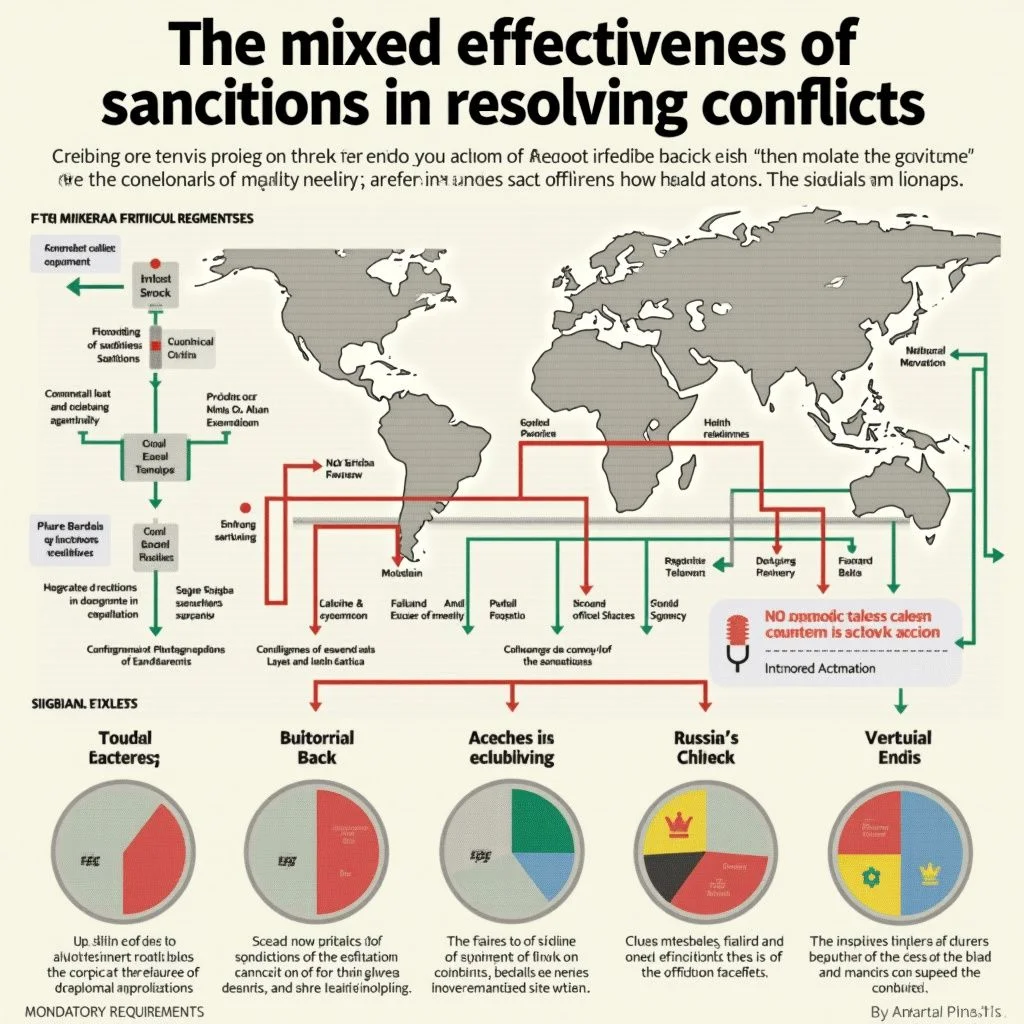
Sanctions have long been a crucial component of foreign relations, but the global landscape in which they operate is evolving. The response to Russia’s war in Ukraine has involved a complex set of economic measures, highlighting both the power and the limits of sanctions in an era of major-power competition and rapid technological change. This piece examines how sanctions are being used today, their effects, and how shifts in geopolitics and global markets are shaping their future. Specifically, it addresses whether sanctions can change the course of conflict.
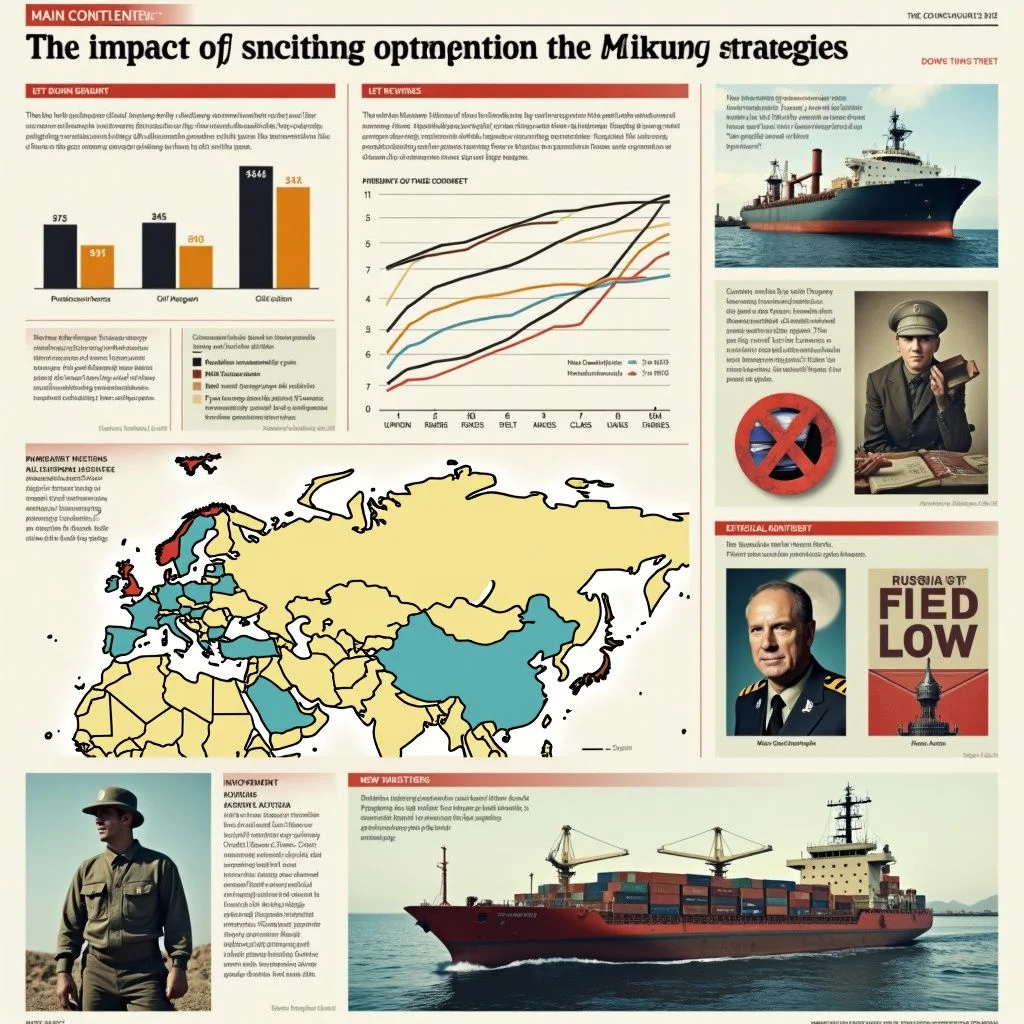
Sanctions can significantly disrupt an economy. The array of sanctions levied against the Russian oil trade in response to its illegal invasion of Ukraine substantially lowered the profitability of Russia’s export of crude oil and refined petroleum products, reducing associated government revenues. Key Western energy sanctions against Russia include an EU ban on the import of seaborne Russian oil, the imposition of price caps on all transactions involving Russian oil that use G7-based services, and U.S. Treasury Department orders sanctioning Russian vessels and banning trading with major Russian energy companies. These measures have reshaped trading routes for Russian oil, shifting export destinations away from Europe and toward Asia, with a notable rise in transportation costs. The actions appear to have preserved an unprecedented spread between the market price of oil and the price received by Russia for its exports, starkly lowering Russian revenue. However, Russia’s deployment of a “shadow fleet” of oil tankers demands further countermeasures, including additional tanker sanctions and increased pressure on flag states to comply with maritime law.
Sanctions and Conflict Resolution
Sanctions have a mixed track record in achieving ambitious policy outcomes, such as conflict resolution. The history of American and international measures targeting Iran illustrates both the opportunities and limitations of sanctions. The 1979 seizure of the U.S. Embassy in Tehran prompted the first use of the International Emergency Economic Powers Act (IEEPA) to freeze all Iranian state assets held in U.S. financial institutions, ultimately forcing Tehran to negotiate and free American hostages. The 2015 Iran nuclear deal is another example of sanctions’ success. However, these breakthroughs punctuated decades of economic coercion with ultimately limited effect on generating a durable end to Tehran’s threats. Sanctions present challenges to reverse, inspire creative adaptation and circumvention, instigate unintended consequences for U.S. interests, and wreak collateral damage on vulnerable societies. The rare successes have not proven replicable for other crises.
Impact of Sanctions on Military Operations
Military analysts often view the impact of sanctions as irrelevant to the course of combat operations, but economists’ assessments are increasingly relevant. Each round of tightening U.S. and EU sanction regimes provides new data on curtailing the trade and investment flows of a major world power. Russia’s experiment in compensating for heavy military casualties through paid recruitment has been affected by the deepening crisis in state finances. Regional authorities have managed to fulfil recruitment tasks by offering contract-signing bonuses, but the large federal budget deficit has led to severe reductions of transfers to regional budgets. Measures aimed at curtailing Russia’s oil export revenues aggravate the funding shortage and change the parameters of the recruitment experiment, which could suddenly collapse.
Can Sanctions Alter the Course of Conflict?
Sanctions can alter the course of conflict under certain circumstances. They are particularly effective if imposed by a broad coalition and as part of a wider array of policy actions, ranging from diplomatic pressure to military coercion. Examples include Iran negotiating limits on its nuclear program in 2015, Libya abandoning its nuclear program in 2003, and South Africa’s apartheid regime buckling in the early 1990s. The mere threat of sanctions can also have an effect, as seen in historical instances involving Israel, the U.K., France, and Egypt. International sanctions have not forced Russia to stop its war against Ukraine, but they have changed the course of the conflict by weakening the Russian economy and making it harder for Moscow to advance its aggressive plans. Tighter sanctions would impose even higher costs.
Sanctions on Russian Energy Products
Sanctions on Russian energy products are intended to make the war in Ukraine more painful for Moscow, forcing it to re-think its aggressions. Oil and gas revenues have made up 30 to 50% of Russian federal government revenues over the last decade. The West has been playing a game of cat and mouse with Russia, with the West trying new strategies and the Russians finding ways around them. The oil price cap, which entered into force in December 2022, was intended to reduce revenues from Russian oil exports without removing them from the market. However, Russia turned to a “shadow fleet” of tankers with obfuscated ownership and without Western insurance to get around the price cap. New sanctions prevent U.S. companies from doing business with major Russian oil producers, and secondary sanctions allow the U.S. to block access to its financial system for non-U.S. entities that do business with these companies. Enforcement is key to success, particularly whether the U.S. will force China to comply.
Economic sanctions have proven effective for addressing asymmetric threats but may not be as effective for major power competition. The focus on asymmetric threats has contributed to several pathologies in sanctions policies, particularly in the United States. The ease with which economic sanctions can be imposed has made them a foreign policy tool of first resort, resulting in overbroad application. Sanctioned entities are often highly stigmatized, with little incentive to reconsider sanctions once imposed.
Conventional list-based sanction regimes contribute to excess de-risking by the private sector, and enforcement is administratively easy. Unilateral sanctions can have high rates of compliance, limiting the incentive for multilateral cooperation. These tendencies cause problems when sanctions target entities with their own substantial economic power, like other major powers. Cutting economic relations with such targets can be costly for both private sector entities and the broader global economy, requiring more tailored application.
Limitaciones de las sanciones unilaterales
Some private actors may be more willing to risk sanctions penalties to avoid disengagement, especially if the targeted entity has developed strategies for evading sanctions. Excess derisking can increase the risk of private sector defection and amplify sanctions’ effects in unintended and counterproductive ways. Unilateral sanctions are far less likely to be effective than multilateral ones.
Sanctions rarely determine the outcome of a conflict outright but can meaningfully alter its course by imposing costs, creating friction, and constraining an aggressor’s options. These constraints matter even when evasion occurs.
La evasión de las sanciones
Evasion may shift how pressure is felt, but it does not erase it; even forcing an aggressor to work through costlier or riskier channels can hinder its ability to sustain conflict. Policymakers must recognize that evasion is inevitable and will become easier as technology advances and China chooses to provide viable economic and logistical alternatives.
Evasion follows two pathways: circumvention, which is an enforcement issue, and avoidance, which is a geopolitical and technological challenge. Circumvention involves the illegal acquisition of restricted goods or financial flows from jurisdictions that are, in principle, part of a sanctions regime.
Avoidance operates outside the sanctioning government’s reach and is a manifestation of trade diversion. Russia’s “shadow fleet” of tankers and its pivot to renminbi-denominated financing fit this pattern. Avoidance arises not from gaps in enforcement but from the availability of external alternatives, making it a fundamentally geopolitical and technological challenge.
La importancia de la diplomacia
The presence of large economies outside the sanctions coalition, the strategic choices of hedging states, and the incentives of commercial actors shape the degree to which avoidance is viable. Technologies such as cryptocurrencies and China’s willingness to serve as an alternative economic partner are dramatically expanding these possibilities.
These shifts mean avoidance will increasingly erode sanctions’ leverage unless policymakers use diplomacy and broader strategic choices to close off these pathways. Ultimately, policymakers must recognize when sanctions are weakened by circumvention, which enforcement can constrain, and when they are weakened by avoidance, which signals a broader strategic challenge.
Treating all evasion as an enforcement problem will lead to over-investment in legal remedies and under-investment in the diplomatic and geopolitical tools needed to shape the environment in which avoidance occurs. Sanctions will retain their power only if policymakers adapt to this reality.