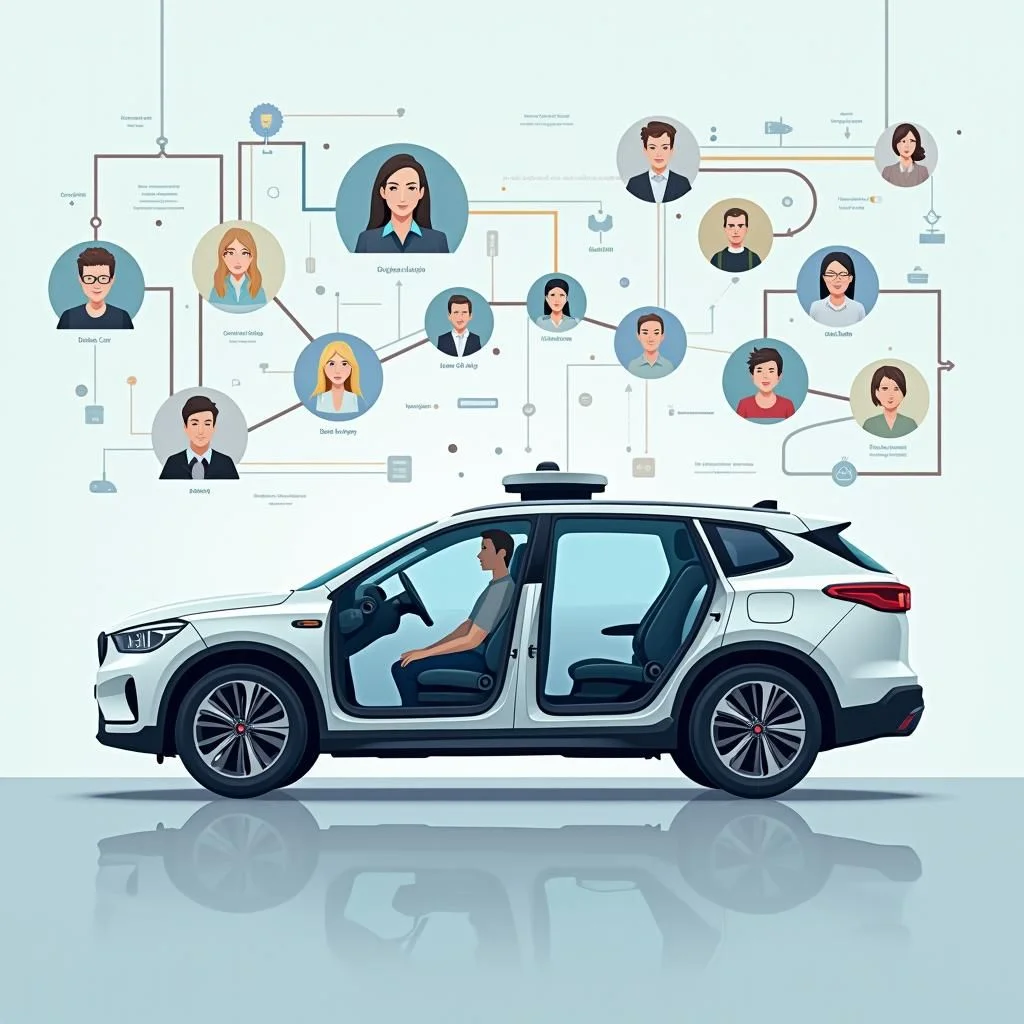
Self-driving cars are becoming increasingly prevalent on roadways worldwide, raising urgent questions about liability for injuries or damages they cause. To address these issues, policymakers should consider various approaches to liability, focusing on specific use cases like self-driving cars rather than comprehensive solutions.
Safety engineers and regulators classify cars based on their level of driving automation, ranging from Level 0 (no automation) to Level 5 (fully autonomous). Tesla’s Autopilot and Full Self-Driving capabilities fall under Level 2, with partial automation that requires a fully attentive driver. However, a Florida jury recently held Tesla partially responsible for a fatal accident involving Autopilot, highlighting the complexity of liability issues. The key liability concerns arise at Levels 4 and 5, where driving is entirely handled by the car, potentially without a human driver.
Waymo’s self-driving taxis exemplify Level 4 autonomous vehicles, operating within specific conditions without a human driver. Tesla’s new robotaxis in Austin, Texas, also operate autonomously. In these cases, the company would be liable for accidents resulting from the car’s poor performance unless a passenger’s negligent use of the intervention button is proven.
Approaches to Liability for Self-Driving Cars
Policymakers can consider four approaches to liability for self-driving cars:
1. Traditional Product Liability Negligence Standard: Under this approach, plaintiffs must show a design or manufacturing flaw in the self-driving car that led to the accident. This standard is well-known to lawyers and provides a basis for injured parties to seek compensation. However, it suffers from significant information asymmetry between manufacturers and plaintiffs, making it difficult for plaintiffs to prove negligence.
2. Strict Product Liability: This approach holds manufacturers liable for any damages their cars produce, regardless of whether the car was defective. It provides compensation without requiring proof of a design or manufacturing defect. However, it can only function as a replacement for a product liability negligence regime, not as a supplement. Implementing strict liability would require all self-driving car accidents to be litigated, defeating the purpose of avoiding pointless litigation.
3. Reasonable Human Driver Standard: This approach evaluates the driving behavior of self-driving cars as if it were a human driver. The car manufacturer would be held liable for damages whenever its computer driver fails to avoid an accident that a reasonable human driver would have avoided. This standard provides recourse for injured parties and incentivizes manufacturers to create cars capable of avoiding “stupid” mistakes. It also allows manufacturers to defend themselves in some circumstances by proving that a human driver would not have been held liable for damages.
4. Reasonable Computer Driver Standard: This approach compares the driving performance of self-driving cars to an industry yardstick, such as an average level of performance or a state-of-the-art standard. It holds manufacturers liable when the computer driver’s safety performance falls below what a reasonable computer driver would have done. This standard could be more protective in certain circumstances but less protective in others, where the technology does not match human driving skills. It risks collapsing back into the product liability design defect standard by forcing plaintiffs to engage in an assessment of what self-driving capabilities are technically and economically feasible.
The reasonable human driver standard introduces a liability standard that judges and juries have domain expertise to administer. The strict product liability regime resembles a negligent driving approach and would be workable if combined with the reasonable human driver standard. The computer driver approach is essentially the product liability negligence approach under a different name and should remain available for plaintiffs to use in addition to litigation based on the reasonable human driver approach.
Combining Liability Standards
To improve car safety, policymakers should combine an approach that assesses the performance of the car under a reasonable human driver standard with the traditional negligence approach under product liability law. This combined liability system creates a fair standard for compensating injured parties and provides a minimum level of performance for self-driving cars. However, it may not create a powerful incentive for manufacturers to produce self-driving cars that exceed the current human safety record.
Human drivers have an admirable safety record, with a fatal accident occurring only about once in every 100 million miles driven. Policymakers should expect self-driving cars to match or exceed this level of safety. While a liability standard for individual cases holds self-driving cars to this minimum level of performance, it is unlikely to effectively move the industry to a higher level of safety. Litigation in individual cases primarily aims to compensate people for injuries or property damage through no fault of their own and may aid in preventing self-driving cars from degrading the current high level of safety provided by human drivers.
Regulatory Requirements
To move the self-driving car industry to a higher level of performance exceeding the current level of safety provided by human drivers, policymakers should consider regulatory requirements rather than relying solely on liability standards for individual accident cases. Regulators can design tests and make specified performance requirements for self-driving cars, such as faster-than-human response times to suddenly appearing pedestrians. An upgraded regulatory system that supports higher safety goals is necessary to move the industry forward.