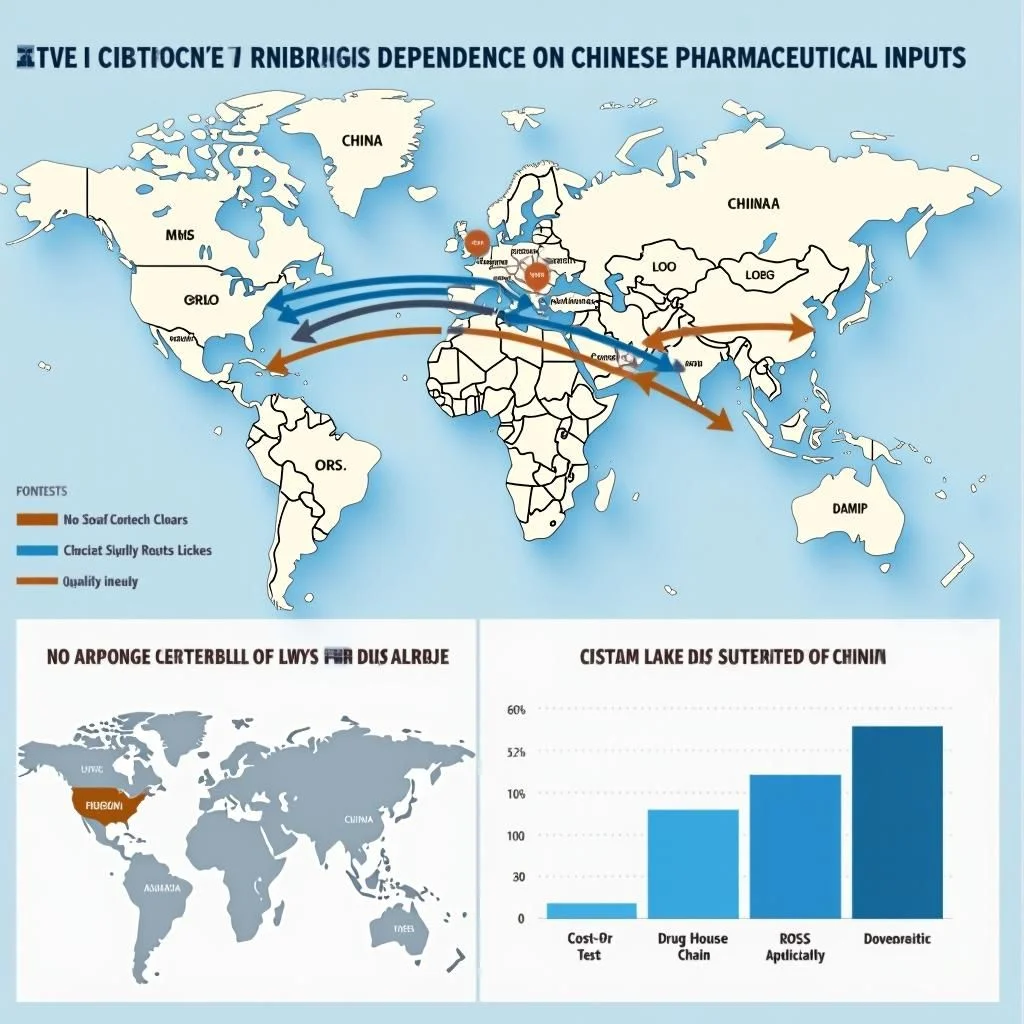
Drug supply chains are complex and vulnerable, with significant exposure to China. Policymakers are increasingly concerned about potential disruptions to U.S. drug supply chains due to geopolitical conflicts, which could lead to widespread drug shortages. These shortages pose risks to both public health and national security. However, current policy approaches are often too narrow, focusing on specific aspects such as active pharmaceutical ingredient (API) production without considering upstream chemical manufacturing, domestic production without allied collaboration, or fixed lists of drugs without adjusting for budgetary realities. A comprehensive strategy is essential to address these vulnerabilities effectively.
Drug shortages arise from various triggers, but the common dynamic is a supply chain’s inability to quickly adjust to disruptions or increased demand. The severity of a shortage depends on the size of the supply chain shock and the amount of slack in the system. Slack includes high inventory levels, spare capacity, and fungible manufacturing lines. Generic drugs are particularly vulnerable due to economic incentives embedded in the reimbursement framework. These incentives lead manufacturers to seek the lowest-cost suppliers, reduce overhead, and operate with minimal slack, making supply chains more susceptible to shocks.
Manufacturing quality issues are the most common cause of shortages, often stemming from inadequate FDA oversight and economic incentives. Other factors include permanent product discontinuations, offshoring to geopolitically volatile regions, and natural disasters. Reliance on China is driven by the economic need for low-cost inputs, including key starting materials (KSMs), reagents, solvents, and intermediates. While China’s role in API production is significant, its influence extends further upstream to critical intermediates and raw materials.
China maintains a cost advantage through lower labor, energy, and transportation costs, supported by government subsidies and a historically lax regulatory framework. Recent efforts by China to raise manufacturing standards and invest in sustainable practices further solidify its competitive position.
Securing drug supply chains requires policymakers to identify and address all weak links, not just some. Prioritization is essential given the vast number of drugs and limited funding. The Trump administration’s list of essential medicines and the Agency for Strategic Preparedness and Response’s (ASPR) efforts to narrow this list to critical drugs are steps in the right direction. However, a broader strategy is needed, considering the relative importance to patient outcomes, the number of patients affected, and vulnerabilities to disruptions beyond geopolitical risks.
A true vulnerability assessment should trace all inputs and steps, weigh geopolitical risks, and consider alternative capacities among allied nations. Current policy proposals, such as tariffs and payment incentives, focus on final drug formulation and API synthesis but do little to address upstream reliance on Chinese chemicals. Policymakers must prioritize which supply chains to de-risk and consider sustainable alternatives.
Domestic manufacturing advocates argue for creating price differentials, but tariffs are ineffective for upstream supply chain incentives. The long-term horizon and low-margin nature of fine chemicals make major capital investments unfavorable. The U.S. should consider funding chemical industrial parks to lower overhead, improve logistics, and meet regulatory standards.
Synthetic biology offers a viable alternative for some APIs by engineering them in living cells. However, cost considerations and the heavily patented nature of the technology pose challenges. International cooperation and partnerships with non-adversarial nations can indirectly de-risk supply chains. For example, the Indian government’s subsidy for statin intermediates indirectly benefits American patients, highlighting the importance of collaborative efforts.
Sustaining demand for alternative supply chains requires counteracting the forces that have made generic drugs a cost control success. The current system undervalues supply chain reliability, leading to price pressure on generic manufacturers. Policy solutions, such as the Senate Finance Committee’s proposal for add-on payments for reliable sources, can shift purchasing decisions toward reliability. Further reforms are needed to address the inability to pass on legitimate price increases and the competition dynamics for finished-dose drugs.
A strategic approach is necessary to ensure limited funding strengthens resilience. This approach must prioritize where to engage, consider the full supply chain, and address economic incentives that underpin problematic market dynamics. Only by doing so can policymakers turn vulnerability into security for American patients.